
Rabbit Breeds and Colors
A Different Approach to Rabbit Breeds and Colors
Which Rabbit Breed Is Right for Me?
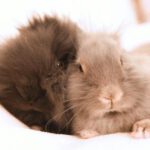
Here, you won’t find rabbits posed against fabric backdrops, with wide, frightened eyes, forced to sit in a particular position.
Instead, you’ll find photos of happy rabbits that are representative of their breed, along with plenty of information about each breed’s temperament and susceptibility to health problems.
Before You Begin
Many rabbits are not officially registered as purebred rabbits (with a pedigree, ear markings, etc.), but they can still be identified as a particular breed based on their body type and appearance (phenotype).
Other rabbits have a combination of breed characteristics that is not officially recognized as a separate breed. One example is the “Lionhead Lop” – a dwarf lop rabbit with the distinctive mane of a Lionhead rabbit.
To help you identify your rabbit’s breed or type, we’ve put together an overview of the most important physical characteristics. Keep in mind that this is a simplified guide and may not be 100% accurate from a professional breeder’s perspective.
A Quick Guide to Rabbit Breeds and Coat Types
Floppy ears = Lop rabbit (lop-eared rabbit)
Dwarf rabbit = A very small rabbit, typically weighing less than 2 kg (4.4 lbs), with short ears
Long or fluffy fur = Angora or Teddy rabbit (Angoras are generally larger, while Teddy rabbits are usually smaller)
A mane or longer fur around the head and ears (with short fur on the rest of the body) = Lionhead rabbit (possibly also a Bearded rabbit)
Overview of Important Rabbit Breeds
Legend
🟢
Healthy breed.
🟡
Breed with potential health problems. Please research the breed carefully and only support breeders who raise rabbits without the health issues described.
🔴
Breed considered to have harmful breeding traits. Please do not support further breeding. If you are considering adopting one from a rescue or a previous owner, make sure to research the breed’s specific health risks beforehand.
🔴 Dwarf Lop Rabbit (German Zwergwidder)
Also Marketed As: Mini Rabbit
Names and Related Breeds in Other Countries: Mini Lop (United Kingdom), Nederlandse Hangoor Dwerg (NHD, Netherlands)
Important: Rabbit breed names vary between countries. The British Mini Lop is not the same breed as the American Mini Lop, which is considerably larger.
Dwarf Lop rabbits are among the most popular pet rabbit breeds. German Dwarf Lops typically weigh between 1.2 and 2 kg (2.6–4.4 lbs), making them slightly larger and heavier than many other dwarf rabbit breeds. Unlike some true dwarf breeds, German Dwarf Lops generally do not carry the genetic dwarfing mutation, although it can occur in some individuals.
These rabbits come in a wide variety of coat colors and patterns. Dwarf Lops are frequently advertised as Mini Lops, even when they do not meet the breed standards of true British Mini Lops.
Temperament: Calm, gentle, easygoing, and generally less easily startled. However, their seemingly relaxed behavior should not automatically be interpreted as a sign of good health. Some lop-eared rabbits suffer from chronic ear infections, which can affect their hearing and behavior. Rabbits are also very good at hiding signs of pain.
Health Problems:
Lop-eared rabbits are particularly prone to ear problems, including chronic ear infections, narrowed ear canals, and excessive earwax buildup. These conditions can cause considerable pain and may require extensive veterinary treatment throughout the rabbit’s life.
Dental disease is another important health concern. Both ear and dental problems can result in substantial veterinary expenses, particularly as rabbits get older.
If you are adopting a lop-eared rabbit, especially from an animal rescue organization, we strongly recommend considering rabbit health insurance.
Ear Problems and Hearing Impairment
The characteristic floppy ears of lop rabbits can significantly affect their quality of life.
Unlike rabbits with upright ears, lop-eared rabbits have a limited ability to move their ears independently. This restricts important aspects of their body language, such as raising, lowering, or turning their ears to communicate with other rabbits.
Their drooping ears may also interfere with hearing and potentially restrict parts of their field of vision.
Hearing impairment and even deafness can occur in lop-eared rabbits, particularly when chronic or previously undetected ear infections are present.
The increased risk of outer and middle ear infections should therefore be taken seriously.
Because of their altered ear anatomy, lop-eared rabbits often have narrowed or partially obstructed ear canals. This can prevent normal earwax drainage, encourage the buildup of debris, and create conditions that favor inflammation and infection.
Research has found a particularly high prevalence of ear canal abnormalities in lop-eared rabbits. Some studies have identified narrowed ear canals in more than 80% of the lop-eared rabbits examined. However, this does not mean that 80% of all lop-eared rabbits will necessarily develop a clinically diagnosed ear infection.
Unfortunately, ear infections often go unnoticed because rabbits instinctively hide signs of illness and pain. Some rabbits may suffer from chronic inflammation for months or even years before the condition is diagnosed.
Treatment can be complicated, time-consuming, and expensive. In severe cases, surgery may be necessary, and some rabbits experience lifelong ear problems.
Regular veterinary examinations and appropriate preventive ear care are especially important for lop-eared rabbits. Although preventive measures may help reduce certain risks, they cannot eliminate problems caused by the rabbit’s ear anatomy.
Dental Problems in Lop-Eared Rabbits
Dental disease is another potential concern, particularly in rabbits with compact or shortened skull shapes.
Some studies have found significantly higher rates of dental abnormalities in lop-eared rabbits than in rabbits with upright ears. However, larger studies have produced mixed results, so an increased dental disease risk cannot be assumed for every lop-eared rabbit.
Dental problems may include misaligned teeth, overgrown molars, and painful sharp points on the teeth.
Depending on the severity, these conditions can require repeated veterinary procedures, lifelong monitoring, and considerable financial expense.
How Lop-Eared Rabbits Develop Their Floppy Ears
Lop-eared rabbits are generally born with upright ears. As they grow, their ears gradually begin to droop.
In some rabbits, one ear remains upright while the other droops. This is sometimes called a “helicopter ear” or “half-lop” appearance.
Rabbits whose ears do not develop according to the breed standard are often excluded from breeding programs.
Are Lop-Eared Rabbits a Result of Harmful Breeding? Understanding the Health Risks
The Dwarfing Gene in Mini Lop Rabbits
Some Mini Lop breeding lines carry the genetic dwarfing mutation.
Breeding two rabbits that both carry this mutation can produce offspring that inherit two copies of the defective gene. These extremely small babies, sometimes called “peanuts,” are generally not viable and usually die shortly after birth.
For this reason, two rabbits carrying the dwarfing mutation should never be bred together. Pairing a carrier with a rabbit that does not carry the mutation avoids producing offspring with two copies of that mutation.
Additional Health Risks Related to Coat Color
Depending on their genetic makeup and coat color, rabbits may also experience additional health problems.
For example, albino rabbits with red eyes may have impaired vision and increased sensitivity to bright light.
Certain pigmentation-related genetic conditions may also be associated with hearing problems. However, blue eyes alone do not mean that a rabbit is deaf.
Are Lop-Eared Rabbits a Result of Harmful Breeding?
Due to their increased susceptibility to painful ear conditions and other inherited anatomical problems, lop-eared rabbits are considered an animal welfare concern.
The health and welfare consequences of breeding rabbits with floppy ears have been addressed by:
- The German Veterinary Association for Animal Welfare (Tierärztliche Vereinigung für Tierschutz, TVT)
- The Qualzucht Evidence Network (QUEN), which evaluates harmful breeding traits
- Veterinarians and animal welfare specialists
These organizations and veterinary experts have raised serious concerns about the health consequences of selectively breeding rabbits for floppy ears.
In Germany, such breeding practices may fall under the concept of Qualzucht (breeding that causes suffering), particularly when inherited characteristics result in pain, disease, or impaired bodily functions.
For these reasons, we strongly recommend against supporting the breeding of lop-eared rabbits. Instead, consider adopting a rabbit from a rescue organization or animal shelter.
🟡 Lionhead Rabbit – Breed Characteristics, Temperament, and Health Problems
Lionhead rabbits are known for their distinctive fluffy mane, which gives them their lion-like appearance. They are popular pet rabbits and come in a variety of sizes, coat colors, and mane types.
Many Lionhead rabbits kept as pets do not meet official breed standards. Their appearance can vary considerably, from rabbits with just a few longer hairs around the neck to those with a thick, fluffy mane covering much of the head.
Although Lionheads have often been bred as a fashionable pet rabbit type, they are officially recognized as a breed in several countries, including the United States.
In Germany, the recognized Lionhead varieties include Rhön-colored, Japanese Harlequin, and blue-eyed white Lionheads.
Weight: Approximately 1.3–2.5 kg (2.9–5.5 lbs), depending on the rabbit’s type and breeding background. Lionheads recognized under the German breed standard have an ideal weight of 1.4–1.8 kg (3.1–4.0 lbs).
Temperament: Active, playful, curious, mischievous, and friendly.
Health Problems:
Lionhead rabbits can vary considerably in appearance and health, particularly when they are bred without following an established breed standard.
In addition to health problems associated with the dwarfing gene and excessively short, rounded skulls (see the section on Netherland Dwarf rabbits), Lionheads may develop problems related to their distinctive mane.
Rabbits with a relatively short or sparse mane often experience few noticeable problems. However, a particularly thick or long mane can cause several health concerns.
The longer fur around the head may lack the same protective outer coat found in normally furred areas. This can make the fur less resistant to wet weather.
Long hairs may also rub against the eyes, causing irritation, excessive tearing, and potentially chronic eye inflammation. In some rabbits, an excessively thick mane can partially obstruct their vision.
Some Lionhead rabbits also develop longer fur around their hindquarters. This can trap droppings and increase the risk of hygiene-related skin problems, particularly when the fur becomes wet or matted.
Despite their fluffy appearance, many Lionhead rabbits do not require extensive grooming. However, rabbits with particularly long or dense fur may need regular brushing and additional care.
Eye Color and Genetic Health Concerns
Red-eyed white rabbits with albinism may have reduced visual acuity and increased sensitivity to bright light. They should always have access to shaded areas and protection from intense sunlight.
Blue-eyed rabbits can also have pigmentation-related genetic differences. Melanocytes are specialized cells involved in producing pigment in the fur, skin, and eyes. They also play an important role in the development and function of the inner ear.
In certain animal species, a lack of functioning melanocytes in the inner ear can cause hearing impairment or congenital deafness.
However, the relationship between blue eyes, coat color, and hereditary deafness has not been clearly established in domestic rabbits. Blue eyes alone do not mean that a rabbit is deaf or has a hearing problem.
What to Consider Before Getting a Lionhead Rabbit
If you are considering getting a Lionhead rabbit, pay particular attention to its physical characteristics, health, and breeding background.
A healthier Lionhead rabbit should ideally have:
- A longer, naturally shaped muzzle rather than an extremely short, rounded face.
- A manageable mane that does not obstruct vision, irritate the eyes, or cause excessive matting.
- A clean hindquarter area without excessively long fur that traps droppings or urine.
- A body weight above 1 kg (2.2 lbs) rather than an extremely small body size.
- A responsible breeding background, with the opportunity to see both parents and assess their health.
- No pairing of two rabbits carrying the dwarfing gene, as this can result in offspring with severe developmental problems that are usually fatal.
If both parents carry the dwarfing gene, we strongly advise against supporting such breeding practices by purchasing their offspring.
Lionhead rabbits with particularly thick or long fur may require considerably more grooming than expected. This is especially important when the fur around the rear end becomes so dense that droppings or urine get trapped in it.
When choosing a rabbit, health and physical well-being should always take priority over unusual coat colors, eye colors, or exaggerated physical characteristics.
We recommend avoiding breeding practices that deliberately select for extreme physical traits or known hereditary health problems, including those affecting vision or hearing.
A Lionhead rabbit’s appearance should never come at the expense of its health. Whenever possible, consider adopting a Lionhead rabbit from an animal shelter or rabbit rescue organization rather than supporting irresponsible breeding practices.
🟡 Netherland Dwarf Rabbits (Farbenzwerge)
Also Marketed As: Mini Rabbits
Netherland Dwarf rabbits are the typical dwarf rabbits, even if they do not always fully meet the official breed standard. They weigh between 1 and 1.5 kg and come in many different colors.
Temperament: Active, cautious, easily startled, agile, and timid.
Health Problems: Depending on breeding practices, rabbits with compact, rounded heads often develop congenital dental misalignments. A shortened jaw can quickly lead to breathing difficulties. Tooth roots may also extend into the tear ducts, causing eye problems and diseases affecting the tear drainage system. Learn more about short-headed rabbits.
This breed carries the so-called “dwarfing gene,” which is responsible for its small size. When two rabbits carrying this gene are bred together, it can result in disabled or nonviable offspring (such breeding is prohibited in Germany).
In addition, approximately one-quarter of the offspring do not meet the breed standard. When breeding with a rabbit of another breed in accordance with animal welfare requirements, this proportion can be significantly higher. Rabbits that do not meet the breed standard may be rejected, slaughtered, or used as food for other animals.
Some very small rabbits also show an increased susceptibility to illness and a shorter life expectancy. For this reason, rabbits weighing at least 1.5 kg should be preferred.
In addition to checking the body weight of both parents, pay attention to the length of their muzzles. Rabbits with extremely rounded heads are more likely to develop dental and respiratory diseases!
Dwarf rabbits with extremely rounded heads or weighing less than 1 kg are classified as examples of harmful breeding (Qualzucht) in the expert report interpreting Section 11b of the German Animal Welfare Act, which prohibits breeding practices that cause suffering.
Coat Colors and Varieties: Rabbits come in a wide variety of colors!
Netherland Dwarf rabbits are available in iron gray, dark gray, agouti (gray), black, blue, Havana (chocolate), red, lilac (Feh), Separator, lynx (Lux), chinchilla, Deilenaar, black-tipped (Schwarzgrannen), pearl lilac (Perlfeh), black silver, blue silver, Havana silver, yellow silver, gray-brown silver, light silver, Thuringian, brown marten, blue marten, yellow Siamese, blue Siamese, black with white-tipped hairs, blue with white-tipped hairs, Havana with white-tipped hairs, Hotot, Rhön, Japanese Harlequin, black and tan, blue and tan, brown and tan, lilac and tan, black-and-white Himalayan, blue-and-white Himalayan, black-and-white Dutch, Thuringian-and-white Dutch, blue-and-white Dutch, lilac-and-white Dutch, chinchilla-and-white Dutch, Japanese Harlequin-and-white Dutch, black-and-white mantle-marked, blue-and-white mantle-marked, Havana-and-white mantle-marked, and agouti-and-white mantle-marked.
What to Look for When Choosing a Netherland Dwarf Rabbit
Breeding larger Netherland Dwarf rabbits with longer muzzles can be supported when the breeding pairs are selected to avoid producing offspring with two copies of the dwarfing gene.
You should not support questionable breeders by purchasing Netherland Dwarf rabbits if you cannot see the parent animals, if both parents are dwarf rabbits, if either parent weighs less than 1 kg, or if the rabbits have flat, shortened muzzles.
In addition, rabbits with blue eyes (leucism, sometimes associated with deafness) or red eyes should not be bred (see the section on albino rabbit breeds).
Marten-colored and Siamese-colored rabbits may also have impaired vision (see the sections on Marten and Siamese rabbits).
Hotot-colored rabbits are affected by the genetic problems associated with breeding spotted rabbits.
🟡 Dwarf Spotted Rabbits (Zwergschecken)
Cute rabbits in a meadow, rabbit care and housing, outdoor rabbit keeping, and proper rabbit care. (image)
Dwarf Spotted rabbits have a white base coat with markings in various colors. The distribution of these markings is precisely defined by the breed standard, and only a few rabbits meet these requirements (the rabbits in the photos do not). Dwarf Spotted rabbits weigh between 1.4 and 1.8 kg (3.1–4.0 lbs).
Temperament: Active, alert, and sometimes timid.
Coat Colors and Varieties: As their name suggests, Dwarf Spotted rabbits have spotted coats. They come in several color varieties: black and white, blue and white, Havana (chocolate) and white, Thuringian and white, and tricolor.
Health Problems and Concerns: Dwarf Spotted rabbits also carry the dwarfing gene and the associated health risks (see the breed information on Netherland Dwarf rabbits).
In addition, breeding two spotted rabbits with the dominant spotting gene can pass on megacolon syndrome to their offspring.
Affected rabbits suffer from chronic digestive disorders, weakened immune systems, chronic stress, and a shortened life expectancy.
Only a small number of rabbits meet the breed standard for their markings, as the exact distribution of spots cannot be reliably controlled through breeding. Rabbits that do not meet these requirements are often rejected, slaughtered, or used as food for other animals.
In responsible breeding, a spotted rabbit is paired with a solid-colored rabbit. This prevents offspring from inheriting two copies of the dominant spotting gene, meaning they are not affected by the associated megacolon syndrome.
What to Look for When Choosing a Dwarf Spotted Rabbit
You can consider purchasing a Dwarf Spotted rabbit if you can see both parents and the following conditions are met:
One parent is a dwarf rabbit weighing more than 1 kg (2.2 lbs), while the other is a larger rabbit. Additionally, one parent must be spotted and the other solid-colored.
You should also make sure that rabbits that do not meet the breed standard are not killed as young animals, as this would violate animal welfare principles.
If you cannot see the parent rabbits or if any of these conditions are not met, you should not support such breeding practices by purchasing their offspring!
🔴 Dwarf Satin Rabbits
Temperament: Gentle, curious, and easily startled.
Coat Colors and Varieties: Red Dwarf Satin, Thuringian Dwarf Satin.
Weight: Approximately 1–1.5 kg (2.2–3.3 lbs).
Health Problems: Satin rabbits are considered a breed affected by harmful breeding traits (Qualzucht), as almost all develop severe dental diseases. The underlying cause has not yet been scientifically established.
Satin rabbits are generally classified as a breed associated with harmful breeding practices. Therefore, please do not support further breeding!
🟡 🔴 Teddy Dwarf Rabbits and Teddy Lop Rabbits
Neither of these rabbit types is officially recognized as a breed, but both are approved as breeds under development. They have longer, soft fur that sheds naturally during seasonal molting and does not need to be sheared. However, their fur must be regularly brushed and detangled to prevent matting. Teddy Dwarf rabbits have upright ears (800–1,700 g), while Teddy Lop rabbits have floppy ears (1,300–2,000 g).
Temperament: Often appear “indifferent” because their facial expressions are hidden by their fur. They are also frequently quite shy due to the regular grooming they require, which many of them dislike.
Health Problems: The genetic dwarfing gene is generally undesirable in Teddy rabbits, but some still carry it (see Netherland Dwarf rabbits).
Their fur offers little protection against the weather because it lacks the protective outer coat. In addition, the long fur around their eyes and their selectively bred short heads often lead to chronic eye problems.
The constant grooming required is unnatural and stressful for many rabbits. Some owners also neglect regular grooming, resulting in matted fur and other health problems. The fur around their eyes must always be trimmed so they can see properly.
Cecotropes (soft cecal droppings) can easily become trapped in their long fur, causing fecal soiling and increasing the risk of flystrike (maggot infestation).
Teddy Lop rabbits also suffer from severe ear infections (see Lop-Eared Rabbits). Veterinary costs for these chronic conditions and the dental diseases that may subsequently develop often reach thousands of euros.
Depending on their coat color and markings, additional health problems may occur, such as megacolon syndrome in rabbits with certain spotted markings, deafness in blue-eyed rabbits, or visual impairment in red-eyed rabbits.
Teddy rabbits prone to matted fur require considerable time and effort from both their owners and the rabbits themselves. For this reason, they are classified as rabbits affected by harmful breeding traits (Qualzucht) by organizations such as the German Veterinary Association for Animal Welfare and veterinary experts. Teddy Lop rabbits are also generally classified as being affected by harmful breeding traits due to their high susceptibility to ear infections. Therefore, please do not purchase these rabbits if doing so supports further breeding!
🟡 Dwarf Rex Rabbits
Rex rabbits have velvety fur, similar to that of a mole. Their fur stands upright away from the body. Unlike rabbits with normal fur, their guard hairs are shorter and do not adequately cover the undercoat. As a result, their fur no longer provides sufficient protection against the weather. To compensate, Rex rabbits develop additional body fat during winter and require a mostly covered enclosure if kept outdoors.
The whiskers, sensory hairs, and eyelashes of Rex rabbits are only about half as long as those of other rabbits. They are also strongly curled, and some rabbits lack them entirely. This limits their ability to navigate and orient themselves in their surroundings.
Temperament: Rex rabbits usually have a rather gentle temperament, although individual personalities can vary considerably. They are very intelligent.
Coat Colors and Varieties: Black and white, Dalmatian blue and white, Dalmatian Havana (chocolate) and white, Dalmatian tricolor, yellow, castor, black, Havana (chocolate), blue-gray, Rhön, lilac (Feh), lynx (Lux), black and tan, blue and tan, brown and tan, lilac and tan, brown marten, blue marten, and black-and-white Himalayan.
Health Problems: Rex rabbits are more susceptible to colds because their altered or missing protective outer coat provides less protection against moisture (see above). To compensate for this, outdoor enclosures must have extensive roof coverage.
Rex rabbits are also more prone to pododermatitis (sore hocks).
Rex rabbits with underdeveloped or curled whiskers are considered to have harmful breeding traits (Qualzucht).
The importance of whiskers was impressively demonstrated in a study involving blind cats. In these animals, the loss of vision was compensated for by significantly increased growth of facial whiskers (Rauschecker, 1995). The loss of whiskers therefore represents the loss of an important sensory function.
Rex rabbits with missing or underdeveloped whiskers are classified as a result of harmful breeding practices by organizations including the German Veterinary Association for Animal Welfare.
What to Look for When Choosing a Dwarf Rex Rabbit
Rex rabbits with missing or curled whiskers are considered to have harmful breeding traits. When purchasing a rabbit, you should be able to see both parents and confirm that they have healthy, intact whiskers. The young rabbits must also have intact whiskers.
The fur covering the feet is extremely important for preventing sore hocks. Make sure both parents have thick, dense fur on their feet, without any exposed areas. The only exception is a very small, circular, non-irritated area on the heel of younger rabbits that is still covered by fur. Young rabbits should also have thick, dense fur covering the undersides of their paws.
You should not support questionable breeders by purchasing Dwarf Rex rabbits if you cannot see the parent animals, if both parents are dwarf rabbits, if either parent weighs less than 1 kg, or if the rabbits have flat, shortened muzzles.
In addition, red-eyed rabbits should not be bred (see the section on albino rabbit breeds).
Spotted color varieties must come from breeding pairs in which one parent is not spotted.
🔴 Satin Dwarf Lop Rabbits
Also Marketed As: Satin Mini Lop, Mini Lop Satin
Satin Dwarf Lop rabbits are considered to be affected by harmful breeding traits (Qualzucht) because they combine the health problems of lop-eared rabbits (severe chronic ear infections, restricted field of vision, deafness or hearing impairment, and dental diseases) with the severe dental problems associated with Satin Lop rabbits. As a result, they suffer from serious health conditions.
Coat Colors and Varieties: Several color varieties exist. Officially recognized varieties include Thuringian Satin Dwarf Lops and agouti Satin Dwarf Lops.
Weight: Approximately 1.2–2 kg (2.6–4.4 lbs).
Temperament: Calm, even-tempered, relaxed, and often become tame relatively quickly. Their calm temperament and tendency to be less easily startled are often related to suffering from chronic ear infections (signs of pain in rabbits).
Health Problems: Lop-eared rabbits generally develop illnesses much more frequently and suffer from more severe health problems than rabbits with upright ears. Chronic ear infections and dental diseases, in particular, often lead to extremely high veterinary expenses throughout their lives, especially as they get older!
If you adopt a lop-eared rabbit, for example from an animal rescue organization, we recommend taking out rabbit health insurance.
Their drooping ears not only restrict their ability to communicate through body language (raising or flattening their ears, etc.) but can also impair their hearing. In addition, lop-eared rabbits have a restricted field of vision behind them because of their floppy ears.
Deafness is more common among lop-eared rabbits, often as a result of hidden or undiagnosed ear infections.
The increased risk of outer and middle ear infections should be taken seriously, and their ears should be checked regularly.
Due to their narrowed ear canals, approximately 80% of lop-eared rabbits develop an ear infection at some point in their lives. However, these infections are rarely diagnosed, and many lop-eared rabbits suffer from severe pain for years.
Treatment is complicated and expensive, and the problem often persists throughout the rabbit’s life. Preventive measures, particularly proper ear care, can help reduce the risk.
Studies have also found that dental diseases occur more frequently in lop-eared rabbits (approximately five times more often than in rabbits with upright ears). These conditions sometimes require complex, lifelong treatment and can result in extremely high veterinary costs.
Lop-eared rabbits are born with upright ears, which only begin to droop as they develop. Rabbits whose ears remain upright or whose ears do not droop evenly (such as rabbits with one upright ear or “helicopter ears”) are often excluded from breeding programs.
Are Lop-Eared Rabbits a Result of Harmful Breeding? Understanding the Problems of Lop Rabbits
Satin rabbits have an extremely high predisposition to dental disease. Most Satin rabbits develop severe dental problems. The reason for their unusually high susceptibility has not yet been scientifically established.
Satin Lop rabbits are classified as a breed associated with harmful breeding practices (Qualzucht) due to their predisposition to dental diseases and ear infections by:
- The German Veterinary Association for Animal Welfare (TVT)
- Veterinarians and veterinary experts
Therefore, please do not support further breeding!
🔴 Rex Dwarf Lop Rabbits
Also Marketed As: Rex Mini Lop, Mini Lop Rex
Rex Dwarf Lop rabbits are Dwarf Lop rabbits with Rex fur. They are considered to have harmful breeding traits (Qualzucht) because they combine the health problems of lop-eared rabbits (severe chronic ear infections, restricted field of vision, deafness or hearing impairment, and dental diseases) with the health problems of Rex rabbits (pododermatitis, missing or underdeveloped whiskers, and impaired sensory perception as a result). These rabbits should never be bred, and their breeding should not be supported by purchasing them.
Coat Colors and Varieties: Various colors exist, but none are officially recognized.
Weight: Approximately 1.2–2 kg (2.6–4.4 lbs).
Temperament: Calm, even-tempered, relaxed, and often become tame relatively quickly. Their calm temperament and tendency to be less easily startled are often related to suffering from chronic ear infections (signs of pain in rabbits).
Health Problems: Lop-eared rabbits generally develop illnesses much more frequently and suffer from more severe health problems than rabbits with upright ears. Chronic ear infections and dental diseases, in particular, often lead to extremely high veterinary expenses throughout their lives, especially as they get older!
If you adopt a lop-eared rabbit, for example from an animal rescue organization, we recommend taking out rabbit health insurance.
Their drooping ears not only restrict their ability to communicate through body language (raising or flattening their ears, etc.) but can also impair their hearing. In addition, lop-eared rabbits have a restricted field of vision behind them because of their floppy ears.
Deafness is more common among lop-eared rabbits, often as a result of hidden or undiagnosed ear infections.
The increased risk of outer and middle ear infections should be taken seriously, and their ears should be checked regularly.
Due to their narrowed ear canals, approximately 80% of lop-eared rabbits develop an ear infection at some point in their lives. However, these infections are rarely diagnosed, and many lop-eared rabbits suffer from severe pain for years.
Treatment is complicated and expensive, and the problem often persists throughout the rabbit’s life. Preventive measures, particularly proper ear care, can help reduce the risk.
Studies have also found that dental diseases occur more frequently in lop-eared rabbits (approximately five times more often than in rabbits with upright ears). These conditions sometimes require complex, lifelong treatment and can result in extremely high veterinary costs.
Lop-eared rabbits are born with upright ears, which only begin to droop as they develop. Rabbits whose ears remain upright or whose ears do not droop evenly (such as rabbits with one upright ear or “helicopter ears”) are often excluded from breeding programs.
Are Lop-Eared Rabbits a Result of Harmful Breeding? Understanding the Problems of Lop Rabbits
Rex rabbits are more susceptible to colds because their altered or missing protective outer coat provides less protection against moisture (see above). To compensate for this, outdoor enclosures must have extensive roof coverage.
Rex rabbits are also more prone to pododermatitis (sore hocks). Rex rabbits with underdeveloped or curled whiskers are considered to have harmful breeding traits.
The importance of whiskers was impressively demonstrated in a study involving blind cats. In these animals, the loss of vision was compensated for by significantly increased growth of facial whiskers (Rauschecker, 1995). The loss of whiskers therefore represents the loss of an important sensory function.
Rex rabbits are classified as rabbits affected by harmful breeding traits by organizations including the German Veterinary Association for Animal Welfare.
Red-eyed Rex rabbits (albinos) suffer from visual impairment, while blue eyes are often associated with deafness (leucism).
Rex Lop rabbits are classified as rabbits affected by harmful breeding traits (Qualzucht) due to their predisposition to ear infections, even when their whiskers are intact. This classification is supported by:
- The German Veterinary Association for Animal Welfare (TVT)
- Veterinarians and veterinary experts
Therefore, please do not support further breeding!
Other Dwarf Rabbit Breeds:
- Jamora Rabbit, Harlequin-colored
- Angora Dwarf Lop Rabbit
Small Rabbit Breeds
🔴 German Small Lop Rabbits (Deutsche Kleinwidder)
Rabbit in a meadow, rabbit care guide, tips for senior rabbits.
German Small Lop rabbits are among the most popular breeds kept as pets. According to the breed standard, they weigh approximately 2.3–3.5 kg (5.1–7.7 lbs), making them slightly larger and heavier than Dwarf Lop rabbits. They come in a wide variety of coat colors and patterns.
Coat Colors and Varieties: Iron gray, dark gray, agouti (gray), blue-gray, yellow, red, lynx (Lux), chinchilla, black, blue, Havana (chocolate), Thuringian, lilac (Feh), Rhön, black with white-tipped guard hairs, dark gray/iron gray and white, agouti and white, blue-gray and white, yellow and white, red and white, lynx and white, chinchilla and white, black and white, blue and white, Havana (chocolate) and white, Thuringian and white, lilac and white, red-eyed white, and blue-eyed white.
Temperament: Calm, even-tempered, relaxed, and often become tame relatively quickly. Their calm temperament is frequently attributed to deafness or hearing impairment and pain caused by ear infections (signs of pain in rabbits).
Health Problems: Lop-eared rabbits generally develop illnesses much more frequently and suffer from more severe health problems than rabbits with upright ears. Chronic ear infections and dental diseases, in particular, often lead to extremely high veterinary expenses throughout their lives, especially as they get older!
If you adopt a lop-eared rabbit, for example from an animal rescue organization, we recommend taking out rabbit health insurance.
Their drooping ears not only restrict their ability to communicate through body language (raising or flattening their ears, etc.) but can also impair their hearing. In addition, lop-eared rabbits have a restricted field of vision behind them because of their floppy ears.
Deafness is more common among lop-eared rabbits, often as a result of hidden or undiagnosed ear infections.
The increased risk of outer and middle ear infections should be taken seriously, and their ears should be checked regularly.
Due to their narrowed ear canals, approximately 80% of lop-eared rabbits develop an ear infection at some point in their lives. However, these infections are rarely diagnosed, and many lop-eared rabbits suffer from severe pain for years.
Treatment is complicated and expensive, and the problem often persists throughout the rabbit’s life. Preventive measures, particularly proper ear care, can help reduce the risk.
Studies have also found that dental diseases occur more frequently in lop-eared rabbits (approximately five times more often than in rabbits with upright ears). These conditions sometimes require complex, lifelong treatment and can result in extremely high veterinary costs.
Lop-eared rabbits are born with upright ears, which only begin to droop as they develop. Rabbits whose ears remain upright or whose ears do not droop evenly (such as rabbits with one upright ear or “helicopter ears”) are often excluded from breeding programs.
Are Lop-Eared Rabbits a Result of Harmful Breeding? Understanding the Problems of Lop Rabbits
Depending on their coat color, additional health problems may occur, such as visual impairment and a tendency to develop skin conditions in red-eyed rabbits (albinos), or deafness in blue-eyed rabbits (leucism).
German Small Lop rabbits are considered an example of harmful breeding (Qualzucht) due to their predisposition to ear infections and many other health concerns, according to:
- The German Veterinary Association for Animal Welfare (TVT)
- Veterinarians and veterinary experts
Therefore, please do not support further breeding!
🔴Himalayan Rabbits (Russenkaninchen)
Temperament: Trusting, calm, and friendly.
Coat Colors and Varieties: Black-and-white Himalayan and blue-and-white Himalayan.
In this breed, the enzyme tyrosinase, which is responsible for producing the pigment melanin, does not function normally. Tyrosinase is sensitive to heat, meaning it can only function in cooler temperatures. Cooler areas of the body, such as the ears, paws, and tail, are therefore more pigmented than warmer areas. The rabbit’s coloration also depends on the surrounding temperature.
Weight: 2.3–3.0 kg (5.1–6.6 lbs), making this the smallest rabbit breed after the dwarf breeds.
Health Problems: Himalayan rabbits have red eyes, making them highly sensitive to sunlight. They should therefore be kept in shaded areas. Like albino rabbits, they have severely impaired vision.
In addition, areas covered with white fur are particularly sensitive to sunlight, making these rabbits more prone to skin problems and sunburn when exposed to direct sunlight.
🟢 Saxon Gold Rabbits
Temperament: Friendly, trusting, calm, and even-tempered. Also well suited for children.
Weight: Approximately 2.75–3.25 kg (6.1–7.2 lbs).
Coat Colors and Varieties: Red with a lighter-colored belly and a lighter underside of the tail.
Health Problems: A very healthy rabbit breed with no known predisposition to specific diseases.