

Arriving in a new home is a very sensitive stage for a rabbit. Everything is unfamiliar and unknown, so the animal needs time to explore its surroundings and feel safe. The experiences during these first days are especially important and can influence its future behavior.
With a few simple measures, you can help your rabbit adapt calmly, reduce stress, and create a trusting environment from the very beginning.

Buying a Rabbit
If you decide to adopt one or more rabbits from a responsible breeder or another reliable source, it is important to consider the following aspects:
- Always adopt at least two rabbits, unless you already have a rabbit at home waiting for a companion. Keeping a rabbit alone is not appropriate for the species and is not considered proper rabbit care.
- Learn about rabbits’ basic needs in advance, including their diet, behavior, and living conditions. Rabbits should never live in a cage or confined space, and they should not be fed dry pellet food.
- Many mistakes related to diet and housing lead to illnesses, high veterinary costs, behavioral problems, and other complications. Most of these issues can be avoided through proper and responsible care.
- The rabbit’s origin has a direct impact on possible future problems, such as hereditary diseases or poor health conditions. Choosing a responsible source also helps prevent animal cruelty and irresponsible breeding.
Which Rabbit Should You Choose?
Choosing the right rabbit is an important decision that will influence daily life, animal welfare, and the adaptation process in the new home. Not only the rabbit’s origin matters, but also its personality, breed, health, and compatibility with other rabbits.
Compatibility With Other Rabbits
Choose rabbits that are compatible with the animals already living in your home, taking factors such as personality, age, and sex into account. Before adoption, learn about the proper introduction and bonding process between rabbits to support a successful relationship.
It is also recommended to agree in advance with the breeder or rescue center on the possibility of returning the rabbit if the bonding process does not work out.
Choosing the Right Breed
In addition to choosing a responsible source, it is important to select a breed that matches your lifestyle. Learn about the typical behavior traits and possible health predispositions of each breed or mix.
Large rabbit breeds are usually calmer, more sociable, and easier to tame. Smaller breeds, on the other hand, are often more active, nervous, and cautious.
Checking the Rabbit’s Health
Before adopting a rabbit, carefully check its physical condition:
- The anal area should be clean.
- The eyes should look healthy and free of discharge or tearing.
- The fur and skin should not show dandruff, wounds, or bald patches.
- The droppings should look normal.
- The rabbit should eat normally and appear active.
It is also advisable to observe whether the rabbit’s siblings and parents are healthy and whether sick animals receive proper veterinary care. If you have any doubts, consult a veterinarian experienced with rabbits or consider choosing another animal.
Diet and Housing Type
Always ask what type of diet the rabbit has received so far and whether it is used to living indoors or outdoors.
Sudden changes in diet or environment can cause digestive problems and stress, especially in young rabbits. Any transition should be done gradually.
Observing the Rabbit’s Personality
Take time to observe the rabbits before making your decision. Try interacting with them to find out which one best matches your personality and lifestyle.
Every rabbit has a different personality: some are calm and sociable, while others are more independent or shy.
Important Factors to Consider
Think in advance about which characteristics are important to you, such as:
- compatibility with children,
- ease of litter training,
- calm behavior,
- adaptation to human handling.
Adult rabbits are usually more likely to be litter-trained indoors, while this cannot yet be predicted in baby rabbits. For families with children, larger breeds are often more suitable because of their calmer and more trusting temperament.
Never Buy Rabbits That Are Too Young
Never buy rabbits that have been separated from their mother too early. Baby rabbits should not leave their mother before 10 weeks of age, and ideally not before 12 weeks.
Rabbits that are raised improperly or separated too early are more likely to develop health and behavioral problems later in life.
If the rabbit has already been examined by a veterinarian, vaccinated, neutered, and has a known and documented EC status, quarantine may not be necessary.
For this reason, it is worth choosing the rabbits’ origin carefully. Doing so can help avoid unnecessary veterinary expenses, stress, and loss of time, while directly investing in the rabbits’ health and well-being.

Everything You Need for Your Rabbit
Before bringing a rabbit home, it is important to prepare everything properly to ensure its well-being, safety, and smooth adaptation to the new environment.
A Suitable Living Space
Your rabbit should have a spacious enclosure adapted to its needs, whether indoors or outdoors. Rabbits need enough space to move, run, rest, and explore every day.
Small cages are not suitable.

Essential Equipment
Before your rabbit arrives, make sure you have all the basic supplies ready for daily care:
- shelters and hiding places,
- litter trays,
- food and water bowls,
- comfortable resting areas,
- toys and environmental enrichment,
- natural materials for chewing.
A well-prepared environment helps reduce stress and makes the adaptation process easier during the first days.
Safety Inside the Home
If the rabbit lives indoors, at least one room should be rabbit-proofed and adapted for daily exercise.
It is important to cover electrical cables, remove toxic plants, and protect delicate or dangerous objects that the rabbit could chew on.
A Separate Area for New Rabbits
New rabbits should initially have their own separate and easy-to-clean area.
Depending on their origin and health condition, a temporary quarantine before contact with other rabbits may be recommended.
A Suitable Carrier
A safe and comfortable transport carrier is necessary not only for bringing the rabbit home, but also for veterinary visits, travel, moving, or temporary stays elsewhere.
The carrier should be sturdy, easy to clean, and well ventilated.
Bringing the Rabbit Home
Giving the Rabbit Time to Adjust
At first, it is best to let the rabbit calmly explore its new space. You can sit nearby and observe its behavior without forcing interaction.
During the first days, it is recommended to avoid constant changes in the environment and not repeatedly remove the rabbit from its enclosure. Too much handling can cause stress and insecurity.
Teaching Litter Habits
Learn how to teach your rabbit to use a litter tray. Cleanliness and routine are essential for supporting this learning process.
Many rabbits can become quite clean indoors when provided with a suitable environment and enough patience.
Building Trust With Your Rabbit
Trust is built gradually. Avoid forcing physical contact and allow the rabbit to approach you on its own initiative.
With patience, calm behavior, and positive experiences, the rabbit will learn to feel safe and confident around you.

A Calm Arrival in the New Home
The arrival in a new home should be as calm and safe as possible for the rabbit, especially if it is a young animal. A well-prepared environment helps reduce stress and supports adaptation from the very beginning.
An Enclosure Ready Before Arrival
The enclosure should be completely prepared before the rabbit arrives. Young rabbits need protected areas, comfortable surfaces, and several hiding places where they can retreat and feel safe.
It can also help to place some hay or familiar-smelling material from the rabbit’s previous home inside the enclosure. Familiar scents provide security and reduce stress during the first days.
Introducing the Rabbit to Its New Space
After transport, it is best to place the carrier directly inside the enclosure and calmly open the door.
The rabbit should come out on its own initiative and at its own pace. This helps build confidence and allows the rabbit to feel safer in the new environment.
Avoid sudden movements, loud noises, and hectic situations, as these can frighten the rabbit even more.
The Importance of Calmness on the First Day
Many owners want to interact with their new rabbit immediately, but during the first hours the most important thing is to give the rabbit peace and quiet.
It is completely normal for the rabbit to stay hidden, remain inside the carrier, or spend time grooming itself. These behaviors are part of the natural adaptation process.
During the first hours, children and other pets should not approach the enclosure in order to avoid unnecessary stress.
Observing Without Disturbing
During this phase, it is recommended to observe the rabbit from a certain distance.
Make sure the rabbit is breathing normally and does not appear apathetic or excessively motionless. Many young rabbits begin exploring their surroundings more actively in the evening or once they feel safer.
Feeding Your Rabbit for the First Time
From the very beginning, provide good-quality hay and fresh water. Young rabbits look for familiar smells and often begin eating some hay shortly after arriving in their new home. This helps them feel safer and reduces the stress of the move.
If the rabbit was used to certain foods in its previous home, you can place a small amount near the hay. This makes the transition easier and less stressful for the animal.
Avoid Sudden Dietary Changes
The first day is not the right moment for major dietary changes. The digestive system of young rabbits is very sensitive and can react negatively to sudden changes in food.
It is best to keep the diet as similar as possible to the previous one during the first days. This reduces the risk of diarrhea, digestive problems, and stress-related symptoms.
Changing the Diet
Any dietary changes should be introduced slowly and gradually. Introduce new foods little by little and always observe how the rabbit reacts.
Dietary Changes in Young Rabbits

First Interactions and Adaptation With Your Rabbit
Once the rabbit starts exploring its enclosure and feeling safer, you can begin approaching it gradually. Ideally, sit on the floor to appear less threatening and create a calm atmosphere.
Place one hand relaxed on the floor and speak softly. Many young rabbits approach out of curiosity when they feel there is no danger. These first voluntary interactions are especially important for building trust.
Avoid Forcing Contact
During the first days, you should not pick up the rabbit or pet it insistently.
Rabbits are prey animals by nature and need to feel that they are in control of the situation. Trust develops when the rabbit can decide for itself when to approach and when to retreat.
A Safe Place to Rest
A quiet place for sleeping and hiding is essential for helping the rabbit feel protected.
Rabbit houses and shelters should have at least two wide entrances. This prevents the rabbit from feeling trapped and ensures it always has an escape route available.
Soft hay or straw helps create a warm and secure environment.
Maintaining a Stable Environment
During the first days, it is important to avoid major changes inside the enclosure.
Young rabbits rely heavily on familiar smells, routines, and structures for orientation. Keeping the environment stable helps reduce stress and makes adaptation to the new home easier.
Socialization and Adaptation to New Stimuli
During the first weeks after arriving in a new home, young rabbits develop a particularly sensitive awareness of everything around them. Sounds, smells, movements, and daily routines leave a strong impression during this stage.
A calm and gradual adaptation to the environment helps the rabbit react more confidently and calmly in the future.
Adaptation Without Stress or Pressure
Environmental socialization does not mean actively exposing the rabbit to stressful situations or too many new stimuli.
The most important thing is that the rabbit can observe and perceive its surroundings from a safe distance while deciding for itself when it wants to approach, explore, or retreat.
This sense of control is essential for developing trust and security.
Getting Used to Everyday Sounds
Soft and normal household sounds help the rabbit gradually adapt to its new environment.
Speaking quietly, opening doors, or calmly walking near the enclosure are normal situations that support natural adaptation and reduce sensitivity to stress.
Avoiding Fearful Situations
During this phase, other pets such as dogs or cats should not have direct access to the rabbit’s enclosure.
Young rabbits can easily feel threatened or pressured, even if the other animal has no intention of causing harm.
A calm, safe, and controlled environment helps prevent fearful behavior and supports the development of a balanced and trusting personality.
Care, Hygiene, and Adaptation During the First Days
The first days in the new home are essential for helping the rabbit build trust and adapt safely to its environment. During this stage, calmness and respect for the rabbit’s needs are more important than excessive handling or intensive care.
Fur Care and Hygiene During Adaptation
The first day is not the right time for extensive grooming or unnecessary handling.
Young rabbits usually clean themselves once they begin feeling safe. At first, it is enough to visually check that the eyes, nose, and anal area are clean and in good condition. It is not recommended to pick up the rabbit only to inspect it.
More detailed health checks should be done later, once the rabbit has developed trust and feels relaxed in its new environment.
Maintaining Familiar Scents
During the adaptation phase, it is also not advisable to clean the enclosure too thoroughly.
Rabbits rely heavily on scents for orientation, and their own scent provides them with security. Ideally, only very dirty areas or toilet corners should be cleaned while avoiding major environmental changes.
Cleanliness and Litter Training
Many young rabbits show some natural cleanliness instincts from the beginning, although fully learning to use a litter tray takes time and routine.
During the first days, it is recommended to place several litter trays with absorbent material and a thin layer of hay.
Rabbits usually choose a specific corner for their toilet habits by themselves. If you observe which area they prefer and place the litter tray there, you will support their natural learning process.
Constantly moving the litter trays can create insecurity and make adaptation more difficult.
Patience and Routine
Rabbits do not learn through punishment or rewards in the same way as some other animals.
Clean habits develop mainly through repetition, routine, and a stable environment. With patience and a clear structure, many rabbits naturally become quite clean over time.
How to Gain Your Rabbit’s Trust
Young rabbits usually get used to people quite well when contact is calm, respectful, and voluntary.
Taming a rabbit does not mean constantly holding or petting it, but helping the rabbit perceive people as a safe part of its environment.
Building Trust Gradually
A calm presence, speaking softly, and offering small amounts of food by hand are often very effective ways to build trust.
Many young rabbits begin approaching on their own after a short time, driven by curiosity.
Sitting regularly on the floor and remaining still allows the rabbit to explore at its own pace and approach when it feels ready.
Respecting the Rabbit’s Boundaries
Respecting the animal’s boundaries is essential.
Avoiding sudden movements, loud noises, and stressful situations helps create a stable sense of security and makes future handling and veterinary examinations much easier.
Once the rabbit is fully adapted, you can work more specifically on improving sociability and confidence.
Contact With Other Rabbits
If socialization with other rabbits is planned, it should not take place on the first day.
The young rabbit first needs a safe place and basic confidence in its new environment before facing new social situations.
Introducing Rabbits on Neutral Territory
Rabbit introductions should take place in a neutral area where none of the animals shows territorial behavior.
Even when the rabbit arrives together with a companion it already knows, both animals should remain under observation, since environmental changes can also create stress between familiar rabbits.
Signs of Well-Being and Adaptation
Young rabbits gradually show signs that they are beginning to feel safe.
These include:
- grooming themselves in a relaxed way,
- calmly walking around the enclosure,
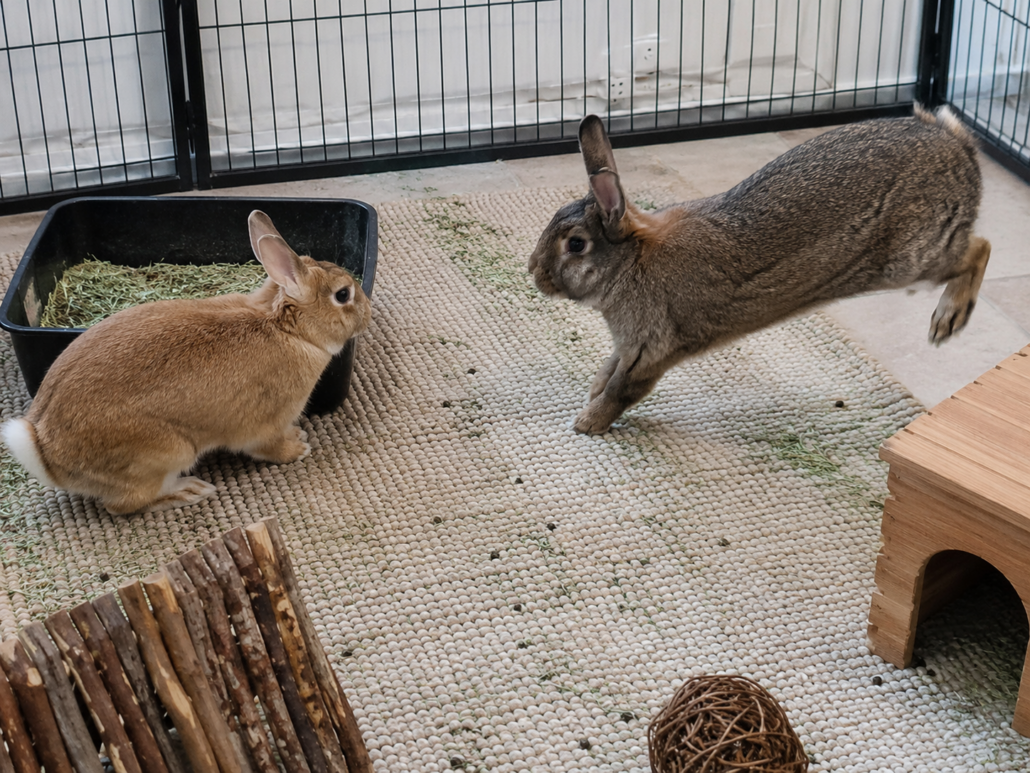
- small jumps and playful running,
- curious approaches toward people.
Some rabbits relax during the first day, while others need several days to adapt completely.
When to Visit a Veterinarian
It is important to pay attention if the rabbit:
- stops eating for several hours,
- remains constantly hidden,
- breathes rapidly or heavily,
- appears apathetic or unresponsive.
In these cases, it is recommended to consult a veterinarian experienced with rabbits.
A Calm Start for a Trusting Relationship
The first days often have a lasting influence on how the rabbit will feel in the future.
Patience, calmness, and a well-prepared environment are the foundation for building a safe and lasting relationship. When the rabbit is able to make its own decisions and its needs are respected, a stable sense of trust develops that will be essential throughout life together.