

Traumatized Rabbits: What Helps Them
Traumatized rabbits, often coming from poor living conditions or emergency situations, need special care and a great deal of patience to regain trust. This article explains the causes of trauma, how it manifests, and how you can help your rabbit overcome its fears.

Causes of Trauma in Rabbits
Rabbits can become traumatized due to various circumstances, such as:
- Poor housing conditions: cages that are too small, isolation, or inadequate care
- Mistreatment: rough handling, neglect, or abuse
- Sudden changes: loss of a bonded partner, relocation or long transports, early loss of the mother
- Environmental disasters: flooding or severe storms that destroyed their enclosure
- Accidents: traffic accidents, falls, burns, rough attempts to catch them, handling by children
- Veterinary treatments
Such experiences can leave lasting effects, often visible through changes in behavior.
Not every animal that goes through such experiences becomes traumatized; it depends greatly on the circumstances and the individual character of the animal. For example, a visit to the veterinarian is usually not traumatic.
Signs of a Traumatized Rabbit

Traumatized rabbits often show symptoms such as:
- Flight responses: they run away in panic or hide at the slightest movement. In some cases, they may even try to climb walls or crash into objects.
- Increased startle response: they react extremely sensitively to noises or touch.
- Apathy: some rabbits withdraw completely and appear lethargic. In some cases, they may stop eating.
- Aggression: in certain situations, they defend themselves by biting or striking.
- Self-injury: for example, over-grooming to the point of wounds or pulling out their fur
- High sensitivity to stress
These behaviors can make interaction difficult, but they are expressions of fear and insecurity.
Additionally, certain situations can trigger memories of the trauma (“flashbacks”). Typical reactions of a rabbit in an acute stress or trauma phase include:
- Freezing: the rabbit becomes motionless and stops making conscious movements.
- Unresponsiveness: it does not react to voice or touch.
- Dilated pupils: the eyes are wide open, often staring into the distance.
- Protruding eyes: due to the stress response, the eyes may appear more prominent.
- Flight behavior: if it does not freeze, it may try to escape in panic and seek a hiding place.
- Hiding: the rabbit frantically searches for a safe shelter.

Certain noises, movements, or smells can act as so-called “triggers” in a traumatized rabbit. These stimuli can suddenly bring back memories of the distressing event, placing the rabbit back into a state of fear and helplessness. This reaction happens unconsciously and is beyond the rabbit’s control.
To us humans, this may often seem confusing or random: a door slamming or a sudden movement can be just as triggering as a loud noise or a specific smell. In such moments, the rabbit is not reacting to the current environment, but to the emotional and physical memories of the trauma it experienced.
To support the rabbit’s well-being, it is important to recognize these triggers and, if possible, reduce them. This allows the animal to feel safer in its new environment.
Traumatized rabbits may have difficulty regulating their emotions and often react disproportionately to certain stimuli. These overreactions are linked to their past experiences and the stress associated with them. They may also display conflicting behavior toward other rabbits and humans.
- Overreactions: the rabbit may panic and flee, freeze, or even react aggressively in response to sudden movements or loud noises.
- Conflicting behavior: in social interactions, the rabbit may seek closeness but suddenly show fear or defensive behavior, such as unexpected biting.
- Unusual aggression: some rabbits show aggressive behavior toward other rabbits or humans that does not match their previous behavior. This can be a sign of inner insecurity or overwhelm.
It is important to understand these behaviors as part of coping with trauma and to support the rabbit with patience, empathy, and stability. This creates a foundation on which the rabbit can slowly rebuild trust.
In humans, this condition is known as post-traumatic stress disorder (PTSD).
Poorly Socialized or Traumatized?
A rabbit that has not been properly socialized perceives everything new as a threat and reacts with intense fear. If an animal has spent its entire life in a hutch, it will experience everyday noises or a new environment as frightening and will need to get used to them gradually. It first has to learn how to behave and what is actually dangerous.
First Steps for Treatment

Create a safe environment:
- Provide a quiet, spacious enclosure with plenty of hiding places. No cages or bars.
- Avoid loud noises and sudden movements.
- Keep other animals or children that might cause stress away.
- Avoid changes of location (e.g., during holidays; it’s best to keep the rabbit in its familiar environment).
Build trust slowly:
- Sit near the rabbit without directly engaging with it.
- Speak in a calm, gentle voice so it gets used to your presence.
- Offer food from your hand when it approaches, but do not force it.
Provide routine and stability:
- Rabbits benefit from consistent routines. Regular feeding times and a stable daily rhythm help them feel secure.
Long-term support
- Patience is essential: each rabbit needs a different amount of time to overcome its fears.
- Positive reinforcement: reward small progress, for example with food when it leaves its hiding place.
- Contact with other rabbits: social interaction with a calm companion rabbit can help.
- Professional help: if the trauma is severe, a veterinarian specialized in rabbits and behavioral therapy or a professional advisory service can provide support.
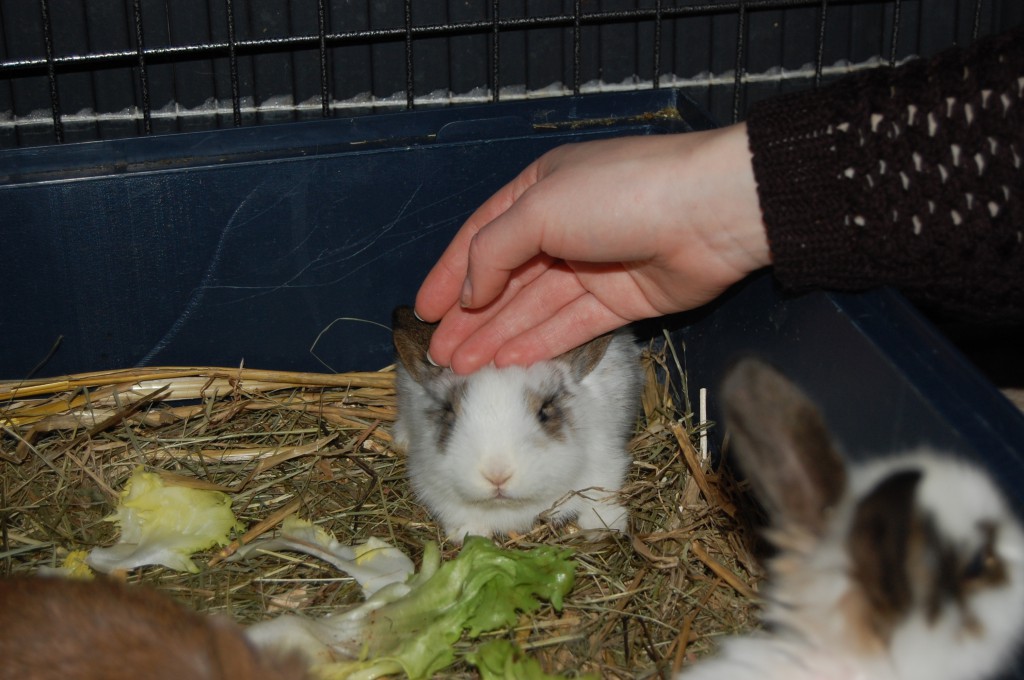
In specific cases, medication can help during treatment or beyond to reduce anxiety and allow the rabbit to relax and feel comfortable again.
Avoid Common Mistakes
- Avoid force or pressure: always let the rabbit act voluntarily.
- Incorrect handling: shouting, sudden movements, or picking the rabbit up from above will increase its fear.
- Isolation: rabbits kept alone often suffer even more from the effects of trauma.
With patience, respect, and empathy, you can help traumatized rabbits live a happy life again. Their behavior may seem difficult at first, but with the right support, they can learn to trust again and regain their joy for life.