
How to Create the Perfect Enclosure for Disabled and Elderly Rabbits

Enclosures for Rabbits with Disabilities – Tips for Species-Appropriate Design

Rabbits with disabilities — meaning those with physical impairments such as paralysis, blindness, amputations, or age-related issues — require special consideration when designing their enclosure. A properly adapted environment can make a significant difference, helping them live safe, enriching lives that still meet their species-specific needs despite their disabilities.
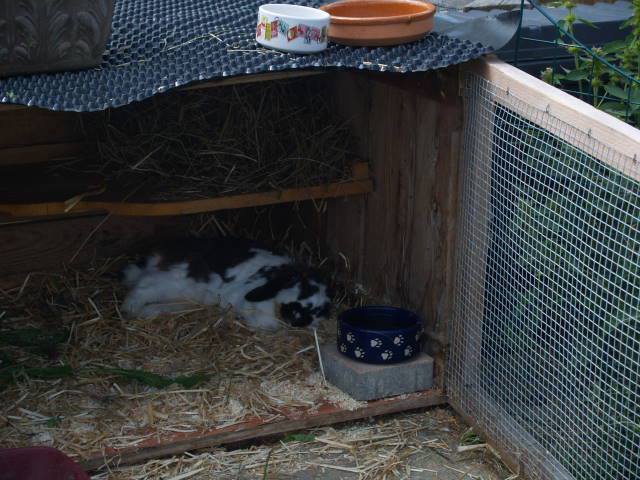
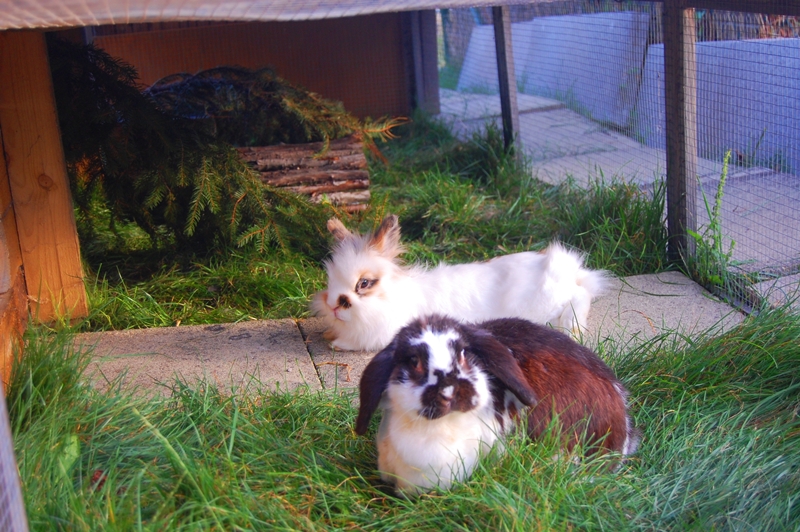
A cute rabbit resting inside a wooden outdoor hutch with bedding and accessories, ideal for rabbit care and enclosure setup.
Senior rabbits have special needs.

Mobility Impairments: Designing an Accessible Enclosure

A well-designed enclosure enables a disabled rabbit to move around safely and independently, without having to rely constantly on its caregiver. The following measures are particularly important:

Floor Design

A soft, non-slip floor covering is essential, as rabbits with disabilities may struggle to walk or hop.

Carpets, soft mats, or fleece liners provide good traction and help prevent slipping and injuries.

Blankets can be secured with non-slip rug underlay, weighted down with stones in the corners, tucked beneath furniture, or replaced with rugs that have a rubber backing. Choose floor coverings that are machine-washable and small enough to fit in your washing machine.
The Right Flooring for Paralyzed or Immobile Rabbits
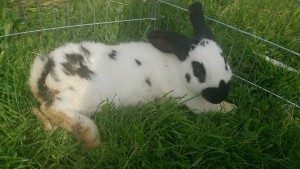
Rabbit lying on grass in a fenced enclosure.
Care for paralyzed rabbits or rabbits with severe mobility impairments is time-consuming, as they frequently soil themselves.

Important: A rabbit that can no longer move at all and remains lying in one place needs urgent attention. This should never become a long-term condition. Unfortunately, some rabbits are still left to suffer in this state for far too long.

If a rabbit can no longer move independently, its quality of life is severely compromised. It is essential to have the underlying cause thoroughly investigated. If the condition cannot be treated, euthanasia is the kindest option. As difficult as this decision is for the owner, it is not fair to keep a rabbit alive if it can no longer live in a way that meets its basic welfare needs.

If the condition can be treated, caring for a completely immobile rabbit requires a great deal of time, effort, and dedication. Owners who are unable or unwilling to provide this level of care should also consider euthanasia, as otherwise the rabbit is likely to suffer from pressure sores, neglect, etc.

Soft Base Layer

Because paralyzed and immobile rabbits spend a lot of time lying in a single place, they can develop pressure sores if the surface underneath them is too hard. A soft, supportive base can help prevent this. Suitable options include:
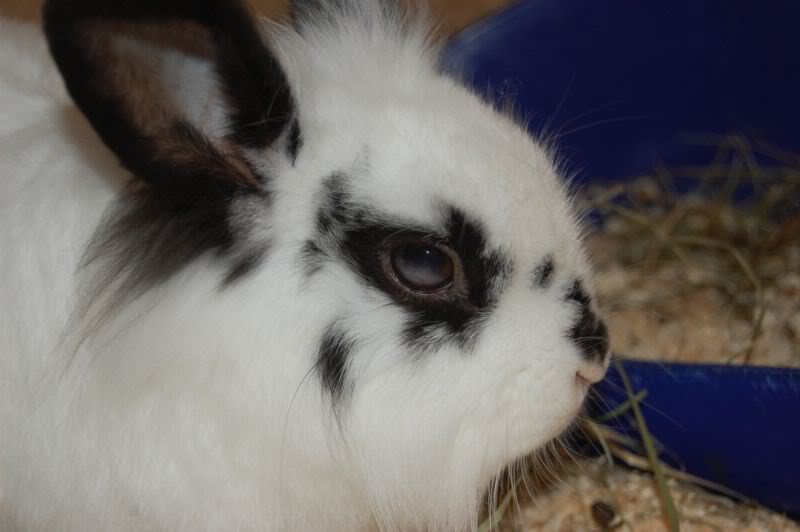
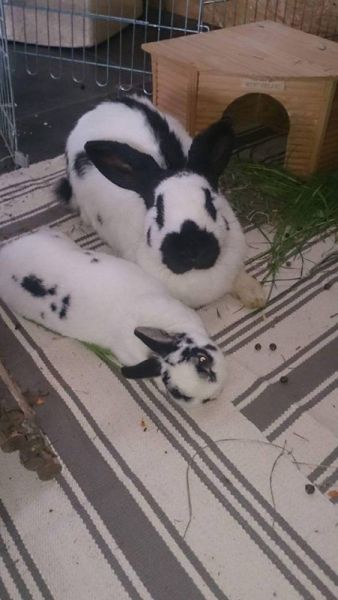
Beautiful white rabbit with black markings, ideal for learning how to care for rabbits.
If a rabbit is prone to tipping over, care should be taken to ensure that the bedding will not cause eye injuries.
  • Dog beds/mats: These are often washable, waterproof, and soft, making them an excellent base. Synthetic leather beds with that are flat or have low, raised edges are particularly suitable.
  • Thick carpets: These can also provide good cushioning. However, they are difficult to wash and therefore usually need to be disposed of once soiled.
  • VetBeds: VetBeds provide good cushioning while allowing urine to drain away through the surface, helping to keep the rabbit drier.
  • Thick layer of hay, straw, or wood shavings: A sufficiently thick layer of hay, straw or wood shavings can also provide soft cushioning.
  • Thin exercise mat or camping mat: These can be used as an additional layer to make the surface softer.
  • Grass: If possible, a grass surface is ideal. However, precautions must be taken to protect the rabbit from flystrike (for example, by using fly screens).
  • Old fabrics, mattresses, or cushions: These can be suitable if covered with a waterproof layer, such as absorbent mats or incontinence/pee pads.
Absorbent Underlayer

A highly absorbent layer should be used, as rabbits that cannot move around will relieve themselves where they are lying. This means that all urine and droppings will collect in one area. Suitable absorbent materials include:

  • Disposable Incontinence pads/pee pads: These are available from drugstores, online retailers, and veterinarians and can be thrown away after use. However, they create a lot of household waste. To prevent them from slipping, non-slip rug mats can be helpful. Puppy training pads can also be used.
  • Wood pellets or shavings: These can be used as an absorbent layer, as long as a soft layer is placed on top.
Waterproof or Urine-Wicking Top Layer

Choosing the correct top layer of bedding is especially important in caring for rabbits that remain in one place for long periods. It should help prevent pressure sores, keep the rabbit dry, wick urine away, and provide enough grip to prevent slipping.

On surfaces with good traction, even paralyzed rabbits can often move around a little on their own. This is extremely important, as it reduces the risk of pressure sores, minimizes the development of pressure points, and can help reduce the need for physiotherapy. Finding a suitable surface should therefore be a top priority. In our experience, grass works best. Suitable options include:

  • Vetbeds: Vetbeds have the advantage of wicking urine away from the rabbit and allowing it to pass through, so the rabbit remains relatively dry. They are washable and can be reused.
  • Thick carpets: A thick carpet can also be suitable and provides good traction. Urine can drain through it, and the surface remains reasonably dry depending on the material. However, carpets cannot usually be washed and often need to be discarded once soiled.
  • Grass: This is the ideal surface. Even rabbits with severe paralysis can often still move around a little on grass because it provides excellent grip, allows urine to drain away quickly, and helps prevent pressure sores. The area must be covered during rain to keep it dry, and rabbits must be protected from flystrike with fly-proof mesh.
  • Hay: A thick layer of hay can be an alternative to Vetbeds or grass, provided it is deep enough that it does not shift easily. Soft hay should be used. It is not suitable for rabbits that spin in circles, as they may injure their eyes on the stems.

Barrier-Free Access

Ramps, steps, and raised platforms should be avoided where possible or designed with a very gentle incline. Rabbits with disabilities often struggle to climb, so a ground-level enclosure is ideal for preventing falls and accidents.

If elevated areas are included, they must have safety edges and wide, low-incline ramps for access. Ramps should also feature side rails or barriers to prevent falls.

If ramps are absolutely necessary, they should be as flat as possible, covered with a non-slip surface to make movement easier and feature side rails or barriers to prevent falls. Access to resting, feeding, and drinking areas should always be easy to reach, without obstacles or steep transitions.
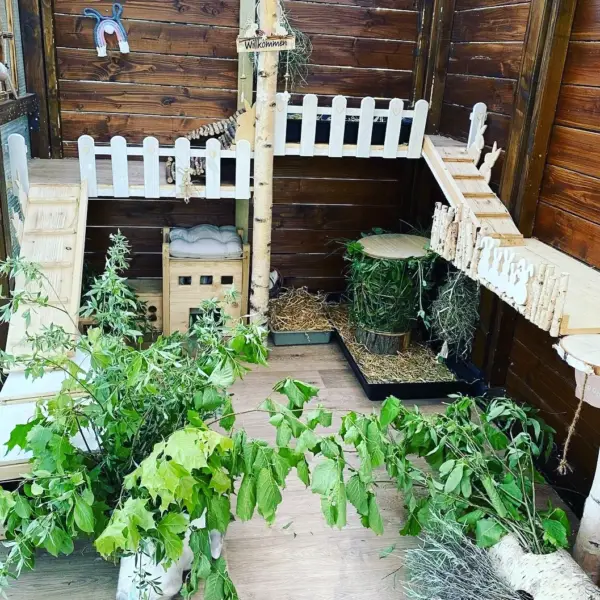
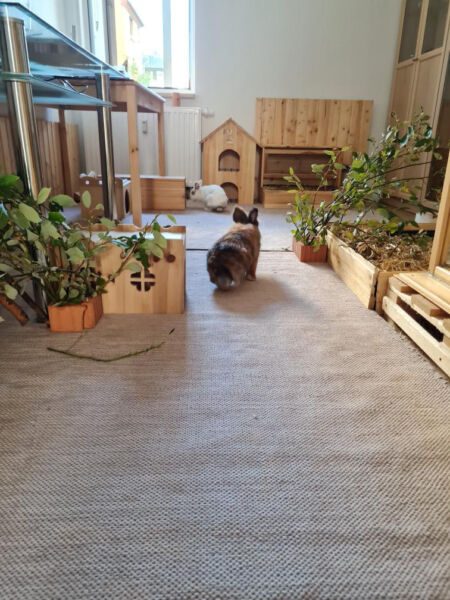
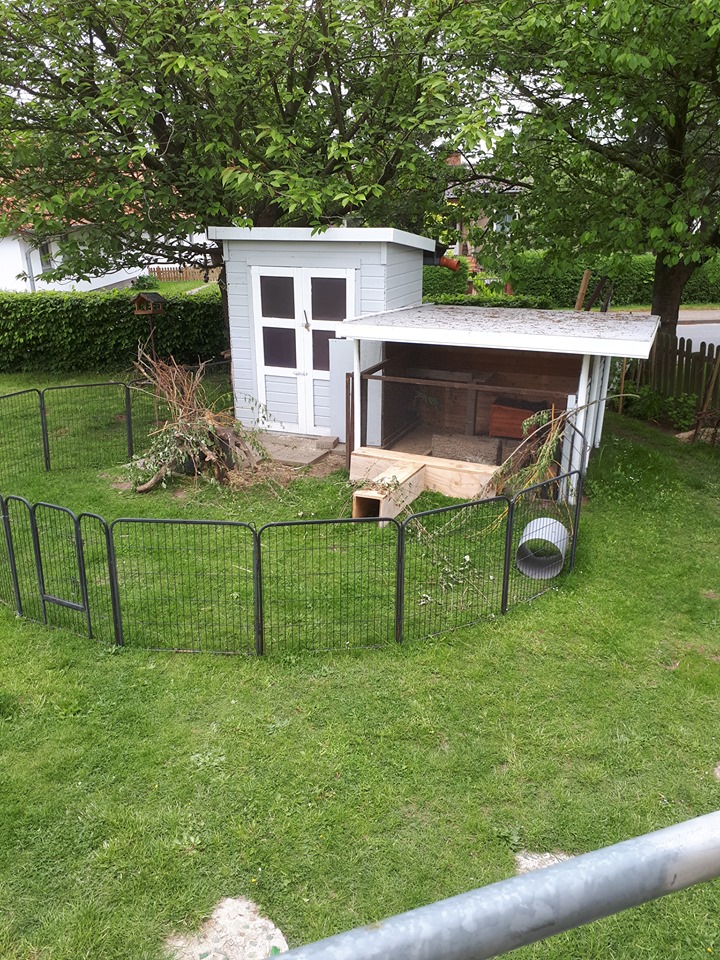
Wooden rabbit hutch with cozy interior and natural greenery for rabbits.
Low, Accessible Openings & Entrances

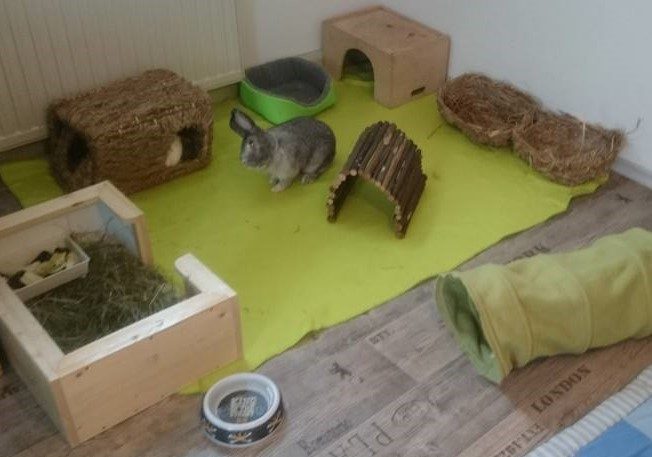
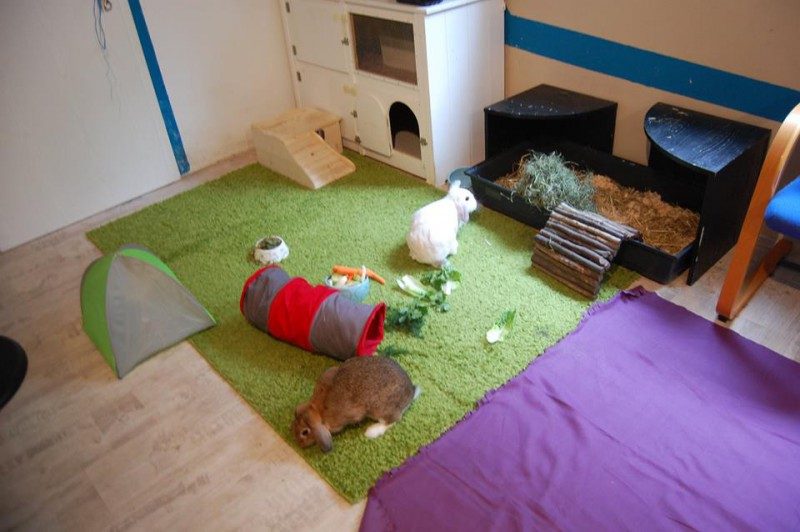
Houses and hides should have wide, low entrances that the rabbit can enter without difficulty. Avoid raised entrances or narrow openings that could be challenging for a disabled rabbit to use.
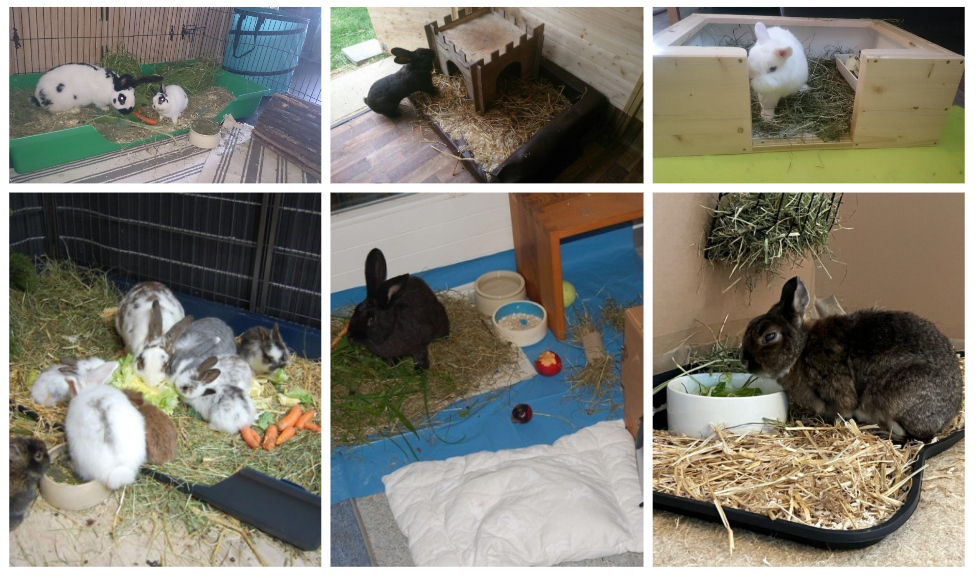
Examples of low accessible openings and entrances on litter boxes, feeding areas and sleeping areas for disabled, paralyzed and senior rabbits.
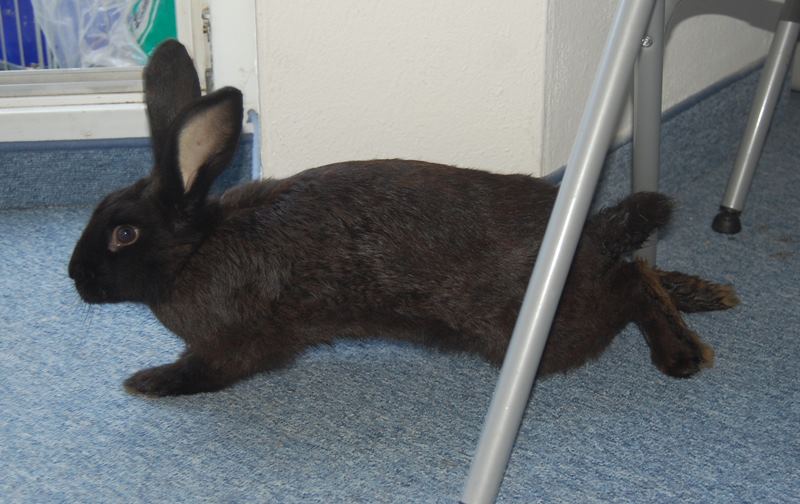
Trash Bag Litter Box Setup

Toilet areas should also be easy for the rabbit to access. A trash bag litter box setup (shown in the bottom-center image with the black rabbit) can be a practical solution for rabbits with very limited mobility. To make one, secure a trash bag all the way around with strips of tape, place newspaper on top, and cover it with hay, straw, or bedding. The newspaper should be rolled up and disposed of once or twice a day.

This type of litter box is particularly suitable for sick rabbits that can barely move around. It is less suitable for rabbits that chew or dig. Alternatively, a plastic sheet or tarp can be used instead.


Spacious Environment

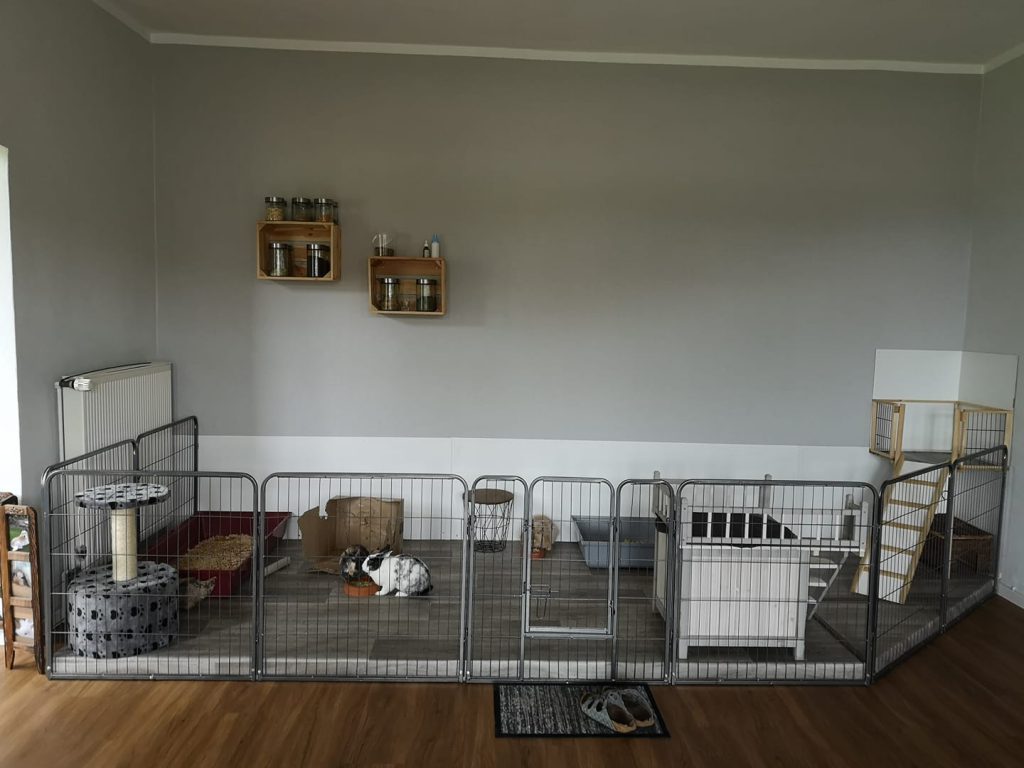
The enclosure should be large enough to give the rabbit plenty of room to move around without encountering obstacles. Narrow passages and difficult-to-reach areas should be avoided.
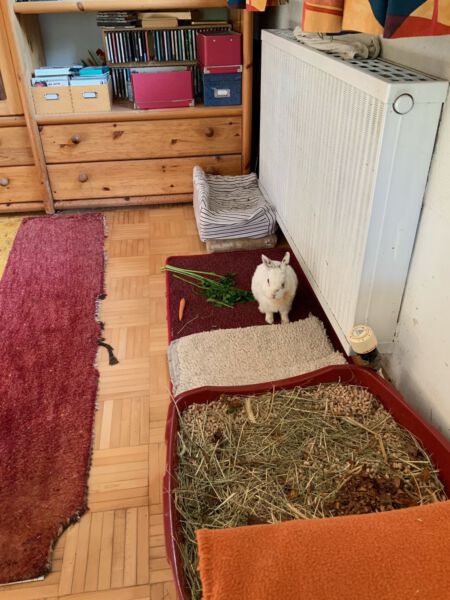
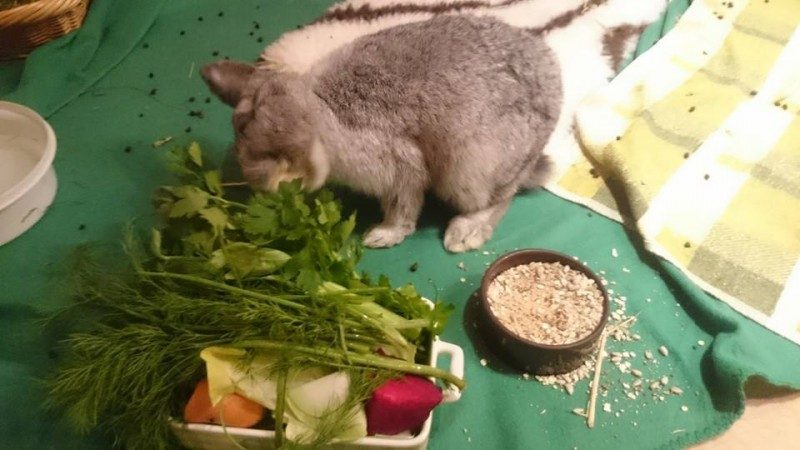
Fresh greens and bunny feeding area, ideal for rabbit care and nutrition.

Rabbits in Wheelchairs?

Many cases of paralysis in rabbits are extremely painful, particularly those caused by spinal injuries. Unfortunately, I often see people rush to use a wheelchair to help a rabbit move more easily before determining whether the underlying condition is painful or not. However, it’s important to remember that a rabbit is not a dog or a human. Rabbits move by hopping, and each hop involves spinal movement — meaning that if the spine is damaged, every attempt to move can cause severe pain.

Moreover, rabbits rarely show pain clearly, so they may appear fine while actually suffering. Unlike dogs, which live closely with us and can be placed in or out of a wheelchair for walks and rest, this isn’t practical for rabbits. A rabbit in a wheelchair cannot choose freely when to rest, stay still, or move.

For this reason, the use of wheelchairs for rabbits must be considered very carefully. Very few people are able to stay with their rabbit around the clock to put the wheelchair on at the right times and remove it when needed.

Adapting Resting Areas for Disabled Rabbits

Rabbits with disabilities need especially comfortable resting spots, as they often spend long periods lying down to conserve energy. These areas should be soft, warm, and easily accessible, without steps or barriers. Using padded bedding, fleece blankets, or VetBeds helps prevent pressure sores and provides comfort. The space should also be quiet, free from drafts, and located in a safe corner of the enclosure where the rabbit feels secure and undisturbed.
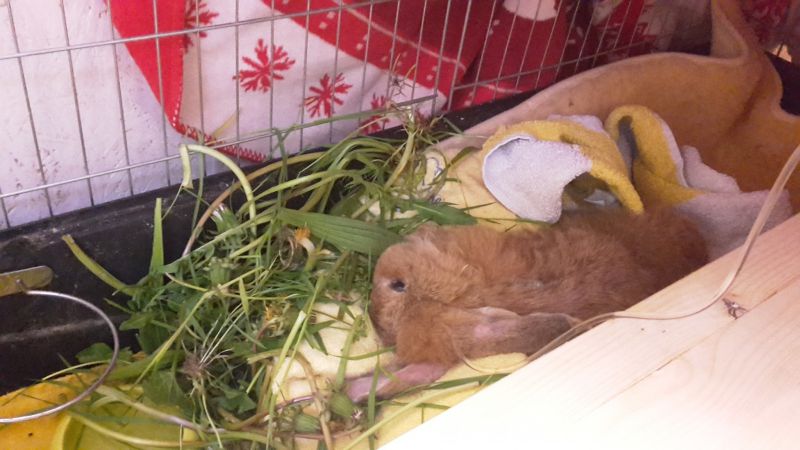
Healthy baby rabbit lying on hay and greens in a cozy cage.
Rabbits that roll over or tip onto their sides need towel rolls placed beside them (weighted with water bottles) in addition to a non-slip surface. These supports help them brace themselves and move around more easily.

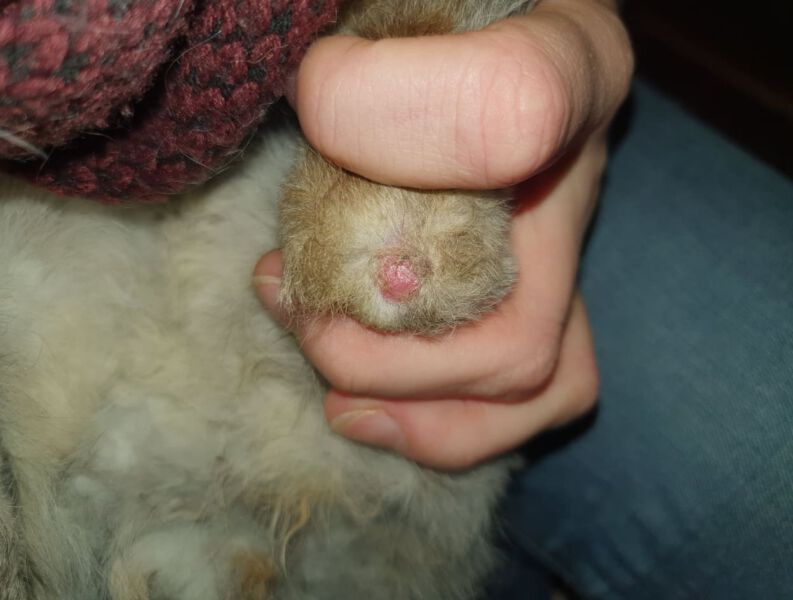
As with humans, longer periods of rest and limited mobility can lead to bedsores. A soft surface is therefore essential to help prevent sore hocks (pododermatitis) and pressure sores.

Tips for Designing Rest Areas

Comfortable resting areas: A soft, well-padded floor — such as blankets or special synthetic leather dog beds — helps relieve pressure on the rabbit’s joints and muscles. These materials should be cleaned regularly to maintain hygiene and comfort. Recommendation: a flat synthetic leather dog bed, a thin exercise mat, or a low-edged bed.

Easy access: Resting areas should be easily accessible. Low shelters or tunnels without high edges are ideal for rabbits with disabilities.

Safe hiding spaces:Like all rabbits, rabbits with disabilities have a natural need for places where they can retreat and feel safe. These should be designed so that the rabbit can easily get in and out, for example with open sides or wide entrances.

Observe your rabbits: Pay attention to which spots they prefer and which they find difficult to use. Adjust the resting areas according to their behavior and needs to improve their comfort and well-being.

Adapting Feeding and Drinking Areas

Feeding should be easy and stress-free for rabbits with disabilities, allowing them to reach food and water comfortably without unnecessary effort.
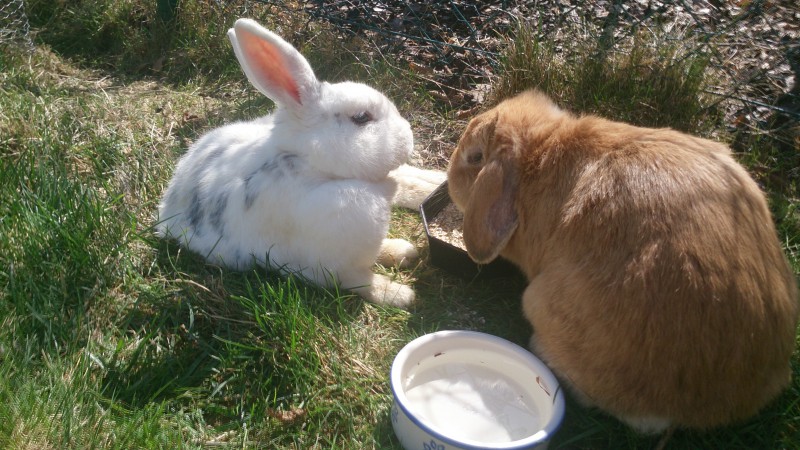
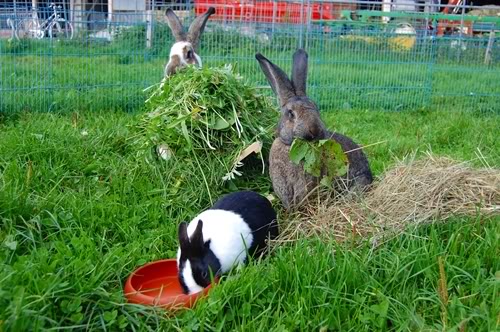
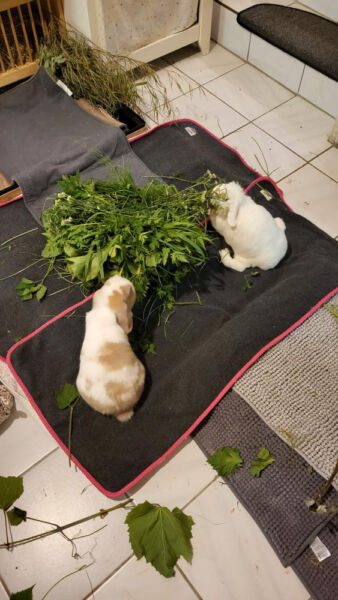
Cute white and brown rabbits sharing a meal outdoors in a garden setting using proper rabbit care.
Water and food must always be within the rabbit’s reach!

Shallow bowls: Use stable, shallow bowls for food and water that the rabbit can easily reach. Avoid tall or unstable bowls that may be difficult for the rabbit to use. Hanging bird bowls designed to attach to enclosure bars can also work well, as they can be placed at a suitable height and secured in place.

All food and water areas should be at ground level, so the rabbit doesn’t need to stretch or jump. This makes access easier, especially for animals with limited mobility.

Easy Access:
Position food and water areas so that the rabbit can approach them easily from multiple sides. This is particularly important for rabbits with impaired vision or paralysis affecting one side of the body, as they should not have to make unnecessary or difficult maneuvers to reach them.
Disability-Specific Enclosure Accommodations

Enclosure Accommodations for Rabbits with Balance Problems (e.g., due to Encephalitozoon cuniculi – EC)

Rabbits that suffer from balance problems caused by conditions such as Encephalitozoon cuniculi (EC) and that frequently roll or fall over need a particularly safe and adapted environment. Because their lack of stability often makes it difficult for them to move safely or remain upright, the design of their enclosure plays an important role in preventing injuries and reducing additional stress.
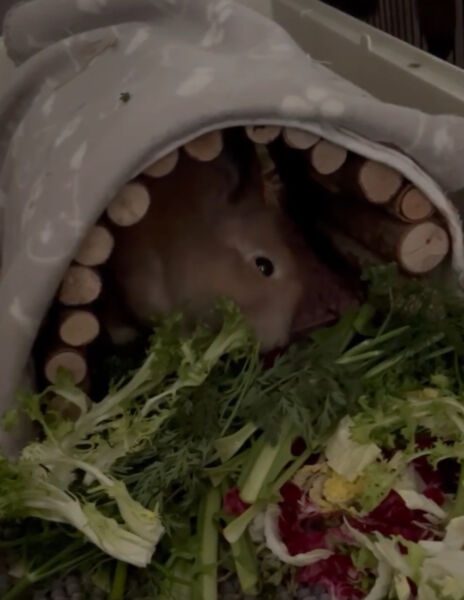
A cute rabbit with a head tilt hiding inside a cozy house with fresh greens and vegetables.

Adapted Feeding

Rabbits with a head tilt or balance issues often struggle to eat from regular bowls. Place food along the edges of the enclosure, scattered on the floor, or in wide, shallow dishes that are easy to reach. This way, the rabbit doesn’t need to stretch or strain to eat, making eating easier and less stressful.

Preventing Eye Injuries from Bedding Substrate

For rabbits that frequently fall or roll over, certain substrates can pose a risk, as particles may get into their eyes and cause irritation or injury. Softer surfaces such as fleece, VetBeds, or special synthetic leather dog beds are a better choice in these cases, as they help minimize the risk of injury.

Wicker/Willow Bridges

Wicker bridges and similar tunnels are ideal for rabbits with balance disorders. They provide stable shelters that the rabbit can lean against, and the overhead cover and dim lighting creates a sense of safety and protection. They have no sharp edges and offer the rabbit a secure space to rest and retreat.

Side Supports using Rolled Towels

A good way to assist rabbits that frequently fall to one side is to place rolled-up towels or mats around them. You can also use a bottle wrapped in a towel to provide additional support without restricting movement. This helps prevent injuries and reduces constant rolling. The rabbit can move through these supported pathways and, if it tips over, use the side support to regain balance and get back upright.
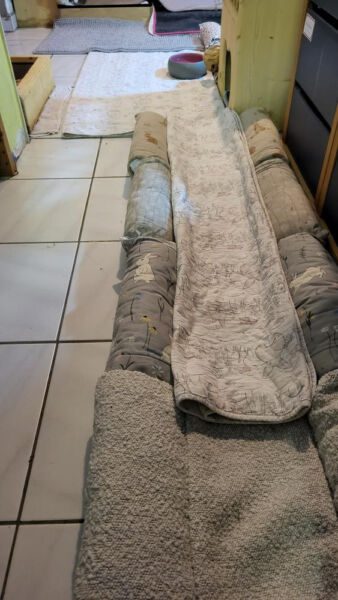
Soft, makeshift rabbit tunnel with blankets and cushions for playful rabbit activity and support for disabled rabbits.

Non-Slip Surfaces

To help rabbits that fall over regain their footing on their own, they need a stable, grippy surface. VetBeds are an excellent choice because they do not slide when the rabbit pushes off with its legs, providing a firm, secure base.

Barrier-Free Access

(See the previous section.)
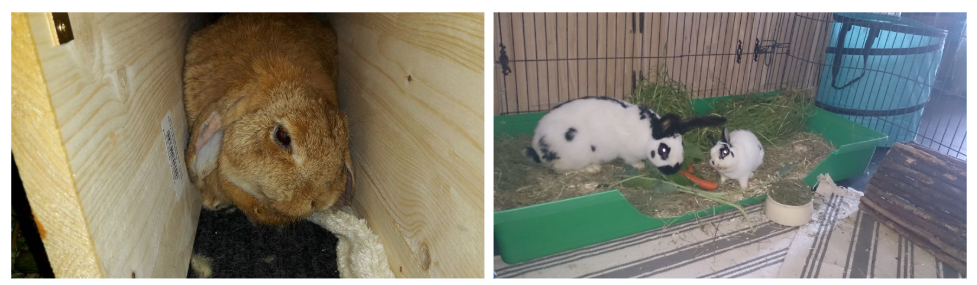
Rabbit in cozy wooden enclosure, ideal for pet rabbit sheltering and comfort.

Enclosure Accommodations for Blind Rabbits

Blind rabbits need a carefully arranged environment, since they can’t rely on vision and depend heavily on smell, hearing, and touch. A clear and consistent enclosure layout is essential so they can move around safely and without stress.

Consistent layout: Avoid rearranging the enclosure too often, as blind rabbits rely on a familiar arrangement of objects to navigate their surroundings. Once a rabbit knows its environment well, it can move around confidently even without sight.

Scent markers: Blind rabbits use their sense of smell to locate feeding areas, resting spots, and shelters. Adding familiar scents to certain objects can make orientation easier.

Tactile guidance: Flat rugs or slightly raised borders can function as tactile pathways. These „guide rails“ help the rabbit find important areas like feeding spots and resting places.

Avoid hazards: Make sure there are no sharp edges, open steps, or other potential dangers in the enclosure. Anything they could bump into should be removed. Edges can be padded with baby crib bumpers or similar protective padding if the rabbit frequently bumps into them.

These adaptations help blind rabbits move around their enclosure safely and with less stress, allowing them to remain active and enjoy a good quality of life.


Enclosure Accommodations for Rabbits with Amputations
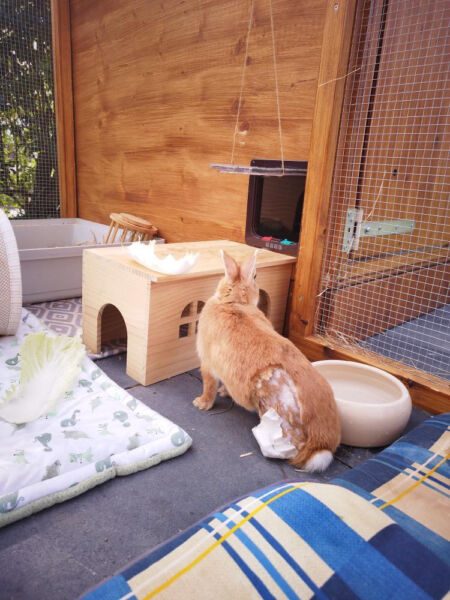
In some rabbits, even after recovery, the enclosure needs adjustments to prevent high jumps (which strain the joints and promote arthritis), sore hocks, and falls:

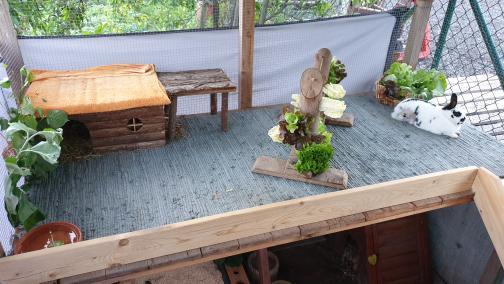
Securing raised platforms: Raised platforms should be secured with barriers and accessible via ramps or gentle slopes, so that rabbits do not need to make high jumps.

Adjusting flooring: Modify the flooring if needed to prevent sore hocks in the limbs that carry extra weight. A good setup is hay on top of a thick layer of bedding, or dog mats, etc.

Providing non-slip surfaces: Many rabbits need non-slip flooring (rugs, bedding, grass, etc.) in order to move around safely.
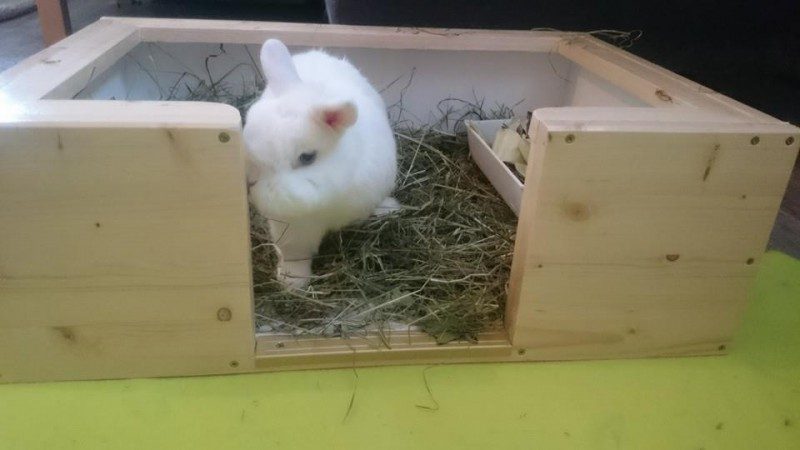
Rabbit in a wooden litter box with a low, accessible opening perfect for rabbits with disabilities or senior rabbits.
Ground-level access to the litter box is important when mobility is limited.
Rabbit with an amputated hind leg on a raised platform with a ramp and protective barrier.
Three-legged rabbit jumps onto a platform.

Enrichment and Encouraging Mobility

Even if rabbits have mobility limitations, they still have a natural need to be active and engage with their environment. Adapted enrichment activities and toys can help them stay active and mentally engaged.

Adapted toys: Use toys the rabbit can interact with even while lying down or with limited mobility, such as lightweight balls, food-dispensing balls, or snuffle mats that the rabbit can explore with its nose.

Gentle encouragement of movement: Add elements that invite the rabbit to move with minimal effort, like low tunnels or boxes it can pass through comfortably. This encourages movement without overexertion.

Varied environment: Rearrange the enclosure or rotate toys from time to time to provide new stimuli and prevent boredom.
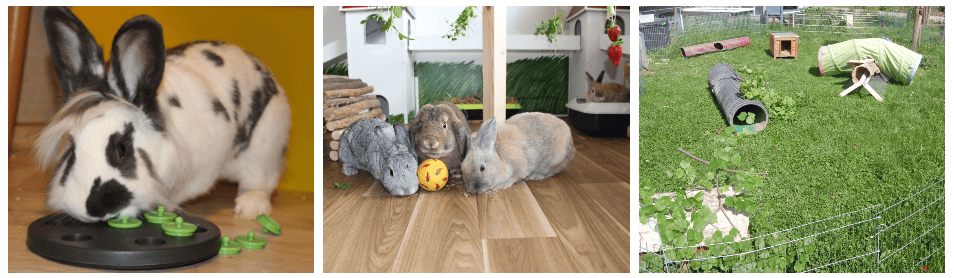
Rabbit playing with an interactive food puzzle, ideal for rabbit enrichment and mental stimulation.

Safety and Risk Prevention

A safe enclosure is essential for rabbits with disabilities, since their limitations increase the risk of injuries or dangerous situations.

Safe materials: Use only non-toxic, rabbit-safe materials. Make sure there are no sharp edges or pointed objects in the enclosure. Keep in mind that rugs must not be chewed or ingested, as this can cause life-threatening intestinal blockages.

Stable elements: All items in the enclosure, such as houses, tunnels, and bowls, should be stable and unable to tip over if the rabbit leans against them or uses them for support.

Minimizing hazards: Remove obstacles that the rabbit could trip over and secure areas where it could become trapped.


Creating a suitable enclosure for rabbits with disabilities requires careful attention and adjustments to meet their individual needs. With a well-designed, accessible enclosure, comfortable places to retreat, and easily accessible feeding areas, you can help ensure that a rabbit with disabilities can still enjoy a fulfilling and largely independent life. Always pay attention to your rabbit’s individual needs and adjust the enclosure when necessary to provide the best possible quality of life.

Senses of rabbits

Vision (visual perception)
Field of view

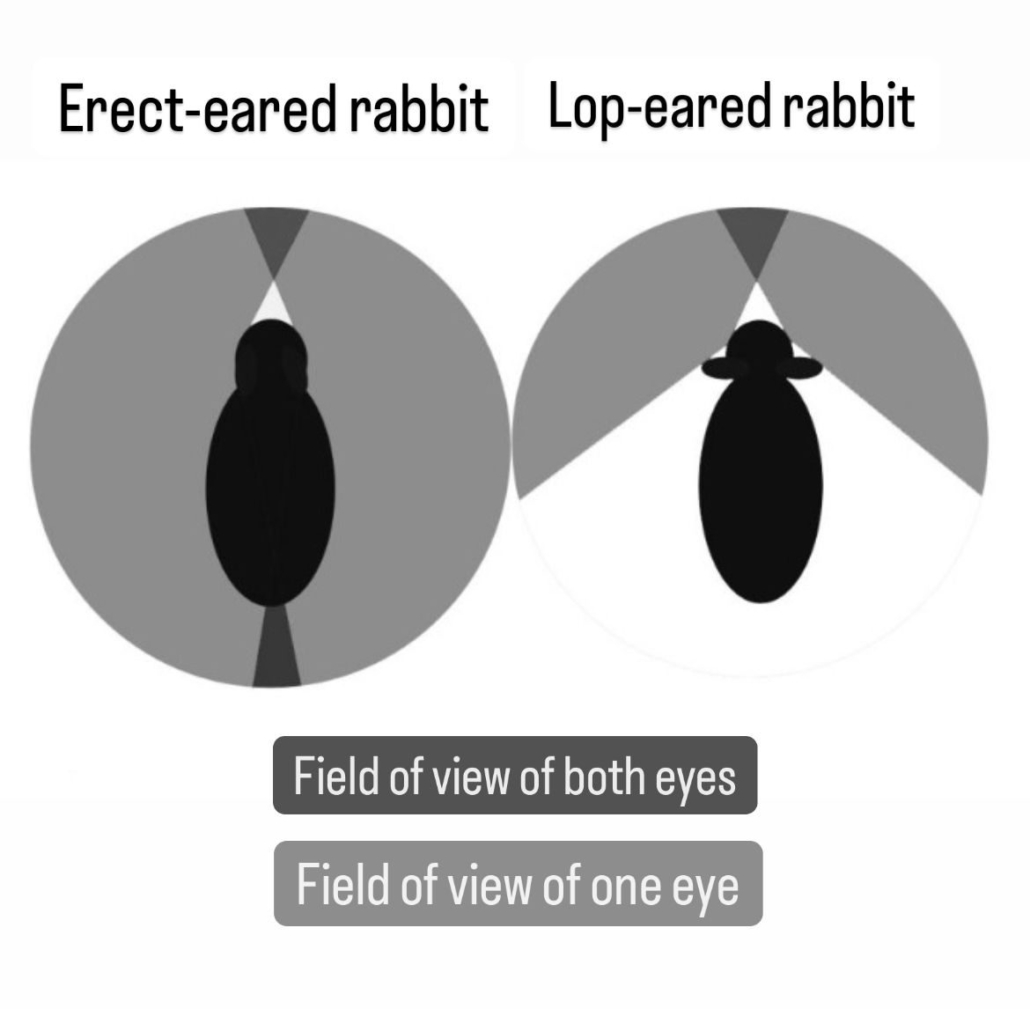
Due to their protruding, large eyes located on the sides of the head, rabbits have a very wide field of view. Unlike humans, they can perceive their surroundings almost all around them (365 degrees) when holding their heads up, which allows them to quickly detect predators both from the air and from the ground. They can therefore also see behind them.


Three-dimensional (binocular) vision is only possible at the front and back (about 10% in the front, 9% in the back). Over the forehead and directly in front of the nose there is a blind spot where rabbits cannot see. In this area, they rely on other senses (smell and touch). This is why rabbits first sniff and feel treats before tasting them.

Erect-eared and lop-eared rabbits comparison diagram for rabbit care and breed explanation.

However, spatial vision is restricted in albino rabbits (they have mostly one-dimensional vision and weak eyesight). In addition, they are extremely light-sensitive and should be kept in the shade. Studies on albino rats have shown that even low light intensities of 60 lux can cause long-term eye damage (phototoxic retinopathy). These animals already avoid stronger light intensities from 25 lux onward. Non-albino rabbits, however, tolerate high light intensities without harm, e.g. 1200 lux over several weeks. Some albinos suffer from nystagmus or exhibit scanning movements to better perceive their surroundings. Lop rabbits (with floppy ears) have a restricted field of view compared to upright-eared rabbits due to their hanging ears (see illustration).

Cute white rabbit with long ears, close-up.
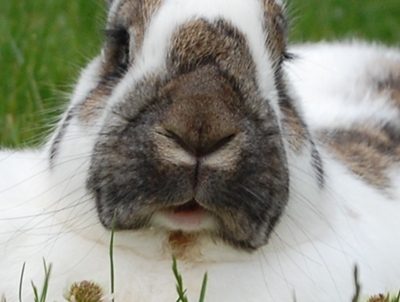
Albino rabbits are limited in their spatial vision.

Day vision and color perception

Each animal species perceives its environment differently. To put ourselves in the place of our rabbits, it can be helpful to understand how they see the world.

Rabbits are farsighted (0.5–1 diopter), caused by a corneal curvature (astigmatism). They are especially good at detecting movement (at a distance), while nearby, motionless objects are seen poorly.

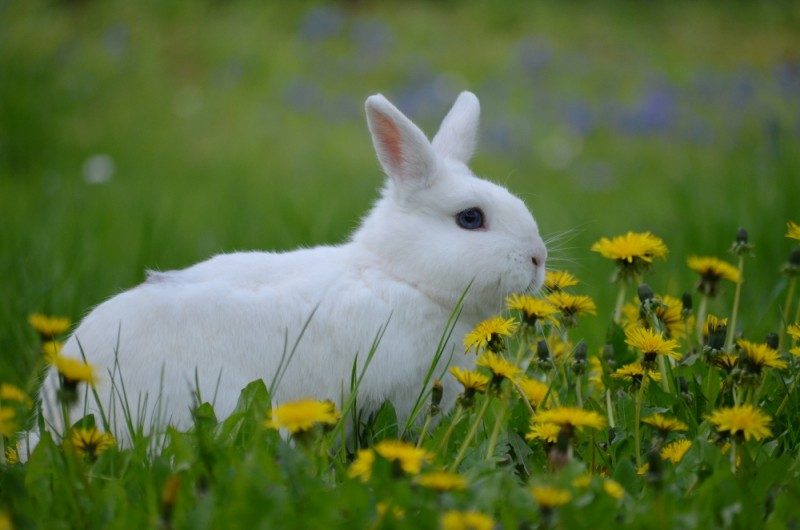
Fluffy white rabbit in a field of yellow flowers, perfect for learning how to care for and raise rabbits.
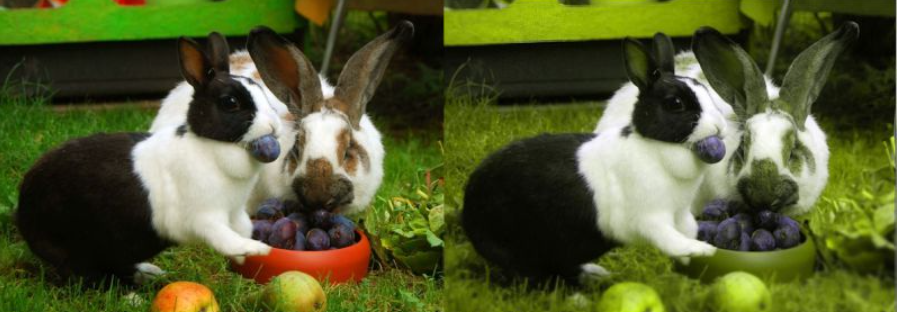
What does the world actually look like to rabbits?

Normally, animals (including humans) can constrict or dilate their pupils depending on the amount of incoming light. Rabbits, however, can hardly constrict their pupils, which makes them very light-sensitive as crepuscular animals. Under strong sunlight, their vision is significantly impaired.

The eye contains different types of receptor cells responsible for vision. Rods enable the perception of various shades of gray, while cones are responsible for color vision. Rabbits have S-cones, which allow them to perceive violet-blue light, and M-cones, which allow them to perceive green light. Unlike humans, they lack cones that detect red light. Therefore, rabbits—similar to humans with red-green color blindness—see red and green as the same shade.

Rabbits cannot distinguish between red and green and are slightly farsighted. However, they are extremely good at detecting movement.

Bunny rabbits eating blueberries outdoors in garden, cute and fluffy pet rabbits with fresh fruits for healthy diet.

Night vision

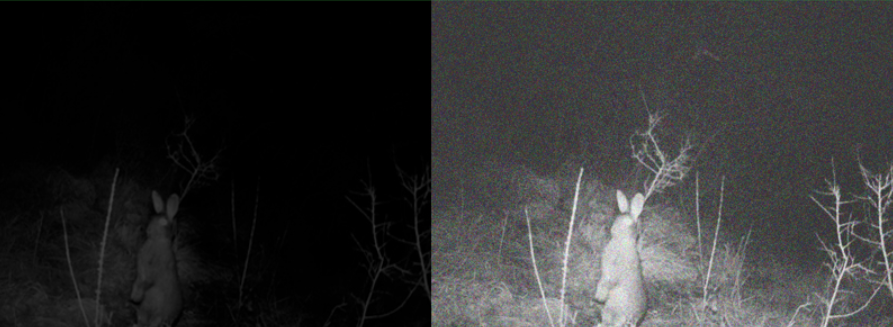
Rabbits are better able to orient themselves at dusk and in the dark than humans. Thanks to their large, dilated pupils and highly light-sensitive rods, they perceive their surroundings in low light as comparatively bright, which gives them good overall awareness. However, their ability to see details is limited.

Binocular night vision rabbit in natural habitat, wildlife photography, nighttime outdoor scene, illuminating a rabbit with infrared light, real-life animal behavior.

Hearing (acoustic perception)

Rabbits have excellent hearing. They can perceive sounds in a frequency range between 60 and 49,000 hertz, whereas humans can only hear between 20 and 20,000 hertz. This means rabbits can detect very high-pitched sounds that humans cannot perceive (ultrasound).

The auricle (outer ear) contributes significantly to a rabbit’s sound perception. It is freely movable and can be rotated toward the direction of a sound. Rabbits can rotate their auricles almost 360 degrees (in all directions), independently of head movement. Each ear can also be oriented independently.

Depending on ear shape, rabbits may be limited in their acoustic perception according to breed. Rabbits with particularly small or heavily furred ears perceive acoustic stimuli less well than large-eared rabbits.

Soft brown lop-eared rabbit sitting on soil with a blurred background.

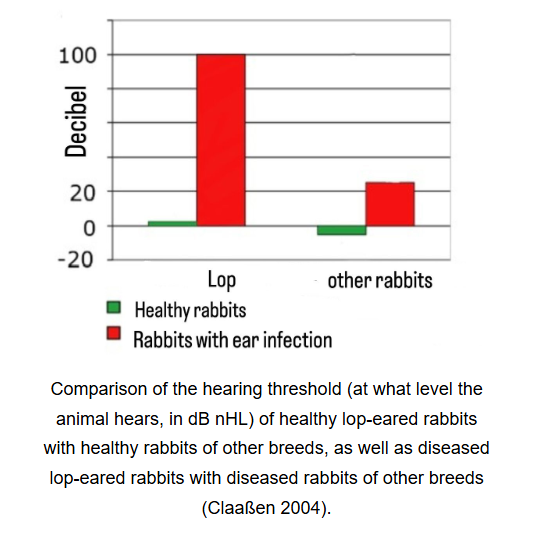
The most problematic case is found in lop rabbits (floppy ears). Studies show that lops are extremely hard of hearing and, due to chronic ear infections—which occur in up to 80% of lops as a breed-specific issue—often even become deaf. (See Lop rabbit problems.)

Hearing tests for rabbits and ear infection comparison chart.

Smell (olfactory perception)

A cute rabbit lying on lush green grass outdoors.

Rabbits rely heavily on their sense of smell. With over 100 million olfactory cells, it is highly developed. Depending on the breed, their sense of smell is comparable to that of dogs (100–200 million) and pigs, and about five times stronger than that of humans. For humans, it is hard to imagine how orientation through smell can be as precise as it is for many animals. Considering that truffle pigs can detect truffles through a thick layer of soil, one can better grasp the extent of a rabbit’s olfactory abilities.

Taste (gustatory perception)

Rabbits, like humans, can perceive sweet, sour, bitter, and salty flavors. They have a particularly high tolerance for bitterness, which explains why they prefer especially bitter plants (e.g., dandelions). With around 17,000 taste buds (humans: 8,000–9,000; dogs: 1,700), rabbits have roughly twice as many as humans. This also explains why, as dietary specialists, they can detect subtle differences in food and selectively choose what they eat.

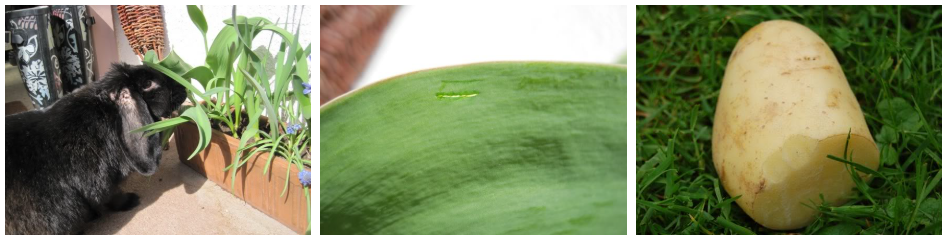
Rabbits first examine everything through their sensitive sense of smell before deciding to take a test bite. If the food is not suitable, they may spit it out again. This makes them very difficult to poison.

Rabbit eating houseplant in indoor setting, pet care, rabbit diet, house rabbit tips.

Touch (tactile perception)

For close-range orientation, rabbits rely on their whiskers (vibrissae) located at the sides of the nose and above the eyes. They also possess tactile corpuscles, particularly at the ends of their limbs. Each side of the body has about 17–23 whiskers, each measuring 3–7 cm in length. Unlike fur, vibrissae are not shed during the molting cycle.

Whiskers help rabbits perceive things hidden from their eyes, and they rely heavily on them for orientation. With their vibrissae, rabbits can not only select food but also judge distances, feel the ground, and even sense vibrations in the air. This allows them to assess their immediate surroundings—for example, whether they can pass through an opening—and provides excellent orientation in burrows, shelters, and in darkness. The whiskers above the eyes help detect objects that might otherwise injure the eye.

When touched, the movement of a whisker is transmitted to the blood-filled capsule at its base, where a nerve conveys the stimulus to the brain.

Cutting off whiskers means amputating an entire sensory organ and significantly impairs the animal. Under no circumstances should whiskers be trimmed or shortened when clipping the fur.

In Rex rabbits, whiskers are often strongly curled, shortened, deformed, or even absent. The absence of whiskers is classified as a form of torture breeding (Qualzucht) in Germany, and such breeding practices are prohibited.

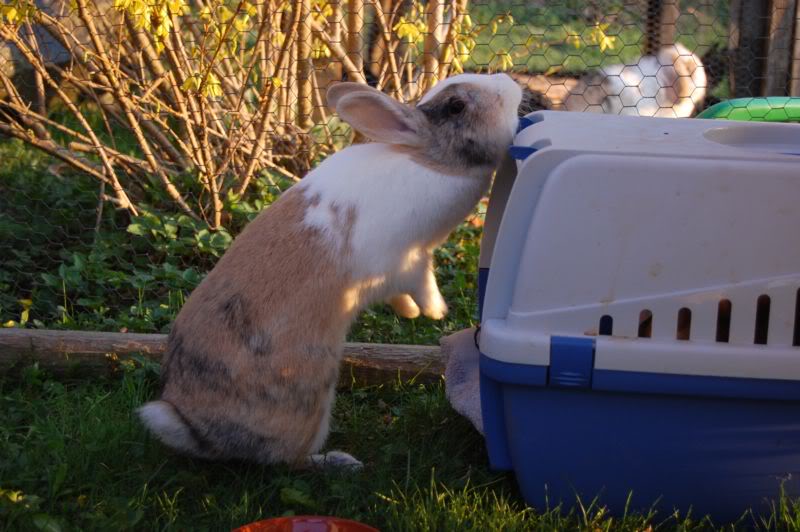
Adorable rabbit peeking out from its hutch, showcasing perfect pet care and grooming tips.
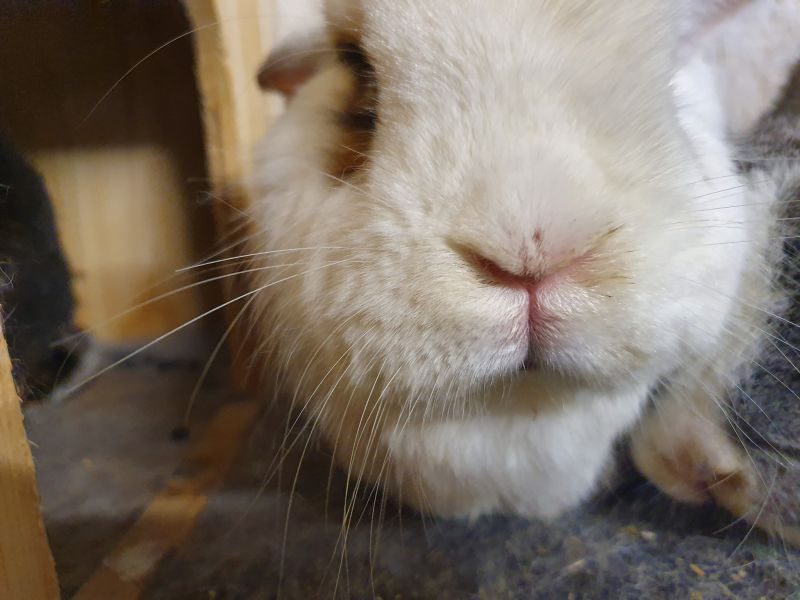
Rex rabbit without vibrissae.

Sources include (among others):

Boback, Alfred W.; Das Wildkaninchen: (Oryctolagus cuniculus (Linné, 1758); 2., unveränd. Aufl.; Nachdr. der 1. Aufl., Wittenberg Lutherstadt, Ziemsen, 1970; Hohenwarsleben; Westarp-Wiss.-Verl.-Ges.; 2004; (Die neue Brehm-Bücherei; 415)

Engelhard, W. von et al (2014): Physiologie der Haustiere. Enke-Verlag, Stuttgart

Gormezano, I. N. Schneiderman, E. Deaux, and I. Fuentes (1962): Nictitating Membrane: Classical Conditioning and Extinction in the Albino Rabbit Science 138:33 – 34 [http://www.psychology.uiowa.edu/Faculty/Freeman/Gormezano_62.pdf, Stand 10.11.2019]

Heffner, H. (1980): Hearing in Glires: Domestic rabbit, cotton rat, feral house mouse, and kangaroo rat. J. Acoust. Soc. Am. 1980, 68(6), S. 1584-1599.

Hughes, A. (1971): A Schematic Eye For The Rabbit, Vision Res. Vol. 12, pp. 123-138. Pergamon Press

Kraft, R. (1976): Vergleichende Verhaltensstudien an Wild- und Hauskaninchen. Universität Erlangen, 1976. Diss

Leicht, W. H. (1979): Tiere der offenen Kulturlandschaft. Feldhase, Wildkaninchen. Heidelberg, Quelle und Meyer

Niethammer, F, Krapp, J.(2003): Handbuch der Säugetiere Europas. Hasenartige. Wiesbaden : Akademischer Verlags-Gesellschaft, Bd. 3/2

Juliusson, B. et al (1994): Complementary cone fields of the rabbit retina, in Investigative Ophthalmology 8c Visual Science, March 1994, Vol. 35, No. 3 [http://www.iovs.org/content/35/3/811.full.pdf Stand 10.11.2019]

Leicht, W. (1979): Tiere der offenen Kulturlandschaft, Heidelberg, Quelle und Meyer; Teil 1, Feldhase, Wildkaninchen; Ethologie einheimischer Säugetiere, 1

Loeffler, K., & Gäbel, G. (2015): Anatomie und Physiologie der Haustiere (Vol. 13). UTB.

Nachtsheim; In: Nachtsheim, H. u. H. Stengel (1977): Vom Wildtier zum Haustier. 3. Aufl. Verlag Paul Parey, Berlin und Hamburg

Schleif, O. (2001): Ein Beitrag zur tiergerechten Haltung der Ratte anhand der Literatur. Diss, Tierärztl. Hochsch. Hannover

Schlingmann F.; De Rijk SHLM.: Pereboom WJ.; Remie R.: „Avoidance“ as a behavioural parameter in the determination of distress amongst albino and pigmented rats at various light intensities. Animal Technol. 1993a; 44(2), 87-95.

Schlolaut, W. (Hrsg) in Zusammenarbeit mit Lange, K.; Das große Buch vom Kaninchen; 3., erw. Aufl.; Frankfurt am Main; DLG-Verl., 2003; 488 S.

Nover, A. (1955): Untersuchungen über die Funktion der Tränendrüse beim Kaninchen, in Graefe’s Archive for Clinical and Experimental Ophthalmology , Volume 156, Number 2

Walde, I. (2008): Augenheilkunde: Lehrbuch und Atlas Hund, Katze, Kaninchen und Meerschweinchen, 3. Auflage, Stuttgart

Wiesner, E. und Ribbeck, R. (2000): Lexikon der Veterinärmedizin. Stuttgart : Enke im Hippokrates Verlag GmbH.

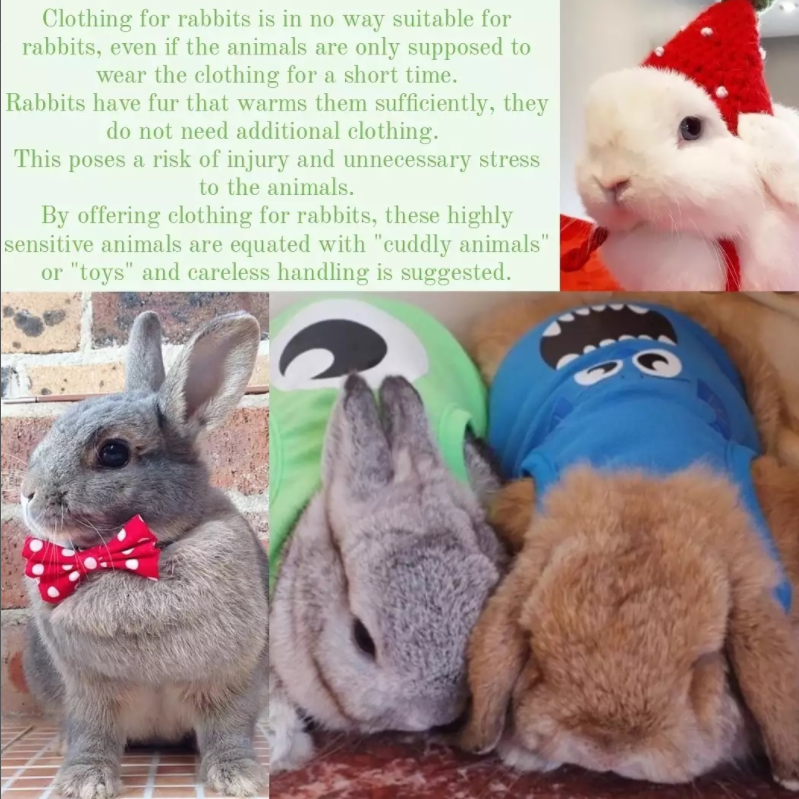
Should Rabbits Wear Clothes?

Rabbits are highly sensitive animals, and dressing them causes significant stress. It also puts them at risk of serious injury if they become entangled in the clothing or struggle to free themselves.

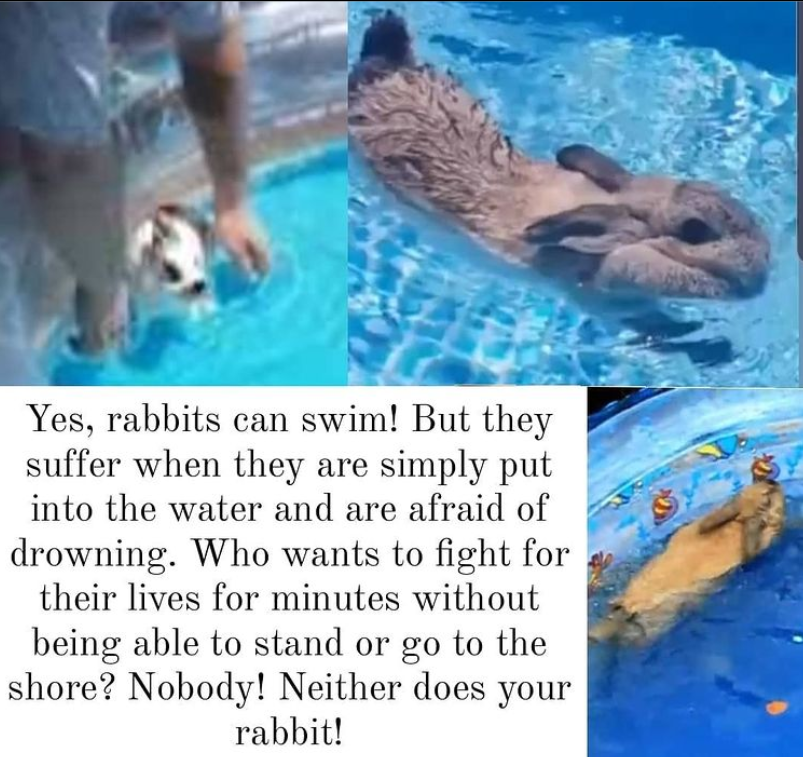
Do Pet Rabbits Like to Swim?

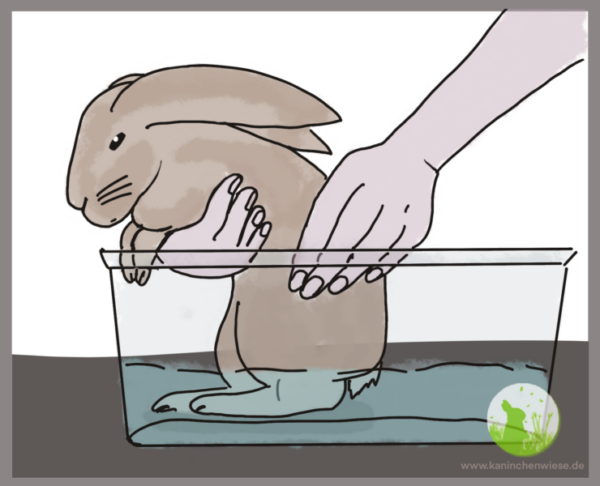
Yes, rabbits can swim! But they suffer when they are simply put into the water and are afraid of drowning. Who wants to fight for their lives for minutes without being able to stand or go to the shore? Nobody! Neither does your rabbit!
Please pass on this information! Too often you see rabbits swimming on Instagram.
The only exception can be a medical indication.

If your rabbit has soiled bottoms, you can clean a rabbit’s bottom by gently holding it over a bowl or sink and wetting and washing its dirty areas.

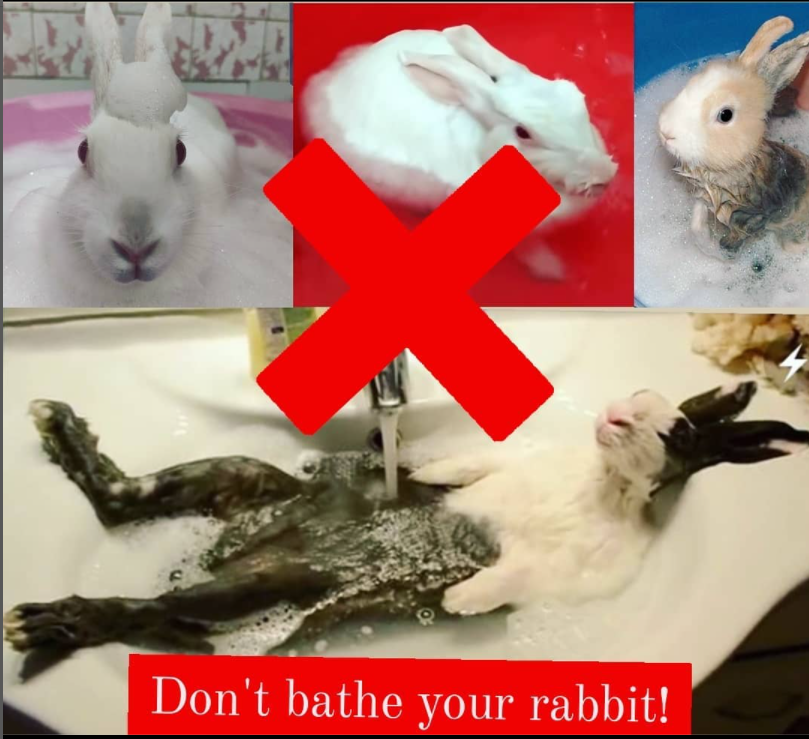
Don´t bathe your rabbit!

Unless your rabbit has a disease, it does NOT need to be bathed. If your rabbit has soiled bottoms, you can clean a rabbit’s bottom by gently holding it over a bowl or sink and wetting and washing its dirty areas.
Rabbits are like cats, they groom themselves to stay clean. Never immerse them in water! Rabbits can easily die from shock and hypothermia, they dry out slowly and it can lead to bladder infections, pneumonia and other serious illnesses. The ordeal of bathing puts them under extreme stress. They can injure themselves when slipping or kicking. The rabbit in this well-known internet picture, supposedly relaxed in the water, has been put into a trance. This is a state in which the rabbit goes into temporary paralysis, trancing is a reaction from the wild. If a rabbit is attacked but has no means of escape, it will play dead. This rabbit is incapable of action and is afraid for its life!
Share and spread the word!

New RHDv-2 Variant in France

In the past, RHD mutated to such an extent that the vaccines no longer worked against it and new vaccines were developed. This variant was called RHDv-2 and has been successfully vaccinated for several years.

In the north of France and other parts of Europe, a particularly contagious variant of RHDv-2 has appeared in recent months, against which the RHD2 vaccine (Eravac, Filavac, Nobivac Myxo-RHD PLUS) does not seem to be sufficiently effective. Unfortunately, epidemics do not respect national borders. The French Agence nationale du médicament vétérinaire (ANMV) has therefore approved the development of an adapted vaccine (ATU Filavac VHD Var K) that is effective against this variant. So far, this vaccine may only be vaccinated if it can be proven that the regular RHD2 vaccine is not effective.

Weiterlesen

Important basic knowledge for newbies

What you have to know as a newbie

The internet offers a lot of information for beginners (often confusing and contradicting). But what do you really need to know and what is really important? What facts are useful and important for beginners?

How old do rabbits become?

Rabbits can become 8-12 years, in exceptional cases they also can die earlier or grow even older than 12 years. The lifespan rises, if the rabbit is treaten species appropriate which includes food and space needs, but also by good observation and fast reactions and right treatment of health issues.

Single-housed, pair or group?

Rabbits should never be kept alone because that is not species appropriate. That’s why it is forbidden by law in Switzerland and Austria. It is also against the German animal protection rights that determinates rabbits „should be kept according to their needs“.

A pair or a harmonic group of three (who already been adopted together) are very harmonic and the best combination for beginners. If you want to have a bigger group, you should start with a small group and get experience first before you enlarge your group. A group should contain the same amount of castrated males and females. Groups only of male or female often collapse. An exception would be two early casrated males that grow up together.

Rabbits for kids? Pet animals?

The rabbit is not an easy-care animal. Rabbits are more expensive and need more care than people think and they hate it to be lifted and be taken around. If you lift your rabbit it becomes anxious and timid. If parents support the welfare of animals, they can show their children a respectful treatment of the rabbits, by petting the rabbits on the ground and feed them from hand. Besides, rabbits are great for observation and you can build adventure playgrounds for them. As a parent you should be aware of the amount of work that a rabbit involves. The most work, like cleaning and the daily routine, is done by the parents, because children have often a lot of other hobbies.

Let the rabbits get to know each other, incompatible rabbits

Rabbits are very social animals. There is no rabbit that doesn’t like other rabbits. The problem often is part of the behaviour of the owner. A lot of owners treat their rabbits wrong while putting it to a new buddy. This is a mistake and it seems like the rabbit is not compatible with the other one.

As an owner you need to inform yourself how to integrate new rabbits into your group or how to get your rabbit a new friend.

Rabbits should never be put together in familiar territory and should be able to clear their hierarchy( fights, flying fur, mate, chasing). It takes several days until the rabbits get along with each other and are able to to get back to the normal territory.

How expensive is it to have rabbits?

Rabbits are not the cheapest pets. You may need 100€-250€ for building a proper and marten-safe enclosure for two rabbits. For the diet you can calculate 1€ per animal per day, if you buy saisonally and on a budget. In the summer you should switch to meadow plants which is very healthy and has no costs. Vet bills can’t be calculated in advance but if your rabbit gets sick you can calculate between 80€-200€. Some rabbits never get sick, some are regularly ill. It depends on the origin, the diet and how the animals are kept.

What to feed?

It is very easy but is often done wrong. The digest system of the rabbit is the same as the one from their wild relatives and for that they need the same food. This means meadow plants, leaves, branches and twigs, buds, blossoms, roots; everything nature has to offer. The main food of the rabbit that should always be available, besides hay, is diversed fodder. You can collect it in the nature in the summer (dandelion, grasses, hogweed, ribwort..) in the winter you can choose green leafy vegetables like bitter lettuce, herbs and cabbage and add fruits. Water should be given in a bowl because rabbits don’t drink much from drinking bottles, where the water only comes in drops.

Totally inappropriate for the rabbits diet is all kind of prepared food/ rabbit food from the store. There are very few food types that do not contain pellets or colorfully clumps and are put together properly and suitable for the rabbits digestion.

How are rabbits kept?

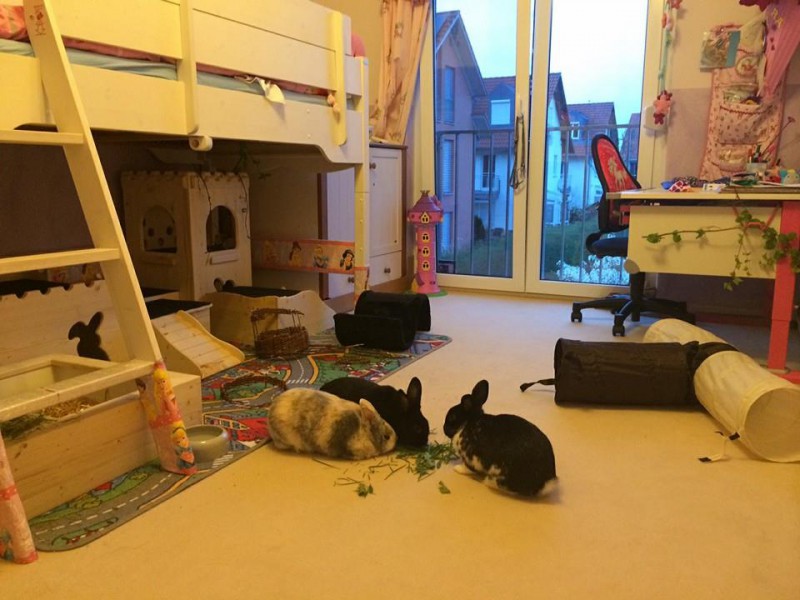
Even though the traditional way to keep rabbits uses coves, stables and cages, it is not species appropriate and is animal cruelty. Just ask yourself: would you put your cat in such a prison? Rabbits are very active and also nocturnal. The stable should have a fundamental free run that is marten-safe. If your rabbit is house-trained, you can keep it free in your house or flat or you can fence off a part of a room for the rabbit, instead of using a cage. It is also possible to keep your rabbit on the balcony.



Two rabbits, who have daily access to a free run for several hours per day, need at least 4 m² corral. Rabbit groups without access to free run or with irregular access to free run we recommend at least 10-12 m² corral. Other organisations recommend in this case 6m² as a minimum.

Are rabbis weatherproof?

Rabbits are perfect to be kept outside in the garden or on the balcony for the whole year, or can be kept inside.

As far as the rabbits are living in a big corral with parcial roofing, they can be kept outside, regardless of weather conditions. Rabbits love to dig snow, graze in light rain and rage during all weather conditions.

If it is too wet or too cold for the rabbits, they go to a safer place on their own. Rabbits should have access to free run at all the time and during all weather conditions and should have the opportunity to decide themselves where to be.

If you want to keep your rabbits outside, they should get used to the outdoor temperature slowly by putting them outside in the summer months.

Don’t make the mistage by putting the rabbits outside into a small stand in the winter. In this case the rabbit would vegetate in a little refrigerator and could even freeze to death.

How to keep the rabbits healthy?

Rabbits are flight animals and by this they will always lay low as long as possible to keep up with the group, even when they are already very sick.

When symptoms are recognisable, the disease has already progressed. To avoid „sudden death rabbits“ it is important to do a „Short Check“ twice a day:

  1. Do all rabbits eat with the same appetite as usual?
  2. Does the rabbit behave normal as usual or does it behave different? (sitting in other places, does not come to the owner as usual, is it more trusting than usual?)
  3. Does th rabbit move as much as usual or is it only sitting around?

If your rabbit does not eat properly or behaves differently, it is a sign for being sick and you should visit a veterinarian as quickly as you can, for example the emergency service.

We recommend to have emergency medicine in your medicine cabinet if the rabbit refuses to eat.

This emergency medicine is made of „Sab Simplex“ (Pharmacy), cooking oil and baby tea for belly welfare.

Give a shot of Sab Simplex into a small container like eggcup, add some of the belly tea powder (do not mix the powder with water), add 5 drops of cooking oil and pull it into a 1ml- syringe (without needle) and put it into the rabbits mouth. Repeat once an hour until the rabbit starts eating again.

If the rabbit does not eat small amounts of herbs or other food (held in front of the rabbits mouth) you need to cantact the emergency service.

Do a health check regulary. Everything you need to know about it, you will find here: Health check . Part of the health check is : faecal sample once a year, cutting claws, if they are not used enough and an examination of the animal.

In spring rabbits should be vaccinated against myxomatosis, RHD and RHD2, especially in infected areas.

Where to get appropriate and healthy rabbits?

Do not buy your rabbits at a pet shop, a construction store or at a small animal market. These animals come from mass breeding. By buying a rabbit from these markets and shops, you support the mass breeders. The animals are mostly sick and have intestants-parasites and from mass-breeders you don’t get a good consultation.

You should get your rabbits from an animal shelter or an emergency station, sometimes private individuals are also a good choice. There you get healthy, veterinary checked, neutered and often vaccinated animals. Here you get a good consultation, you can give the animals back in case of an emergency and you can get help if there are problems or you have questions.

Young animals should be adopted with 10 weeks, better with 12 weeks. If you get offered animals younger than that, than the offerer is not professional and serious.

Find more information about origin here: Where to buy rabbits?