

Causes, Symptoms, Diagnosis & Treatment
Tumors are unfortunately not uncommon in rabbits, especially in older animals. Many owners are initially alarmed by the word “tumor.” However, it is important to understand that not every growth is automatically cancerous.
In this article, we explain in a clear and well-founded way what tumors are, how to recognize them, and which treatment options are available.
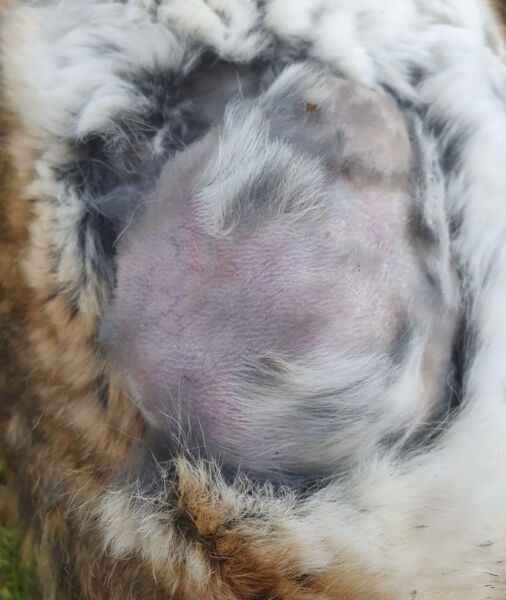
What Is a Tumor?
In medical terms, a tumor is an abnormal growth of tissue caused by uncontrolled or dysregulated cell growth.
There are two main types:
- Benign tumors
- Malignant tumors (cancer)
Benign tumors usually grow slowly and do not spread to other parts of the body.
Malignant tumors, on the other hand, can invade surrounding tissue and spread to other organs (metastasize).Important to Know
Not every lump or swelling is automatically cancerous.
Abscesses, cysts, or harmless fatty growths can initially look similar to a tumor. For this reason, a veterinary examination is always necessary.
How Do Tumors Develop in Rabbits?
The development of tumors is usually multifactorial, meaning that several factors can contribute at the same time. Possible causes include:
- Genetic predisposition
- Hormonal influences (especially in unspayed female rabbits)
- Severe obesity and poor nutrition
- Chronic inflammation
- Advanced age and age-related changes
- Environmental factors
- Physical inactivity and lack of exercise
- Certain viruses (e.g. papillomavirus)
- UV exposure
- Passive smoking
Uterine tumors are particularly common in unspayed female rabbits.
Common Types of Tumors in Rabbits
1. Uterine Tumors (usually adenocarcinomas)
These tumors are very common in older, unspayed female rabbits.
Possible symptoms include:
- Bloody discharge
- Digestive problems
- Weight loss
- Lethargy
- Breathing difficulties in cases of metastasis
They develop due to excessive hormonal stimulation of the uterine lining. These tumors are often malignant and may spread to the lungs.
In many cases, the veterinarian can feel the tumor during a physical examination and confirm it with ultrasound or X-rays. If diagnosed early, spaying surgery — including removal of the uterus and ovaries — can be an effective treatment. In advanced stages, especially when lung metastases are present, the prognosis is less favorable.
2. Skin and Subcutaneous Tumors
These tumors appear as palpable lumps beneath the skin.
They may be either benign or malignant
3. Mammary Tumors
Older female rabbits in particular may develop mammary tumors, as the female reproductive system is heavily influenced by hormones over the years. These tumors usually appear as lumps in the mammary area and are often painless in the early stages.
However, if the tumors spread to the lungs, breathing difficulties may occur. The tumors should be surgically removed as soon as possible. At the same time, spaying can be performed to help prevent further hormone-related tumors.
Before surgery, it is important to confirm that no metastases are already present.
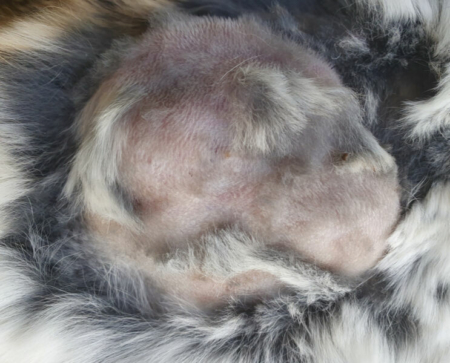
Tumor in the abdominal area originating from the mammary gland.
4. Brain Tumors
Although brain tumors are rare in rabbits, they usually progress rapidly once symptoms appear. In many cases, they are only discovered incidentally after the animal’s death.
Affected rabbits may show neurological symptoms such as seizures, coordination problems, and impaired consciousness. Unfortunately, treatment is not possible in these cases, and euthanasia is often the kindest option for the animal.
5. Bone Tumors
In rabbits, bone tumors are usually osteosarcomas, which primarily affect older animals. These tumors often occur in the skull region.
To rule out a jaw abscess, the veterinarian will usually take X-rays. Tumors typically appear as dense, cloudy structures on the images.
Unfortunately, a cure is generally not possible. In advanced cases, pain medication may help keep the rabbit comfortable and stable for some time. If the rabbit continues to suffer despite treatment, euthanasia is recommended.

6. Tumors in the Chest Cavity
Lung tumors in rabbits are most commonly caused by metastases, meaning another tumor has spread to the lungs, although primary lung tumors can also occur. Unfortunately, these tumors cannot be cured.
As long as the rabbit is still breathing comfortably, it is possible to maintain a good quality of life for some time. However, the condition often progresses quickly. Once breathing becomes noticeably impaired, euthanasia should be considered promptly to prevent severe suffering.
The rabbit’s breathing should be monitored very closely several times a day so that any deterioration can be recognized early. Warning signs include:
- Labored abdominal breathing
- Heavy nasal breathing
- Open-mouth breathing
- In the final stages, stretching or lifting the head to breathe
Without timely intervention, affected rabbits may suffocate.
In addition to lung tumors, rabbits can also develop lymphomas or thymomas in front of the heart.
7. Abdominal Tumors
Rabbits with abdominal tumors often show non-specific symptoms. For example, they may eat poorly, repeatedly stop eating, or show signs of pain.
Tumors can develop in almost any internal organ, including:
- The liver (often due to metastases from another tumor)
- The stomach
- The intestines
- The bladder
If the tumor has not yet spread to the liver or lungs, surgical removal may be attempted. Depending on the size and exact location of the tumor, surgery can be relatively straightforward or more complicated.
8. Kidney Tumors
Kidney tumors are rare in rabbits and are often associated with leukosis, a virus-related disease. In most cases, both kidneys are affected, leading to symptoms such as loss of appetite, weight loss, and increased thirst.
During a physical examination, enlarged kidneys can often be felt. The diagnosis is usually confirmed through blood tests combined with ultrasound or X-rays.
Because the kidneys perform vital functions and are usually severely damaged in these cases, treatment is often unsuccessful. Euthanasia is therefore frequently the most humane option for affected rabbits.
9. Lymphoma
Lymphoma is relatively common in rabbits and occurs particularly in younger animals.
10. Testicular Tumors
These tumors are very common in older, unneutered male rabbits.
How Can You Recognize a Tumor?
The symptoms depend greatly on the location and type of the tumor.
Possible signs include:
- Palpable lumps or swellings
- Weight loss
- Changes in eating behavior
- Breathing difficulties
- Bloody discharge
- Behavioral changes
- Weakness or reduced activity
- Impaired organ function

Warning Signs
The following symptoms should be examined by a veterinarian immediately:
- Blood from the vagina or nose
- Rapid breathing difficulties or shortness of breath
- A rapidly growing lump
- Severe weight loss
- Apathy or extreme lethargy
- Refusal to eat
How Is a Tumor Diagnosed?
Depending on the findings, diagnosis may include:
- A thorough clinical examination
- Ultrasound
- X-rays (for example, to check for metastases)
- CT scans in specialized cases
- Fine needle aspiration (often possible without anesthesia), cytology, or a tissue sample/biopsy
In most cases, a reliable distinction between a benign and malignant tumor is only possible through laboratory analysis of a submitted sample.
At What Size Are Metastases Visible?
On X-rays, lung metastases are usually only visible once they reach a size of approximately 5–10 mm. Smaller lesions can easily be missed. A CT scan is significantly more sensitive.
Important for Rabbit Owners
A normal X-ray does not completely rule out very small metastases.
However, it can show whether larger metastatic spread is already present and is therefore important for treatment planning.
Treatment Options
Treatment depends on several factors, including:
- The type of tumor
- Its location
- The rabbit’s overall condition
- Additional illnesses
- The presence or absence of metastases
Surgical Removal
Surgical removal is the most common and often the best treatment option, especially for localized tumors.
Radiation Therapy
In some cases, radiation therapy may be necessary, sometimes even after surgical removal of the tumor.
Palliative Care
If a cure is no longer possible, the main focus shifts to maintaining the rabbit’s quality of life.
Supportive Therapy
- Pain management
- Assisted feeding
- Stabilization of the circulatory system
- Antioxidants (carotenoids, flavonoids, vitamins C and E, selenium, etc.)
Medication
Depending on the type of tumor, different medical treatment options may be available for rabbits. Chemotherapy generally plays only a minor role in rabbit medicine.
Special Concern: E. cuniculi
An important and often underestimated issue is the potential immunosuppressive effect of chemotherapeutic drugs.
In one study, rabbits with lymphoma that were also infected with Encephalitozoon cuniculi were treated with cyclophosphamide:
- Initial dose: 50 mg/kg
- Followed by: 15 mg/kg weekly
- Over a period of 12 weeks
Many of these rabbits subsequently developed clinical signs of encephalitozoonosis.
The conclusion from this is crucial:
Chemotherapy-induced immunosuppression can trigger a fatal encephalitozoonosis in rabbits with a subclinical E. cuniculi infection.
Because many rabbits carry a latent E. cuniculi infection, this represents a significant risk.
Anti-Cancer Foods and Nutritional Supplements
Examples include ginger, black seed oil, aronia berries, wild herbs and culinary herbs, as well as cabbage vegetables. Sprouted broccoli seeds are considered particularly beneficial due to their potential anti-cancer properties.
Additional Therapies
Heel Therapy
A treatment approach developed by the company Heel, tailored to the individual animal and its condition. However, it should be noted that the effectiveness of homeopathic remedies has not been scientifically proven.
Mistletoe Therapy
Mistletoe preparations (for example from Helixor) are also used in some cases as supportive therapy.
Prognosis
The prognosis can vary greatly depending on the type and stage of the tumor:
- Benign tumors → often have a very good prognosis after surgical removal
- Early-detected uterine tumors → generally have good chances of recovery
- Malignant tumors that have not yet metastasized and can be removed surgically → may still have good chances of recovery
- Metastatic tumors → usually carry a guarded to poor prognosis
Early detection is crucial.
Weekly check-ups help detect diseases at an early stage.
Quality of Life: The Most Important Measure
The diagnosis alone is not the deciding factor. What truly matters is:
- Is the rabbit still eating independently?
- Is it moving around voluntarily?
- Does it show interest in its surroundings?
- Is the breathing stable?
- Is there obvious pain or respiratory distress?
As long as a rabbit continues to eat actively, interact with its environment, and does not show severe symptoms, palliative care may be a reasonable option.
When Should a Rabbit Be Euthanized?
Euthanasia may be appropriate when all reasonable treatment options have been exhausted and the rabbit’s quality of life and enjoyment of life have significantly declined despite pain management.
It should also be considered if pain medication is no longer effective or if the rabbit shows signs such as refusal to eat, breathing difficulties, or persistent pain.
Tumor on the paw successfully removed without amputation:
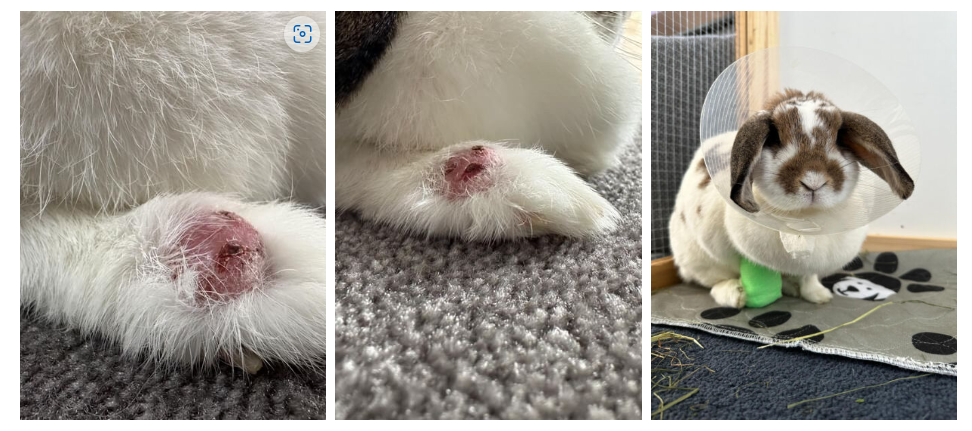
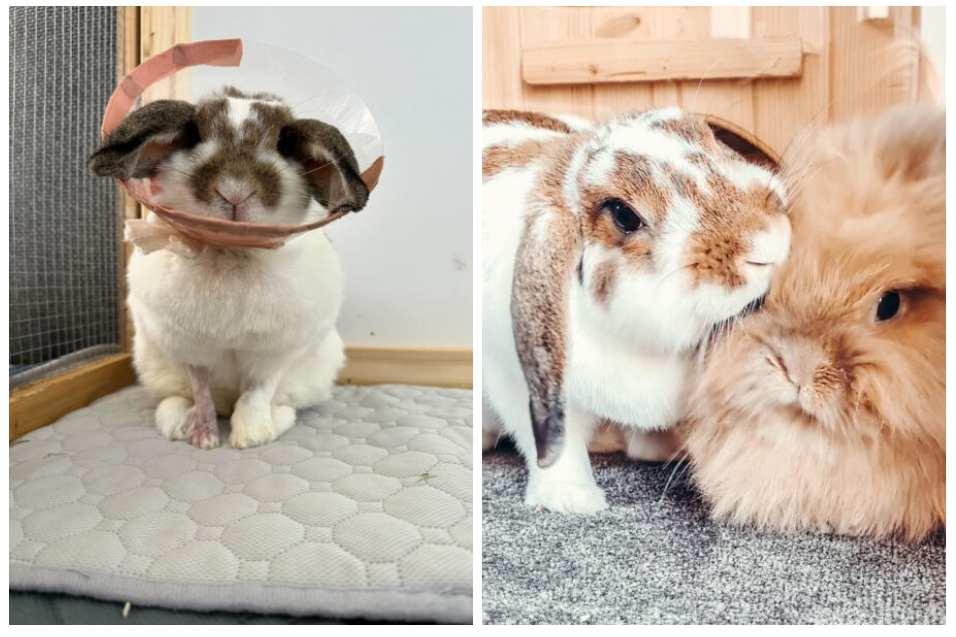
Note: It is often better to replace the cone with a soft fabric collar or, depending on the case, leave it off entirely.
Sources include:
Baumgärtner, W., & Gruber, A. D. (2015): Spezielle Pathologie für die Tiermedizin. Thieme Verlag.
Bertram CA et al. Neoplasia and tumor-like lesions in pet rabbits (Oryctolagus cuniculus) (2019): a retrospective analysis of cases between 1995 and 2019. Vet Pathol 2020; 25: 901 – 911
Bertram, C. A., Garner, M. M., Reavill, D., Klopfleisch, R., & Kiupel, M. (2020): Giant cell sarcomas in domestic rabbits (Oryctolagus cuniculus). Veterinary pathology, 57(4), 490-496
Bertram, C. A., Bertram, B., Bartel, A., Ewringmann, A., Fragoso-Garcia, M. A., Erickson, N. A., … & Klopfleisch, R. (2021). Neoplasia and tumor-like lesions in pet rabbits (Oryctolagus cuniculus) (2021): a retrospective analysis of cases between 1995 and 2019. Veterinary pathology, 58(5), 901-911.
Engels, M., & Soutullo, I. D. (2024): Nephrektomie bei einem Kaninchen aufgrund eines renalen Adenokarzinoms. Tierärztliche Praxis Ausgabe K: Kleintiere/Heimtiere, 52(05), 324-329.
Ewringmann, A.: Leitsymptome beim Kaninchen
Fuchs, S., Eberhardt, F., Niesterok, C., & Kiefer, I. (2013): Ultraschall bei Kaninchen und Meerschweinchen–Häufigste pathologische Befunde von Milz, Leber und Gastrointestinaltrakt. kleintier konkret, 16(04), 13-18.
Kershaw, O. (2017): Tumoren von Mäusen, Ratten, Kaninchen und Meerschweinchen. In: Klopfleisch, R. (Hrsg.) Veterinäronkologie kompakt. Springer Spektrum, Berlin, Heidelberg. https://doi-org.emedien.ub.uni-muenchen.de/10.1007/978-3-662-54987-2_19
Kessler M, (2022): Kleintieronkologie – Diagnose und Therapie von Tumorerkrankungen bei Hund und Katze. Hrsg. 4., vollständig überarbeitete Auflage. Stuttgart: Thieme; 2022. doi:10.1055/b-006-163261
Künzel, F. (2013): Thymom–ein unterdiagnostiziertes klinisches Problem beim Kaninchen?. veterinär spiegel, 23(01), 22-25.
Oliver-Guimera, A., Asin, J., Imai, D. M., Casanova, M. I., Strunk, A., Keel, K., … & Reavill, D. R. (2024): Diseases of domestic rabbits by purpose; a retrospective study of 2,583 cases received at 4 diagnostic laboratories in California, USA, 2013–2022. Journal of Veterinary Diagnostic Investigation, 36(5), 677-694.
Puho, H. (2023): Das Lymphom beim Kaninchen–ein Überblick zur Erkrankung mit klinischem Fall. veterinär spiegel, 33(04), 164-170.
Selbitz, HJ, Truyen, U., Valentin-Weigand, P., Alber, G., Amtsberg, G., Bauer, J., … & Wieler, LH (2011):
Tiermedizinische Mikrobiologie, Infektions- und Seuchenlehre . Thieme Verlag.
Tinkey PT, Uthamanthil RK, Weisbroth SH (1999): Rabbit neoplasia. In: Suckow MA, Stevens KA, Wilson RP (Hrsg) The
laboratory rabbit, guinea pig, hamster, and other rodents, Academic Press/Elsevier, London, S 448–501
Veiga-Parga, T., La Perle, K. M., & Newman, S. J. (2016). Spontaneous reproductive pathology in female guinea pigs. Journal of Veterinary Diagnostic Investigation, 28(6), 656-661.
17