Loading
  • Link to Instagram
How to rabbit
  • Home
  • Getting a Rabbit
    • Before You Get Rabbits
      • Rabbit Care for Beginners
      • Rabbit Care in 15 Minutes
      • How Much Do Rabbits Cost?
      • Lop Rabbits: Health & Welfare Concerns
      • Rabbit Lifespan: How Long Do Rabbits Live?
    • Choosing & Bringing Home Rabbits
      • Bringing a Rabbit Home
      • Sexing Rabbits: Male or Female?
      • Neutering Male Rabbits
      • Rabbits and Other Pets
      • Rabbit Adoption Contract
  • Housing
    • Outdoor Housing
      • Winter Care for Rabbits
      • Keeping Rabbits in the Garden
      • Building an Outdoor Rabbit Enclosure
      • Overwintering Rabbits
      • Outdoor Rabbit Run Ideas
    • Indoor Housing
      • Rabbit Litter Training Guide
      • Setting Up a Rabbit Room
      • Vitamin D for Indoor Rabbits
      • Keeping Rabbits Indoors
      • Indoor Rabbit Housing Ideas
      • Keeping Rabbits Cool in Summer
    • Balcony Housing
      • Keeping Rabbits on a Balcony
      • Rabbit-Friendly Balcony
  • Feeding
    • Foods for Rabbits
      • Grass & Meadow Plants
      • Pellets for Rabbits
      • Vegetables
      • Culinary herbs
      • Fruits for rabbits
      • Water & Drinking
    • Feeding Guidelines
      • Feeding Guidelines
      • Common Feeding Mistakes
      • Rabbit Feeding Myths
      • How to Feed a Baby Rabbit
    • Feeding tips
      • How to Transition a Rabbit to a New Diet Safely
      • Winter Diet for Rabbits
      • Nutrition for Young Rabbits
      • Diet Changes in Young Rabbits
    • Nutrition Basics
      • What can rabbits eat?
      • Types of Rabbit Diets
      • Is Hay the Main Food for Rabbits?
      • Tooth Wear & Dental Health
      • Crude Fiber & Carbohydrates
      • Secondary Plant Compounds
      • Food selection
      • Between Scarcity and Abundance
      • Rabbit Digestion
      • Wild Rabbit Nutrition
    • Foraging & Plant Identification
      • Foraging Meadows for Beginners
      • Identifying Coniferous Trees
      • Highly toxic plants
    • Food & Plant Lists
      • Safe Branches for Rabbits
      • Best Vegetables for Rabbits
      • Wild Grasses for Rabbits
      • Aromatic Herbs for Rabbits
      • Foraging & Plant Identification
      • Garden plant list
      • Fruit list
  • Companionship & Bonding
    • Rabbit Bonding
    • After a Rabbit Dies: Should the Other Rabbit Live Alone?
    • Can Rabbits Live Alone?
    • Choosing the Right Rabbit Companion
    • Rabbit Bonding Methods
    • Common Bonding Mistakes
    • Bonding of Young Rabbits
    • Keeping Rabbits in Large Groups
    • Hierarchy Fights & Bullying
    • Bonding Disabled or Ill Rabbits
    • Rabbit Socialization
  • Behavior
    • Handling Rabbits
    • Common Behaviors & Problems
      • Rabbits that don’t get along
      • Handling traumatized rabbits
      • Nibbling & Chewing
      • Digging
      • Humping
      • Kicking, Scratching & Wriggling
      • Biting & Aggressive Behavior
    • Body Language & Senses
      • Rabbit Senses
  • Health
    • General Health
      • Is My Rabbit Sick?
      • Recognizing Pain in Rabbits
      • Sudden Death in Rabbits: Possible Causes
      • Rabbit Health Myths
    • Digestive Disorders
      • Gastric Dilatation in Rabbits
      • Bloating in Rabbits
      • Hairballs & Constipation
      • Rabbit Diarrhea & Mushy Poop
      • Stomach Overload
      • Coccidia in Rabbits
      • Yeast in Rabbits
      • Worms in Rabbits
      • Underweight & Overweight Rabbits
      • Megacolon Syndrome
      • Bacterial Enteritis
      • Appendicitis in Rabbits
    • Skin, Fur & Parasites
      • Molting
      • Flystrike in Rabbits (Myiasis)
      • Mites, Ticks, Fleas & Other Parasites
      • Ear Mites
      • Skin Fungus
      • Wounds & Bite Wounds
      • Abscesses
      • When Rabbits Lick Themselves Raw
      • Sore Hocks in Rabbits
      • Injection Necrosis
      • Tumors & Cancer in Rabbits
      • Skin Inflammation
    • Infectious Diseases
      • Rabbit Snuffles
      • E. cuniculi in Rabbits
      • Rabbit Hemorrhagic Disease (RHD)
      • Myxomatosis
      • Ear Infection
      • Rabbit Syphilis
      • Tularemia (Rabbit Fever)
      • Tetanus
      • Toxoplasmosis
      • Listeriosis
      • Rodentiosis
      • Herpesviruses in rabbits
    • Internal & Organ Diseases
      • Liver Diseases
        • Liver Lobe Torsion
      • Cystitis
      • Bladder Sludge & Bladder Stones
      • Kidney Failure
      • Sex & Neutering
      • Uterine Diseases
      • Heart Diseases
      • Thyroid Diseases
      • Heatstroke in Rabbits
      • Stroke in rabbits
      • Schock
      • Hormonal Disorders
    • Other Health Conditions
      • Floppy Rabbit Syndrome
      • Dental Diseases
        • Jaw Abscesses
        • Nutrition for Dental Disease
      • Eye Diseases in Rabbits
        • Watery Eyes
      • Joint Diseases
      • Bone Fractures & Accidents
      • Cramps & Seizures
      • TThymoma, Lymphoma & Other Tumors
      • Poisoning in Rabbits
      • Mold & Mycotoxins
  • Care
    • Rabbit Poop & Urine: What It Means
    • Housing for Disabled & Elderly Rabbits
    • Wheelchairs & Mobility Support for Rabbits
    • Rabbit Health Check
    • Dirty Bottom in Rabbits
    • Why Does My Rabbit Pee & Poop Everywhere?
    • Saying Goodbye to a Rabbit
  • Offspring
    • Breeding that causes animal suffering
  • Service
    • News
    • About Us
    • Legal Disclosure
    • Privacy Policy
  • Click to open the search input field Click to open the search input field Search
  • Menu Menu

Thyroid diseases

Contents

  • Disorders of Thyroid Hormones in Rabbits
  • Too Few Thyroid Hormones (Hypothyroidism or Reduction Due to Other Diseases)
  • Too Many Thyroid Hormones (Hyperthyroidism – Extremely Rare, e.g., Due to Thyroid Cancer)
  • Diagnosis and Treatment
  • Distinguishing Thyroid Diseases from Euthyroid Sick Syndrome (ESS)
  • Impact of Diet on Thyroid Hormones
  • Case Study: Maya

Disorders of Thyroid Hormones in Rabbits

Euthyroid Sick Syndrome (ESS) and Thyroid Diseases

The thyroid gland produces hormones and has a complex influence on the rabbit’s body, affecting metabolism, circulation, and growth, among other functions. If too many or too few hormones are produced, it can have consequences for the rabbit’s health.
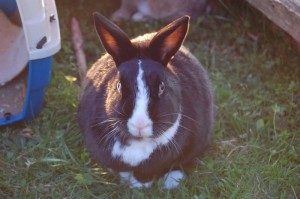
Rabbit sitting outdoors in a garden with sunlight.
Obesity can result from reduced thyroid hormones.

The main thyroid hormones include:

  • Thyroxine (T4) – the transport form
  • Triiodothyronine (T3) – the biologically active form

Symptoms

Too Few Thyroid Hormones (Hypothyroidism or Reduction Due to Other Diseases)

  • Overweight that does not respond to diet changes
  • Lethargy, reduced activity, increased need for sleep
  • Hair loss, bald patches
  • Constipation, intestinal obstruction (ileus), megacolon
  • Slowed heartbeat, altered blood pressure

Too Many Thyroid Hormones (Hyperthyroidism – Extremely Rare, e.g., Due to Thyroid Cancer)

  • Underweight despite a good appetite
  • Restlessness
  • Rapid heartbeat

Diagnosis and Treatment

Thyroid diseases in rabbits are still poorly researched and rarely documented in veterinary literature. Additionally, diagnosing these conditions is challenging because only the T4 value can be measured in rabbit blood. Other thyroid parameters commonly used in dogs and cats are currently not available for rabbits.

The T4 value can provide an initial indication in cases of extreme emaciation or obesity, but it is not a definitive diagnostic tool. There are no established reference values for rabbits, though one study reported a T4 reference range of 0.65–2.85 µg/dl (8.4–36.7 mmol/L) in healthy rabbits. However, it is known that thyroid hormone reference values vary significantly between laboratories, so laboratory-specific reference values should be used whenever possible.

Relying solely on T4 measurements is insufficient. Due to the limited research available and the lack of comprehensive thyroid hormone testing for rabbits, a suspected case of hypothyroidism or euthyroid sick syndrome in obese rabbits should first be addressed through dietary measures and a thorough investigation of underlying causes before considering medication.

If medication is necessary, Euthyrox (initially 10–20 µg/kg) can be administered. However, continuous monitoring is essential during treatment. Regular veterinary check-ups and additional tests are recommended to ensure proper management. Medication dosages should be adjusted based on ongoing T4 level assessments.
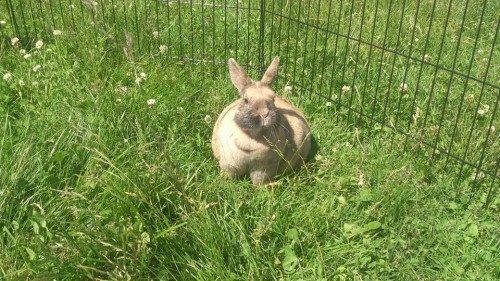
Grey rabbit sitting in a fenced outdoor garden area, enjoying fresh green grass.
Obesity in rabbits can be a sign of an underlying illness. The Euthyroid Sick Syndrome can cause diseases that lower thyroid hormones, leading to weight gain in rabbits despite a serious health condition.

Distinguishing Thyroid Diseases from Euthyroid Sick Syndrome (ESS)

Euthyroid Sick Syndrome (ESS, also known as Nonthyroidal Illness Syndrome) must be differentiated from actual thyroid diseases. In ESS, the T4 hormone level drops significantly due to other non-thyroidal illnesses. A study has linked this condition to fractures, obstructive ileus, dental disease, and urinary tract disorders, though other diseases may also be contributing factors. Additionally, certain medications can temporarily cause a decline in T4 levels.

ESS is very common in rabbits. For example, a rabbit with a serious underlying condition (such as undiagnosed tumors) may show extremely low T4 levels, even though its thyroid gland is functioning normally.

There is debate among experts about how many rabbits suspected of having thyroid disease actually suffer from ESS. Interestingly, treatment with Euthyrox appears to be effective in these cases, often leading to weight reduction. However, the necessity of medication remains controversial. The primary focus should be on identifying and treating the underlying disease before considering thyroid hormone therapy.

Impact of Diet on Thyroid Hormones

Diet can also influence thyroid hormone levels. A diet high in cruciferous vegetables (such as cabbage, broccoli, kale, radish greens, and turnip greens) may inhibit iodine absorption, leading to lower T4 levels. To maintain healthy thyroid function, a balanced diet should be ensured.

Case Study: Maya


Symptoms:
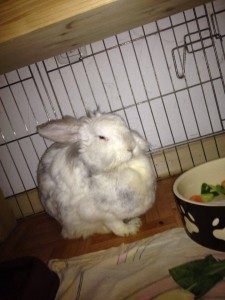
Maya, a rabbit weighing 3.1 kg, exhibited:

  • Obesity that persisted despite multiple diet attempts
  • Lethargy
  • Sore hocks (due to excess weight and inactivity)
  • Hair loss
  • Aggressiveness
  • T4 level of 0.2 µg/dl
Fluffy white rabbit sitting near food bowl in cage.
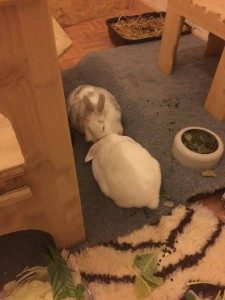
Rabbit pair on carpet with food bowl and table legs.


Treatment:
Maya was treated with Euthyrox, but the initial dosage was too high, causing severe trembling. The dosage was immediately reduced by half.

With the correct dosage, Maya experienced:

  • Weight loss of 500g
  • Healing of her sore hocks
  • Increased energy and activity
  • T4 levels improving to 0.8 µg/dl, later stabilizing at 0.5 µg/dl


However, during a routine blood test performed during surgery, a T4 level of 1.9 µg/dl indicated temporary hyperthyroidism, possibly influenced by other factors.

Although treatment came late, and some damage had already been done, Maya was able to enjoy a renewed, more active, and pain-free life in her later years.

Update:
Pathology results later revealed that Maya had a lymphoma, which was likely the underlying cause of her low T4 levels.

Sources include:

Brandao, J., Higbie, C., & Rick, M. (2015): Naturally occurring idiopathic hyperthyroidism in two pet rabbits. In Exoticscon Proceedings San Antonio (p. 341).

Brandão, J., Ellison, M., Beaufrère, H., Johnson, J., Rick, M., & Tully, T. (2014). Quantitative 99M-Technetium pertechnetate thyroid scintigraphy in euthyroid New Zealand white rabbits (Oryctolagus cuniculus). Veterinary Radiology and Ultrasound, 55(6), 689-690.

DiGeronimo, P. M., & Brandão, J. (2020): Updates on Thyroid Disease in Rabbits and Guinea Pigs. Veterinary Clinics: Exotic Animal Practice, 23(2), 373-381.

Dinges, H. P., & Kovac, W. (1972): Metastasizing thyroid carcinoma in the rabbit. Zeitschrift fur Versuchstierkunde, 14(4), 197-204.

Liebscher, J. (2020): Endokrinologische Erkrankungen beim Kleinsäuger–nicht so häufig wie vermutet. kleintier konkret, 23(S 02), 30-34.

Mebis, L., Debaveye, Y., Ellger, B., Derde, S., Ververs, E. J., Langouche, L., … & Van den Berghe, G. (2009): Changes in the central component of the hypothalamus-pituitary-thyroid axis in a rabbit model of prolonged critical illness. Critical Care, 13(5), 1-10.

Thöle, M., Brezina, T., Fehr, M., & Schmicke, M. (2019): Presumptive nonthyroidal illness syndrome in pet rabbits (Oryctolagus cuniculus). Journal of Exotic Pet Medicine, 31, 100-103.
Who Is Behind How to rabbit?

Veterinarian Viola Schillinger
Who Is Behind How to Rabbit? Viola Schillinger is a veterinarian who has kept rabbits since childhood and has dedicated much of her professional life to improving their health, welfare, and living conditions. Decades of rabbit keeping, intensive observation, and professional study have given her extensive experience in rabbit health, nutrition, behavior, and species-appropriate husbandry. She shares her knowledge through television appearances, webinars, podcasts, radio programs, articles, and books. In 2008, Viola founded Kaninchenwiese.de, which has grown into a leading German-language resource for rabbit care and health, reaching around 500,000 visitors per month. How to Rabbit brings this knowledge to an international English-speaking audience. The English content is translated and adapted by Erika Kühne Escobar and medically reviewed by Viola Schillinger.

Rabbits need space…


How to rabbit…

…is a guide for the appropriate keeping, nutrition and care of rabbits.

Search

Search Search

Never alone


Last Changes

  • Neutering Male Rabbits 2. October 2026
  • Cookie Policy (EU) 7. September 2026
  • Care 26. August 2026
  • Fruit list 27. September 2026
  • Highly toxic plants 30. July 2026
© Copyright - How to rabbit 2024 - Enfold Theme by Kriesi
  • Link to Instagram
Scroll to top Scroll to top Scroll to top