Houseplants, Flowers & More
Please note that fruit, trees and shrubs, herbs, and wild herbs/weeds can be found in separate lists.

Pheasant’s Eye (Adonis), Amur Adonis (Adonis amurensis), Spring Pheasant’s Eye (Adonis vernalis)
Poisonous; please do not feed. However, they are not considered a problem in a rabbit-accessible garden.
Columbine (Aquilegia)
Poisonous; do not feed. However, rabbits generally do not eat it when roaming freely in the garden.
Wild or Outdoor Cyclamen (Cyclamen)
Poisonous; do not feed. Generally not a problem in a rabbit-accessible garden.
Anemones, Windflowers (Anemone)
Usually avoided because they are poisonous. Please do not deliberately feed them.
Arnica, Mountain Arnica (Arnica montana)
Safe and suitable as a supplementary food in small quantities.
Asters (Aster), New York Aster (Aster novi-belgii), New England Aster (Aster novae-angliae), Bushy Aster (Aster dumosus), Heath Aster, September Flower (Aster ericoides), Autumn Aster, Autumn Chrysanthemum, Winter Asters (Dendranthema, Chrysanthemum), Alpine Aster (Aster alpinus), Italian Aster (Aster amellus), Goldilocks Aster (Aster linosyris), China Aster, Garden Aster (Callistephus chinensis)
Safe and suitable as supplementary food.
Bamboo (Fargesia nitida)
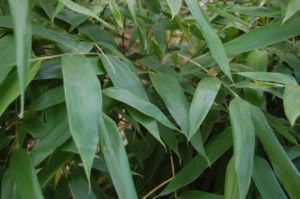
Bamboo is a natural food source for rabbits in a garden environment.
It is an ideal winter food and is usually eaten with great enthusiasm. It is perfect for growing your own winter rabbit food in the garden. All types of garden bamboo are non-toxic.
Wisteria (Wisteria)
Poisonous to rabbits; please do not offer it.
Spiked Speedwell (Pseudolysimachion)
Safe and suitable in small quantities.
Purple Loosestrife, Loosestrife (Lythrum)
Suitable as supplementary food.
Buttercup (Ranunculus)
Usually avoided and not considered a problem when accidentally included among picked forage. There is no need to collect it deliberately as a food plant. Mildly poisonous.
Christmas Rose (Helleborus)
Highly poisonous; do not feed.
Clematis, Traveller’s Joy (Clematis)
Mildly poisonous; do not feed. Generally not a problem in a rabbit-accessible garden. It is non-toxic when dried.
Dahlias (Dahlia)
May be offered in small quantities as supplementary food.
Ivy (Hedera helix)
A medicinal plant for rabbits, traditionally used for respiratory problems, rabbit rhinitis, and digestion. Suitable as supplementary winter food in small quantities. The berries are poisonous.
Angel’s Trumpet, Trumpet Tree, Datura (Brugmansia)
Poisonous; do not feed.
Eucalyptus (Eucalyptus)
Poisonous; do not offer.
Spurges (Euphorbia)
All plant parts containing milky sap are poisonous.
Foxglove (Digitalis)
Highly poisonous, including in a rabbit-accessible garden.
Garden Anemone (Anemone coronaria)
Poisonous; do not feed.
Geraniums, Pelargoniums (Pelargonium)
Non-toxic in small quantities, but not particularly popular.
False Hellebore, Black False Hellebore, White False Hellebore (Veratrum)
Poisonous, including when dried.
Chinese Windmill Palm (Trachycarpus fortunei)
Safe in small quantities.
Japanese Anemone (Anemone)
Usually avoided because it is poisonous. Please do not deliberately feed it.
Autumn Crocus, Meadow Saffron (Colchicum autumnale)
Highly poisonous, including when present in hay.
Hydrangea (Hydrangea macrophylla)
Poisonous, but generally not a problem in a rabbit-accessible garden. We use it in patio containers because rabbits avoid eating it.
Horned Violet (Viola cornuta)
Edible when included as part of a varied mixture.
Hyacinths (Hyacinthaceae)
Poisonous.
Iris, Flag Iris (Iris)
Non-toxic when included as part of a varied mixture.
Jacob’s Ladder (Polemonium)
Non-toxic and may be fed.
Crown Imperial (Fritillaria imperialis)
Poisonous; do not feed.
Camellia (Camellia)
Non-toxic and may be fed.
Chervil (Anthriscus)
Non-toxic and may also be given in large quantities.
Climbing Roses
Non-toxic and may be fed. The thorns are harmless to rabbits with healthy teeth. However, they should be removed for rabbits with dental disease.
Orchid, Native Orchids (Orchis)
Protected by law, but not poisonous.
Silver Lace Vine, Russian Vine (Fallopia aubertii)
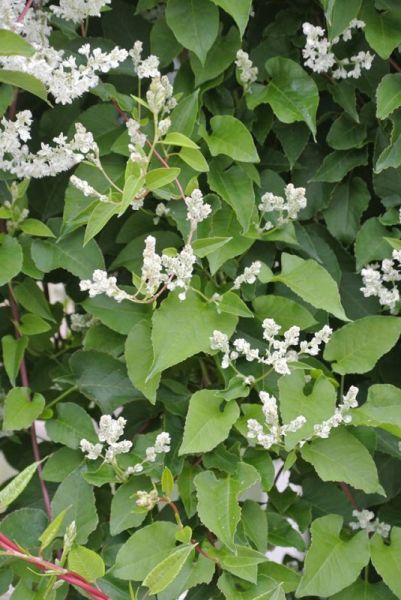
Non-toxic and suitable as a food plant.
Crocus (Crocus)
Do not feed deliberately. However, it is generally not a problem in a rabbit-accessible garden.
Pasque Flower (Pulsatilla vulgaris)
Safe in small quantities or when growing in a rabbit enclosure.
Alliums (Allium)
A medicinal supplementary food that may occasionally be offered in small quantities.
Lavender
Edible and often nibbled willingly.
Fumewort, Bird-in-a-Bush (Corydalis solida)
Poisonous; do not feed.
Hollowroot (Corydalis cava)
Poisonous; do not offer.
Lily of the Valley
Poisonous, but generally not a problem when growing in a rabbit-accessible outdoor area.
Canterbury Bells (Campanula medium)
Non-toxic, but should not be deliberately used as a regular food plant.
Spring Snowflake (Leucojum vernum)
Poisonous, but generally not a problem in a rabbit-accessible garden. Small amounts nibbled occasionally are considered harmless.
Poppies (Papaveraceae), Himalayan Blue Poppy (Meconopsis betonicifolia), California Poppy (Eschscholzia californica), Common Poppy (Papaver rhoeas), Opium Poppy (Papaver somniferum)
Usually avoided and non-toxic in small quantities. Only offer them as part of a varied mixture. The exception is the opium poppy, which must not be fed.
Daffodils (Narcissus)
Poisonous; do not feed. However, they are generally not a problem in a rabbit-accessible outdoor area.
Green Hellebore (Helleborus viridis)
Poisonous.
Stinking Hellebore (Helleborus foetidus)
Poisonous; do not offer.
Native Orchids (Orchidaceae)
Non-toxic, but should not be deliberately collected or fed.
Passionflower (Passiflora)
Non-toxic and may be suitable in a rabbit-accessible garden or as supplementary food.
Peonies (Paeonia)
Poisonous, but usually avoided and generally not a problem in a rabbit-accessible garden.
Rhododendrons and Azaleas (Rhododendron)
Generally not a problem in a rabbit-accessible garden because rabbits avoid them, but they are otherwise poisonous. They are ideal for anyone looking for a plant that will survive around rabbits.
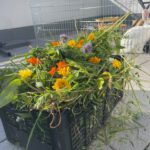
Pot Marigold (Calendula officinalis)
Non-toxic and may be fed as part of a varied mixture.
Larkspur, Garden Delphinium (Consolida ajacis, Delphinium elatum)
Highly poisonous; never feed.
Amaryllis (Hippeastrum)
Highly poisonous; do not feed.
Roses
Non-toxic and very popular. Remove the thorns before feeding them to rabbits with dental problems. Rabbits with healthy teeth can safely eat roses with the thorns attached.
Solomon’s Seal (Polygonatum)
Mildly poisonous; do not feed.
Wood Sorrel (Oxalis)
Contains high levels of oxalic acid. It is therefore only suitable when growing freely in an outdoor enclosure or, very rarely, in extremely small quantities.
Himalayan Poppy (Meconopsis)
Non-toxic, but usually avoided. Only feed as part of a varied mixture.
Snowdrop (Galanthus nivalis)
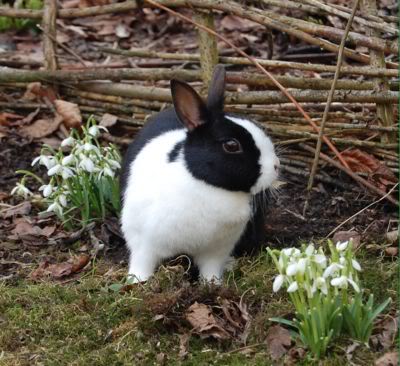
Do not feed because it is poisonous. However, small amounts may be nibbled in a rabbit-accessible garden without causing problems.
Winter Heath (Erica carnea)
Non-toxic, but unpopular.
Black-Eyed Susan Vine (Thunbergia alata)
Safe and suitable for feeding.
Water Lilies and Pond Lilies (Nymphaea), White Water Lily (Nymphaea alba), Yellow Water Lily, Brandy-Bottle (Nuphar lutea), Water Lily, Yellow Flag Iris (Iris pseudacorus)
Please do not feed.
Perennial Sweet Pea (Lathyrus latifolius)
Safe and suitable as a food plant.
Pansy, Garden Pansy (Viola × wittrockiana)
Edible and may be fed.
Hollyhock (Alcea)
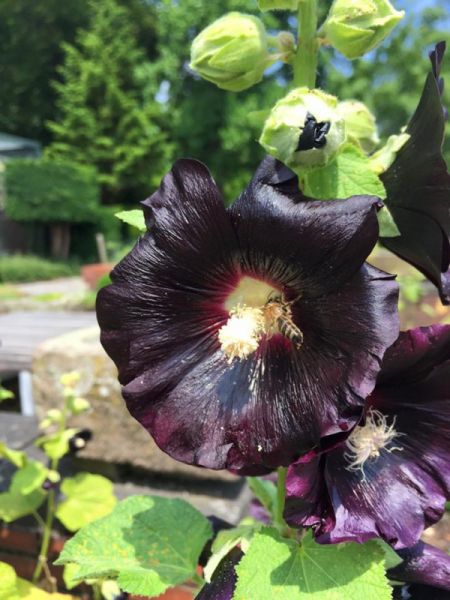
Non-toxic and suitable as a food plant.
Cranesbill (Geranium)
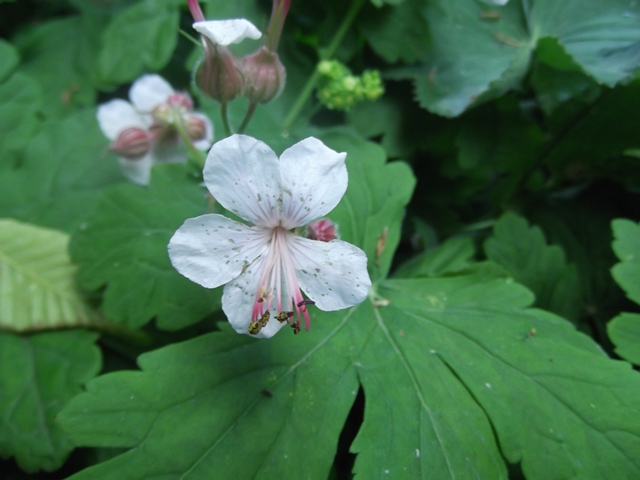
Non-toxic and suitable as a food plant.
Black Cohosh (Actaea, syn. Cimicifuga)
Safe in small quantities. Do not feed to pregnant rabbits.
China Aster, Garden Aster (Callistephus chinensis)
Very suitable as a food plant and non-toxic.
Sunflower (Helianthus annuus)
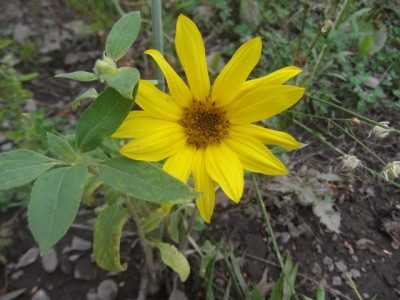
Non-toxic and suitable as a food plant.
Thorn Apple, Jimsonweed (Datura)
Poisonous; never feed.
Sneezeweed (Helenium)
Non-toxic and may be offered as supplementary food.
Perennial Sunflower (Helianthus decapetalus)
Suitable as a food plant and may also be given in large quantities.
Daylily (Hemerocallis)
Safe for rabbits, but only suitable as supplementary food.
Devil’s Claw, Rampion (Phyteuma)
Non-toxic and traditionally considered beneficial for osteoarthritis.
Grape Hyacinth (Muscari)
Do not deliberately feed. However, it is generally not a problem in a rabbit-accessible garden.
Common Morning Glory (Ipomoea purpurea, syn. Pharbitis purpurea)
Poisonous; do not feed.
Globeflower, European Globeflower (Trollius europaeus)
Usually avoided and not considered a problem when accidentally included among picked forage. There is no need to collect it deliberately as a food plant. Mildly poisonous.
Tulips (Tulipa)
Poisonous, but generally not a problem in a rabbit-accessible garden.
Violets (Viola), Sweet Violet, English Violet (Viola odorata), Common Dog Violet (Viola riviniana), Early Dog Violet (Viola reichenbachiana), White Violet (Viola alba)
Edible and may be fed.
Forget-Me-Not (Myosotis)
Edible for rabbits.
Willowherb (Epilobium)
Safe and may be fed.
Winter Aconite (Eranthis hyemalis)

Winter aconite is poisonous, but rabbits avoid it completely.
Zinnias (Zinnia)
Non-toxic.