The Top Ten Toxic Plants
Highly Toxic Plants
Lords-and-ladies / Spotted arum (Arum maculatum)
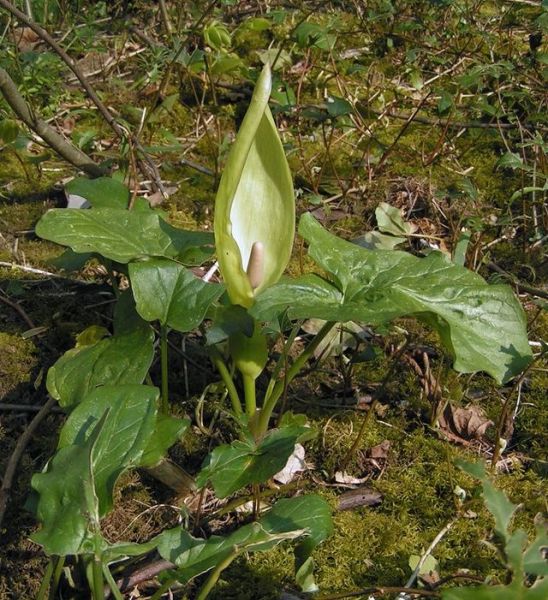
When not in flower, lords-and-ladies is rather inconspicuous. It grows in shady places beneath trees, often among bushes.
Habitat: Deciduous woodland
Growth form: Herbaceous plant
Risk of confusion: It may be mistaken for wild garlic, which grows in similar locations and also forms extensive patches. However, the leaf shape is slightly different. In addition, wild garlic smells of garlic when its leaves are rubbed between the fingers.
The leaf shape also resembles that of common sorrel. Spotted arum, however, often has spotted leaves and usually grows in a different habitat, whereas sorrel is commonly found in meadows.

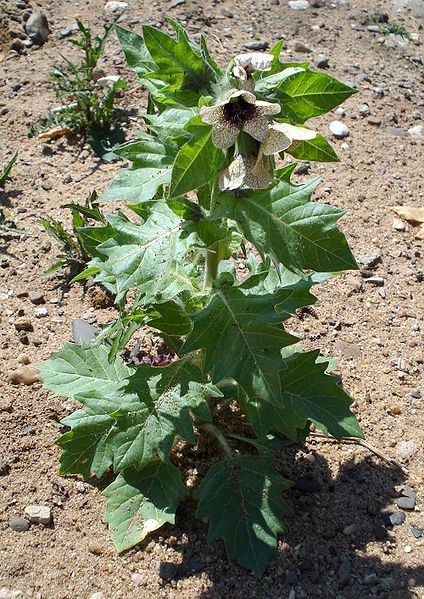
Henbane (Hyoscyamus niger)
Highly poisonous, but relatively rare. Some rabbits, though not all, are resistant to its toxins, including atropine.
Habitat: Rubble sites and roadsides
Growth form: Herbaceous plant
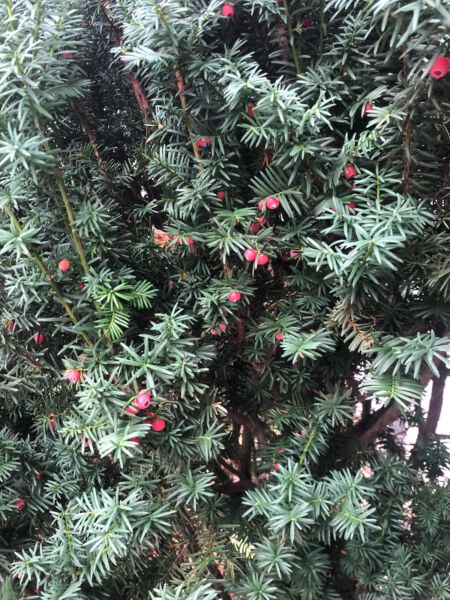
European yew (Taxus baccata)
Toxic dose: 0.7 g of needles per kg of body weight or 1.75 g of needles per animal, administered orally.
Habitat: Gardens and parks
Growth form: Tree, shrub or hedge
Risk of confusion: It may be confused with other conifers, such as fir and spruce. The bark, needles and seeds are highly poisonous, while the red fleshy aril surrounding the seed is non-toxic.
Toxins: Diterpenes, including taxines A, B and C, baccatins and taxols
Effects: Death may occur very rapidly, often accompanied by convulsions, cardiac problems and respiratory distress.
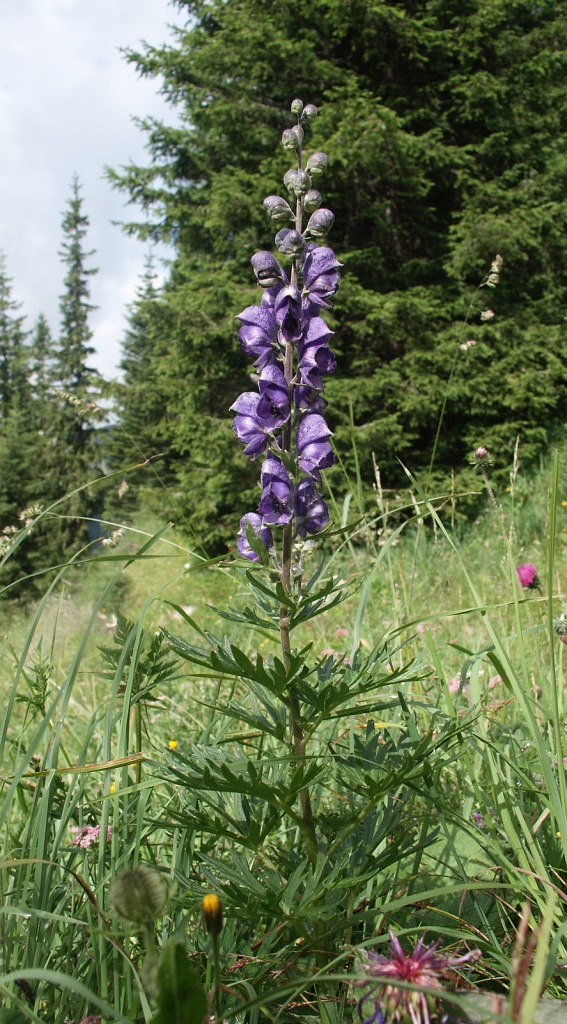
Monkshood is relatively rare and is not commonly encountered. However, it is extremely poisonous and its toxicity is often underestimated.
Risk of confusion: It may be confused particularly with cranesbill, other members of the buttercup family and sweet lupin.
Habitat: Gardens in sunny to partially shaded locations, as well as natural habitats
Growth form: Herbaceous plant
Toxins: Diterpenoid alkaloids, particularly aconitine
Effects: Digestive problems, excessive salivation, a slowed or abnormal heart rhythm, impaired coordination, convulsions and coma. Death may occur within one to six hours as a result of respiratory paralysis.
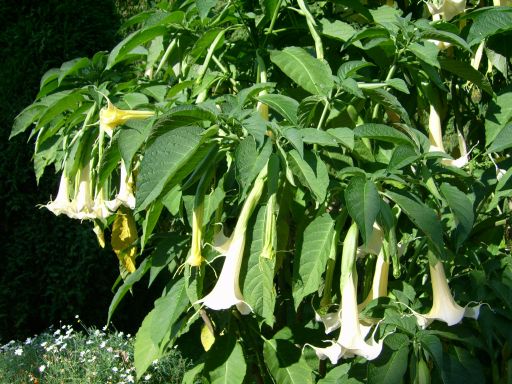
Angel’s trumpet (Brugmansia spp.)
Along with yew and golden chain, angel’s trumpet is one of the few highly poisonous woody plants.
Some rabbits—approximately 50%, but not all—may have a degree of resistance to atropine.
The plant can reach a height of approximately 2–5 metres.
Habitat: Grown as an ornamental plant in gardens
Growth form: Shrub or small tree
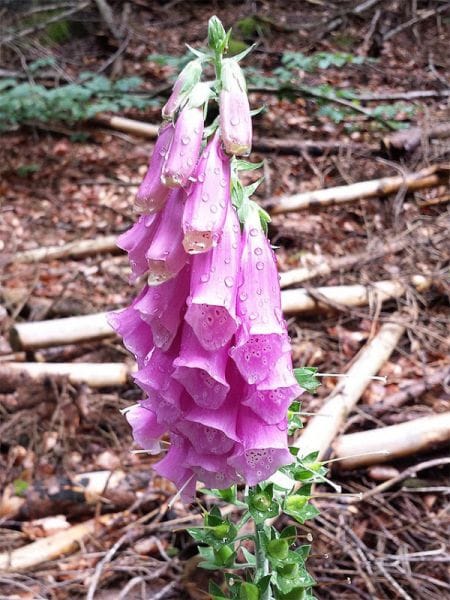
Common foxglove (Digitalis purpurea), as well as large yellow foxglove (Digitalis grandiflora) and straw foxglove (Digitalis lutea)
Foxglove has very distinctive, thimble-shaped flowers. When not in flower, however, the plant is rather inconspicuous.
Its leaves are unremarkable and can easily be mistaken for those of other plants, particularly comfrey and borage.
Foxglove-derived substances are used in extremely small quantities to manufacture heart medications such as digitoxin. However, the difference between a therapeutic and a toxic dose is very small, making accurate dosing essential.
Habitat: Mainly found in the wild in partially shaded areas beneath trees, but also grown as an ornamental plant in gardens
Growth form: Herbaceous plant
Toxins: Cardiac glycosides, including digitoxin and lanatosides
Effects: The toxins bind to and inhibit the sodium–potassium ATPase. This alters the transport of sodium and potassium across cell membranes and increases the force of contraction of the heart muscle.
Symptoms: Restlessness, convulsions, bloody and watery diarrhoea, a slowed or abnormal heartbeat, including bradyarrhythmia and other cardiac arrhythmias, unusually loud heart sounds, impaired coordination, staggering, tremors and partial paralysis. Death may occur within 24 hours as a result of cardiac arrest or respiratory paralysis.
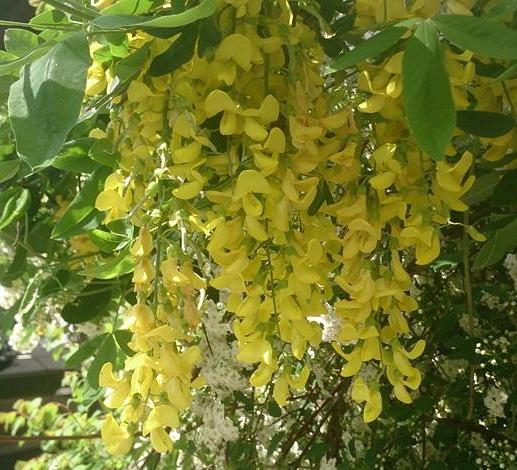
Golden chain (Laburnum spp.)
Golden chain is a popular ornamental plant. It is commonly found in parks, gardens and hedges.
Habitat: Grown as an ornamental shrub in gardens
Growth form: Shrub or tree
Toxins: Cytisine and N-methylcytisine (quinolizidine alkaloids)
The toxins can pass into the milk.
Effects: Nicotinic effects initially cause stimulation of the central nervous system, followed by paralysis.
Symptoms: Excessive salivation, digestive problems, initial constriction of the pupils (miosis), agitation, convulsions and an increased heart rate (tachycardia). These may later be followed by dilation of the pupils (mydriasis), depression, muscular paralysis and a slowed heart rate (bradycardia). Death may occur as a result of cardiac arrest.
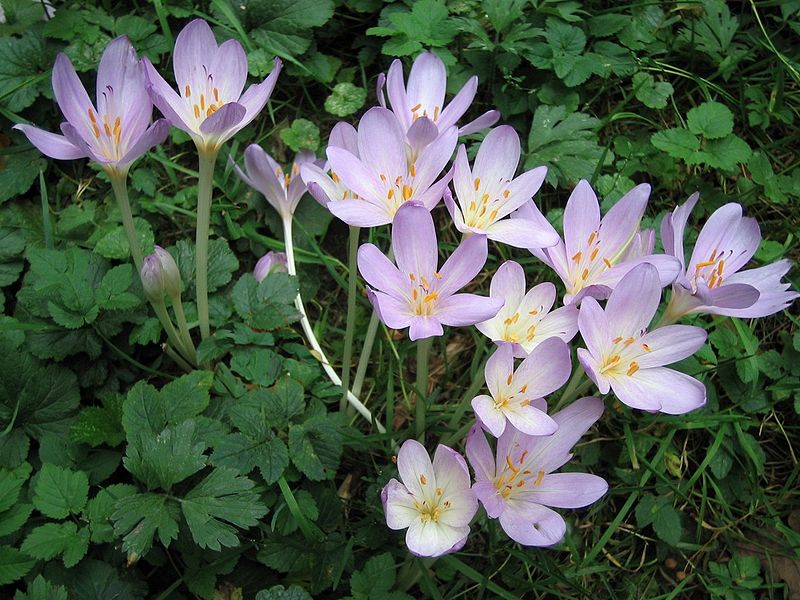
Autumn crocus / meadow saffron (Colchicum autumnale)
Habitat: Meadows, particularly damp locations in full sun or partial shade. The flowers are easily confused with those of true crocuses. However, unlike crocuses, which flower in spring, autumn crocus flowers in autumn.
Autumn crocus is particularly dangerous because it remains poisonous even after being dried in hay and is repeatedly responsible for fatal poisonings.
Growth form: Herbaceous plant
Risk of confusion: The leaves may be confused with wild garlic. Although the plants look similar, several differences can be recognised on closer inspection. Autumn crocus leaves emerge directly from a thick-leaved basal rosette and have no distinct stalk. Lily of the valley usually has two or three leaf stalks that wrap around one another, while wild garlic leaves have a clearly visible stalk.
Toxin: Colchicine
Effects: Colchicine is a cytotoxin that inhibits mitosis and therefore prevents normal cell division.
Symptoms: Symptoms usually begin two to six hours after ingestion and may include loss of appetite, sweating, colic, bloody diarrhoea, paralysis and circulatory problems. Death may occur after one to two days as a result of respiratory paralysis, often while the animal remains fully conscious. Hay contaminated with autumn crocus may cause the deaths of several animals.
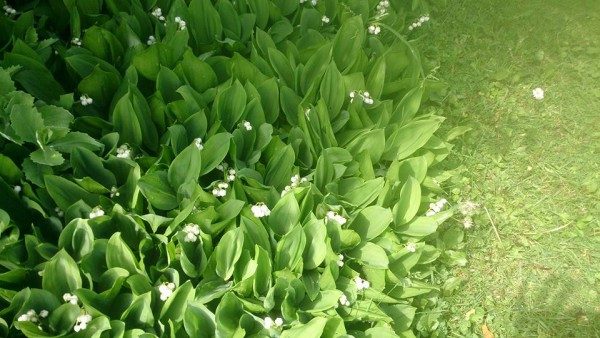
Lily of the valley (Convallaria majalis)
Habitat: Partially shaded areas, especially in parks and gardens
Growth form: Herbaceous plant
Risk of confusion: It may be confused with wild garlic. The garlic-like smell of crushed wild garlic leaves is an important distinguishing feature. Another clear difference is the glossy underside of lily-of-the-valley leaves.
Unlike wild garlic, lily of the valley produces two large leaves that grow from the same shoot and wrap around it. The leaves are initially enclosed within a sheath, which later turns brownish.
Wild garlic also emerges earlier in the year, whereas lily of the valley usually begins to sprout from mid-April onwards.
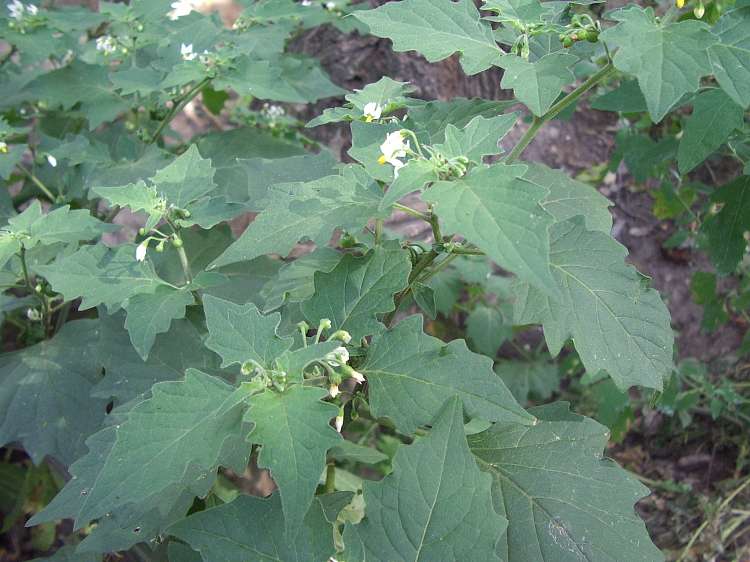
Black nightshade (Solanum nigrum) and bittersweet nightshade (Solanum dulcamara)
These plants can be highly poisonous, although some rabbits—but not all—may have a degree of resistance to their toxins.
Habitat: Mainly unmanaged or uncultivated areas, such as roadsides, railway embankments, hedgerows and field margins
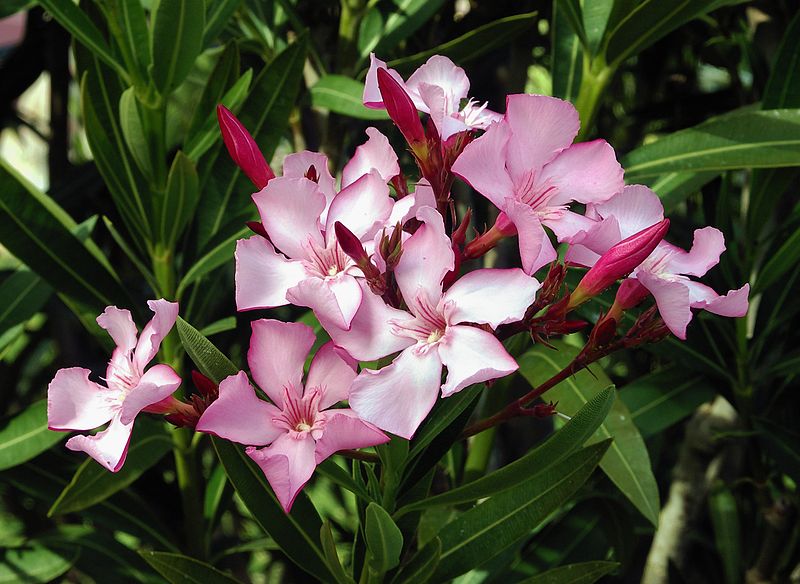
Oleander (Nerium oleander)
Oleander is widely known as a poisonous plant.
It should not be planted in gardens near rabbits, as even small amounts can be dangerous.
Habitat: Grown as an ornamental plant in gardens
Growth form: Shrub
Risk of confusion: Because of the shape of its leaves, oleander may be confused with members of the olive family, such as olive trees, wild olives and ash trees, or with willow, especially when the oleander is still young. Oleander leaves are tougher and have a very prominent central vein. In addition, oleander is a shrub rather than a tree.
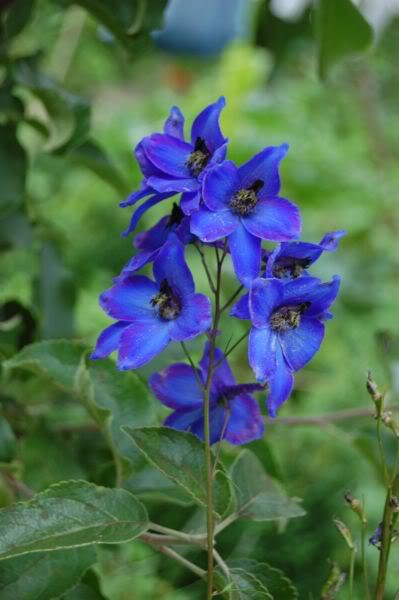
Larkspur (Delphinium elatum)
A relatively popular ornamental plant
Caution when allowing animals to roam freely in the garden!
Larkspur belongs to the buttercup family.
Habitat: Grown as an ornamental plant in gardens and parks
Growth form: Herbaceous plant
Risk of confusion: Most likely to be confused with buttercup, which is mildly poisonous, sweet lupin, or cranesbill.
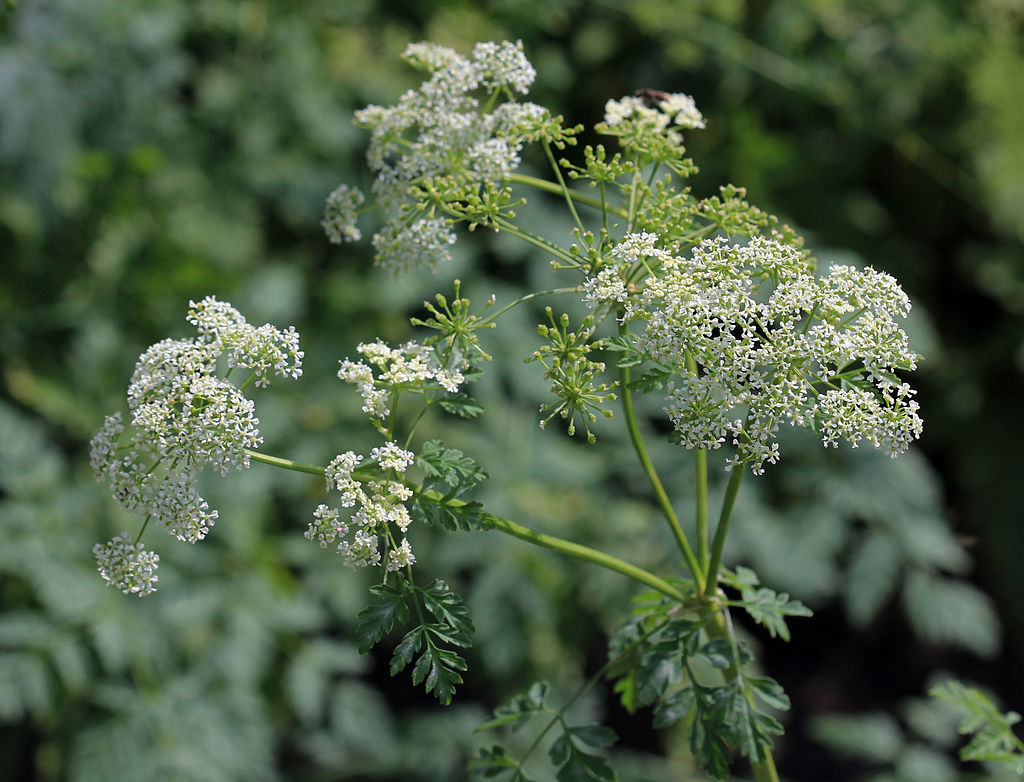
Poison Hemlock (Conium maculatum) and Water Hemlock (Cicuta virosa)

Growth form: Herbaceous plant
Risk of confusion: May be confused with safe forage plants such as cow parsley and other members of the carrot family. Characteristic smell resembling mouse urine.
Toxins: Coniine and other piperidine alkaloids — neurotoxic.
Rapidly absorbed through the skin and mucous membranes; causes nicotinic effects, is teratogenic, and can be excreted in milk.
Effects: Paralysis while consciousness remains intact.
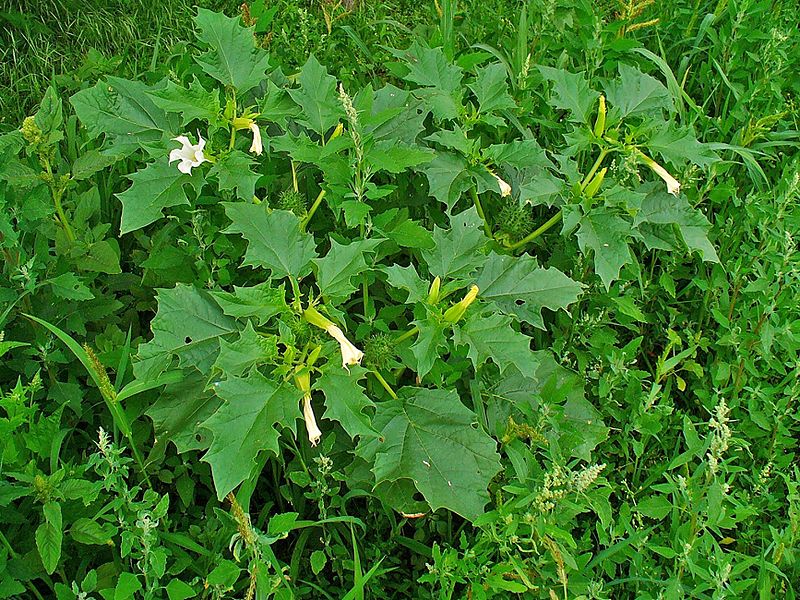
Thorn Apple / Jimsonweed (Datura)
Can be highly poisonous, although some rabbits—but not all—have a certain resistance to its toxins, particularly atropine. The seeds are especially dangerous.
Habitat: A non-native plant found along roadsides, on waste ground, rubble sites, and similar locations.
Growth form: Herbaceous plant
Toxins: Tropane alkaloids, including atropine, scopolamine, and hyoscyamine
Effects: Tachycardia, mydriasis, dry mouth, loss of coordination, convulsions, coma, severe colic, polyuria, and hyperaesthesia.
The leaves and flowers of thorn apple resemble those of the also poisonous angel’s trumpet (Brugmansia). The main difference is that the trumpet-shaped flowers of thorn apple point upwards, whereas those of angel’s trumpet hang downwards.
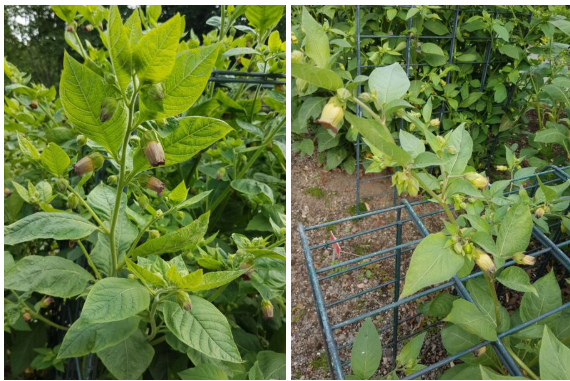
Deadly Nightshade (Atropa belladonna)
Deadly nightshade is widely known as a poisonous plant. Some rabbits—but not all—may have a certain resistance to atropine.
Habitat: Semi-shaded woodland, rocky scrubland, and along forest paths
Growth form: Herbaceous plant
Toxins: Tropane alkaloids, including atropine and S-hyoscyamine; scopolamine
Effects:
No salivation. Increased respiratory rate, dry mucous membranes, dilated pupils (mydriasis), visual disturbances, agitation, digestive problems, loss of muscle tone (atony), convulsions, and death due to respiratory paralysis.
Treatment: Physostigmine and further supportive care
Risk of confusion: May be confused with other blue or dark-coloured fruits, such as bilberries and sloes.
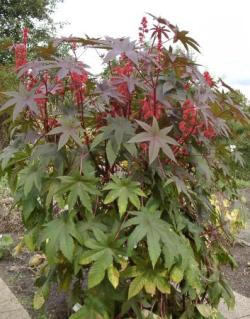
Castor Oil Plant (Ricinus communis)
Toxic dose: 1 g of castor beans per kg of body weight, administered orally
Habitat: Grown as an ornamental shrub in gardens
Growth form: Shrub
Risk of confusion: May be confused with Virginia creeper, which is a climbing plant rather than a shrub.