

For rabbit socialization to be successful, it is extremely important to learn about the topic thoroughly before starting. The better informed you are, the calmer and smoother the bonding process between the rabbits will be.
Factors That Influence Rabbit Socialization
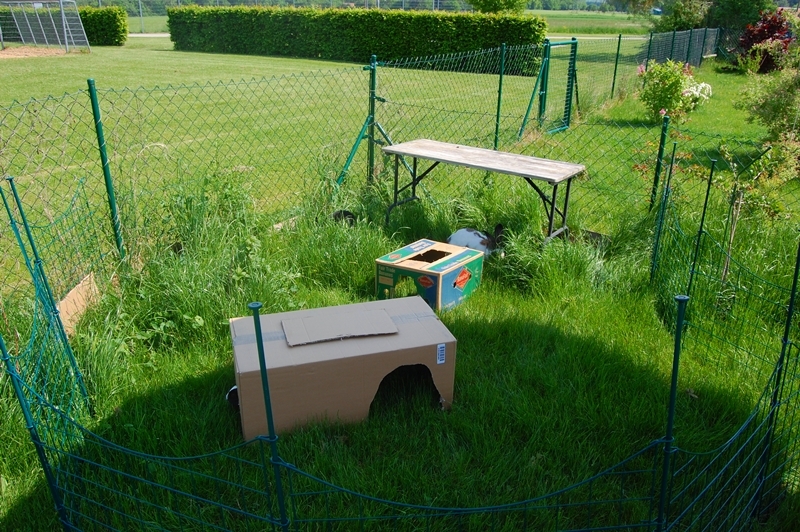
The Right Place for Introducing Rabbits
Rabbit socialization is always necessary because rabbits defend their territory and also need to establish a hierarchy with newcomers. If you allow rabbits to meet outside of their usual territory, one of the main causes of conflict — territorial behavior — is removed. This way, they only need to establish their hierarchy, and the process is usually much calmer.
For this reason, especially for people who have never bonded rabbits before, it is recommended to introduce them in a completely neutral and unfamiliar environment for both animals. The newer and stranger the place feels, the better the bonding process usually works.
It can also help to change the usual environment:
- Indoor rabbits can be bonded in the garden.
- Outdoor rabbits can be introduced indoors.
- For indoor rabbits, places such as a bathroom (if they normally do not use it), a balcony, or a garage are often suitable. It can even be a good idea to hold the first meeting at a friend’s house.
⚠️ Never place one rabbit directly into another rabbit’s enclosure.
For rabbits that already have a very large living area — for example, free-roaming rabbits in a house or rabbits living in a large garden — bonding may sometimes work even without a neutral area. However, if one rabbit is highly territorial and the available space is small, successful bonding is unlikely.
In general, females tend to defend their territory more strongly than males, although there are exceptions.
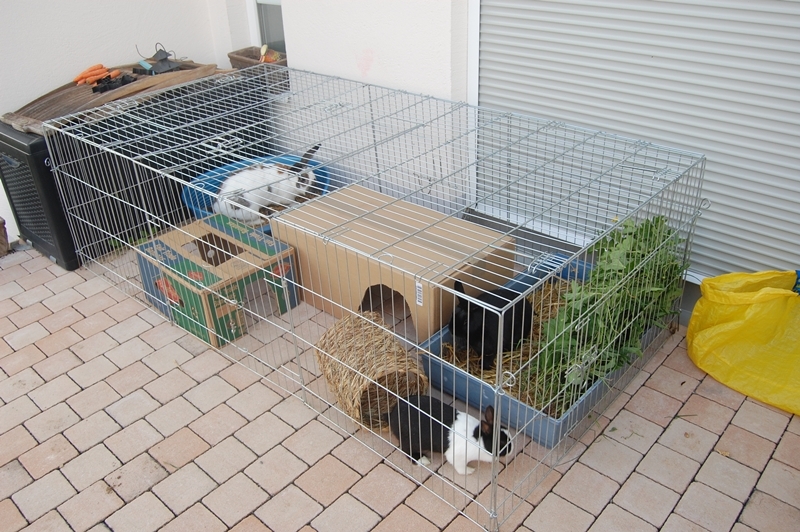
How Large Should the Bonding Area Be?
The size of the space is a key factor in rabbit bonding. The larger the area, the calmer the initial interaction between the rabbits usually is, although the process may take longer. In smaller spaces, bonding often progresses more quickly, but it can also become more stressful.
The ideal approach is to adjust the size of the area according to the rabbits’ behavior during bonding:
- If the rabbits mainly avoid each other, the space can be smaller.
- If fights become too intense or one rabbit shows significant stress, the area should be expanded.
Depending on the rabbits’ personalities, slightly reducing the space can also help speed up the bonding process and end the tension sooner. When rabbits have too much space, they may avoid each other constantly and never properly establish their hierarchy. This can prolong conflicts and make coexistence more difficult.
In smaller spaces, many rabbits eventually find a way to coexist more quickly. As a general guideline, around 3 m² per rabbit is recommended during the bonding process.
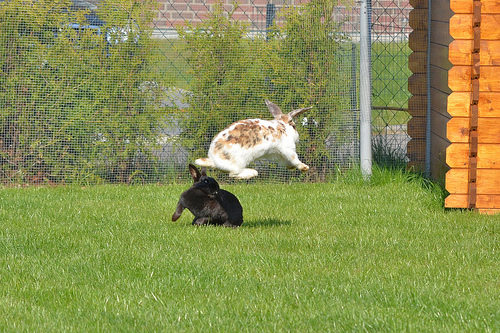
What You Need for Rabbit Bonding
The area used for bonding should be completely free of scents or territorial markings from any rabbit. Ideally, only completely new objects should be used.
Recommended Items for Rabbit Bonding
To create a safe and suitable environment, you can use:
- Cardboard boxes with one entrance and one exit
- Tunnels
- Bridges
- Platforms or elevated areas
- Hiding places and retreat areas
It is extremely important to avoid dead ends, as they can lead to fights, stress, and dangerous situations during the initial bonding phase.
The rabbits should have enough hiding spots to feel safe. However, if bonding takes too long or constant conflicts arise, it may become necessary to remove some hiding places.
Preparing the Space Correctly
The floor should be non-slip to prevent injuries during chasing or fighting.
In addition, food should never be placed in only one location. Hay and food should be distributed throughout multiple areas to reduce competition and encourage calmer coexistence.
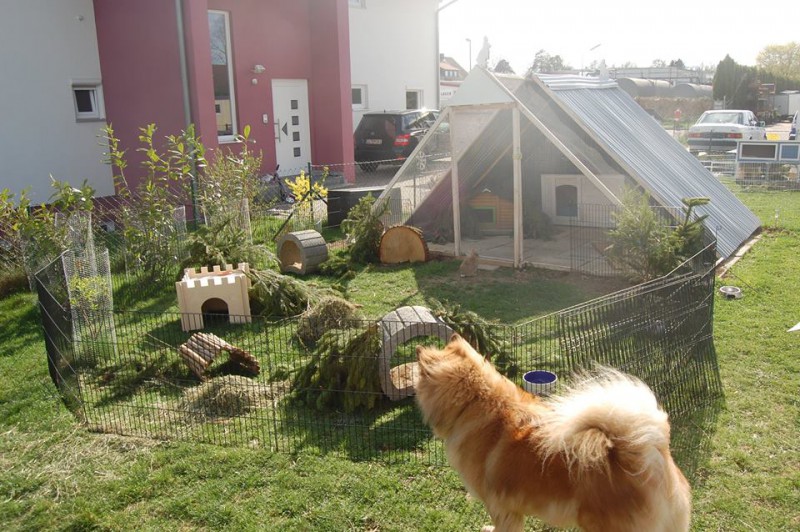
What to Do Before Starting Rabbit Bonding
Before beginning the bonding process, proper preparation is essential to increase the chances of success.
People often recommend allowing rabbits to smell each other before introducing them. However, this method frequently causes problems and can make bonding fail. When rabbits have prior contact without being able to establish their hierarchy directly, tension often increases.
If a bonding attempt fails and you want to try again, the rabbits should remain completely separated for approximately 2–3 weeks. During this time, they should not see, smell, or have any contact with each other. Only then is it possible to start a completely fresh bonding process.
It is also extremely important that all rabbits are as healthy as possible before the introduction. A sick, weak, or injured rabbit may react with more stress, fear, or aggression.
The First Meeting During Rabbit Bonding
Bonding begins the moment the rabbits meet for the first time in a neutral space. During this first encounter, the animals need to establish their hierarchy and learn how to coexist.
Rabbits are highly social group animals and should never live alone. It is strongly recommended to keep at least two rabbits together to ensure proper social interaction and prevent behavioral issues.
Can Rabbit Bonding Be Avoided?
The easiest pairing is usually a female and an early-neutered male — meaning neutered before reaching sexual maturity. It also often works well to introduce a young rabbit into an already stable and harmonious rabbit group.
However, when unfamiliar rabbits are introduced to one another, proper bonding is necessary. A new rabbit should never be placed directly into the territory of the resident rabbit, as this usually leads to territorial fights and serious conflicts.
Bonding should always take place in a completely neutral, new area without territorial smells.
Method 1: Rabbit Bonding in Neutral Territory
Bonding rabbits in neutral territory is one of the most recommended methods, especially for beginners or people with little experience. It also has one of the highest success rates.
Before starting, the rabbits should remain separated for at least two weeks. During this period, they should neither see nor smell each other. This makes hierarchy establishment easier and reduces the risk of serious fights.
The introduction should take place in a completely new and unfamiliar environment for all rabbits. This prevents either rabbit from perceiving the other as an intruder in their territory and helps reduce aggression and territorial behavior.
All rabbits should enter the neutral territory at the same time. Before the introduction, they should have no visual or scent contact.

How to Prepare the Neutral Territory
The bonding area should include:
- Hay and fresh food distributed in multiple places
- Completely new and neutral hiding spots
- Enough space for movement and escape
Hiding places should never have only one entrance, as a rabbit could become trapped during a confrontation.
A truly neutral territory is a place where none of the rabbits have lived before or left territorial markings.
Normal Behavior During Bonding
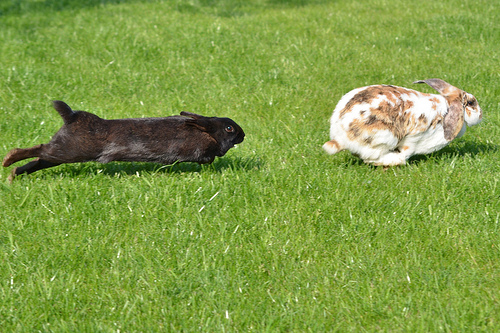
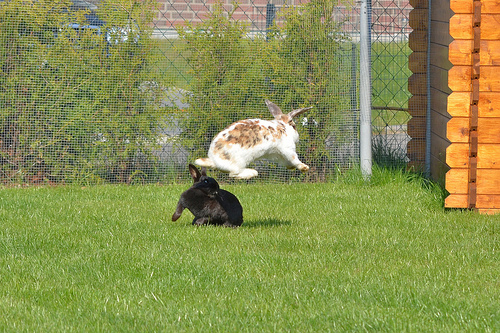
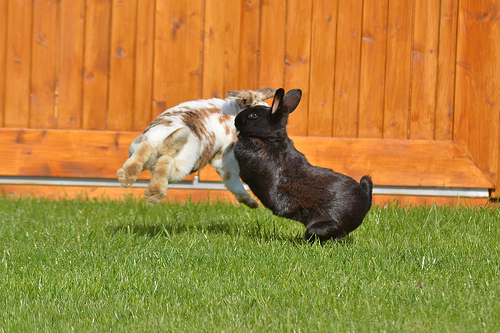
During bonding, rabbits need to establish their hierarchy. Therefore, chasing, brief fights, and even small tufts of fur being pulled out are normal. This behavior is often necessary to achieve a stable and harmonious relationship.
During the first few hours, the owner should supervise constantly and intervene only if:
- Rabbits bite dangerously
- One rabbit shows extreme stress
- Serious injuries occur that require veterinary care
During intense fights, a blanket can be used to separate or distract the rabbits briefly before allowing them to continue establishing hierarchy.
Rabbit bonding can take several days or even weeks. Once the rabbits eat together and rest beside each other, they can usually move into their permanent living area.
Before moving them, it is recommended to clean the permanent enclosure thoroughly with apple cider vinegar to remove territorial smells. Minor arguments may still happen after the move, but they usually disappear quickly.
Method 2a: Two Territories With Meetings in a Neutral Area
This method only works if each rabbit group — for example, two pairs — already has its own separate territory. These may be different rooms in the house or different sections of a garden.
Between both territories, there should be a neutral area for meetings.
Before starting bonding, the rabbits should not see or smell each other for around two weeks. This helps reduce aggression and makes hierarchy clarification easier.

Preparing the Neutral Area
On the bonding day, access from both territories into the neutral zone is opened. Cardboard boxes, tunnels, and safe hiding spots can be added to encourage curiosity and exploration.
Dead ends must always be avoided. Every hiding place should have at least two exits.
The rabbits may return to their own territory at any time. However, the owner must ensure that no rabbit enters the other group’s territory too early.
How This Method Works
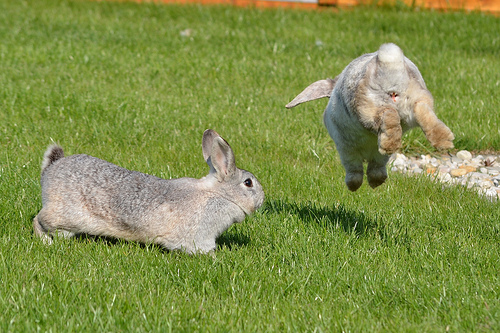
Meetings should happen several times per day under supervision. Rabbits may chase or fight to establish hierarchy. In most cases, intervention is unnecessary unless there is a risk of serious injury.
Once the rabbits eat together and remain calm, access to the other territory can gradually be allowed.
Another option is to keep all rabbits in the neutral area for around two days and two nights while their original territories are cleaned thoroughly to remove territorial scents.
Before returning the rabbits, neutral or new furniture and accessories should be added to reduce future territorial conflicts.
Method 2b: Interrupted Rabbit Bonding
This method involves allowing rabbits to interact only during certain times of the day in a neutral area before separating them again afterward.
For example, rabbits may stay in their normal territories at night and meet during the day when supervision is possible.
It is extremely important that, while separated, the rabbits cannot see or smell each other. In addition, they should remain completely separated for around two weeks before bonding begins.
How This Method Works
During time together in the neutral area, rabbits may chase, argue, or fight to establish hierarchy. However, after each separation, they often react with renewed tension during the next meeting.
For this reason, interrupted bonding usually takes longer and has a lower success rate than continuous bonding without separation.
This method is generally recommended only for experienced rabbit owners.
Advantages and Disadvantages
The main disadvantage is that rabbits must partially re-establish hierarchy after every separation, increasing stress and delaying stable coexistence.
The main advantage is that a permanent neutral territory is not always necessary. For example, in secure gardens protected from predators, rabbits may spend the day together in a neutral area and return to their original spaces at night.
Method 3: Rabbit Bonding in a Very Large Space
Bonding rabbits in a very large area is recommended only when the rabbits live freely in an area of at least 150 m².
In such cases, rabbits can often be introduced directly within the large territory because they have enough room to avoid constant conflict.
However, special attention should be paid to the new rabbit, who is usually perceived as an intruder in the established territory. Rabbits must have enough opportunities to retreat and create distance when necessary.
This method is generally recommended only for experienced owners.

Common Problems in Large Territories
In many cases, rabbits coexist relatively peacefully during the day but continue having conflicts in nighttime sleeping areas because those places are considered more valuable territory.
For this reason, complete bonding can be more difficult in resting areas.
Making Nighttime Coexistence Easier
In these situations, it may help to create a small separate space for the new rabbit within the shared nighttime territory. This allows the resident rabbits to gradually become accustomed to the newcomer’s presence.
After several weeks, many rabbits eventually accept the new group member.
This separate area should remain inside the shared territory rather than in a completely different location. Otherwise, the new rabbit may establish its own separate territory, making bonding even more difficult.
Method 4: Rabbit Bonding Through Bars or Fences
Many people recommend placing two cages or enclosures side by side so rabbits can slowly get used to each other’s scent and presence. However, this method works only in very specific situations.
When rabbits are shy and non-aggressive, bonding through bars may work reasonably well. However, with dominant or territorial rabbits, this method often increases aggression.
The problem is that rabbits can see and smell each other but cannot directly establish hierarchy. This can create frustration, tension, and much more violent fights once direct contact finally occurs.

When This Method Can Be Useful
Bonding through barriers is mainly recommended for:
- Disabled rabbits
- Rabbits unable to fight physically
- Particularly difficult cases where other methods have failed
In some situations, temporarily switching territories can also help. For example, placing one rabbit in the other’s enclosure for a while allows both to become familiar with each other’s scent.
Slow Bonding as a Last Resort
In extreme situations, this method may be used as a last resort to avoid serious injuries. However, bonding often requires a great deal of time and patience and may take several months.
Variation in Large Spaces
This method can also be applied in very large areas, such as a large secure garden.
In these cases, a small enclosure for the new rabbit may be placed inside the other rabbit’s territory. The enclosure should be moved regularly so the newcomer’s presence becomes a normal part of the territory.
Because the rabbits have enough room to run away and avoid each other, aggression is often reduced.
Method 5: Rabbit Bonding Through Stress
This method is based on the idea that social animals tend to unite during shared fear or insecurity. In nature, rabbits generally do not fight when facing common danger because survival instinct overrides territorial conflict.
For this reason, some people intentionally create controlled stress situations to encourage bonding.
Stress Methods Often Recommended
Examples include:
- Transporting rabbits together in a carrier during a car ride
- Placing the carrier on top of a running washing machine
- Exposing rabbits to unfamiliar situations
However, these methods are highly controversial and can cause extreme stress.
Risks of This Method
Stress bonding can lead to:
- Severe fear
- Extreme stress
- Violent fights
- Serious injuries, especially in confined spaces
When rabbits do not have enough space to escape or retreat, the risk of injury increases dramatically.
Moderate Use of Stress During Bonding
Some owners use milder versions of this method. For example, transporting rabbits separately before introducing them in neutral territory may create mild insecurity that slightly simplifies bonding.
In some cases, the presence of a calm animal accustomed to rabbits may also help interrupt fights and reduce tension.
Even so, this method should be used with great caution and is generally not recommended as a first choice.
Method 6: Rabbit Bonding After Anesthesia
Some studies suggest that allowing rabbits to wake up together after anesthesia can temporarily reduce aggression and facilitate bonding.
This method may be used, for example, when two males are neutered at the same time or in especially difficult cases where other methods have failed.
In some situations, veterinarians may also use mild sedation to assist bonding. This should always be done under veterinary supervision.
How This Method Works
After anesthesia or neutering, rabbits remain together while regaining consciousness. In many cases, this temporarily reduces territorial behavior and aggression.
Some owners report particularly good results with sexually mature males that previously fought violently.
After waking up, the rabbits should continue living together for some time in neutral territory until coexistence stabilizes. Minor disputes may still occur while they finalize hierarchy.
What Research Says About Rabbit Aggression
Researchers at the University of Los Angeles studied aggressive rabbit behavior after anesthesia. According to the study, rabbits waking up together showed significantly less aggression and coexisted peacefully for several weeks.
However, when the rabbits were isolated again and later reintroduced, aggression quickly returned.
Additional experiments produced similar results: rabbits waking together after anesthesia showed fewer conflicts than rabbits waking separately.
Important Considerations Before Using This Method
Although some cases show positive results, this method does not guarantee successful bonding and should never be used without veterinary advice.
After anesthesia, rabbits still require:
- Neutral territory
- Constant supervision
- Enough time to stabilize the relationship
- Sufficient space to avoid future territorial conflicts
Bonding after anesthesia is generally considered a special method for difficult situations rather than a standard solution.
Are Some Rabbits Incompatible?
Just like humans, rabbits form stronger bonds with some companions and reject others. Therefore, not all rabbits get along, even when bonding is done correctly.
If serious injuries continue to occur despite proper bonding in neutral territory, or if one rabbit constantly suffers stress, fear, or harassment, forcing them to live together usually makes no sense.
However, a rabbit should never live alone. Rabbits are extremely social animals and require companionship for both physical and emotional well-being.
If bonding fails, the solution is not isolation but finding a more compatible companion.
What to Do When Rabbits Do Not Accept Each Other
In some cases, rabbits may coexist without constant fighting but still fail to form a strong bond. Sometimes they simply tolerate one another.
In large groups, rabbits usually choose which companions they prefer spending time with. In small groups, the owner must observe carefully for signs of incompatibility.
If necessary, it may be better to remove the new rabbit and search for a more suitable partner.
How to Distinguish Normal Fighting From Incompatibility
Short fights, chasing, and hierarchy clarification are normal parts of rabbit bonding and do not automatically indicate incompatibility.
However, constant aggression, extreme fear, or repeated injuries may indicate true incompatibility.
Which Pairings Usually Work Best?
The best results are typically achieved with a neutered male and a female. Especially when using Method 1 in neutral territory, this combination works successfully in the vast majority of cases.
Even rabbits initially considered “incompatible” often manage to coexist peacefully when bonding is done correctly and the right companion is chosen.
If problems occur during rabbit bonding, it is important to analyze the situation calmly and adjust the bonding process rather than forcing a stressful coexistence.