
Loading
  • Link to Instagram
How to rabbit
  • Home
  • Getting a Rabbit
    • Before You Get Rabbits
      • Rabbit Care for Beginners
      • Rabbit Care in 15 Minutes
      • How Much Do Rabbits Cost?
      • Lop Rabbits: Health & Welfare Concerns
      • Rabbit Lifespan: How Long Do Rabbits Live?
    • Choosing & Bringing Home Rabbits
      • Bringing a Rabbit Home
      • Sexing Rabbits: Male or Female?
      • Neutering Male Rabbits
      • Rabbits and Other Pets
      • Rabbit Adoption Contract
  • Housing
    • Outdoor Housing
      • Winter Care for Rabbits
      • Keeping Rabbits in the Garden
      • Building an Outdoor Rabbit Enclosure
      • Overwintering Rabbits
      • Outdoor Rabbit Run Ideas
    • Indoor Housing
      • Rabbit Litter Training Guide
      • Setting Up a Rabbit Room
      • Vitamin D for Indoor Rabbits
      • Keeping Rabbits Indoors
      • Indoor Rabbit Housing Ideas
      • Keeping Rabbits Cool in Summer
    • Balcony Housing
      • Keeping Rabbits on a Balcony
      • Rabbit-Friendly Balcony
  • Feeding
    • Foods for Rabbits
      • Grass & Meadow Plants
      • Pellets for Rabbits
      • Vegetables
      • Culinary herbs
      • Fruits for rabbits
      • Water & Drinking
    • Feeding Guidelines
      • Feeding Guidelines
      • Common Feeding Mistakes
      • Rabbit Feeding Myths
      • How to Feed a Baby Rabbit
    • Feeding tips
      • How to Transition a Rabbit to a New Diet Safely
      • Winter Diet for Rabbits
      • Nutrition for Young Rabbits
      • Diet Changes in Young Rabbits
    • Nutrition Basics
      • What can rabbits eat?
      • Types of Rabbit Diets
      • Is Hay the Main Food for Rabbits?
      • Tooth Wear & Dental Health
      • Crude Fiber & Carbohydrates
      • Secondary Plant Compounds
      • Food selection
      • Between Scarcity and Abundance
      • Rabbit Digestion
      • Wild Rabbit Nutrition
    • Foraging & Plant Identification
      • Foraging Meadows for Beginners
      • Identifying Coniferous Trees
      • Highly toxic plants
    • Food & Plant Lists
      • Safe Branches for Rabbits
      • Best Vegetables for Rabbits
      • Wild Grasses for Rabbits
      • Aromatic Herbs for Rabbits
      • Foraging & Plant Identification
      • Garden plant list
      • Fruit list
  • Companionship & Bonding
    • Rabbit Bonding
    • After a Rabbit Dies: Should the Other Rabbit Live Alone?
    • Can Rabbits Live Alone?
    • Choosing the Right Rabbit Companion
    • Rabbit Bonding Methods
    • Common Bonding Mistakes
    • Bonding of Young Rabbits
    • Keeping Rabbits in Large Groups
    • Hierarchy Fights & Bullying
    • Bonding Disabled or Ill Rabbits
    • Rabbit Socialization
  • Behavior
    • Handling Rabbits
    • Common Behaviors & Problems
      • Rabbits that don’t get along
      • Handling traumatized rabbits
      • Nibbling & Chewing
      • Digging
      • Humping
      • Kicking, Scratching & Wriggling
      • Biting & Aggressive Behavior
    • Body Language & Senses
      • Rabbit Senses
  • Health
    • General Health
      • Is My Rabbit Sick?
      • Recognizing Pain in Rabbits
      • Sudden Death in Rabbits: Possible Causes
      • Rabbit Health Myths
    • Digestive Disorders
      • Gastric Dilatation in Rabbits
      • Bloating in Rabbits
      • Hairballs & Constipation
      • Rabbit Diarrhea & Mushy Poop
      • Stomach Overload
      • Coccidia in Rabbits
      • Yeast in Rabbits
      • Worms in Rabbits
      • Underweight & Overweight Rabbits
      • Megacolon Syndrome
      • Bacterial Enteritis
      • Appendicitis in Rabbits
    • Skin, Fur & Parasites
      • Molting
      • Flystrike in Rabbits (Myiasis)
      • Mites, Ticks, Fleas & Other Parasites
      • Ear Mites
      • Skin Fungus
      • Wounds & Bite Wounds
      • Abscesses
      • When Rabbits Lick Themselves Raw
      • Sore Hocks in Rabbits
      • Injection Necrosis
      • Tumors & Cancer in Rabbits
      • Skin Inflammation
    • Infectious Diseases
      • Rabbit Snuffles
      • E. cuniculi in Rabbits
      • Rabbit Hemorrhagic Disease (RHD)
      • Myxomatosis
      • Ear Infection
      • Rabbit Syphilis
      • Tularemia (Rabbit Fever)
      • Tetanus
      • Toxoplasmosis
      • Listeriosis
      • Rodentiosis
      • Herpesviruses in rabbits
    • Internal & Organ Diseases
      • Liver Diseases
        • Liver Lobe Torsion
      • Cystitis
      • Bladder Sludge & Bladder Stones
      • Kidney Failure
      • Sex & Neutering
      • Uterine Diseases
      • Heart Diseases
      • Thyroid Diseases
      • Heatstroke in Rabbits
      • Stroke in rabbits
      • Schock
      • Hormonal Disorders
    • Other Health Conditions
      • Floppy Rabbit Syndrome
      • Dental Diseases
        • Jaw Abscesses
        • Nutrition for Dental Disease
      • Eye Diseases in Rabbits
        • Watery Eyes
      • Joint Diseases
      • Bone Fractures & Accidents
      • Cramps & Seizures
      • TThymoma, Lymphoma & Other Tumors
      • Poisoning in Rabbits
      • Mold & Mycotoxins
  • Care
    • Rabbit Poop & Urine: What It Means
    • Housing for Disabled & Elderly Rabbits
    • Wheelchairs & Mobility Support for Rabbits
    • Rabbit Health Check
    • Dirty Bottom in Rabbits
    • Why Does My Rabbit Pee & Poop Everywhere?
    • Saying Goodbye to a Rabbit
  • Offspring
    • Breeding that causes animal suffering
  • Service
    • News
    • About Us
    • Legal Disclosure
    • Privacy Policy
  • Click to open the search input field Click to open the search input field Search
  • Menu Menu

Thymoma, Lymphoma, and others

Thymoma and Lymphoma

A thymoma is the medical term for a tumor or growth of the thymus. The thymus is part of the lymphatic system and is located next to the heart, making it an integral part of the immune system. Most thymomas are benign growths, with only about a quarter being malignant (thymic carcinoma or malignant thymoma). Thymomas are much more common in rabbits than in other mammals, and they typically affect older rabbits (usually five years or older). Castrated male and female rabbits are more likely to be affected than uncastrated ones.

Lymphoma refers to a growth in the lymph nodes, which are part of the immune system. Like thymomas, lymphomas are usually benign and cause medical symptoms mainly due to their size. Lymph nodes can also become significantly enlarged due to infections.
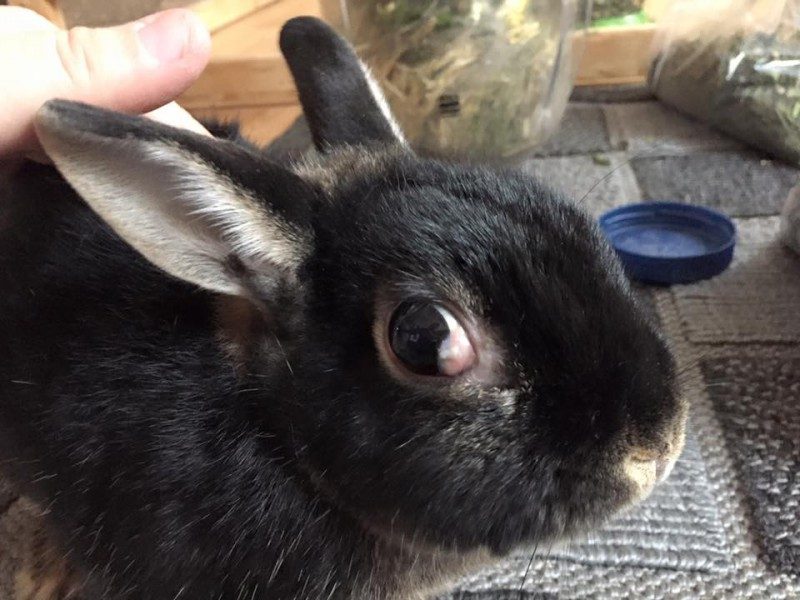
Black bunny rabbit close-up, pet bunny with soft fur and alert expression.

Contents

  • Symptoms
  • Diagnosis
  • Treatment
  • Surgical Treatment for Thymoma:
  • Radiation for Benign Thymoma:
  • Euthanasia:

Symptoms

The first symptom is usually the protrusion of the nictitating membrane (third eyelid), which often occurs when the rabbit lowers its head, such as when eating or under stress. Typically, the nictitating membrane only temporarily protrudes and then retracts. The eyes may also bulge out, appearing somewhat protruded.

Rabbits often lose weight gradually, move less, or seem less active than before.

In the advanced stages, respiratory distress may occur as the thymoma presses on the heart, potentially hindering its normal function. The symptoms will resemble those of a heart condition. The rabbit may exhibit labored breathing from the sides of the chest and nostrils, and the heart sounds may be muffled upon auscultation. In some cases, fluid accumulation may occur in the lungs and abdominal cavity as a result.

Skin disorders are rare but may occur, showing as coat changes, with dandruff being relatively common and skin inflammation occurring less frequently. Symmetrical hair loss on the head and abdomen is often observed.

In lymphoma, it may spread to other body areas (typically involving the lymph nodes), and in cases of severe progression, it may cause little or no respiratory distress.

Diagnosis

The growth can usually be seen on an X-ray. A heart ultrasound is used to rule out heart diseases, while a biopsy (tissue sample) provides an accurate diagnosis and helps differentiate from lung tumors and abscesses, though it is not always performed. In the case of lymphoma, an increase in lymphocytes may be observed in the blood test, and this can be further examined through a blood smear. A pseudoleft shift in the blood may be an indicator of lung abscesses.

Treatment

Medication Therapy:

  • Typically, an ACE inhibitor (e.g., Prilium or Benefortin) is prescribed to lower blood pressure. If fluid accumulation occurs, a diuretic (e.g., Dimazon) may be useful.
  • To inhibit tumor growth and, in the best case, reduce it, a low dose of corticosteroids (e.g., Prednisolone, 1mg/kg orally) has been found effective, especially if the tumor is already large or if respiratory distress occurs.
    Side effects: Rabbits are sensitive to steroids! Corticosteroids are only suitable for a few conditions. Possible consequences include immunosuppression, which can lead to issues like the outbreak of coccidiosis, E. cuniculi (EC), mites, or rabbit snuffles. Severe liver damage or liver failure, gastrointestinal ulcers, and delayed wound healing are also possible. The EC status must be tested beforehand, and EC-positive rabbits should be treated with Fenbendazole (Panacur). Corticosteroids are considered the treatment of choice and often produce better results than radiation or surgical treatments.
  • For respiratory issues, Theophylline can also be used, which works similarly to corticosteroids but has fewer side effects. However, it does not reduce tumor size.
  • Additionally, other tumor therapies, such as Heel therapy or mistletoe therapy, are commonly used. These are tailored to the animal and the tumor. However, their effectiveness has not been scientifically proven.
  • Note: Immune-boosting or immune-enhancing medications should never be administered.

Surgical Treatment for Thymoma:

Surgical removal of the thymoma is generally not recommended, as over 70% of rabbits die shortly after or during the surgery (due to high anesthesia risks!). For the rabbits that survive, the thymoma often grows back within a few months.

Radiation for Benign Thymoma:

  • Radiation can be beneficial for benign thymomas, as it can shrink the tumor for a period of time or permanently.
  • Studies have shown that about 15% of rabbits died during the first two weeks of radiation treatment. The remaining rabbits had an average survival time of over two years (with an average age of just under 7 years at the start of radiation treatment!). In another study, irradiated rabbits survived between just under one year and almost three years.
  • Initial radiation can achieve a 50% reduction in tumor size, allowing rabbits with larger thymomas to breathe more easily. Further radiation treatments did not result in a significant reduction in one study.
  • Possible side effects: Pneumonia, heart failure, localized hair loss, pain.
  • Conclusion: Radiation therapy is not widely available, and there are still relatively few cases reported. It is most beneficial for early-diagnosed, benign thymomas or for large thymomas to improve breathing, but it comes with higher costs. The success of radiation therapy also depends on the experience of the clinic with rabbits.

Euthanasia:

If the condition worsens and the rabbit suffers from (persistent/non-treatable) severe respiratory distress, it should be euthanized.

Sources include:

Andres et al. (2012): The use of megavoltage radiation therapy in the treatment of thymomas in rabbits: 19 cases. Vet Comp Oncol 2012; 10: 82-94
Ewringmann, Anja (2016): Leitsymptome beim Kaninchen: Diagnostischer Leitfaden und Therapie. Georg Thieme Verlag
Bertram C., et al. (2021): Neoplasia and tumor-like lesions in pet rab- bits (Oryctolagus cuniculus): a retrospective analysis of cases between 1995 and 2019. Vet Pathol 2021;58:901–911.
Gabrisch, Karl (2015): Krankheiten der Heimtiere, 8. vollständig überarbeitete Auflage, Schlütersche
Künzel, Frank (2013): Thymom – ein unterdiagnostiziertes klinisches Problem beim Kaninchen? Veterinär-Spiegel 23.01: 22-25.
McCready, J. E., Poirier, V. J., Fleck, A., Darco, J., & Beaufrère, H. H. (2022): Adaptive radiation therapy using weekly hypofractionation for thymoma treatment: A retrospective study of 10 rabbits. Veterinary and Comparative Oncology, 20(3), 559-567.
Morrisey, J. K., & McEntee, M. (2005): [Englisch] Therapeutic Options for Thymoma in the Rabbits
Palmer, A., Wu, C. C., Miwa, Y., Turek, M., & Sladky, K. K. (2021): Outcomes and survival times of client-owned rabbits diagnosed with thymoma and treated with either prednisolone or radiotherapy, or left untreated. Journal of Exotic Pet Medicine, 38, 35-43.
Praag, E.: [Englisch] Sebaceous adenitis associated to thymoma in rabbits


Who Is Behind How to rabbit?

Veterinarian Viola Schillinger
Who Is Behind How to Rabbit? Viola Schillinger is a veterinarian who has kept rabbits since childhood and has dedicated much of her professional life to improving their health, welfare, and living conditions. Decades of rabbit keeping, intensive observation, and professional study have given her extensive experience in rabbit health, nutrition, behavior, and species-appropriate husbandry. She shares her knowledge through television appearances, webinars, podcasts, radio programs, articles, and books. In 2008, Viola founded Kaninchenwiese.de, which has grown into a leading German-language resource for rabbit care and health, reaching around 500,000 visitors per month. How to Rabbit brings this knowledge to an international English-speaking audience. The English content is translated and adapted by Erika Kühne Escobar and medically reviewed by Viola Schillinger.

Rabbits need space…


How to rabbit…

…is a guide for the appropriate keeping, nutrition and care of rabbits.

Search

Search Search

Never alone


Last Changes

  • Neutering Male Rabbits 2. October 2026
  • Cookie Policy (EU) 7. September 2026
  • Care 26. August 2026
  • Fruit list 27. September 2026
  • Highly toxic plants 30. July 2026
© Copyright - How to rabbit 2024 - Enfold Theme by Kriesi
  • Link to Instagram
Scroll to top Scroll to top Scroll to top