
Dental disease is one of the most common health problems in rabbits. It is often not recognized until a later stage and can affect the rabbit’s general well-being, which means it can also lead to secondary health problems.
Warning: Rabbits can sometimes starve in front of a full food bowl because dental misalignment can make it extremely difficult for them to pick up and eat food. They may simply rummage through the food, making it look as though they are eating when they actually are not.
Rabbit Dental Disease at a Glance
- Common problem: Dental disease is one of the most common health problems in rabbits and is often recognized only at a later stage.
- Early signs can be subtle: Weight loss, drooling, a wet chin, changes in eating behavior, digestive problems, teeth grinding, reduced fecal output, or taking longer to eat may all indicate dental disease.
- Incisors are only part of the picture: Changes or misalignment of the incisors are almost always associated with cheek tooth disease.
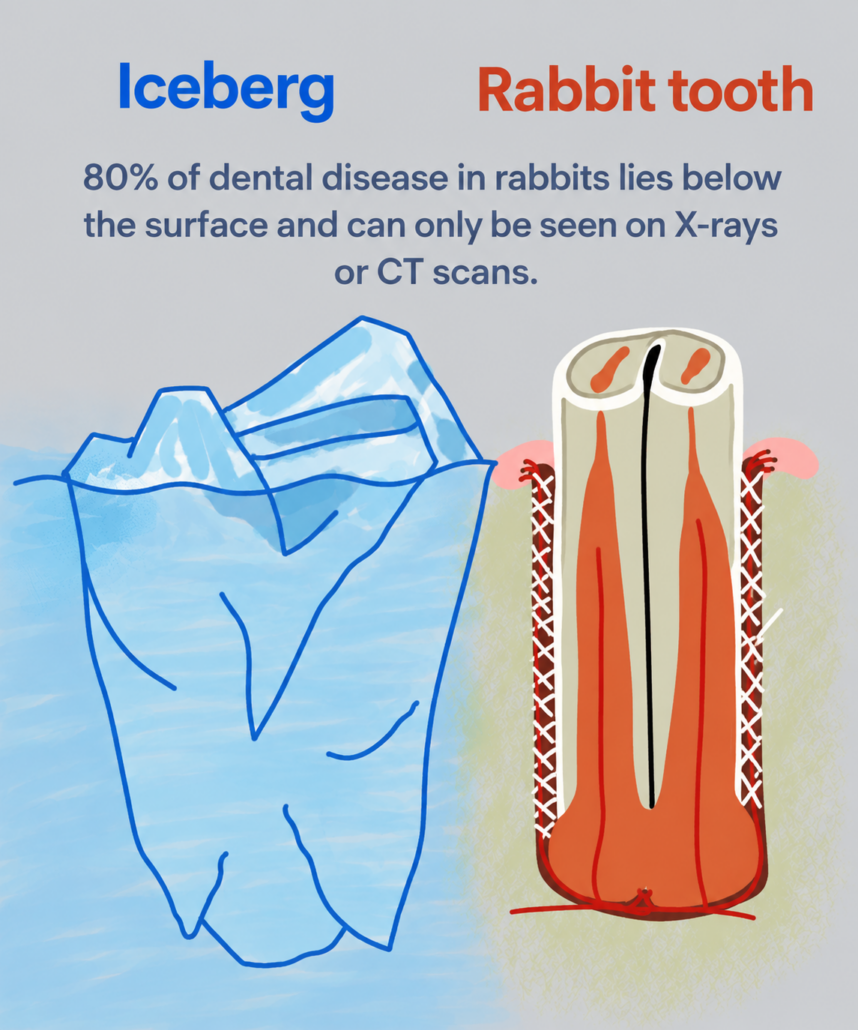
- Much of the disease is hidden: Around 80% of dental disease is located in the tooth sockets or at the tooth roots and cannot be seen during a simple examination of the mouth.
- X-rays are essential: If dental disease is suspected, the teeth should be X-rayed from several different views so hidden problems can be identified.
- Eye or nasal discharge can be dental: Because the nasolacrimal duct runs very close to the tooth roots, diseases of the upper jaw may become apparent only through eye or nasal discharge.
- Diet is a major factor: Inappropriate feeding can lead to insufficient tooth wear and abnormal loading of the teeth, contributing to dental disease.
- Hard food is not the solution: Rabbits need fresh, leafy food that allows natural grinding movements rather than hard foods such as dry bread.
- Teeth must never be clipped with pliers: Dental correction should be performed with rotary instruments, as clipping can cause cracks, loosened teeth, inflammation, pus, and jaw abscesses.
- Proper diagnosis and treatment usually require sedation or anesthesia: This allows the teeth to be examined thoroughly, corrected according to the reference lines, and checked with X-rays.
- Treatment depends on the condition: It may include grinding overgrown teeth, removing diseased teeth, treating injuries to the oral mucosa, or surgically treating teeth affected by purulent disease.
- Rabbits with dental disease may need dietary adjustments: After incisor removal or with severe cheek tooth misalignment, a special diet may be necessary.
Symptoms of Rabbit Dental Disease: How to Recognize the Signs
The symptoms of rabbit dental disease can vary widely. In many cases, rabbits show only subtle signs, and often just one or two symptoms appear at the same time — even when a serious dental problem is already present.
Because of this, dental issues in rabbits are frequently overlooked until they become severe.
Symptoms: How to Recognize Dental Disease in Rabbits
The symptoms of dental disease in rabbits can vary widely. The following signs can be a direct indication of dental problems, although usually only one or two symptoms appear at the same time:
- Weight loss or becoming underweight due to reduced food intake
- A wet chin, wet areas on the front paws, or drooling under the mouth, at the corners of the mouth, or on the neck
- Diarrhea or other digestive problems that may not occur continuously; the feces are often misshapen or mushy
- Teeth grinding
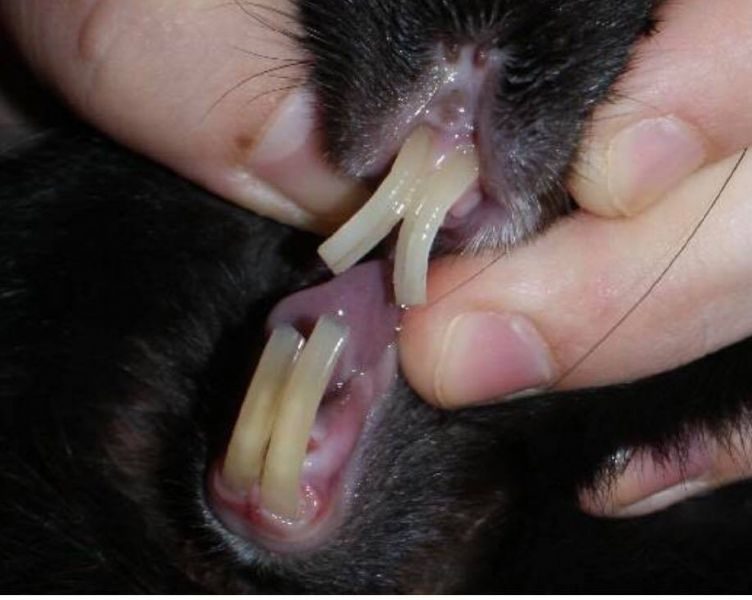
- Overgrown, broken, or incorrectly growing front teeth visible on inspection
- The rabbit produces less feces, or passes chains of fecal pellets connected by fibers (not by hair, as can happen during molting)
- Digestive disorders, such as gas, constipation, gastric dilatation, diarrhea, or refusal to eat
- The rabbit holds its mouth slightly open and does not close it completely
- Certain foods are gradually eaten less and less, for example foods that need to be bitten off or harder foods; often the rabbit will only eat chopped or soft food
- The rabbit appears to be eating but cannot pick up or chew the food properly; food may fall back out of the mouth, or the rabbit may be unable to grasp it properly with its teeth
- The rabbit takes longer to eat, seems constantly hungry, and rummages through or searches the food
- Strong chewing movements or chewing predominantly on one side
- Increased fluid intake or increased drinking
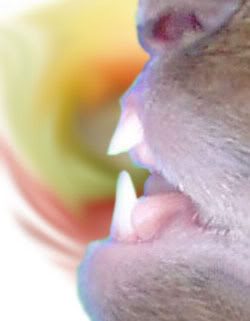
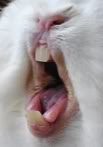
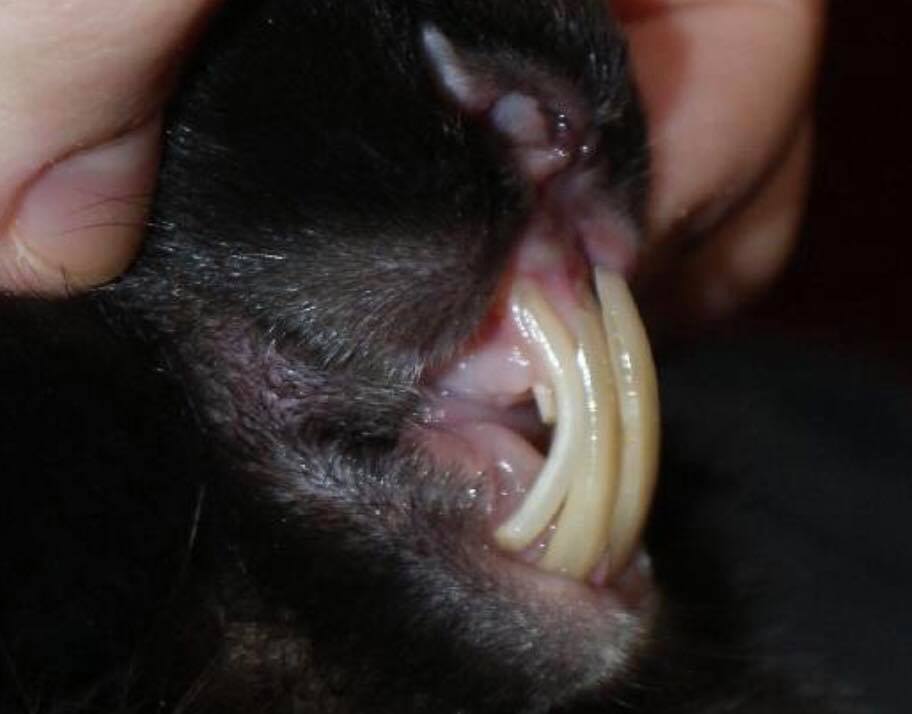
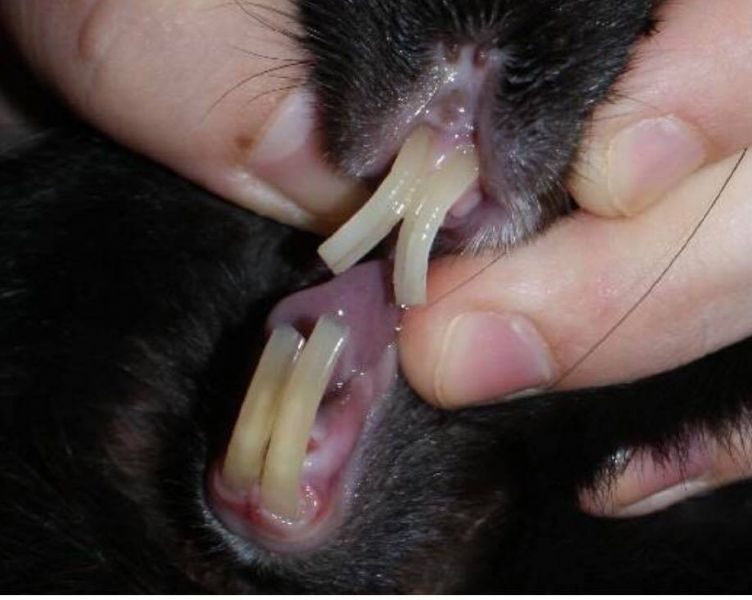
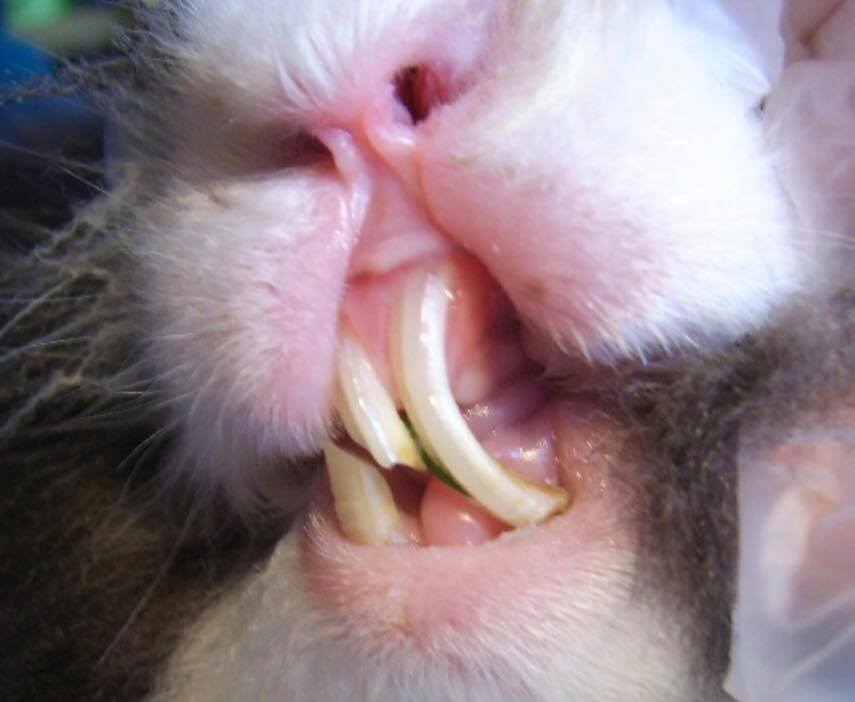
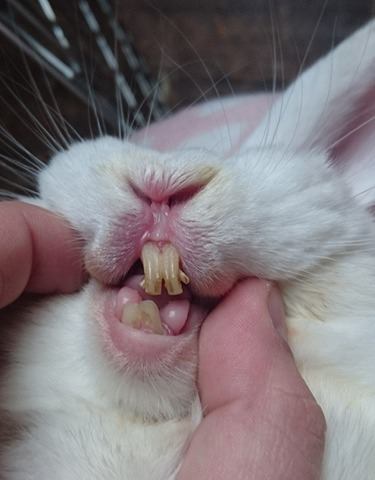
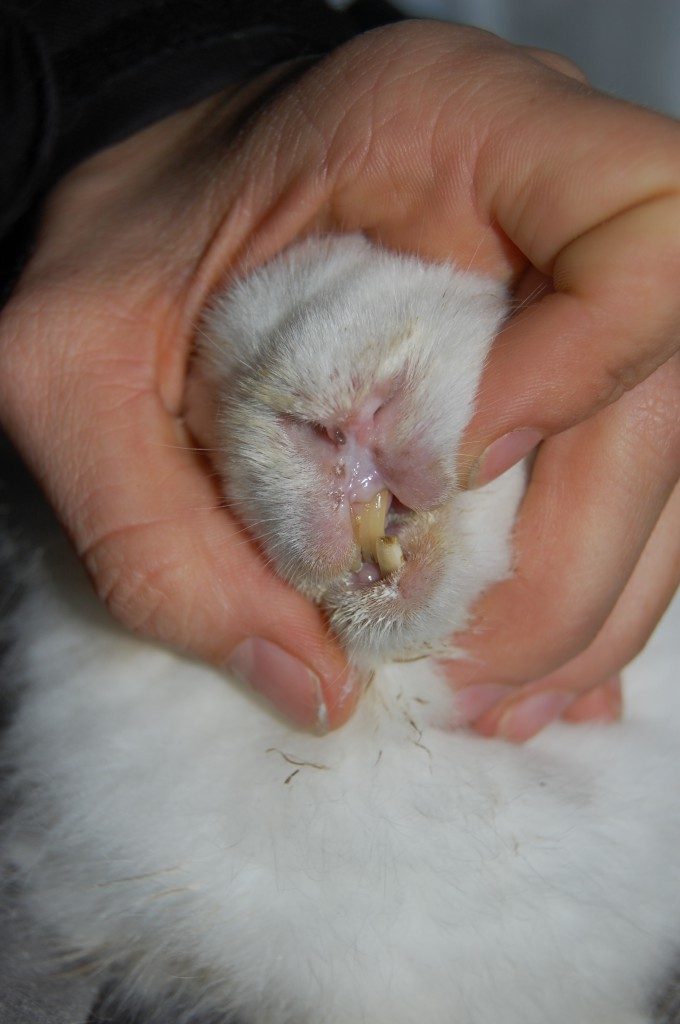
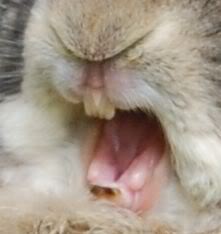
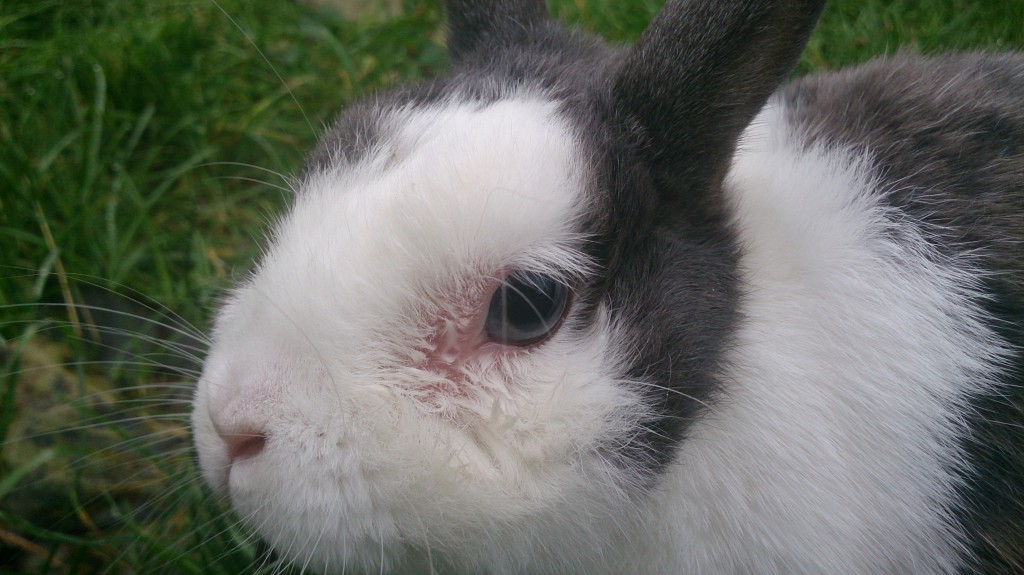
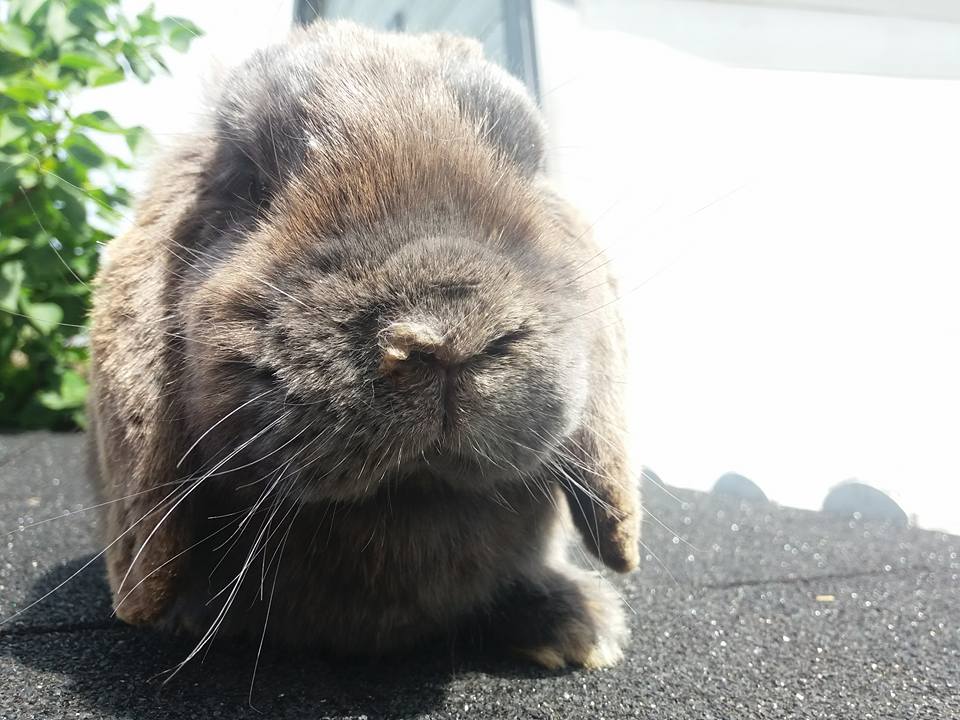
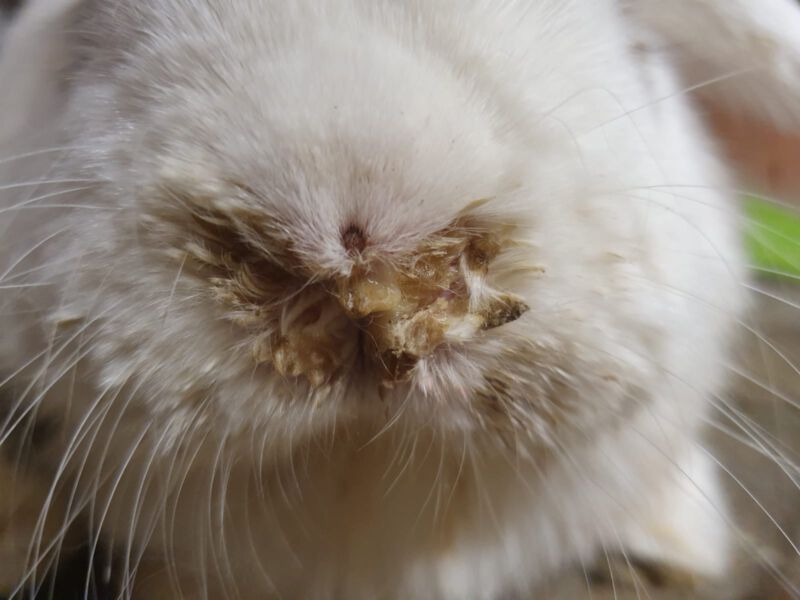
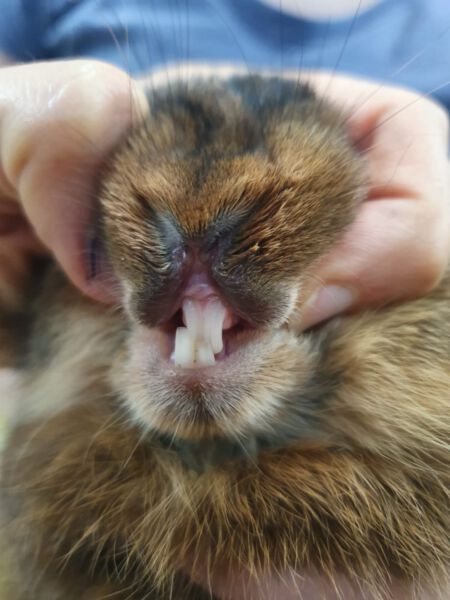

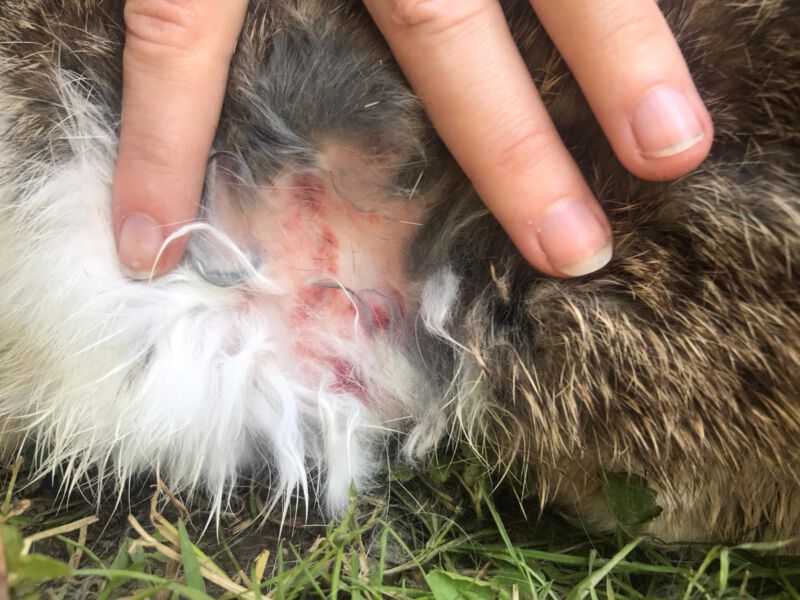
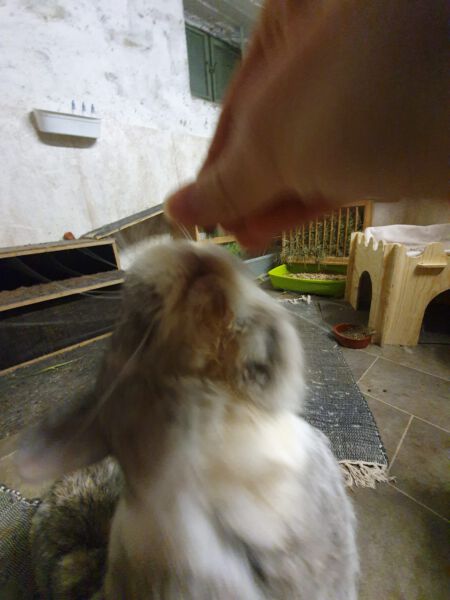
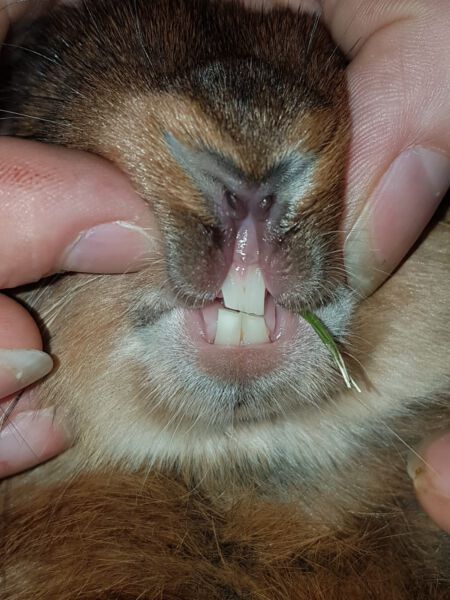
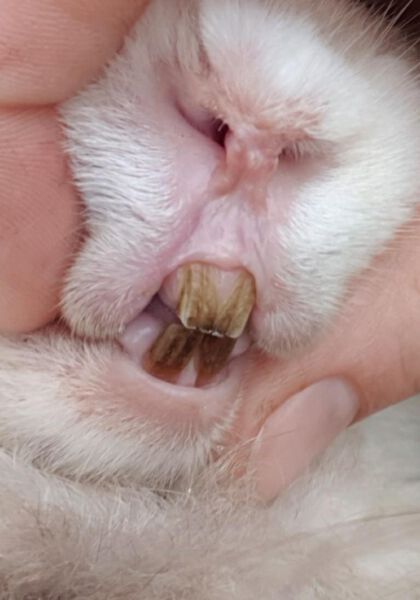
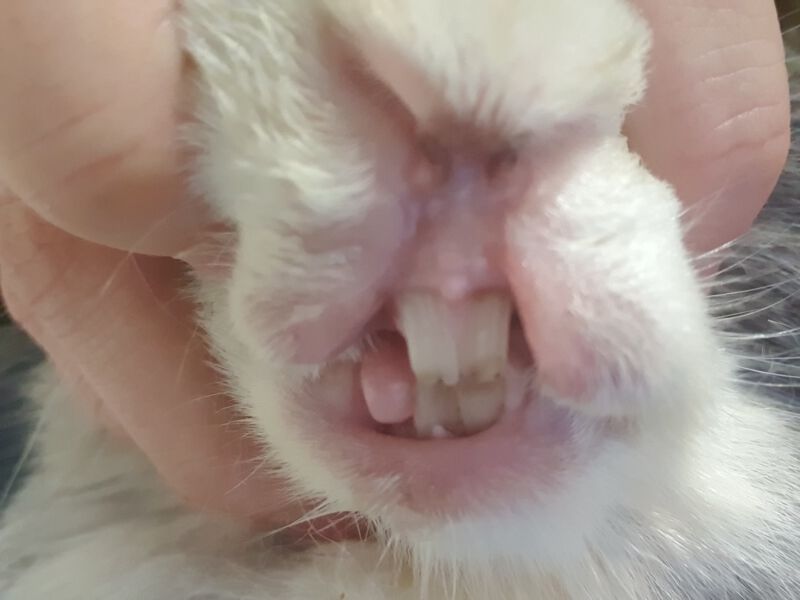
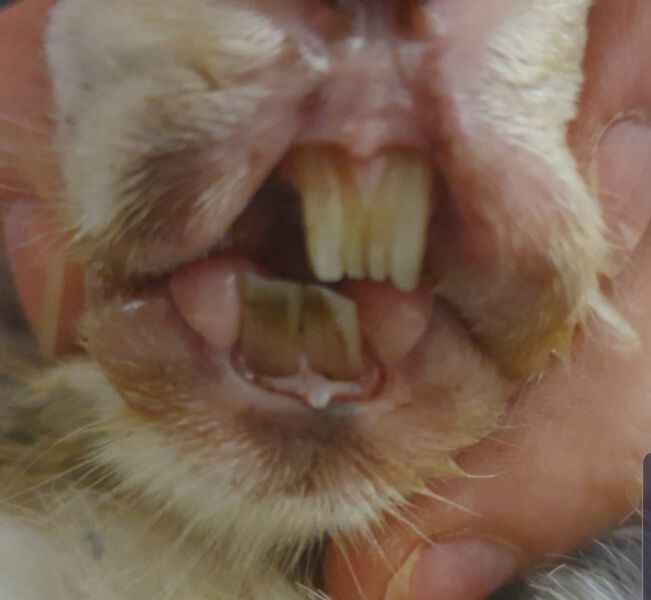
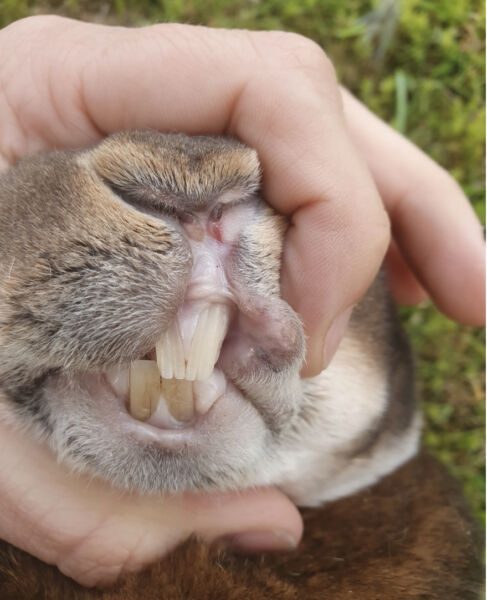
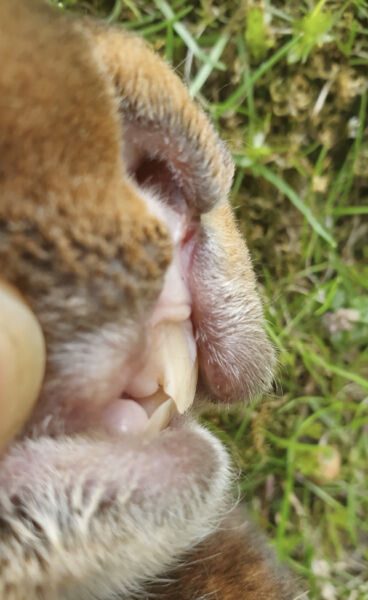
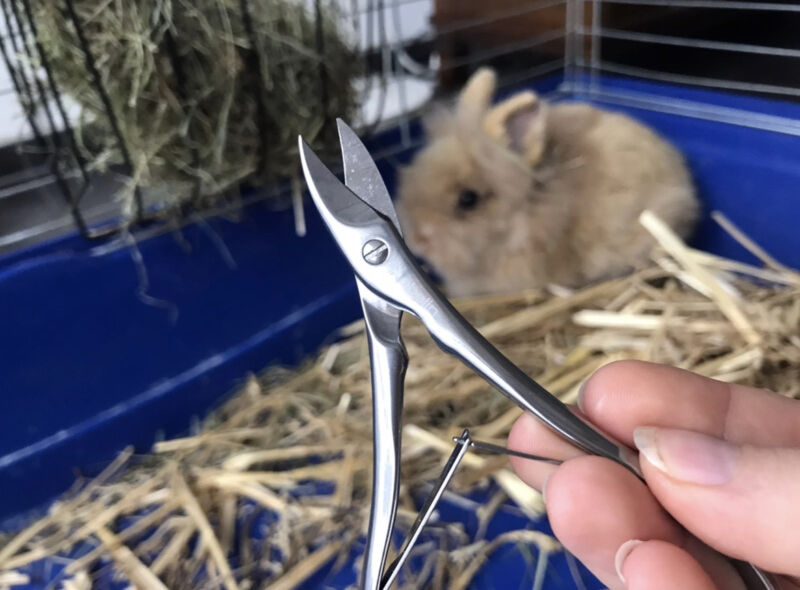
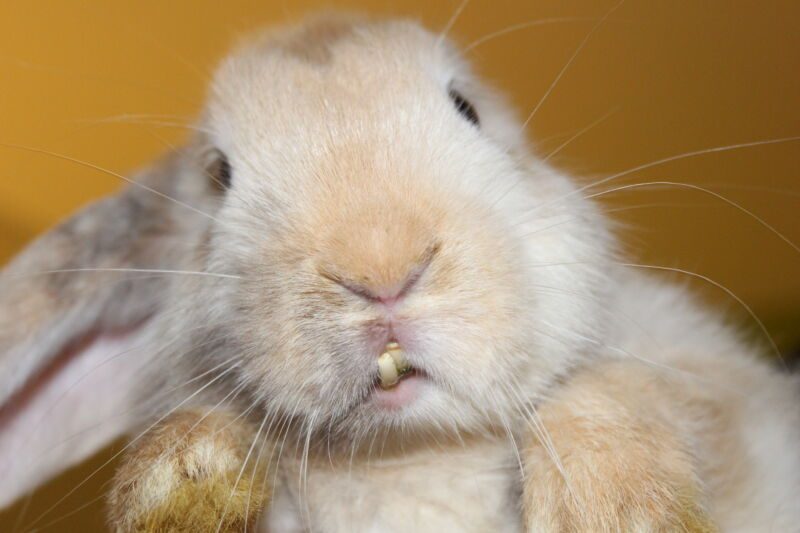
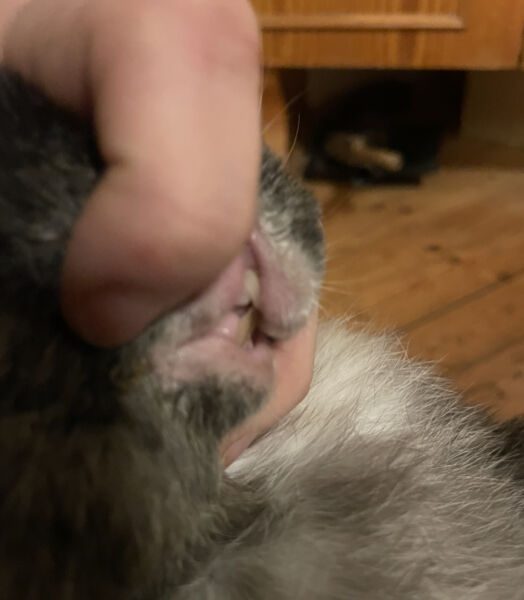
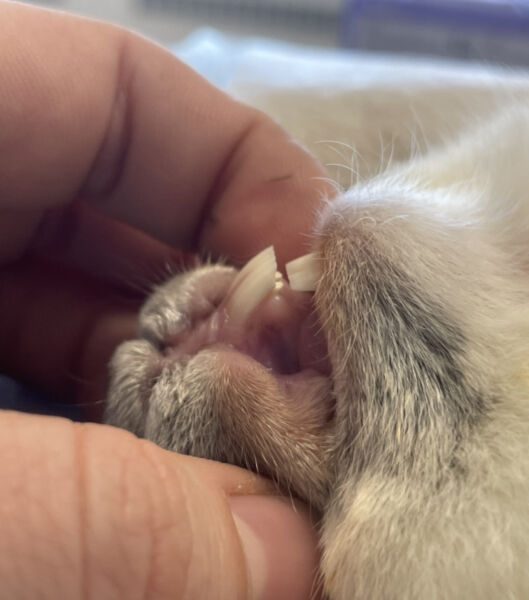
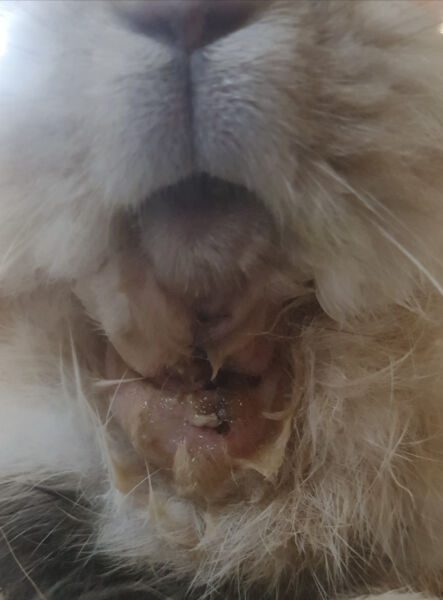
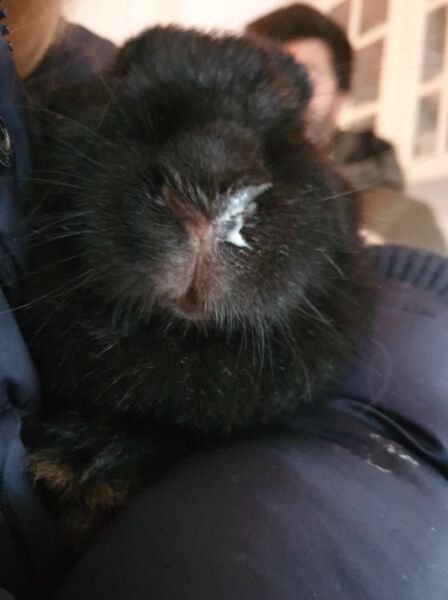
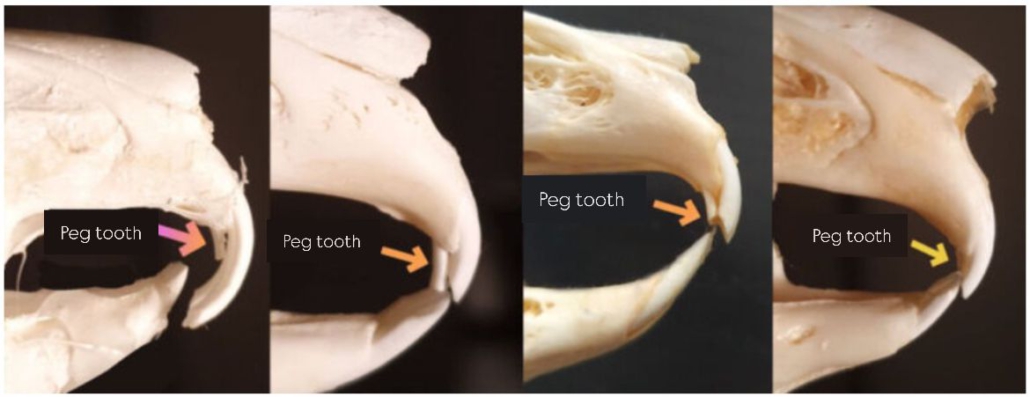
The peg tooth can be checked from the side during a routine health check. The three images on the left show an unhealthy set of teeth with an overgrown peg tooth. In addition to its length, the shape of the tooth surface should also be assessed. This surface should form an extension of the incisor surface and run horizontally or slope slightly toward the molars, but it should not be triangular, as shown in image 3.
The image on the right shows a healthy set of teeth, with the peg tooth lying closely against and fitting the cutting surface of the incisor. The length of the incisors should also be checked; the upper and lower incisors should be approximately the same length.
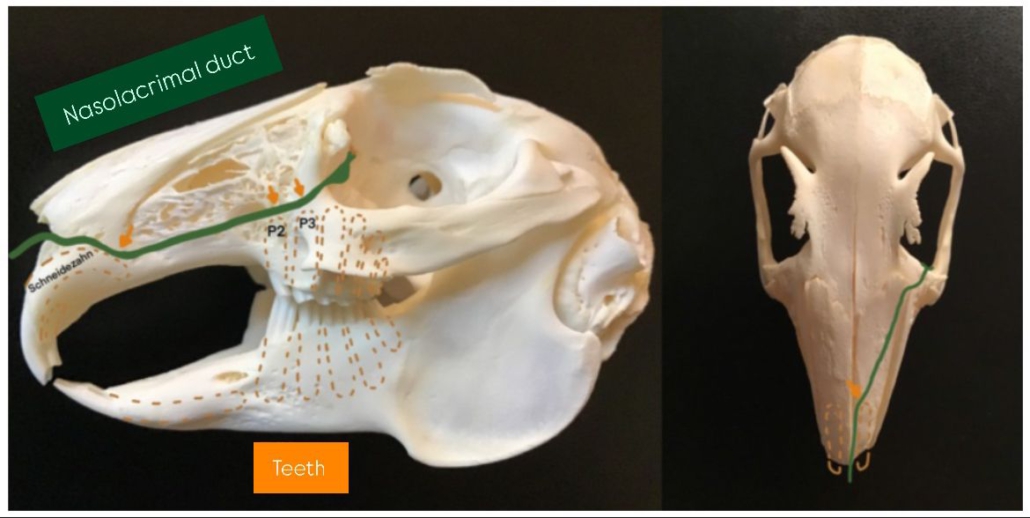
Green line: The course of the nasolacrimal duct from the tear duct opening at the eye to the nose.
Brown: The non-visible part of the teeth.
The nasolacrimal duct runs very close to the tooth roots (orange arrows), which is why diseases of the upper jaw, such as retrograde tooth growth or jaw abscesses, often become apparent only through nasal or eye discharge.
Indirect Symptoms of Dental Disease in Rabbits
There are also indirect symptoms that are often not immediately associated with dental disease. As a result, they frequently go unrecognized or are only identified after numerous veterinary visits and appropriate diagnostic testing:
- The nasolacrimal duct runs very close to the tooth roots, which is why diseases of the upper jaw, such as retrograde tooth growth or jaw abscesses, often become apparent only through nasal or eye discharge.
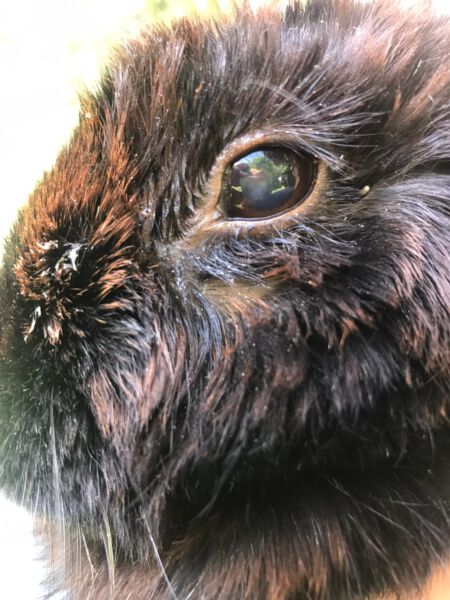
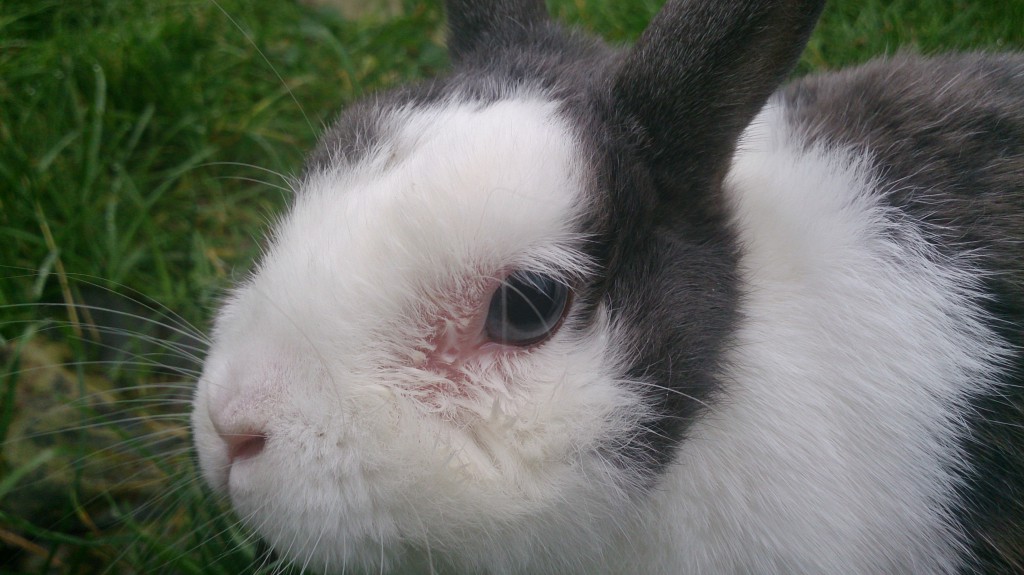
- Discharge from one or both eyes (the tooth roots are pushed into the nasolacrimal duct by the high pressure caused by overgrown teeth; see the graphic on the right)
- Protrusion of one eye
- “Snuffles” / nasal discharge
- Lumps that can be felt when palpating the lower or upper jawbone
- The rabbit withdraws and participates less in activities
Causes: What Causes Dental Disease in Rabbits?
The main causes of dental problems are:
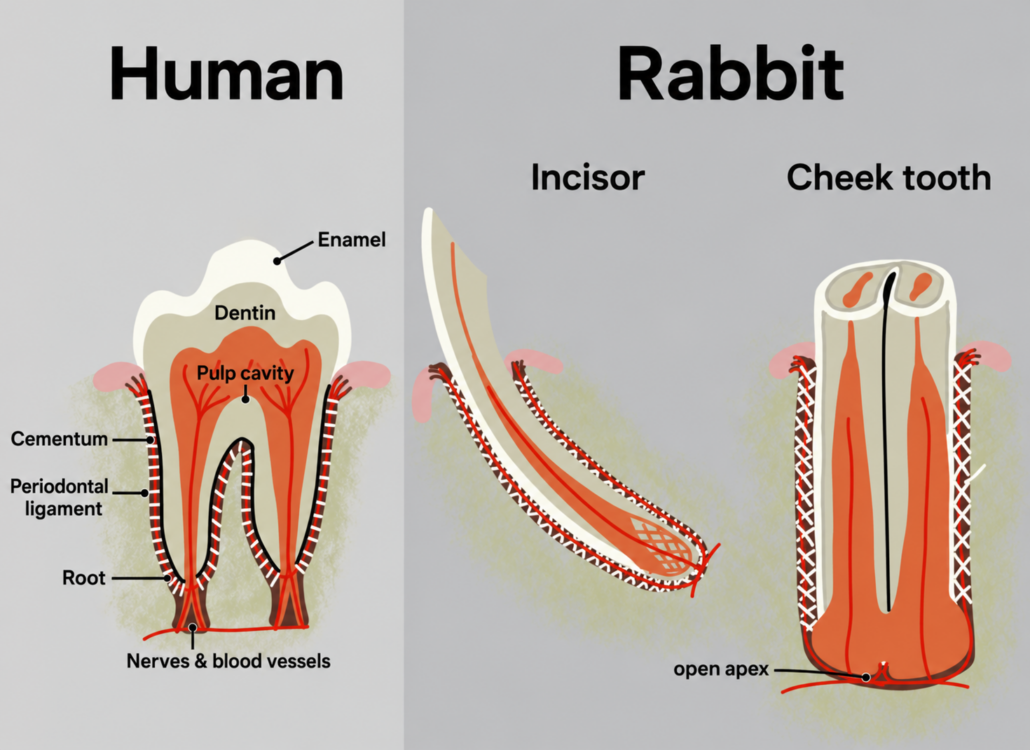
Rabbits do not have tooth roots, because their continuously growing teeth constantly form new dental tissue from below. The specialized tooth-supporting apparatus pushes the teeth upward, allowing them to grow.
This delicate supporting apparatus, including the periodontal ligaments, can be damaged by an inappropriate diet. As a result, the teeth are no longer pushed upward properly and instead the tooth “grows” into the bone. It may then extend into the eye socket or nasolacrimal duct, or break through the lower jawbone to the outside.
- Insufficient tooth wear of the continuously growing teeth due to an inappropriate diet. Feeding dry food, bread, too much corn, or grains is the main cause of dental problems. For healthy tooth wear, rabbits need access around the clock to high-quality hay and a varied selection of fresh greens, such as grass, dandelion, clover, leafy branches, vegetable greens, leafy vegetables, and herbs. Commercial rabbit food and bread are completely unsuitable as part of a rabbit’s diet. Other energy-dense foods should be given only sparingly and only when needed. The more rabbits chew, the better their tooth wear is maintained. Rabbits chew particularly well and extensively when they are offered palatable, fiber-rich foods that are not too energy-dense, are constantly available, and have not been ground or chopped.
- Food that is too hard, such as dry food, hard bread, or a diet consisting mainly of firm vegetables and fruit instead of fresh greens (leafy, herbaceous, flat foods). Rabbits chew these foods in a similar way to humans rather than grinding them as they would fresh greens. This places extreme strain on the very sensitive tooth sockets and can eventually lead to retrograde tooth growth or inflammation.

- Congenital jaw misalignment or genetically determined dental misalignment caused by breeding rabbits without sufficient knowledge of genetics. This is often seen in dwarf rabbits, for example brachygnathia superior in short-headed rabbits. Congenital genetic factors may also play a role, such as a predisposition in Satin rabbits.
- Raising young rabbits on pellets/dry food and hay, as is practiced in many pet-shop breeding facilities. During this developmental stage, an unnatural diet can alter the shape of the head and the chewing muscles, which may later lead to dental disease.
- Traumatic dental disease caused by physical force, for example through the use of mouth gags, gnawing on cage bars, impacts to the front teeth when rabbits panic and run into walls or objects, falls onto the front teeth, or shortening the teeth with pliers (“clipping”).
- Age-related dental disease caused by age-related shifting of the teeth.
- Metabolic bone diseases that lead to dental disease through osteoporosis, mineral deficiencies, or disturbances in calcium-phosphorus (Ca:P) metabolism. Possible causes include a diet low in calcium, vitamin D deficiency, medications, neutering, refusal to eat, or poor nutrient absorption due to another illness. Keep vitamin D in mind for indoor rabbits! A deficiency of this “sunshine vitamin” is a major cause of dental misalignment in indoor rabbits.
- Reduced food intake due to other illnesses. When a rabbit refuses food, it chews less, so the teeth are worn down less and dental disease can develop.
- Altered chewing behavior due to an ear infection, as is often seen, for example, in lop-eared rabbits with an undetected ear infection.
- Hand-rearing of rabbits, presumably due to an inadequate supply of minerals during growth.
Even when an animal does not need to chew very much because it is fed food that is more energy-dense than fresh greens, its teeth continue to grow.
If guinea pigs and rabbits are given foods that make them feel full more quickly than the diet nature intended for them, they chew less and their teeth become too long. A widespread but incorrect belief is that these animals need something “hard,” such as dry bread, to promote tooth wear. This is not correct, because the only thing hard enough to wear down a tooth is another tooth. This tooth-on-tooth wear occurs during normal chewing.
The dentition of rabbits and guinea pigs is one of the most highly specialized in the animal kingdom. The shape of the teeth, as well as the structure of the teeth and tooth roots, is highly specialized for grinding soft, fresh, leafy food.
If these animals are given food whose structure is not suited to their highly specialized dentition and which cannot be broken down through their physiological grinding movements, the teeth and tooth roots are subjected to abnormal forces. This, in turn, can lead to serious dental problems.
An inappropriate diet is therefore the cause of most dental problems in rabbits and guinea pigs.
“Malocclusions” are almost never congenital; instead, they develop as a result of insufficient tooth wear or abnormal mechanical loading of the teeth.
— Dr. med. vet. Diana Ruf, tieraerztin-ruf.de
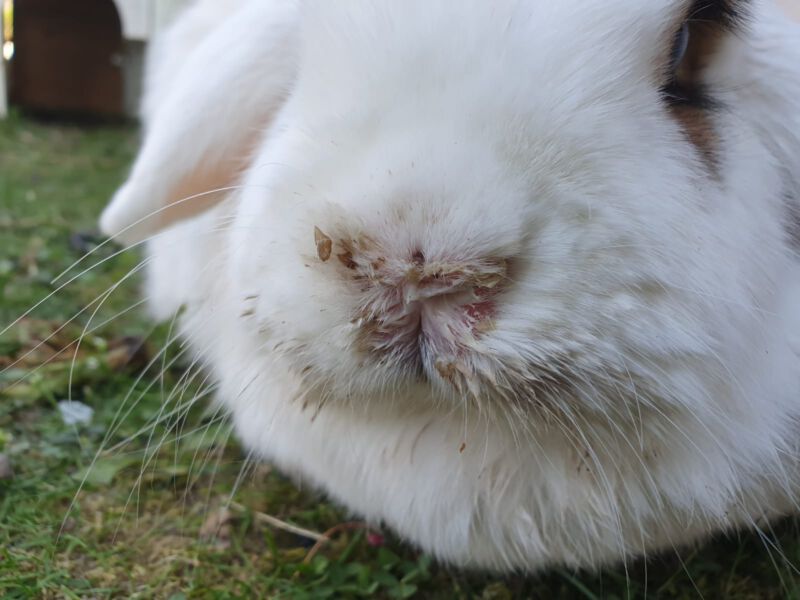
Many rabbits with dental root disease are mistakenly treated for “rabbit snuffles” because pus from the tooth root drains into the nasolacrimal duct.
Although the generally “harder” food is therefore one of the main reasons why domestic rabbits suffer from dental problems so frequently, while their wild relatives are usually spared, the exact mechanisms involved have not yet been fully clarified. In this context, the current study provides important new findings.
It found that the dentition itself — the functional unit formed by the cheek teeth — does not fundamentally differ between domestic and wild rabbits. However, the morphology of the entire skull varies considerably: domestic rabbits have a higher and shorter head, whereas wild rabbits have a noticeably flatter and longer skull.
This also affects the chewing muscles. In domestic rabbits, the muscles run at a steeper angle and can therefore generate greater chewing pressure, particularly in the rear cheek-tooth area. In wild rabbits, by contrast, the flatter course of the muscles allows the force to be distributed more evenly across the individual cheek teeth.
But why is the head of domestic rabbits shorter? Various studies have shown that the type of food has a major influence on the development of the jawbone. This so-called phenotypic plasticity is particularly pronounced in young animals after weaning from their mother’s milk. […]
This relationship was especially pronounced in young animals. Subadult rabbits that ate predominantly rougher food, such as hay and pellets, developed larger jawbones and stronger chewing muscles within a relatively short period of time. Together with the unphysiological chewing movement, this increases the load on the cheek teeth and consequently promotes pathological changes in the tooth-root area (retrograde root elongation).
In addition, very coarse, stalky hay provides relatively little energy, so rabbits have to eat fairly large amounts throughout the day in order to feel full. This further increases the strain on the teeth and at the same time raises the risk of gingivitis caused by stalks piercing the gums.
Consequences
Simply feeding hay with a higher proportion of flowers or offering dried herbs is not a good alternative, because this “crumbly” food breaks down quickly in the mouth and therefore results in completely insufficient tooth wear.
Rabbits therefore need fresh food: soft food that can be “cut” by the teeth in a species-appropriate way and therefore places primarily lateral rather than axial pressure on the teeth.
In summer, this means fresh meadow forage, and in winter, leafy vegetables. High-quality hay should, of course, always be available, but it should not be the main food.
— Dr. Böhmer: Unique Specialization of the Rabbit Dentition: Are There Differences Between Wild and Domestic Rabbits? Rodentia Nager & Co.
Examination & Diagnosis of Dental Disease in Rabbits
For the treatment of dental disease, a general pet veterinarian is usually not specifically trained, so a specialized veterinary dentist is needed.
The incisors can usually be examined reasonably well by an experienced veterinarian using the appropriate handling technique. Their color, structure, shape, and length should be assessed. If the incisors are too long or grow incorrectly, the cheek teeth are almost always affected as well.
The cheek teeth, however, are much more difficult to examine. For an initial examination, it is sufficient to inspect the mouth using an otoscope or a cheek retractor.
A mouth gag should never be used for this purpose, as it can fracture the jaw or loosen the teeth. This can result in dental misalignment, purulent tooth roots and jaw abscesses, or broken teeth. Defensive movements can also cause the rabbit to seriously injure its hind legs or spine.

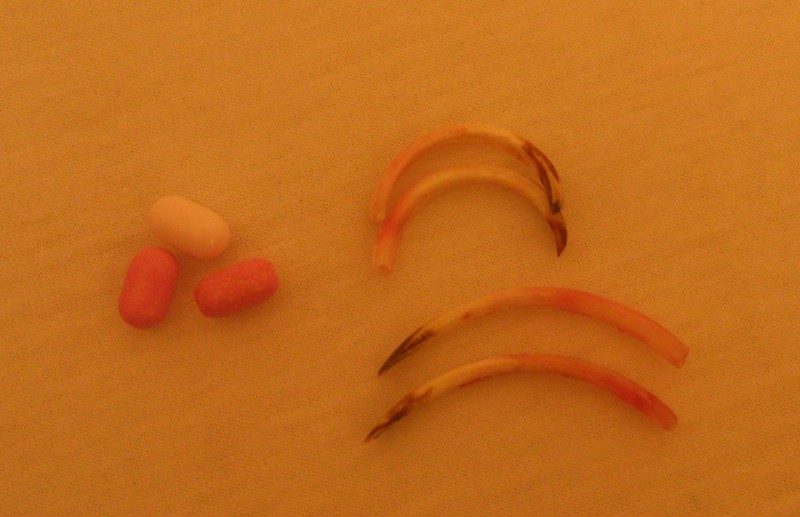
Important: Do not give pea flakes, nuts, parsnips, or other white foods before the appointment, for example to lure the rabbit into the carrier, as they may be mistaken for pus during the oral examination.
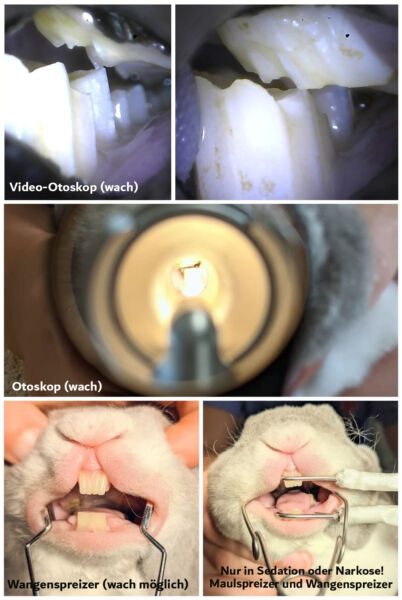
A video otoscope provides the best view of the oral cavity in an awake rabbit (photos: kaninchenseele.de). Examination is also possible using an otoscope or a cheek retractor together with a headlamp. A mouth gag is attached to the incisors and, because of the risk of injury, must only be used under sedation or general anesthesia (photo: S. Wagner).
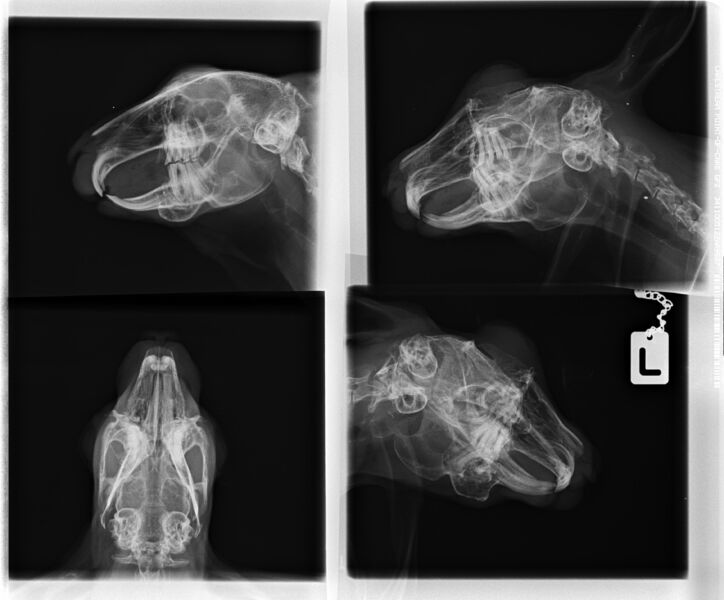
If dental disease is suspected, it is essential to take dental X-rays, because 80% of dental disease is located in the tooth sockets or at the tooth roots and is therefore not visible externally.
The head is X-rayed from several different angles (views) because different conditions can be identified more clearly this way. For example, a lateral view is needed to assess whether the chewing surfaces and tooth roots have the correct length and shape, while 45-degree oblique views are required to evaluate the tooth roots individually.
Correct interpretation of dental X-rays is possible using the reference lines described by Böhmer and Crossley.
For X-rays, sedation or general anesthesia is normally not necessary. However, rabbits can often be positioned more easily under anesthesia, which is why many veterinarians take additional views while the rabbit is anesthetized or use an anesthesia that is already required for another procedure to also obtain dental X-rays.
If the nasolacrimal duct is also affected, additional diagnostic procedures may be useful alongside dental diagnostics. These can include flushing the nasolacrimal duct to determine whether it is open, staining the eye to check whether chronic inflammation has caused a visible corneal infection, and, if necessary, a contrast X-ray examination of the nasolacrimal duct to identify where the narrowing is located.
Other imaging techniques, such as intraoral X-rays, CT, or MRI, can also be considered for diagnosis and, depending on the condition, may often provide more useful information. This is particularly the case when assessing the nasolacrimal duct, retained tooth fragments, or similar problems.
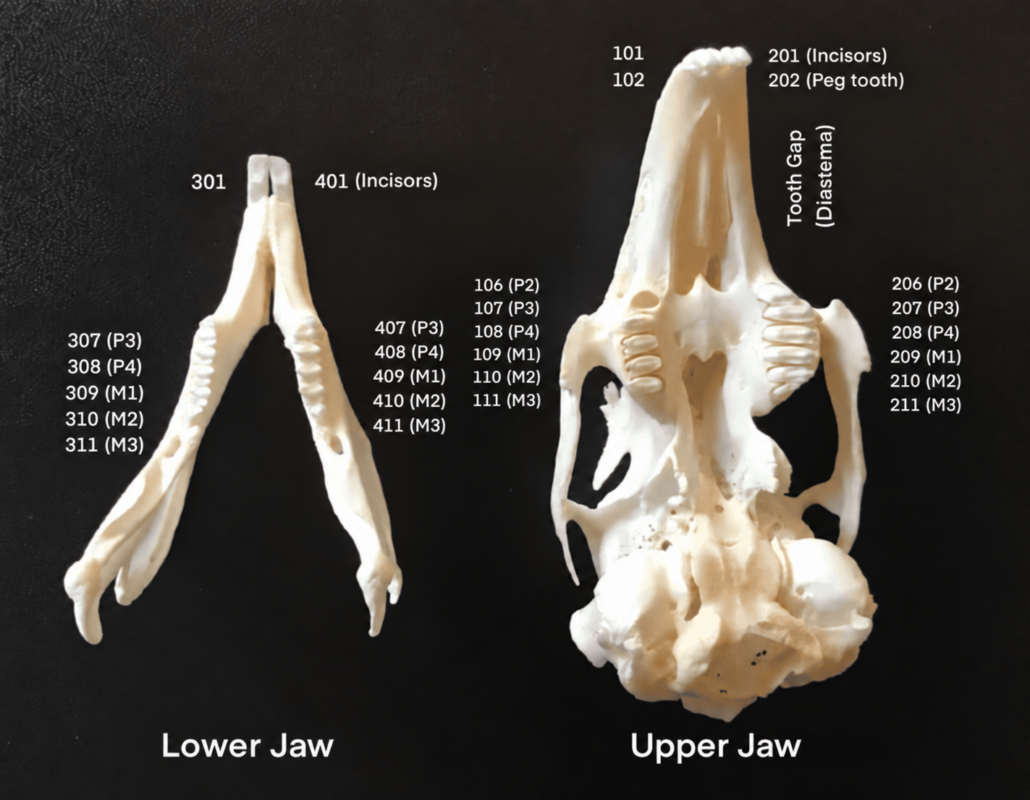
I = Incisors (Incisivi / front teeth)
Peg teeth
P = Premolars (front cheek teeth)
M = Molars (rear cheek teeth)
Treatment of Dental Disease in Rabbits
Depending on the specific dental condition, the following treatment methods may be used:
Incisor Disease in Rabbits
Changes or misalignment of the incisors are almost always associated with disease of the cheek teeth. The teeth should be X-rayed from several different views by a rabbit dental specialist and examined inside the mouth under general anesthesia, with appropriate treatment carried out if necessary.
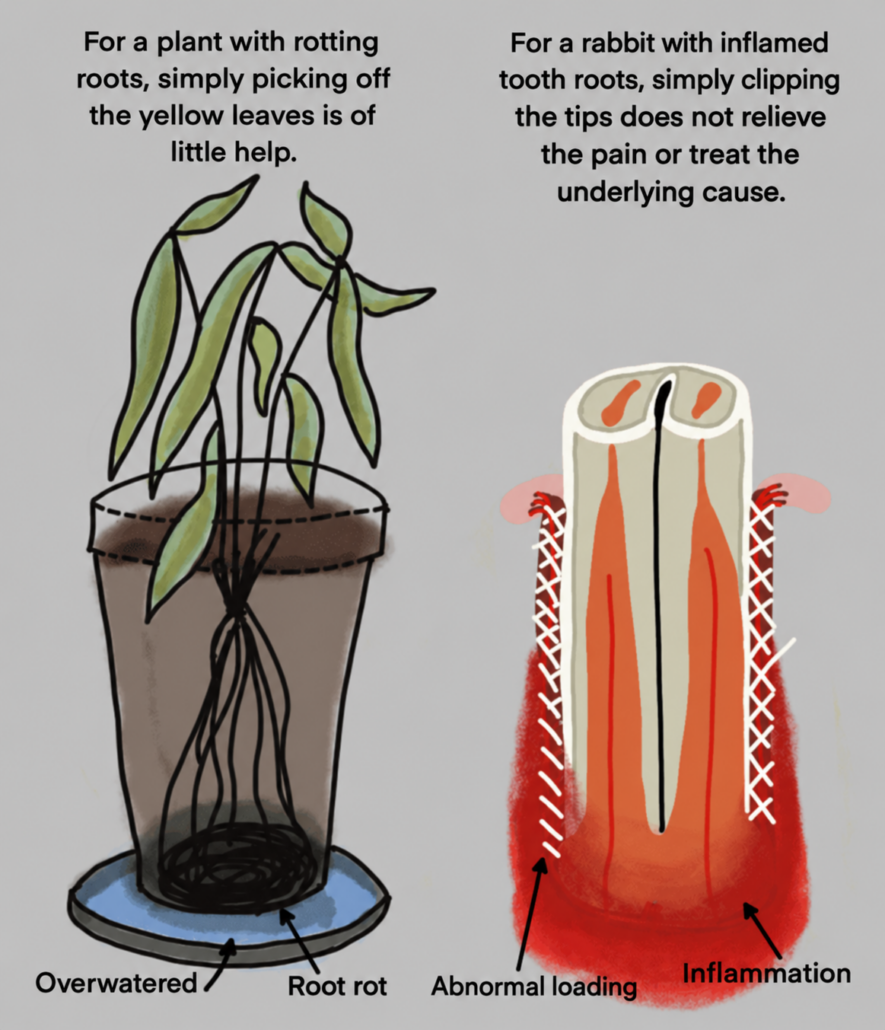
Simply shortening the incisors without thoroughly examining and treating the cheek teeth does not solve the underlying problem.
- Shortening overgrown incisors according to the reference lines. The teeth must never be clipped with pliers; they must always be shortened using rotary instruments. If necessary, this may also be possible without anesthesia. Clipping can cause hairline cracks, loose or wobbly teeth, or porous tooth growth, all of which can promote the development of purulent infections and jaw abscesses. The shortening procedure must be repeated every 3–6 weeks, which is why the incisors are often removed instead. In many cases, the cheek teeth also need to be corrected so that the teeth return to a normal position and can wear down naturally again.
- Removal of severely misaligned incisors is particularly useful when only the front teeth are misaligned and the misalignment is so severe that they can no longer be used to bite off food. After the incisors have been removed, rabbits can no longer bite pieces off food themselves and therefore need to be offered chopped food, either grated or cut into strips. In return, the regular stress and costs associated with repeated veterinary visits are eliminated.
- Broken incisors grow back on their own. However, the opposing tooth, which can now grow without being worn down, must be shortened or monitored; otherwise, dental misalignment may develop. The underlying cause should also be addressed. Brittle or deteriorated teeth indicate disease of the tooth root or a disorder of mineral metabolism. Kidney failure or vitamin D deficiency may also be possible causes.
- Incisor misalignment in young rabbits is an exception and is not necessarily caused by disease of the cheek teeth. Instead, it may be caused by a shortened upper jaw resulting from breeding. The earlier these teeth are ground into the correct position, the greater the chance that the misalignment can be corrected using this grinding technique. Similar to braces, the teeth are gradually guided back into a normal position. The grinding procedure needs to be repeated several times at intervals of approximately 7–10 days.
- Surgical removal of teeth with a purulent tooth “root” (see Jaw Abscesses)
Cheek Tooth Disease in Rabbits
- Grinding down overgrown cheek teeth according to the reference lines, including removal of dental spurs and similar abnormalities. Here too, only rotary instruments may be used without exception. For this reason, sedation is required. Clipping off larger pieces of tooth can cause hairline cracks, loose or wobbly teeth, or porous tooth growth, all of which can promote the development of purulent infections and jaw abscesses. After treatment, an X-ray check using the reference lines should be performed so that any necessary corrections can be carried out during the same anesthesia.
- Surgical removal of teeth with a purulent tooth “root” (see Jaw Abscesses). The opposing teeth do not necessarily have to be removed. If only individual teeth are missing, the opposing teeth are worn down by the neighboring teeth because rabbits grind their food. If many teeth are removed, rabbits generally chew on the other side, relieving the affected jaw. In addition, there is no pressure on the teeth because the opposing tooth is missing. This lack of mechanical loading often causes tooth growth to stagnate. In some cases, the teeth need to be ground down one to three more times before growth stops completely. This must, of course, always be monitored. There is also the option of stopping tooth growth by surgically destroying the growth area.
- More extensive grinding of teeth with retrograde growth to provide temporary relief. This often allows the teeth to become more stable, and the retrograde growth may be stopped. Regular check-ups should be carried out. If the retrogradely growing teeth cause symptoms or have an abscess capsule around the roots, they must, of course, be removed.
- Treatment of any injuries to the oral mucosa that may have occurred.
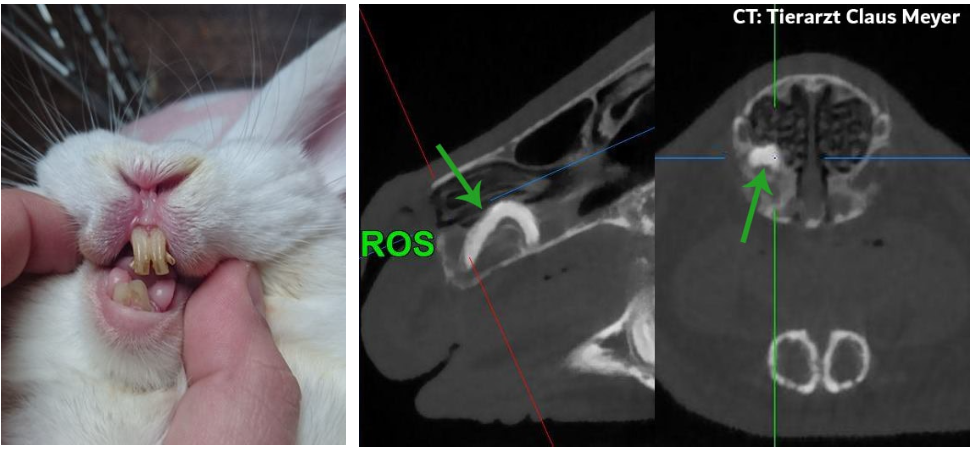
During the weekly health check, the incisors can be assessed with a simple handling technique. Signs of dental disease include overgrown, misaligned, or discolored teeth, as well as horizontal grooves or an uneven chewing surface. This rabbit has severe dental disease.
Right image:
A retained tooth-root fragment from a removed incisor, growing invisibly and narrowing the nasal cavity.
High-resolution CT images by veterinarian Claus Meyer.
Dental Correction Without Anesthesia?
- Around 80% of dental diseases in rabbits are missed during an examination performed without anesthesia or sedation. Often, the incisors are shortened while disease of the cheek teeth remains untreated. With anesthesia and X-ray diagnostics from several different views, around 90% of dental diseases can be detected. If underlying dental disease remains undiagnosed, treatment usually cannot achieve the intended result.
- An examination without anesthesia causes enormous stress in almost all rabbits. This can lead to fatal shock as well as defensive movements that may cause serious injuries to the spine, teeth, gums, or jaw. Such injuries can also result in incisor misalignment.
- A mouth gag must never be used without anesthesia, because defensive movements can cause injuries and damage to the teeth if the rabbit struggles. However, a mouth gag is essential for a thorough diagnostic examination.
“Mouth gags and cheek retractors must not be used on conscious animals. They carry a high risk of injury, including jaw fractures, jaw luxations, gingival injuries, and incisor fractures. Their use is also painful for the patient, both during the procedure and for several days afterward due to the considerable pressure exerted by the mouth gag on the jaw and teeth.”
— BVVD (2016): FAQ – Berufseinstieg Kleintierpraxis. Enke Verlag.
- An examination without anesthesia places a considerable strain on the cardiovascular system, which can significantly increase the subsequent risk of anesthesia.
- Rotary instruments are required for professional dental correction, because only these allow precise treatment. Compared with pliers, they have the advantage that they do not loosen or split the teeth. Split teeth can lead to inflammation, which often results in the need for complete tooth removal or in abscesses and purulent infections that are difficult to treat. For safety reasons, rotary instruments should only be used in sedated rabbits (exception: incisors).
- Anesthesia makes it possible to perform a proper and comprehensive dental correction: grinding the teeth according to the reference lines, checking the result with X-rays, in some cases correcting the causes of the dental problem, and treating the entire condition so that nothing is overlooked. As a result, the rabbit needs treatment far less often, and the intervals between treatments may become considerably longer. Many rabbits that have had their teeth clipped for years need only one proper grinding procedure, after which their teeth may once again wear down naturally for the rest of their lives.
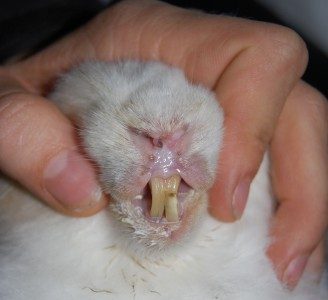
For this reason, it is essential that rabbits with dental disease are examined and treated under anesthesia or sedation. If a chronic dental problem is present and the teeth need to be shortened at short intervals, it may be possible to try performing these corrections without anesthesia, especially if the rabbit is already older or is not fit for anesthesia. However, a comprehensive dental correction under anesthesia and X-rays from four different views should always be carried out beforehand.
Some rabbits become accustomed over time to this stressful procedure. Even so, the teeth should never be clipped with pliers. Instead, they should be shortened with a cutting disc, rasped, or ground down.
If a rabbit is not fit for anesthesia, dental corrections must be carried out as well as possible without anesthesia, or the rabbit should first be stabilized sufficiently so that sedation becomes possible.
Many rabbits die every year as a result of teeth being clipped. Especially when more than just very small superficial points are clipped off, the consequences can be fatal. The resulting hairline cracks can extend lengthwise into the jaw, leading to inflammation, which in turn can cause pus and abscesses. These conditions can result in extremely high treatment costs, and in many cases the rabbits ultimately have to be euthanized.
Case Example: Jaw Abscess Caused by “Teeth Clipping” – Before and After
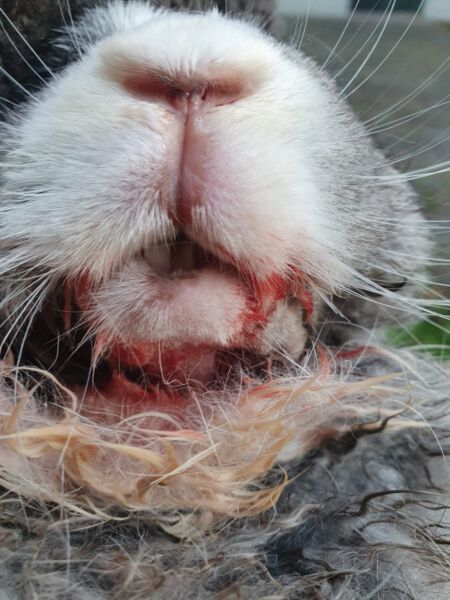
One day, Gizmo’s cheek teeth became severely infected with pus as a consequence of teeth clipping, and a jaw abscess developed. Despite intensive treatment, he did not recover and ultimately had to be euthanized.
Gizmo was euthanized at the age of four. Countless rabbits in Germany share the same fate.
If the rabbit is not fit for anesthesia, corrections should be made as best as possible without it, or the rabbit should be stabilized enough to allow for sedation.
Each year, many rabbits die as a result of improper tooth clipping, especially when it’s more than just minor clipping (such as removing small tips). The consequences can be fatal. The hairline fractures (running lengthwise into the jaw) caused by clipping lead to infections, which can then result in pus and abscesses, leading to extremely high treatment costs. Often, these rabbits have to be euthanized.
Case example: Jaw abscess caused by “tooth clipping” – Before and After
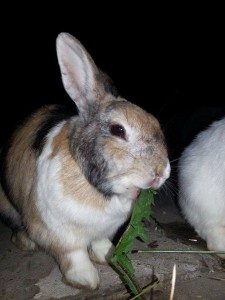
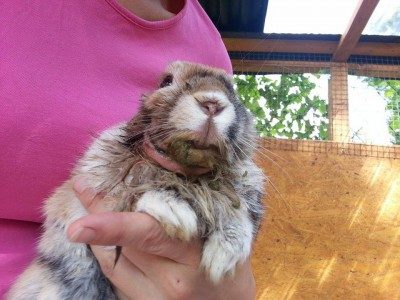
Gizmo’s molars became severely infected as a result of “tooth clipping,” which led to a jaw abscess. Despite intensive treatment, he didn’t survive and had to be euthanized. Gizmo was put to sleep at the age of four. This fate is shared by countless rabbits in Germany.
“My Veterinarian Treats the Teeth Very Gently — Without Anesthesia!”
Many rabbit owners are afraid of anesthesia and therefore choose to have the teeth “clipped” using a mouth gag. This can have serious consequences: with this type of treatment, the reference lines are not corrected and the underlying cause is not investigated. Instead, only the visible symptoms are treated superficially.
As a result, the teeth have to be clipped repeatedly, often as frequently as every 10–14 days (!), while the rabbit is restrained with a mouth gag. Meanwhile, the underlying disease continues to progress and the rabbit suffers.
By the time the rabbit is eventually examined by a rabbit veterinarian with specialist dental knowledge, the disease is often already so advanced that there may be very little that can still be done.
With early, thorough diagnostics and treatment under anesthesia, the underlying cause can often be identified and treated or corrected, so that in many cases no further dental treatment is needed at all. The correct chewing surface can also be restored, allowing the rabbit to grind fresh food normally again.
I repeatedly hear from rabbit owners whose rabbits had their teeth clipped for months or even years and who, after a proper dental correction by a veterinary dental specialist, did not require any further treatment.
In addition, the underlying cause is treated — and this is usually what causes the severe pain.
For most dental corrections, general anesthesia is not required. Instead, only sedation with a strong sedative is necessary, and the risk is very low. Rabbits that are treated properly can often live to an old age even when they require regular sedation.
Teeth clipping also carries risks beyond fractures of the spine or legs caused by defensive movements. Clipping can cause the teeth to splinter and develop fine cracks extending into the roots, which can lead to abscesses.
Clipping teeth in a conscious rabbit is a long-outdated method. Or would you still have your own teeth treated at the dentist the way they were in the Middle Ages?
Further information on this topic can be found here:
Recommendations of the DGT (German Society for Veterinary Dentistry) on dental treatment in rabbits and rodents
Does It Have to Be Gas Anesthesia (Isoflurane)?
No. A rabbit can also be sedated or anesthetized just as safely by injection, for example with midazolam and medetomidine. The rabbit is only lightly anesthetized, and the medication can be topped up if necessary. The drugs can also be reversed with an antidote administered through an intravenous catheter.
More information on anesthesia safety in rabbits
Case Reports
Hazel Had a Cheek Tooth Extracted from the Outside – Healing Progress Over 4 Weeks
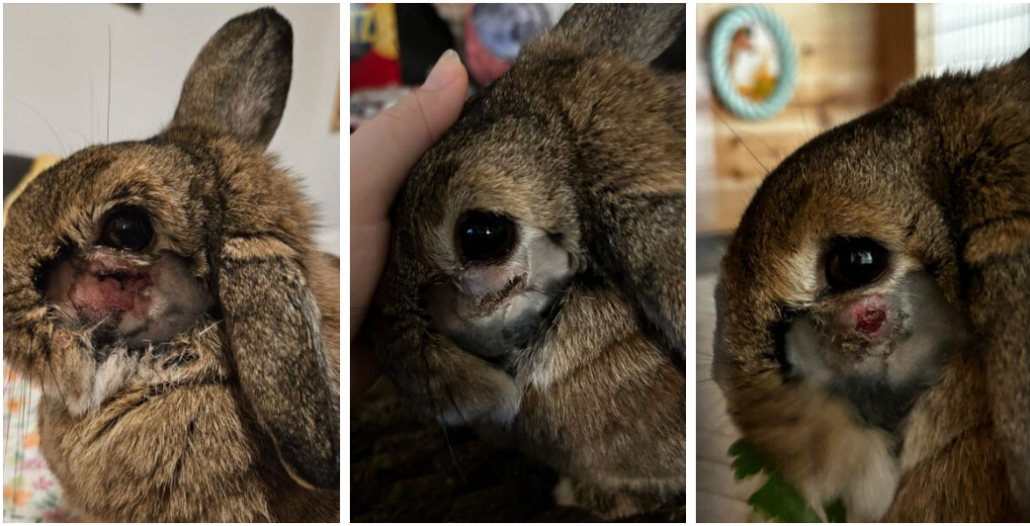

Moritz, a Satin Rabbit with Multiple Jaw Abscesses and Dental Problems
Moritz had the entire lower right row of teeth removed, as well as one lower incisor. With surgery and long-term antibiotic treatment with amoxicillin, the condition was brought under control, allowing him to live for several more years without developing another abscess.
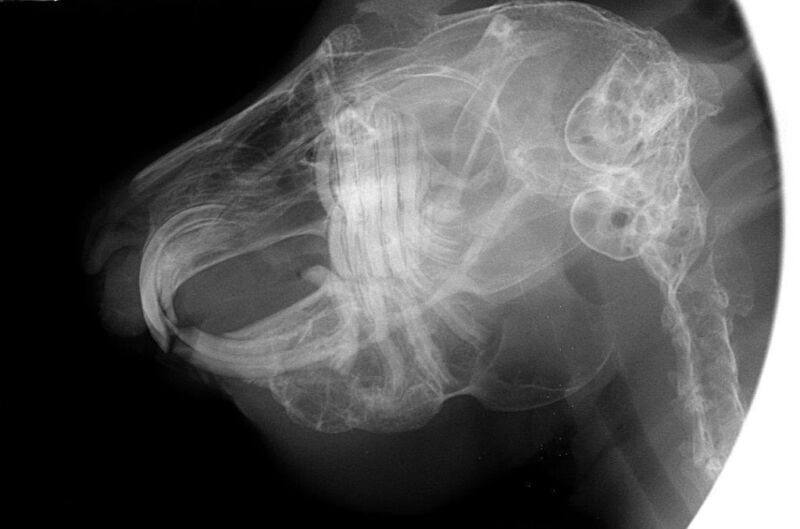
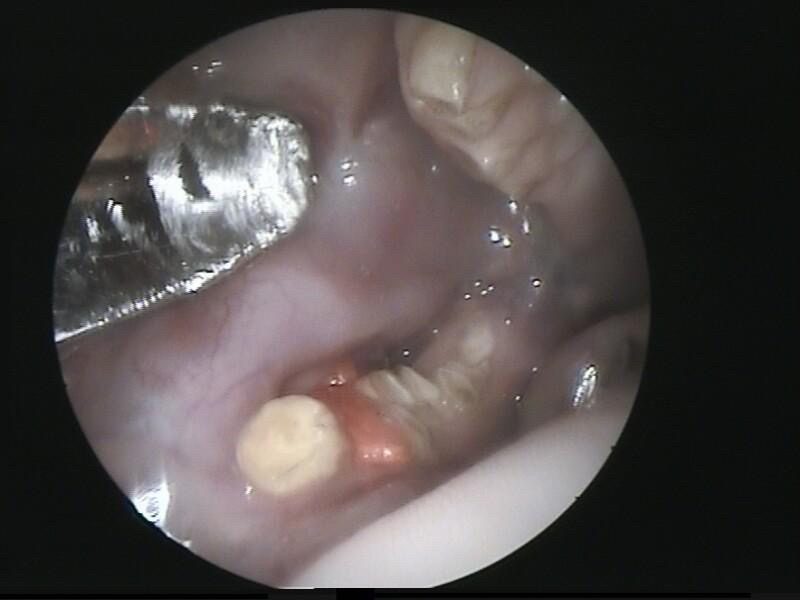
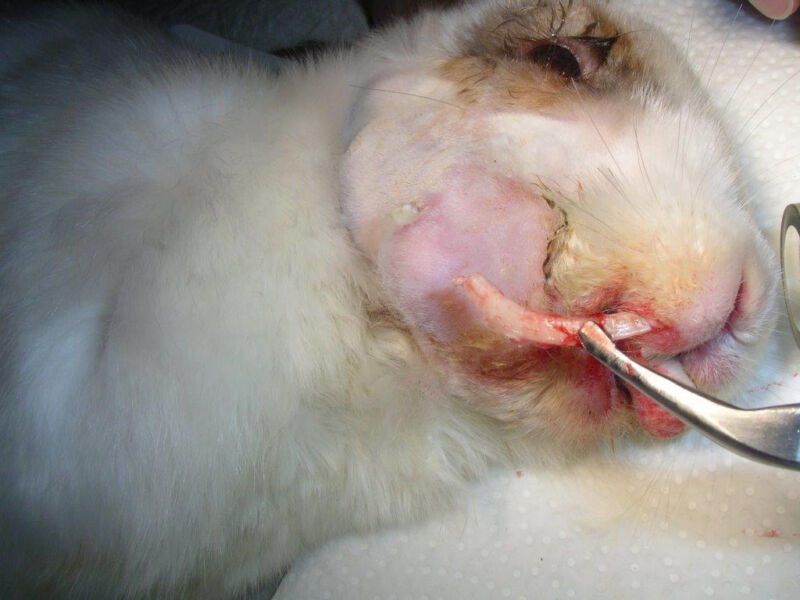
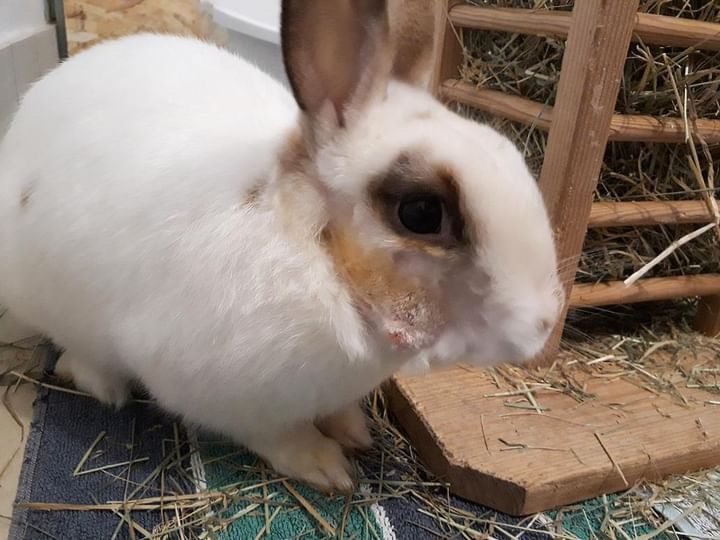
Mia
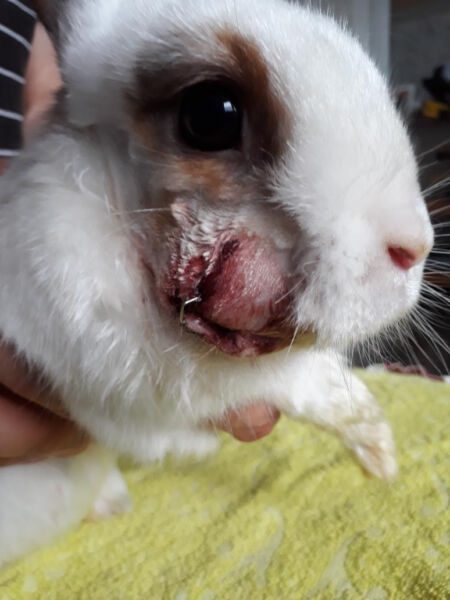
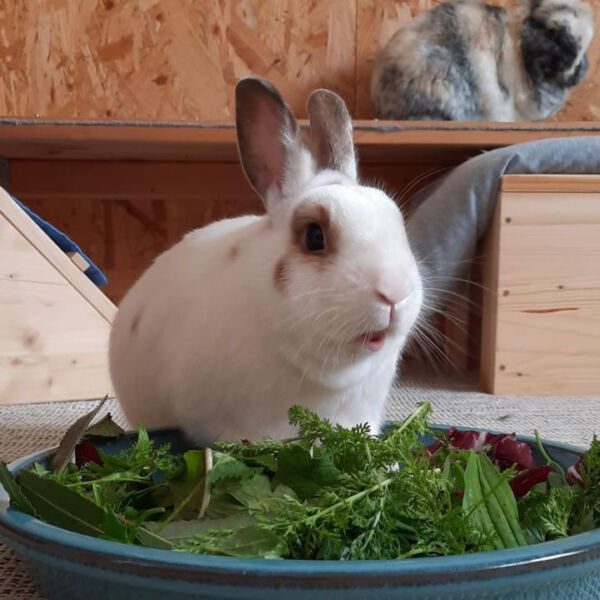
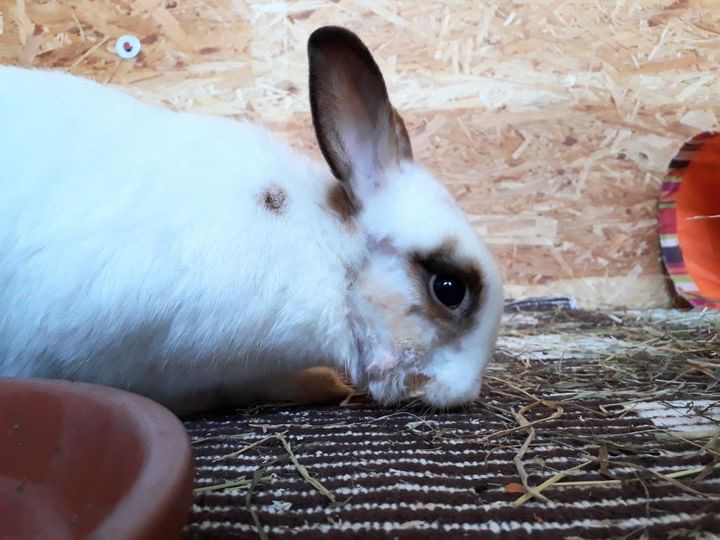
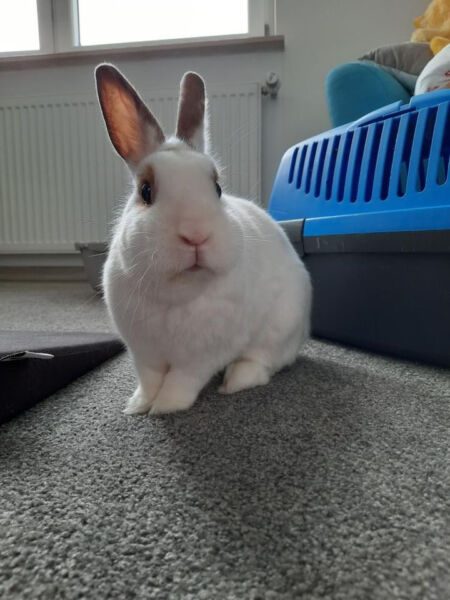
Mia had severe abscesses in two quadrants of her jaw and very poor dental health overall. Over the course of several surgeries, all of her cheek teeth were removed — first the abscessed teeth in the upper right and lower left, and then the remaining teeth gradually, depending on their severity. She still has all of her incisors.
One of her front teeth had also become abnormal at the tooth root because of the inflamed cheek teeth, but it grew back healthy after the diseased cheek teeth were removed.
She now eats Cuni Complete from an automatic feeder (a handful twice a day) and vegetables such as cucumber, cabbage, and bell pepper — mainly softer foods that she can bite pieces off. She no longer eats meadow forage.
You would never guess from looking at her that she no longer has any cheek teeth.
Although I initially found the idea of a rabbit without teeth very strange, I would say that I would make the same decision again. Mia developed the condition when she was 3 years old and is now 10 years old. Once her dental treatment was completed, she no longer needed veterinary treatment for her teeth and was completely healthy.
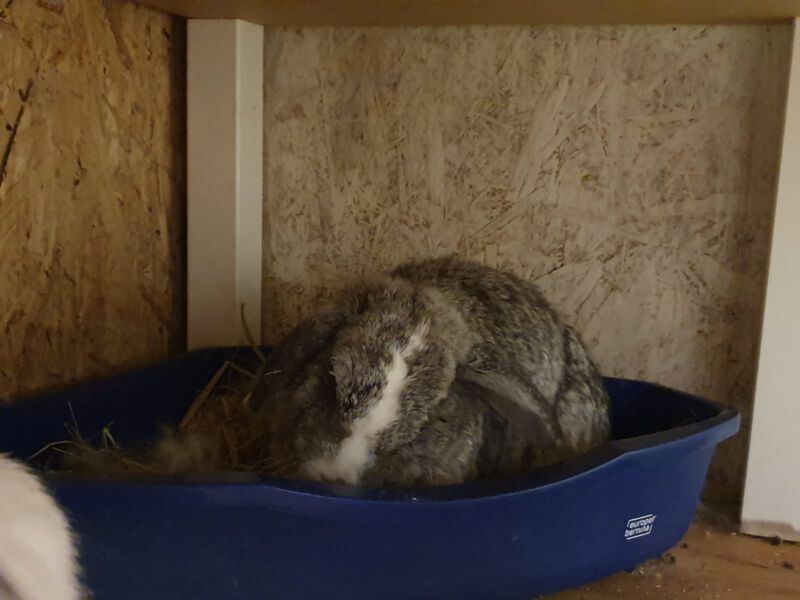

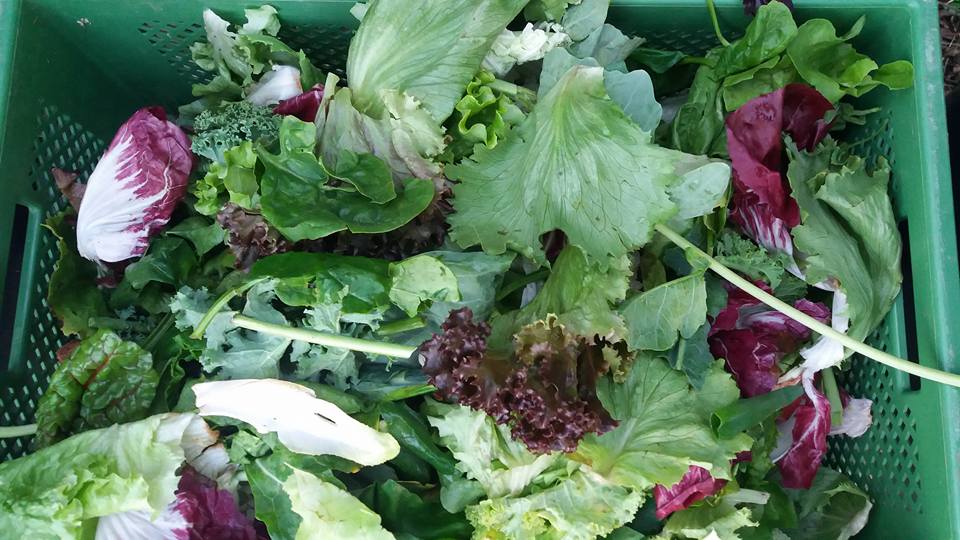
Diet for Rabbits with Dental Disease
Dental problems are often caused by dietary mistakes, which is why affected rabbits should be switched to a diet consisting exclusively of fresh greens.
More information on how to improve tooth wear and thereby potentially prevent the development of dental spurs or extend the intervals between dental corrections can be found here: Tooth Wear.
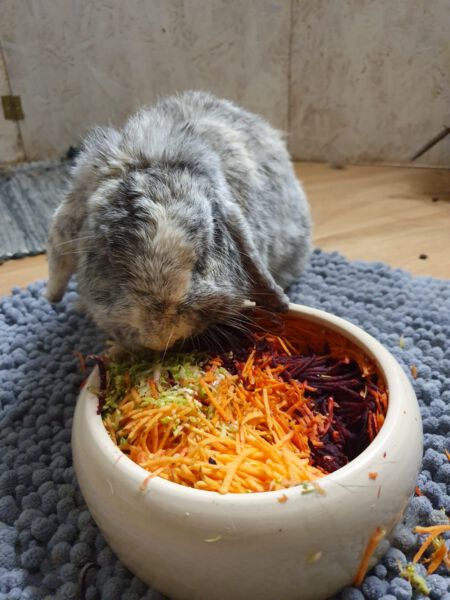
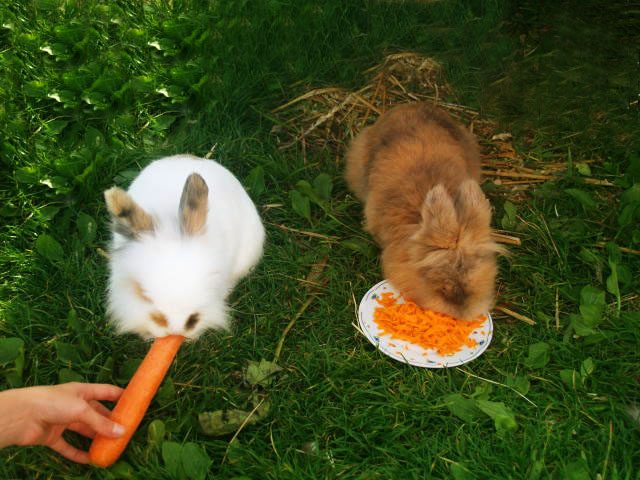
Feeding After Dental Surgery and for Rabbits with Dental Disease
If the incisors have been removed or the rabbit has severe misalignment of the cheek teeth, a special diet is required.
More information about this, including feeding after dental surgery, can be found here.
Frequently Asked Questions About Rabbit Dental Disease
What are the signs of dental disease in rabbits?
Dental disease can cause many different symptoms, and often only one or two signs appear at the same time. Possible signs include weight loss, drooling, a wet chin, changes in eating behavior, taking longer to eat, teeth grinding, digestive problems, reduced fecal output, abnormal incisors, increased drinking, or withdrawing from normal activities.
Can dental disease in rabbits be hidden?
Yes. Around 80% of dental disease is located in the tooth sockets or at the tooth roots and is therefore not visible from the outside. When looking into the mouth, a veterinarian can see only a small portion of the teeth. This is why dental X-rays from several different views are essential when dental disease is suspected.
Can dental disease cause eye or nasal discharge in rabbits?
Yes. The nasolacrimal duct runs very close to the tooth roots. Diseases of the upper jaw, including retrograde tooth growth and jaw abscesses, may therefore become apparent only through eye or nasal discharge. Rabbits with dental root disease are sometimes mistakenly treated for rabbit snuffles because pus can drain into the nasolacrimal duct.
Do rabbits need hard food to wear down their teeth?
No. Giving rabbits hard foods such as dry bread does not promote healthy tooth wear. Tooth wear occurs through tooth-on-tooth contact during normal chewing. Rabbits need fresh, leafy foods that allow the natural grinding movements of their highly specialized teeth.
Can an inappropriate diet cause dental disease in rabbits?
Yes. Dietary mistakes are a major cause of dental problems. Foods that are too energy-dense can reduce the amount of time rabbits spend chewing, while foods with an unsuitable structure can place abnormal pressure on the teeth and tooth-supporting structures. Rabbits need a diet rich in fresh greens, together with high-quality hay that is always available.
Should overgrown rabbit teeth be clipped with pliers?
No. Rabbit teeth should never be clipped with pliers. Clipping can cause hairline cracks, loosened or split teeth, inflammation, pus, and jaw abscesses. Dental correction should instead be performed using rotary instruments.
Does a rabbit need anesthesia for a dental examination?
A first examination of the mouth can be performed in an awake rabbit using a video otoscope, otoscope, or cheek retractor. However, a thorough examination and treatment of dental disease requires sedation or anesthesia, particularly when a mouth gag or rotary instruments are used. X-rays themselves do not normally require anesthesia, although positioning may be easier under anesthesia.
Can rabbits live without incisors?
Yes. Rabbits can live without their incisors, but they can no longer bite pieces off food themselves. Their food therefore needs to be grated or cut into strips so that they can eat it.
Can rabbits live without cheek teeth?
Yes. Rabbits can live even after multiple or all cheek teeth have been removed. Their diet may need to be adapted to foods they are still able to eat comfortably.
Why are X-rays so important for rabbit dental disease?
Because most of the tooth lies beneath the gums, many dental problems cannot be diagnosed by simply looking into the mouth. X-rays taken from several different views allow the veterinarian to assess the chewing surfaces, tooth length and shape, tooth sockets, and deeper dental structures.
About This Article
Original content by Viola Schillinger, veterinarian
Veterinarian specializing in rabbit health, nutrition and species-appropriate husbandry, and founder of Kaninchenwiese.de, a long-established German rabbit care and health resource reaching around 500,000 visitors per month.English translation and adaptation by Erika Kühne Escobar
Medically reviewed by Viola Schillinger, veterinarian
Last medically reviewed: August 2026
Sources/Further Reading:
Böhmer, E., Crossley, D.(2009): Objective interpretation of dental disease in rabbits, guinea pigs and chinchillas. Use of anatomical reference lines. Schattauer
Böhmer, E. (2011). Zahnheilkunde bei Kaninchen und Nagern: Lehrbuch und Atlas; mit 27 Tabellen. Schattauer.
Böhmer, C., & Böhmer, E. (2017): Shape variation in the craniomandibular system and prevalence of dental problems in domestic rabbits: a case study in Evolutionary Veterinary Science. Veterinary sciences, 4(1), 5.
Böhmer, E. (2017): Frage an den Tierarzt/Tierärztin: „Sind die Zähne meines Kaninchens in Ordnung?“ [http://curoxray.de/blog/frage-an-den-tierarzttieraerztin-sind-die-zaehne-meines-kaninchens-in-ordnung/, 9.12.2017]
Ewringmann, A. (2016): Leitsymptome beim Kaninchen: diagnostischer Leitfaden und Therapie. Georg Thieme Verlag.
Ewringmann, A. (2017): Keimspektrum und Antibiotikasensitivitäten bei eitrigen Zahnerkrankungen von Kaninchen. Tierärztliche Praxis Ausgabe K: Kleintiere/Heimtiere, 45(06), 373-383.
Gabriel, S. (2013): Röntgendiagnostik bei Malokklusion des Kaninchens. veterinär spiegel, 23(01), 17-22.
Gabriel, S. (2014); Extraktion der Inzisivi bei Kaninchen. kleintier konkret, 17(S 01), 13-19.
Gabriel, S. (2016): Molarenextraktion bei Heimtieren–Indikation und Technik. kleintier konkret, 19(S 02), 18-22.
Gabriel, S. (2015): Praxisbuch Zahnmedizin beim Heimtier. Georg Thieme Verlag.
Glöckner, B. (2002): Untersuchungen zur Ätiologie und Behandlung von Zahn-und Kiefererkrankungen beim Heimtierkaninchen (Doctoral dissertation, Freie Universität Berlin, Universitätsbibliothek).
Glöckner, B. (2014): Spülung des Tränennasenkanals bei Dakryozystitis und Dakryostenose. kleintier konkret, 17(S 01), 27-30.
Glöckner, B. (2016): Dacryocystitis beim Kaninchen. team. konkret, 12(04), 8-13.
Gorrel, C. (2006). Zahnmedizin bei Klein-und Heimtieren. Elsevier, Urban&FischerVerlag.
Harcourt-Brown, F. M. (1996): Calcium deficiency, diet and dental disease in pet rabbits. The Veterinary Record, 139(23), 567-571.
Harcourt‐Brown, F. M., & Baker, S. J. (2001): Parathyroid hormone, haematological and biochemical parameters in relation to dental disease and husbandry in rabbits. Journal of Small Animal Practice, 42(3), 130-136.
Harcourt-Brown, F. (2006): Metabolic bone disease as a possible cause of dental disease in pet rabbits.
Harcourt-Brown, F. (2009): Dental disease in pet rabbits 1. Normal dentition, pathogenesis and aetiology. In Practice, 31(8), 370. [https://www.researchgate.net/profile/Frances_Harcourt-Brown/publication/298854593_Dental_disease_in_pet_rabbits_1_Normal_dentition_pathogenesis_and_aetiology/links/5794c62808ae33e89f97970b/Dental-disease-in-pet-rabbits-1-Normal-dentition-pathogenesis-and-aetiology.pdf, 9.12.2017]
Hartmann, M. (2007): Zahnextraktion hypsodonter Zähne bei Nagern und Hasenartigen. veterinär spiegel, 17(01), 22-27.
Jekl, V., & Redrobe, S. (2013): Rabbit dental disease and calcium metabolism–the science behind divided opinions. Journal of Small Animal Practice, 54(9), 481-490.
Korn, A. K. (2015): Zahn-und Kieferveränderungen beim Kaninchen: Diagnostik, Auftreten und Heritabilitäten.
Köstlinger, S. (2014): Vergleich der digitalen Röntgenuntersuchung mit der computertomographischen Untersuchung des Schädels bei zahnerkrankten Kaninchen(Doctoral dissertation, Bibliothek der Tierärztlichen Hochschule Hannover).