
Loading
  • Link to Instagram
How to rabbit
  • Home
  • News
  • Getting a Rabbit
    • Before You Get Rabbits
      • Rabbit Care for Beginners
      • Rabbit Care in 15 Minutes
      • How Much Do Rabbits Cost?
      • Lop Rabbits: Health & Welfare Concerns
      • Rabbit Lifespan: How Long Do Rabbits Live?
    • Choosing & Bringing Home Rabbits
      • Bringing a Rabbit Home
      • Sexing Rabbits: Male or Female?
      • Rabbits and Other Pets
      • Rabbit Adoption Contract
  • Housing
    • Outdoor Housing
      • Winter Care for Rabbits
      • Keeping Rabbits in the Garden
      • Building an Outdoor Rabbit Enclosure
      • Overwintering Rabbits
      • Outdoor Rabbit Run Ideas
    • Indoor Housing
      • Rabbit Litter Training Guide
      • Setting Up a Rabbit Room
      • Vitamin D for Indoor Rabbits
      • Keeping Rabbits Indoors
      • Indoor Rabbit Housing Ideas
      • Keeping Rabbits Cool in Summer
    • Balcony Housing
      • Keeping Rabbits on a Balcony
      • Rabbit-Friendly Balcony
  • Feeding
    • Foods for Rabbits
      • Grass & Meadow Plants
      • Pellets for Rabbits
      • Vegetables
      • Culinary herbs
      • Fruits for rabbits
      • Water & Drinking
    • Feeding Guidelines
      • Feeding Guidelines
      • Common Feeding Mistakes
      • Rabbit Feeding Myths
      • How to Feed a Baby Rabbit
    • Feeding tips
      • How to Transition a Rabbit to a New Diet Safely
      • Winter Diet for Rabbits
      • Nutrition for Young Rabbits
      • Diet Changes in Young Rabbits
    • Nutrition Basics
      • What can rabbits eat?
      • Types of Rabbit Diets
      • Is Hay the Main Food for Rabbits?
      • Tooth Wear & Dental Health
      • Crude Fiber & Carbohydrates
      • Secondary Plant Compounds
      • Food selection
      • Between Scarcity and Abundance
      • Rabbit Digestion
      • Wild Rabbit Nutrition
    • Foraging & Plant Identification
      • Foraging Meadows for Beginners
      • Identifying Coniferous Trees
      • Highly toxic plants
    • Food & Plant Lists
      • Safe Branches for Rabbits
      • Best Vegetables for Rabbits
      • Wild Grasses for Rabbits
      • Aromatic Herbs for Rabbits
      • Foraging & Plant Identification
      • Garden plant list
      • Fruit list
  • Companionship & Bonding
    • Rabbit Bonding
    • After a Rabbit Dies: Should the Other Rabbit Live Alone?
    • Can Rabbits Live Alone?
    • Choosing the Right Rabbit Companion
    • Rabbit Bonding Methods
    • Common Bonding Mistakes
    • Bonding of Young Rabbits
    • Keeping Rabbits in Large Groups
    • Hierarchy Fights & Bullying
    • Bonding Disabled or Ill Rabbits
    • Rabbit Socialization
  • Behavior
    • Handling Rabbits
    • Common Behaviors & Problems
      • Rabbits that don’t get along
      • Handling traumatized rabbits
      • Nibbling & Chewing
      • Digging
      • Humping
      • Kicking, Scratching & Wriggling
      • Biting & Aggressive Behavior
    • Body Language & Senses
      • Rabbit Senses
  • Health
    • General Health
      • Is My Rabbit Sick?
      • Recognizing Pain in Rabbits
      • Sudden Death in Rabbits: Possible Causes
      • Rabbit Health Myths
    • Digestive Disorders
      • Gastric Dilatation in Rabbits
      • Bloating in Rabbits
      • Hairballs & Constipation
      • Rabbit Diarrhea & Mushy Poop
      • Stomach Overload
      • Coccidia in Rabbits
      • Yeast in Rabbits
      • Worms in Rabbits
      • Underweight & Overweight Rabbits
      • Megacolon Syndrome
      • Bacterial Enteritis
      • Appendicitis in Rabbits
    • Skin, Fur & Parasites
      • Molting
      • Flystrike in Rabbits (Myiasis)
      • Mites, Ticks, Fleas & Other Parasites
      • Ear Mites
      • Skin Fungus
      • Wounds & Bite Wounds
      • Abscesses
      • When Rabbits Lick Themselves Raw
      • Sore Hocks in Rabbits
      • Injection Necrosis
      • Tumors & Cancer in Rabbits
      • Skin Inflammation
    • Infectious Diseases
      • Rabbit Snuffles
      • E. cuniculi in Rabbits
      • Rabbit Hemorrhagic Disease (RHD)
      • Myxomatosis
      • Ear Infection
      • Rabbit Syphilis
      • Tularemia (Rabbit Fever)
      • Tetanus
      • Toxoplasmosis
      • Listeriosis
      • Rodentiosis
      • Herpesviruses in rabbits
    • Internal & Organ Diseases
      • Liver Diseases
        • Liver Lobe Torsion
      • Cystitis
      • Bladder Sludge & Bladder Stones
      • Kidney Failure
      • Sex & Neutering
      • Uterine Diseases
      • Heart Diseases
      • Thyroid Diseases
      • Heatstroke in Rabbits
      • Stroke in rabbits
      • Schock
      • Hormonal Disorders
    • Other Health Conditions
      • Floppy Rabbit Syndrome
      • Dental Diseases
        • Jaw Abscesses
        • Nutrition for Dental Disease
      • Eye Diseases in Rabbits
        • Watery Eyes
      • Joint Diseases
      • Bone Fractures & Accidents
      • Cramps & Seizures
      • TThymoma, Lymphoma & Other Tumors
      • Poisoning in Rabbits
      • Mold & Mycotoxins
  • Care
    • Rabbit Poop & Urine: What It Means
    • Housing for Disabled & Elderly Rabbits
    • Wheelchairs & Mobility Support for Rabbits
    • Rabbit Health Check
    • Dirty Bottom in Rabbits
    • Why Does My Rabbit Pee & Poop Everywhere?
    • Saying Goodbye to a Rabbit
  • Offspring
    • Breeding that causes animal suffering
  • Service
    • About Us
    • Legal Disclosure
    • Privacy Policy
  • Click to open the search input field Click to open the search input field Search
  • Menu Menu

Lobar torsion of the liver

The twisting of liver lobes
The liver in rabbits has six lobes, which can partially twist around their own axis, a condition known as lobar torsion of the liver.
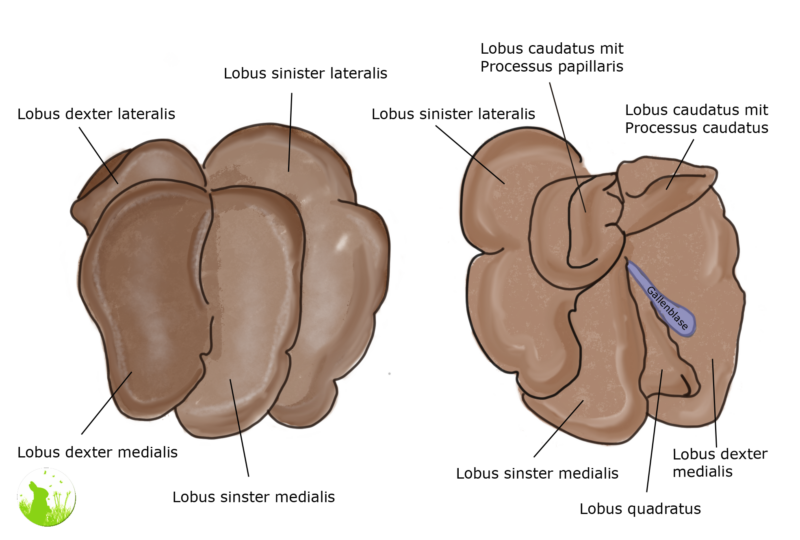
Diagram of the rabbit liver: On the left, the side adjacent to the diaphragm; on the right, the side facing the abdominal cavity.

Contents

  • The anatomical structure of the liver:
  • Causes: How does liver lobar torsion develop?
  • Symptoms: How does liver lobar torsion manifest?
  • Possible common symptoms:
  • Diagnosis: How can it be determined that a rabbit has liver lobar torsion?
  • Treatment: How is it treated?
  • Stabilization until surgery:
  • The Surgery (Lobectomy):

The anatomical structure of the liver:

  • Left lobe (Lobus sinister): Divided into the medial and lateral parts (Lobus sinister medialis and lateralis).
  • Right lobe (Lobus dexter): Divided into the medial and lateral parts (Lobus dexter medialis and lateralis).
  • Caudate lobe (Lobus caudatus): Contains the caudate process (Processus caudatus) and the papillary process (Processus papillaris).
  • Quadrate lobe (Lobus quadratus).

The caudate lobe of the liver is particularly affected by liver lobar torsion in rabbits.

The issue with this condition is that the symptoms are very nonspecific, making it difficult to diagnose early in many rabbits. However, early diagnosis is crucial because if left untreated, it can lead to death.

Why is this the case?

The twisting of the liver lobe causes the vein to become blocked, leading to thrombosis and tissue breakdown. As a result, the affected tissue no longer receives blood supply, and toxins enter the bloodstream.
Causes: How does liver lobar torsion develop?

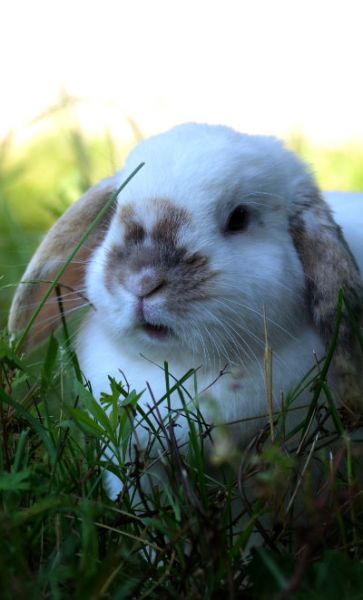
  • Dwarf rabbits with brown spots appear to have a predisposition for liver lobar torsion.
    Liver diseases such as liver injury from falls or other causes (trauma), neoplasms, liver infections, or liver coccidiosis.
  • Gastrointestinal diseases, especially conditions like (repeated) gastric dilatation and intestinal diseases, particularly blockages, are suspected causes for the twisting of liver lobes.
  • There is ongoing discussion whether dwarf rabbits, especially white rabbits with brown markings (Basseches, 2014), have a genetic predisposition for liver lobar torsion.
    A potential connection with megacolon has also been suggested, as frequent digestive disorders may predispose to liver lobar torsion.

Symptoms: How does liver lobar torsion manifest?

  • Refusal to eat and general malaise are often still incorrectly attributed to digestive disorders. Many rabbits exhibit symptoms similar to gastrointestinal issues, such as gastric dilatation, which unfortunately leads to liver lobar torsion often going undiagnosed.
  • The refusal to eat causes the stomach contents to stagnate, leading to potential gas buildup (bloating), and many rabbits may die suddenly due to this complication.
  • Some rabbits with liver lobar torsion show recurrent gastric dilatations, which can be a clue to the condition.
  • There are also cases where rabbits die suddenly without any symptoms at all.

Possible common symptoms:

  • Refusal to eat and gastric dilatation with bloating.
  • General malaise and pain (no comfortable position).
  • Poor circulation status: pale mucous membranes (sometimes also jaundiced mucous membranes), dehydration, low body temperature, rarely elevated temperature, rapid heart rate.
  • Pain upon palpation of the cranial abdomen, with a mass palpable on the right side.
  • Reduced fecal output and sometimes soft stools.
  • Rapid breathing

Diagnosis: How can it be determined that a rabbit has liver lobar torsion?

  • Sometimes, swelling of the liver can be visible in the X-ray of the right caudal abdomen.
  • The veterinarian may be able to palpate the swollen liver on the right side of the stomach.
  • Ultrasound is an excellent method for diagnosing liver lobar torsion, provided the veterinarian is experienced in ultrasound diagnostics.
  • Liver values in the blood can sometimes show abnormalities (such as ALT and AST, less often γ‑GT). However, they are often completely normal, and abnormalities can have many different causes.
  • Affected rabbits frequently show signs of anemia with reduced hematocrit levels.

Treatment: How is it treated?

Without surgery, only a small percentage of rabbits (44% in one study) recover with medication treatment. However, the surviving rabbits often suffer from digestive disorders (such as gastric dilatation) due to ongoing pain. On the other hand, surgically treated rabbits (undergoing lobectomy) all recovered and returned to health.
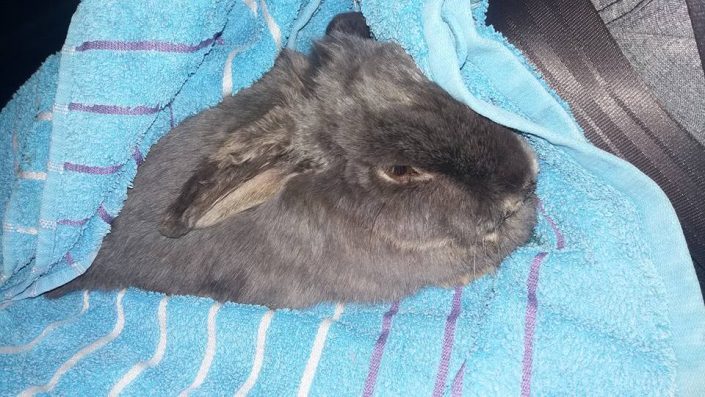
Before the surgical procedure, rabbits are stabilized; however, surgery should still be performed relatively promptly, typically within the first 24 hours.

Stabilization until surgery:

  • Warming in case of low body temperature.
  • Warm intravenous infusions to help stabilize circulation.
  • Strong pain relief (e.g., opioids).
  • Antibiotics (e.g., Enrofloxacin) to prevent infection.
  • Metoclopramide (MCP) to support gastrointestinal motility.
  • Liver protectants (as used for liver diseases).
  • Additional supportive measures as for gastric dilatation if needed.
  • In cases of severe anemia, blood transfusions may be required.

The Surgery (Lobectomy):

Once the rabbit’s circulation has been stabilized, the twisted liver lobe can be surgically removed. The surgery generally has a good prognosis, and complications are rare. However, the rabbit must stay in the clinic until it has fully recovered and stabilized after the procedure.

Sources and Further Reading:

Basseches, J. (2014): Liver lobe torsion in pet rabbits. Vet Clin North Am Exot Anim Pract, 17, 195.

Eckert, Y., & Thöle, M. (2019): Verdreht–Leberlappentorsion, eine unterschätzte Erkrankung beim Kaninchen?. kleintier konkret, 22(S 02), 2-9.

Graham, J. E., Orcutt, C. J., Casale, S. A., Ewing, P. J., & Basseches, J. (2014): Liver lobe torsion in rabbits: 16 cases (2007 to 2012). Journal of Exotic Pet Medicine, 23(3), 258-265.

Graham, J., & Basseches, J. (2014): Liver lobe torsion in pet rabbits: clinical consequences, diagnosis, and treatment. Veterinary Clinics: Exotic Animal Practice, 17(2), 195-202.


Who Is Behind How to rabbit?

Veterinarian Viola Schillinger
Who Is Behind How to Rabbit? Viola Schillinger is a veterinarian who has kept rabbits since childhood and has dedicated much of her professional life to improving their health, welfare, and living conditions. Decades of rabbit keeping, intensive observation, and professional study have given her extensive experience in rabbit health, nutrition, behavior, and species-appropriate husbandry. She shares her knowledge through television appearances, webinars, podcasts, radio programs, articles, and books. In 2008, Viola founded Kaninchenwiese.de, which has grown into a leading German-language resource for rabbit care and health, reaching around 500,000 visitors per month. How to Rabbit brings this knowledge to an international English-speaking audience. The English content is translated and adapted by Erika Kühne Escobar and medically reviewed by Viola Schillinger.

Rabbits need space…


How to rabbit…

…is a guide for the appropriate keeping, nutrition and care of rabbits.

Search

Search Search

Never alone


Last Changes

  • Cookie Policy (EU) 7. September 2026
  • Care 26. August 2026
  • Fruit list 5. August 2026
  • Highly toxic plants 30. July 2026
  • Appendicitis 21. July 2026
© Copyright - How to rabbit 2024 - Enfold Theme by Kriesi
  • Link to Instagram
Scroll to top Scroll to top Scroll to top