Mushy or watery poop in rabbits is always a warning sign.
Rabbit diarrhea can become life-threatening within hours – especially due to dehydration or flystrike.
Emergency: Rabbits with diarrhea are at high risk of flystrike, which can be fatal very quickly.
What Is Diarrhea in Rabbits?
Diarrhea in rabbits means passing watery, very soft, or unformed stool.
It is usually caused by:
- irritation of the gut
- inflammation of the intestinal lining
- imbalance in gut bacteria
Rabbits have a highly sensitive digestive system, so problems can escalate quickly.
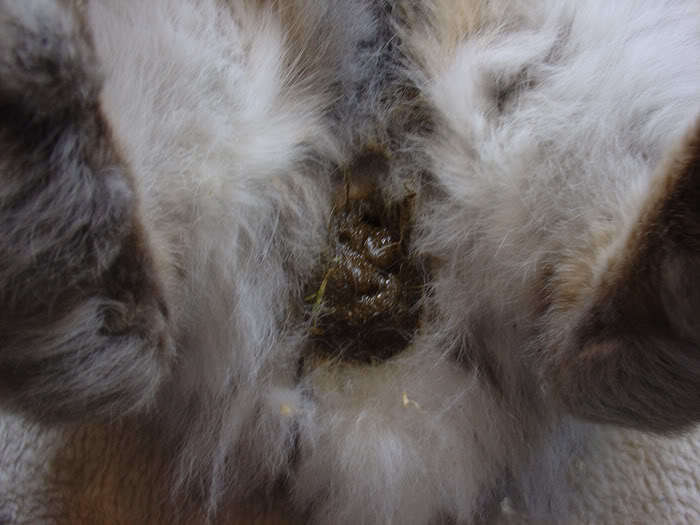
Common Causes of Rabbit Diarrhea
1. Poor Diet (Most Common Cause)
An improper diet is the #1 trigger of digestive issues in rabbits.
2. Fresh Food Intolerance (Usually a Sign of a Problem)
Rabbits are naturally built to eat fresh greens.
If they react with diarrhea, it often means:
- gut damage from dry food
- parasites or infection
- imbalance in gut bacteria
3. Parasites & Infections
A stool test over 2–3 days is recommended.
4. Sudden Diet Changes
Especially in spring:
- fresh greens introduced too quickly
- high-protein plants
6. Dental Problems
Unchewed food can overload digestion.
7. Stress
Sensitive rabbits may develop soft poop under stress.
8. Underlying Diseases
- organ problems
- viruses
- chronic conditions
Diarrhea is always a symptom, not the root cause.
9. Toxins & Contaminated Food
Diarrhea can also be caused by toxic substances, such as:
- pesticide-contaminated greens
- spoiled or fermented fresh food
- medications (especially antibiotics)
- ingestion of toxic plants or materials
Always ensure fresh food is clean and safe.
10. Antibiotics & Gut Imbalance
Antibiotics can strongly affect a rabbit’s digestion.
They may:
- damage gut bacteria
- lead to soft or watery stool
- cause long-term sensitivity
After antibiotic treatment, the gut often needs time and support to recover.
11. Disrupted Gut Flora (Dysbiosis)
An unhealthy gut microbiome can result from:
- poor diet
- antibiotics
- early separation from the mother
This imbalance often leads to chronic soft poop or recurring diarrhea.
12. Food Intolerances
Some rabbits cannot tolerate certain vegetables or foods.
This can lead to:
- repeated diarrhea
- soft or misshaped poop
👉 Identify and remove trigger foods.
13. Megacolon (Genetic Condition)
Some rabbits, especially white rabbits with spotted markings, may suffer from megacolon syndrome.
Typical signs:
- chronic mushy poop
- recurring diarrhea
This is a genetic condition and requires long-term management.
Important: Unlike in humans, diarrhea in rabbits is not harmless and always has an underlying medical cause! Be sure to find the cause and have the rabbit treated by a veterinarian.
Dirty Bottom – Other Causes
A dirty rear is not always diarrhea. It can be caused by:
- uneaten cecotropes
- obesity (rabbit cannot reach to clean itself)
- pain (arthritis, spine issues)
- balance problems
- poor hygiene in the enclosure
Home Remedies for Mild Rabbit Diarrhea
If your rabbit is still:
- active
- eating
- behaving normally
You can try first aid:
Feed only:
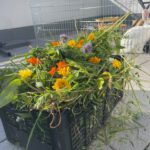
- fresh grass
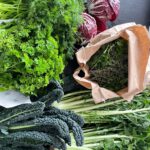
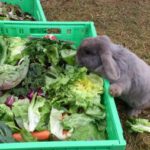
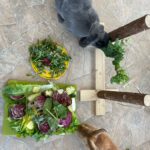
- leafy greens
- carrot tops
- branches with leaves
- Offer digestive tea (pure herbal tea!) to increase water intake and soothe the digestive system.
Avoid:
- pellets
- fruit
- dry food
This stabilizes digestion naturally.
Important: Never Feed Only Hay
A “hay-only diet” is dangerous.
It lacks:
- water
- nutrients
This can weaken your rabbit further instead of helping.
Under no circumstances should you feed only hay (a „hay diet“), as it contains too little water and nutrients, unnecessarily weakening the rabbit. Dr. Anja Ewringmann, DVM, states in „Clinical Symptoms in Rabbits“:
„Proper feeding during diarrheal diseases is extremely important therapeutically. […] A hay-and-water diet is not suitable to meet the needs of these animals.“
When to See a Vet Immediately
Go to a rabbit-savvy vet if:
- diarrhea lasts more than 12–24 hours
- your rabbit stops eating
- your rabbit seems weak or inactive
- symptoms keep coming back
Rabbits can die quickly from dehydration and gut failure.
What Does the Vet Do for Rabbit Diarrhea?
A rabbit-savvy veterinarian will first stabilize your rabbit and then treat the underlying cause of the diarrhea.
1. Stabilization (Critical Step)
In moderate to severe cases, the vet will:
- administer fluids (IV or subcutaneous) to prevent dehydration
- stabilize circulation
- closely monitor the rabbit
Rabbits with acute diarrhea and circulatory issues often require hospitalization.
2. Medication
Depending on the cause, treatment may include:
- anti-diarrheal medication
- gut-supporting products (e.g. Dysticum, Stullmisan vet)
- activated charcoal (for toxins or antibiotic-related diarrhea)
- natural binders such as healing clay
3. Restoring Gut Flora
To rebuild a healthy digestive system:
- prebiotics and probiotics
- brewer’s yeast
- apple pectin
This helps stabilize the gut long-term and prevent recurrence.
4. Treating the Root Cause (Most Important)
Diarrhea is not a disease, but a symptom.
The vet will identify and treat the underlying issue, such as:
- parasites
- infections
- dental problems
- diet-related issues
Without treating the cause, diarrhea will return.
Treatment: What helps with diarrhea?
Step 1: Identify the Cause
- check diet
- do a stool test (parasites, yeast, bacteria)
- check teeth
Step 2: Stabilize the Rabbit
A vet may:
- give IV fluids
- stabilize circulation
- prescribe medication
Step 3: Support Gut Health
Helpful supplements:
- prebiotics / probiotics
- apple pectin
- brewer’s yeast
Daily Care for Rabbits with Diarrhea
- clean dirty fur daily
- keep the anal area dry
- remove feces carefully
- check for fly larvae twice a day
- Rabbits with diarrhea have an increased need for minerals, so a Himalayan salt lick or a bowl of saline solution should be offered in addition to fresh water (never as a replacement).
In summer: bring rabbits indoors immediately
Cecotropes vs. Diarrhea (Very Important!)
Many owners confuse diarrhea with soft cecotropes.
Normal Cecotropes
- soft, sticky, nutrient-rich
- usually eaten directly
Problem: Uneaten Cecotropes
- smeared poop
- dirty bottom
- rabbit sitting in feces
Often caused by:
- poor diet
- obesity
- pain
- gut imbalance
Liquid Cecotropes
Some rabbits produce:
- mushy or liquid cecotropes
- alternating normal + soft poop
Common causes:
- dysbiosis
- parasites
- stress
- poor diet
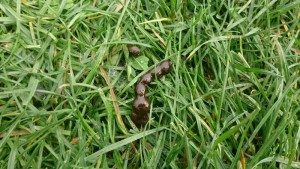
Liquid cecotropes in their intact form
The cause of mushy or liquid cecotropes is a condition affecting the cecum, often due to a bacterial imbalance. This issue usually arises from dysentery or another underlying condition, such as parasites (coccidia, worms) or spoiled food.
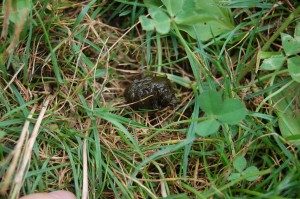
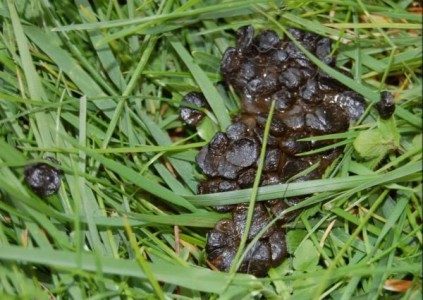
Despite extensive tests, no cause for Willy’s „diarrhea“-covered bottom could be found. Despite optimal nutrition and various treatment attempts, there was no improvement. „He’s completely covered every day, and the clinic never finds anything. Sometimes it’s so bad that when I’m at work and come home in the afternoon, everything has already dried and clogged up, preventing any poops from coming out. When I clean him, about ten poops come out at once, which is really awful.“. Thanks to our suggestion, the owner realized it might be cecotropes and that an inflammation could be the underlying cause. She treated with Baytril and Lactulose, and the rabbit recovered.
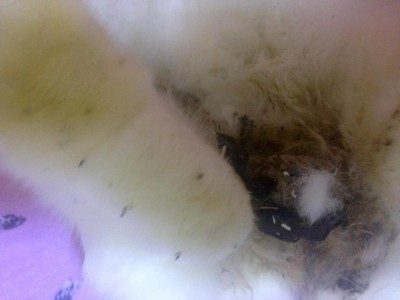
The issue usually arises from dysentery or another underlying condition, such as parasites (e.g., coccidia, worms), spoiled or unsuitable food, a generally poor diet (e.g., dry food), or significant stress. Yeast infections can also be a cause. The rabbits show no signs of pain and generally appear to be in good overall health. However, the most common cause is hay rich in herbs or dried herbs.
For dysentery, treatment is typically with Baytril (usually for 10 days, or longer if the symptoms persist, extending beyond recovery; in rabbits that have been untreated for a long time, treatment may need to be significantly longer to prevent recurrence). Parasites should be ruled out or treated through a poop test and a tape impression. A gut flora support supplement is necessary, with prebiotics proving particularly effective, sometimes in combination with probiotics.
Additionally, we recommend monitoring vitamin D intake, as a deficiency can promote or trigger inflammatory bowel diseases. Of course, the underlying cause should be addressed to prevent the condition from recurring.
Sources include:
Ewringmann, A. (2016): Leitsymptome beim Kaninchen: Diagnostischer Leitfaden und Therapie. Georg Thieme Verlag.
Hein, J. (2016): Durchfall beim Kaninchen–Ursachen und Therapie. kleintier konkret, 19(S 01), 2-9.
Hein, J. (2017): Durchfallerkrankungen bei Kleinsäugern: Ursache, Diagnostik, Therapie. Schlütersche.
Kraft, W., Emmerich, I. U., & Hein, J. (2012): Dosierungsvorschläge für Arzneimittel bei Kleinnagern, Kaninchen und Frettchen. Schattauer Verlag.