
Parasites in Rabbits
Many rabbit owners are unaware that small numbers of parasites may be present on rabbits without causing any symptoms. A healthy immune system usually prevents them from multiplying excessively. However, when the immune system is weakened, mild to severe parasite infestations can develop and may require urgent treatment.
Causes of Parasite Infestations in Rabbits
Mites and other parasites are often already present in the rabbit’s environment. Mites, for example, can be found in hay, straw and even on the rabbits themselves.
In healthy rabbits, these parasites are usually present only in very small numbers and cause no signs of illness such as itching, dandruff or hair loss. However, if the immune system becomes weakened, the parasites can multiply and symptoms may develop.
Sometimes, a new infestation occurs after treatment once the medication has been metabolized, approximately 14 days later. Although the parasites may have been killed during treatment, they can become established again once the medication is no longer effective. If the rabbit’s immune system remains compromised, the symptoms are likely to return.
Important: Rabbits with parasite infestations often have hidden underlying conditions that weaken their immune system. They should therefore be thoroughly examined, including X-rays, blood tests and a careful general health check.
Factors That Can Weaken the Immune System and Promote Parasite Infestations
- Stress: Stress caused by bonding attempts, disharmonious groups, moving to a new environment, frequent heat cycles or false pregnancies, frequent handling, poor interactions, limited space, or a lack of hiding places can weaken the immune system.
- Living alone: Rabbits are social animals, and isolation can cause stress, which may weaken the immune system and increase susceptibility to parasites.
- Other untreated or chronic illnesses: These can weaken the immune system and make rabbits more susceptible to parasite infestations.
- Poor hygiene: Inadequate cleanliness can allow mites to multiply excessively.
- Nutritional deficiencies or an improper diet: These can impair the immune system’s ability to function properly.
- Heavily infested hay or straw: Mites in hay or straw, combined with other factors, can increase the likelihood of an infestation. Switching to a different type of hay or straw may help.
- Contact with contaminated grass or clippings: Especially in the case of autumn grass mites, exposure to infested areas can lead to an outbreak.
Cleaning the Environment
In addition to treating the rabbit, it is important to renew all bedding, clean the floors, replace hay and straw, and thoroughly clean the enclosure on the day of treatment to remove as many parasites from the environment as possible.
Diatomaceous earth can be used to help treat the surrounding environment (see below for more details).
In cases of bird mite or rat mite infestations, environmental cleaning is particularly important and should be carried out very thoroughly.
Treating All Rabbits?
Parasites are contagious and can spread to other rabbits in the group. However, for a rabbit to develop symptoms, the immune system is usually weakened.
In well-maintained living conditions, typically only individual rabbits in the group become ill. If several rabbits or the entire group develop symptoms, the living conditions should be reviewed urgently (see “Causes of Parasite Infestations”).
In principle, only rabbits showing symptoms are treated. Healthy rabbits living with an infested rabbit do not usually require treatment.
An exception may be made for immunocompromised rabbits, for which preventive treatment may be advisable in some cases.
Mites
Autumn grass mites in the ears may appear as small red spots.
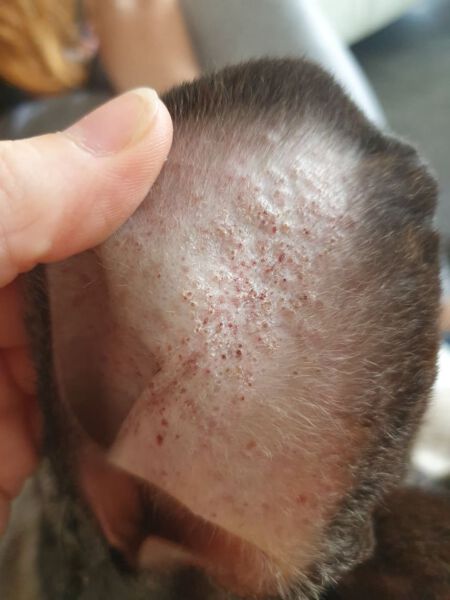
Which types of mites infest rabbits and how do they manifest?
- Predatory mites (Cheyletiella parasitivorax): Symptoms include dandruff, bald patches, clumps of loose fur and, rarely, itching. In later stages, restlessness, weight loss and a general deterioration in health may occur.
- Fur mites (Leporacus gibbus or Listrophorus gibbus): Symptoms include dandruff, hair loss, skin rashes and sometimes itching.
- Burrowing mites (Sarcoptes): Symptoms include intense itching, hair loss, bloody scratches and crusted areas, especially around the nose and on the back. In later stages, weight loss, poor general health and secondary infections may occur.
- Autumn grass mites (Trombicula autumnalis): Symptoms include skin rashes, occasional itching and hair loss.
- Hair follicle mites (Demodex cuniculi): Symptoms include hair loss, especially around the neck and head, as well as crusting of the skin.
- Bird mites (Dermanyssus) and rat mites (Ornithonyssus bacoti): Symptoms include itching and restlessness, especially in the evening and at night.
Common Types of Mites in Rabbits
| Type of mite | Typical signs |
|---|---|
| Predatory mites (Cheyletiella parasitivorax) | Dandruff, bald patches, clumps of loose fur and, less commonly, itching. In advanced cases, restlessness, weight loss and a general decline in health may occur. |
| Fur mites (Leporacus gibbus / Listrophorus gibbus) | Dandruff, hair loss, skin rashes and sometimes itching. |
| Burrowing mites (Sarcoptes) | Intense itching, hair loss, bloody scratches and crusted areas, especially around the nose and on the back. In advanced cases, weight loss, poor general health and secondary infections may occur. |
| Autumn grass mites (Trombicula autumnalis) | Skin rashes, occasional itching and hair loss. |
| Hair follicle mites (Demodex cuniculi) | Hair loss, especially around the head and neck, as well as crusting of the skin. |
| Bird mites (Dermanyssus) and rat mites (Ornithonyssus bacoti) | Itching and restlessness, particularly in the evening and at night. |
Diagnosis and Treatment
Mites are the most common parasites in rabbits. An infestation is often first noticed because of changes in the coat or abnormalities of the skin.
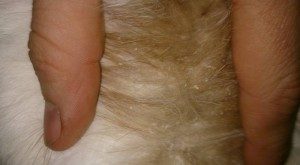
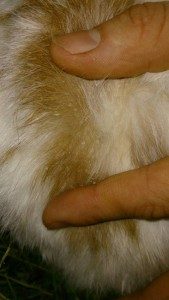
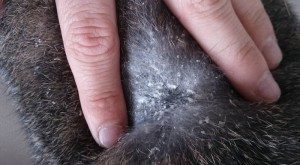
For example, large, thick flakes of dandruff may stick to the fur. Even when loose fur is pulled out, the flakes remain attached to the hairs (see photo). Hair loss may also occur. Rabbits rarely show obvious itching with mite infestations, although itching can often be triggered during a veterinary examination.

An experienced veterinarian can often diagnose a mite infestation based on the clinical signs alone. For a more accurate diagnosis, a tape test or skin scraping may be performed. However, false-negative results are possible, meaning that an infestation may be present even if the test does not detect it.
Dandruff can also be caused by fungal infections.
For mild infestations characterized by dandruff and possibly mild itching, treatment with diatomaceous earth mite powder can be tried without veterinary guidance.
However, if the rabbit has severe itching, bald patches, scabs, or other signs of a more serious infestation, a veterinary examination is essential. An underlying condition may also be present, such as a fungal infection, metabolic disorder, thymoma, or hormonal imbalance.
In severe infestations, additional treatment may be necessary, for example wound care, treatment of secondary infections, or treatment of other underlying health problems.
If diatomaceous earth does not lead to noticeable improvement, the rabbit should be examined by a veterinarian, as another underlying condition may be responsible.
The dandruff usually remains in the coat unless it is combed out.
Important: Although mites can be found in hay and in the environment, they usually infest weakened or sick rabbits with hidden underlying health conditions or, in rare cases, rabbits experiencing extreme stress, such as during bonding attempts, dominance struggles, or when living alone. These rabbits should therefore be thoroughly examined, including blood tests, X-rays, and a detailed general examination, to identify possible underlying conditions.
Diatomaceous Earth (Silicon Dioxide) for Mite Control
Diatomaceous earth, which is derived from fossilized diatoms, is a natural substance that is highly effective against surface-dwelling mites of various types, as well as fleas, lice, hair lice and other insects.
Unlike many medications, it works purely mechanically, meaning that resistance cannot develop. The silicate dust adheres to the insects, particularly around their joints. Its fine, sharp-edged particles damage the waxy protective layer through an abrasive effect. This creates microscopic damage to the wax coating, causing the insects to lose body fluids and die from dehydration within a few hours.
Unlike many other natural products, such as tea tree oil, diatomaceous earth is highly effective and, when used correctly, completely safe.
It is available online, for example through Amazon, or in drugstores as a dietary supplement in the form of silica powder. However, it must be finely ground to work effectively, and many powders sold in drugstores have an unsuitable grain size. For this reason, a product specifically intended for mite control is recommended.
Application
Diatomaceous earth is only effective in completely dry conditions. It is therefore essential to keep the rabbit and its environment absolutely dry during treatment. This may involve frequent cleaning, covering the enclosure, protecting it from rain, temporarily moving the rabbit indoors during periods of high humidity, and making sure the rabbit’s fur is dry.
Because diatomaceous earth works very quickly, maintaining dry conditions for just one or two days is usually sufficient.
Only a small amount is required to treat a mite infestation successfully. Larger amounts are unnecessary and should be avoided, as excessive dust can put strain on the respiratory system.
Apply a small amount of diatomaceous earth to a paper towel, dip the towel into the powder and gently rub it into the rabbit’s coat, including against the direction of hair growth. Repeat this process until the entire coat has been treated.
With completely dry hands, you can also distribute the diatomaceous earth throughout the coat by gently stroking the rabbit both with and against the direction of hair growth.
Avoid the head area whenever possible. If the infestation is located there, take particular care to prevent the powder from entering the rabbit’s eyes or nose.
For preventive purposes, treating the environment is usually sufficient and the rabbit itself does not need to be treated.
If the rabbit is already infested, both the rabbit and its environment may need to be treated. The environment must be completely dry, as diatomaceous earth will not work properly in damp or wet conditions.
When treating the environment, apply the powder sparingly. The rabbit should only be returned once the dusting process has been completed.
Protective goggles and a dust mask should be worn during application to prevent inhalation of the dust and protect the eyes.
For severe infestations, a follow-up treatment should be carried out after 10 days and may need to be repeated once or twice more.
Severe Mite Infestations
For severe infestations, a visit to the veterinarian is essential. The veterinarian can determine whether the rabbit actually has a mite infestation or whether another condition is responsible.
Mite species that live beneath the skin, for example, are not affected by diatomaceous earth.
In severe cases, secondary infections and other pre-existing conditions must also be treated. Scabbed areas may require antibiotic treatment.
In some cases, treatment for itching and pain relief may also be necessary to prevent further scratching and reduce the rabbit’s discomfort.
Veterinary Medications for Mite Infestations
Veterinarians typically use the following medications, depending on the type of mite:
- Selamectin (e.g., Stronghold® 15–30 mg/kg, equivalent to 0.25–0.5 ml/kg): Applied as a spot-on treatment to the back of the neck. A follow-up treatment is usually required because not all parasitic stages are killed. After application, make sure that other animals do not lick the Stronghold® off.
- Ivermectin (Ivomec® 0.3–0.5 mg/kg, available in various strengths): Can be administered as an injectable solution or applied as a spot-on treatment to the neck. When using the spot-on form, make sure that other animals do not lick it off during grooming. Three applications are required, spaced 7–10 days apart.
- Imidacloprid/Moxidectin (Advocate® 0.1 ml/kg)
- Doramectin (e.g., Dectomax® 0.5 mg/kg)
- Fluralaner (Bravecto®): This is the preferred treatment for Sarcoptes mites, as many other treatments do not work effectively due to extensive resistance.
Bath Additives
Bath additives are not really effective for treating mites. Bathing rabbits causes significant stress, and they can also catch a cold afterward. The stress may even contribute to the mites reappearing once the effect of the medication wears off.
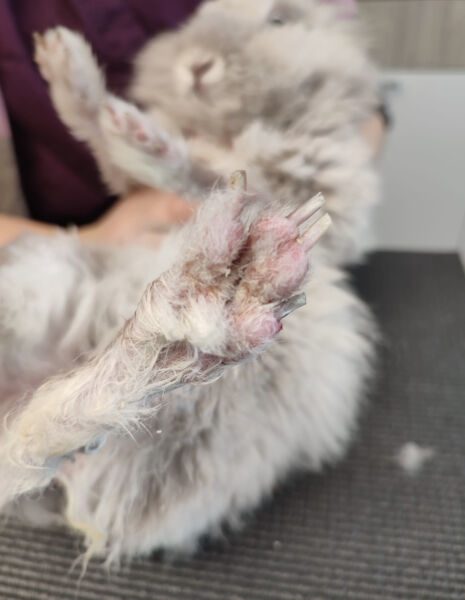
There are less stressful and gentler treatment options available.
Warning: Fipronil (e.g., Frontline®) must never be used on rabbits!
Frontline® (fipronil) is completely unsuitable for rabbits and can lead to life-threatening conditions. It is not approved for use in rabbits because it can be fatal.
Do not use mite medications intended for dogs and cats on rabbits. These are potent neurotoxins, and incorrect application or dosage can cause irreversible damage.
Natural Mite Treatments
Natural mite treatments are sometimes completely ineffective or even incompatible with rabbits. Some of these products are effective and are recommended for mild to moderate infestations.
However, diatomaceous earth (see above) offers the highest effectiveness and safety for rabbits.
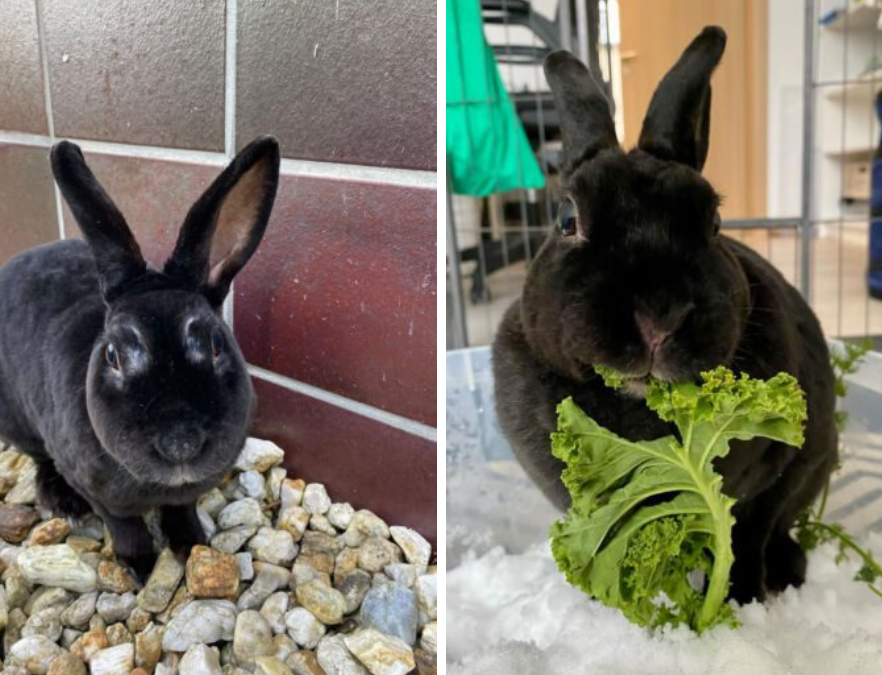
Mite treatment Before – After
Ticks on Rabbits
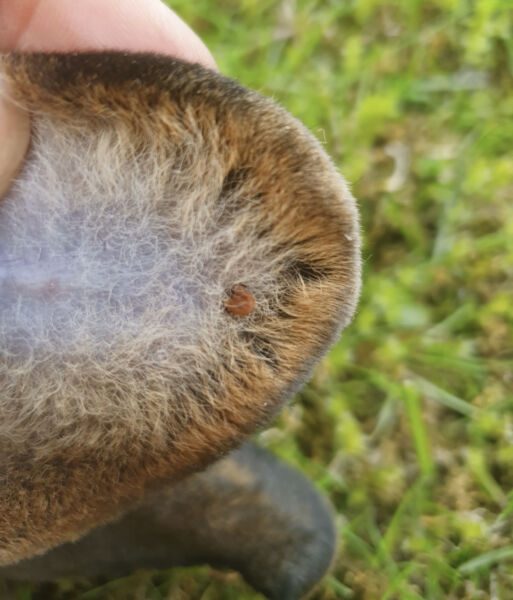
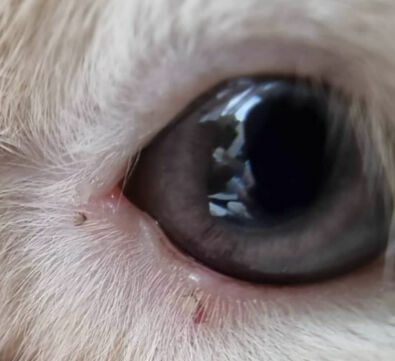
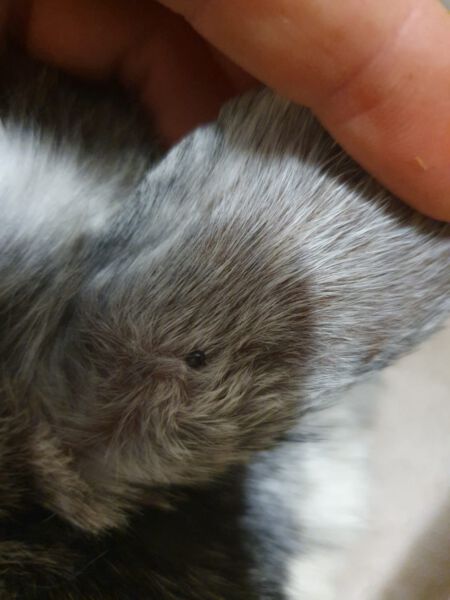
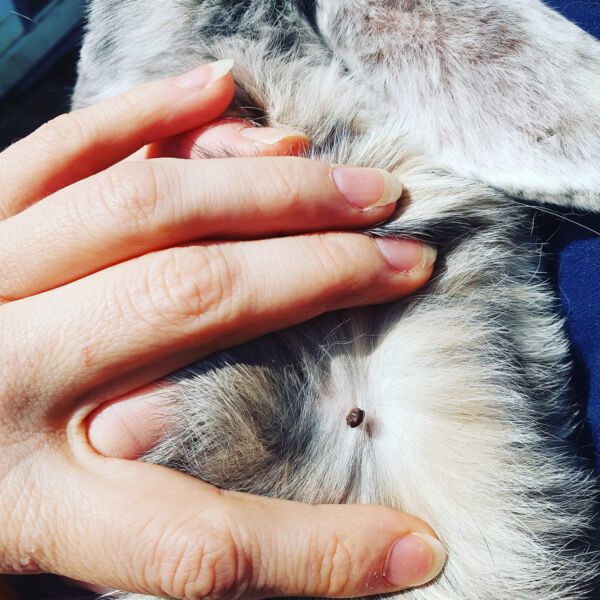
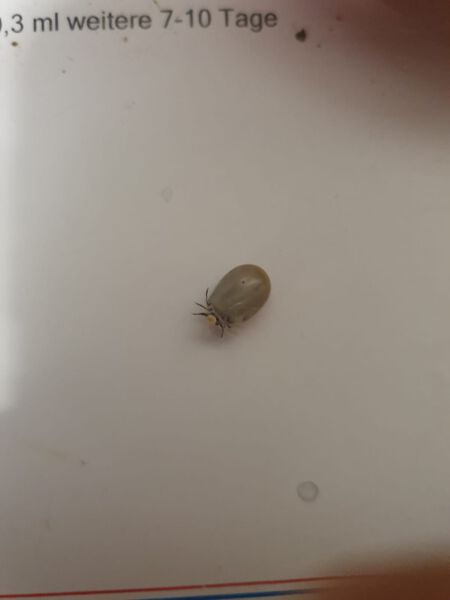
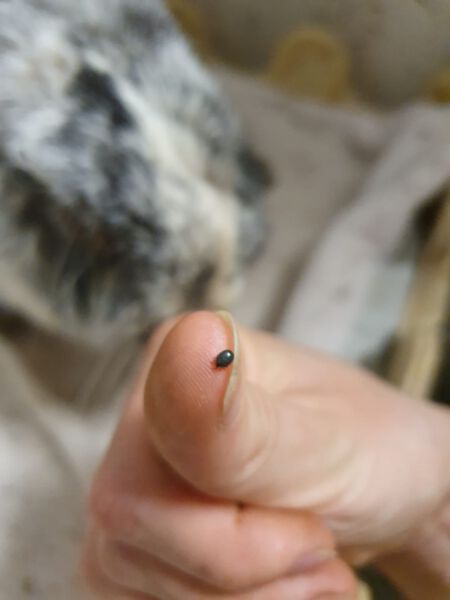
We frequently receive questions about tick infestations in rabbits. First, it is important to know that although ticks can be annoying for rabbits, they are usually not dangerous.
Unlike in other mammals, there are no known cases of ticks transmitting diseases to rabbits. However, in certain areas, the transmission of diseases such as tularemia is possible. Whether rabbits can contract Lyme disease (Borrelia) remains controversial. In any case, Lyme disease does not play a significant role among rabbit diseases.
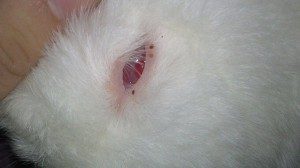
Rabbits are typically infested by very small, dark ticks (hard ticks; Ixodes ricinus and other Ixodidae). These ticks usually attach themselves to areas with thin, sparsely haired skin, such as the eyelids, nose, base of the ears and genital area.
If there is only one tick or a small number of ticks, simply removing them is usually sufficient.
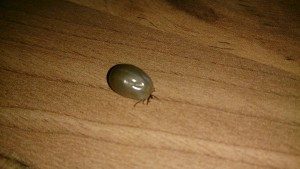
Tick Removal in Rabbits
According to current knowledge, ticks should be removed as quickly as possible. The sooner they are removed, the lower the likelihood of Lyme disease developing.
Never apply substances such as oil, glue or vinegar to the tick.
Grasp the tick as close to the skin as possible and gently pull it away using steady pressure. Often, the tick will release on its own after a short wait. A tick card is the best tool for this.
Take care not to crush the tick while removing it.
If the tick’s head remains in the skin, this does not cause Lyme disease or other diseases, as is often incorrectly claimed. Removing the body is sufficient to kill the tick and prevent disease transmission. However, the remaining head may cause local inflammation.
Treatment for Frequent or Heavy Tick Infestations
If a rabbit is heavily infested or repeatedly gets ticks, consult a veterinarian about tick-repellent treatments that may help reduce the number of ticks on the rabbit.
Veterinarians may use the following products:
- Permethrin (e.g., ExSpot® 0.1–0.3 ml): In rare cases, it may cause skin irritation at the application site.
- Permethrin & Imidacloprid (e.g., Advantix®): Available over the counter and can be applied at a dose of 10–30 mg/kg every two weeks to the skin on the neck after parting the fur. A 40 mg spot-on is suitable for rabbits weighing between 1.3 and 4 kg. Alternatively, for higher concentrations, 0.1 ml/kg can be used. Some rabbits may experience mild skin reactions such as hair loss or irritation.
- Selamectin and Sarolaner (e.g., Stronghold Plus©)
- Imidacloprid and Moxidectin (e.g., Advocate©): This combination is another option for treating ticks and mites.
Important: Never use Frontline® on rabbits. It can cause life-threatening conditions.
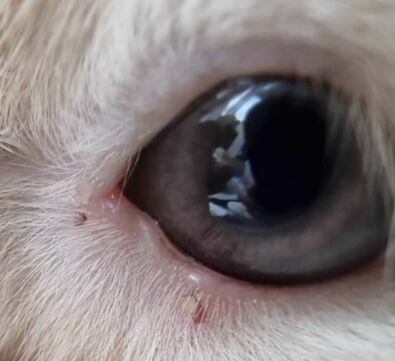
Preventing Tick Infestations
If the level of infestation does not require strong medication, various preventive measures against ticks can be tried. Inuzid Spray has proven effective.
Coconut oil and black cumin oil have tick-repellent properties but need to be reapplied frequently to areas that are particularly prone to ticks, such as around the eyes, nose and base of the ears.
They can make the coat greasy, and effective amounts are often lost because of the oily coat and the need for constant reapplication, making this method less practical for everyday use.
Tick rolls in the garden have worked well for many owners and can help solve the tick problem.
A dry environment can also help prevent tick infestations because ticks prefer moist environments. Simply changing the grazing area can often make a significant difference.
Ticks are commonly found at the edges of forests, in parks and in wooded areas.
Lice, Fleas, and Biting Lice
Biting lice, fleas, and lice are relatively rare in rabbits.
Biting lice can cause itching, hair loss, and small bloody or scabbed areas on the skin. The lice themselves are often visible as very small, elongated black or white creatures.
With fleas, diagnosis is often possible with the naked eye. Fleas may be seen jumping, or small black spots of flea feces may be visible in the fur. Flea infestations often cause frequent scratching and restlessness.
Lice can cause symptoms similar to those seen with mites, including severe itching, restlessness, skin rashes, small scabs, and hair loss.
Treatment
- Diatomaceous earth (see above) can be used externally to treat these parasites. It is particularly effective for treating the environment.
- For more severe infestations, additional treatment with a spot-on product or injection may be necessary, for example Advantage®, Advantix®, ExSpot®, Stronghold®, or Ivomec®.
- Advantix® is available over the counter. Apply 10–30 mg/kg every two weeks as a spot-on treatment to the back of the neck after parting the fur. A 40 mg spot-on is suitable for rabbits weighing between 1.3 and 4 kg. Alternatively, a higher-concentration spot-on can be applied at 0.1 ml/kg. Some rabbits may develop mild skin reactions, such as hair loss or irritation, so avoid applying too much in one area.
- Program® (Lufenuron, oral administration) and Capstar® (Nitenpyram, minimum 1 mg/kg, oral, effective for only 1 day) are also proven treatment options.
- A natural alternative may be Inuzid Spray or Ixotan®.
- Flea allergies can be treated with Resilium®.
- For flea infestations, environmental treatment is essential, for example with diatomaceous earth as described above.
Frequently Asked Questions About Parasites in Rabbits
Do all rabbits in a group need treatment if one rabbit has parasites?
Not necessarily. In general, only rabbits showing symptoms are treated. Healthy rabbits living with an affected rabbit usually do not require treatment, although exceptions may be made for immunocompromised rabbits.
Can mites come from hay or straw?
Yes. Mites may already be present in hay, straw, the environment, or even on the rabbit itself. In healthy rabbits, they often remain in very small numbers without causing symptoms.
When should a rabbit with mites see a veterinarian?
A veterinary examination is important if the rabbit has severe itching, bald patches, scabs, or other signs of a more serious infestation. An underlying health problem may also be contributing to the infestation.
Can Frontline be used on rabbits?
No. Frontline® contains fipronil and must not be used on rabbits because it can cause life-threatening reactions.
About This Article
Original content by Viola Schillinger, veterinarian
Veterinarian specializing in rabbit health, nutrition and species-appropriate husbandry, and founder of Kaninchenwiese.de, a long-established German rabbit care and health resource reaching around 500,000 visitors per month.English translation and adaptation by Erika Kühne Escobar
Medically reviewed by Viola Schillinger, veterinarian
Last medically reviewed: August 2026
Sources, including:
Beck, W., & Pantchev, N. (2012): Praktische Parasitologie bei Heimtieren: Kleinsäuger-Vögel-Reptilien-Bienen. Schlütersche.
Ewringmann, A. (20016): Leitsymptome beim Kaninchen: diagnostischer Leitfaden und Therapie. Georg Thieme Verlag.
Kraft, W., Emmerich, I. U., & Hein, J. (2012): Dosierungsvorschläge für Arzneimittel bei Kleinnagern, Kaninchen und Frettchen. Schattauer Verlag.