
Pellets, Mixed Feed, and Rabbit Food
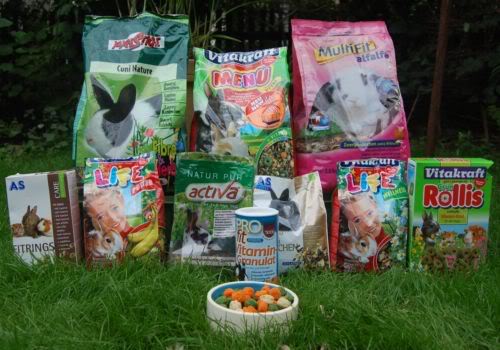
Various types of “complete feed” and mixed feed for rabbits are available in stores. Manufacturers promote these products with claims of extra vitamins and nutrient richness on the colorful packaging.
Secondary Diseases from Feeding Dry Food
The list of secondary diseases promoted and triggered by a dry food diet in rabbits is extensive.
Dental Diseases in Rabbits
Only 20% of dental problems can be detected during a careful oral examination. The remaining 80% are only identifiable through a dental examination under anesthesia combined with multiple head X-rays from different angles and a thorough evaluation.
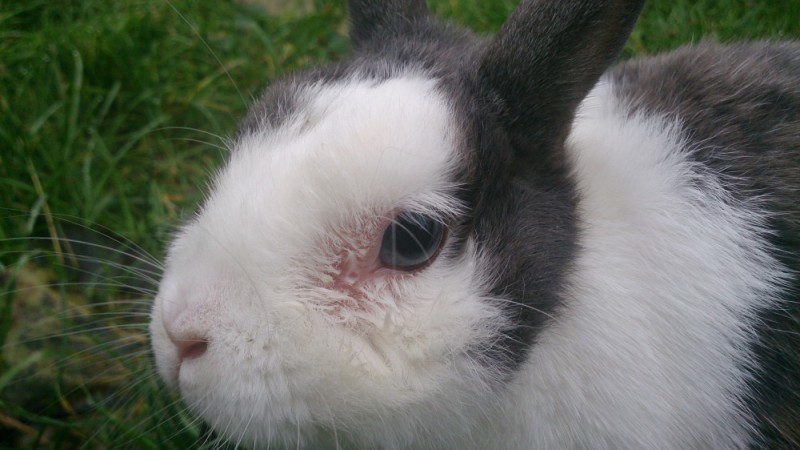
Root diseases are a common consequence of feeding dry food. In advanced stages, symptoms may include:
- Watery eyes
- Abscesses
- Nasal discharge
These symptoms are often misdiagnosed as respiratory infections by veterinarians who are not experienced with rabbits.
Food intolerances, especially intolerance to large amounts of fresh food or fresh foods in general, are also a typical sign of dental disease.
How Dry Food Causes Dental Problems
Dry food causes rabbits to feel full much faster. Even small amounts, such as one tablespoon per day, can reduce fresh food intake to less than half of the required amount.
As a result, rabbits do not chew enough to ensure the natural wear of their continuously growing teeth.
In addition, dry food has a very fine texture because it consists of milled meal instead of natural fibers. It is therefore barely chewed. Rabbits also chew dry food differently from their natural diet:
- Dry food is “cracked”
- Fresh greens are ground down
This cracking motion places excessive strain on the jaw and tooth roots and may lead to retrograde tooth growth.
Treatment
To treat these problems, affected teeth must be filed under anesthesia by a rabbit-savvy dental veterinarian. In addition, the rabbit’s diet must be adjusted accordingly.
Digestive Disorders in Rabbits Caused by Dry Food
Digestive disorders are another common consequence of feeding rabbits dry food.
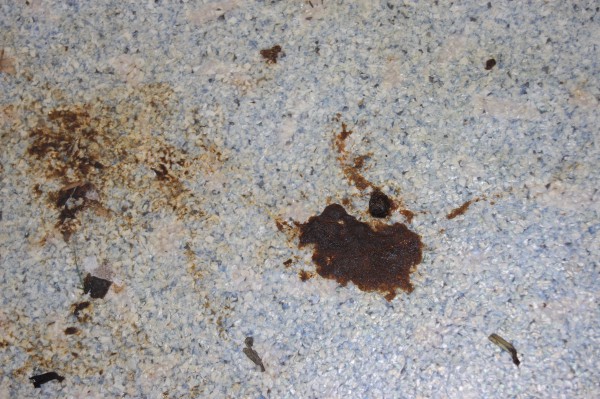
Many rabbits eventually develop diarrhea after eating fresh food or become unable to tolerate certain foods altogether. Even occasional diarrhea or an overproduction of cecotropes are typical consequences of a dry food diet.
Some rabbits are also prone to:
- Constipation
- Bloating
- Gastric dilatation
There are several reasons for these digestive problems.
Lack of Coarse Fiber
Rabbits rely on very coarse, fibrous food because of their poorly developed intestinal peristalsis. Fibrous plant material helps move food efficiently through the digestive tract.
Dry food, however, is finely ground and consists mainly of processed ingredients rather than coarse natural fibers. This slows down digestion and negatively affects gastrointestinal motility.
Disruption of Healthy Gut Flora
Rabbits have a highly specialized bacterial flora in their digestive system.
Feeding dry food promotes the growth of harmful bacteria, allowing them to spread and disrupt the healthy intestinal flora. This imbalance can contribute to chronic digestive disorders and poor tolerance of fresh foods.
Bladder Gravel, Bladder Stones, and Kidney Stones in Rabbits
Feeding dry food significantly reduces the intake of fresh greens. Even less than one tablespoon of dry food per rabbit per day can lower fresh food consumption so drastically that rabbits eat less than half of the necessary amount of green food.
As a result, the diet contains far less water. Rabbits cannot compensate for this lack of moisture simply by drinking more water — this has been demonstrated in multiple studies.
Insufficient Flushing of the Urinary Tract
Because of the reduced water intake, the urinary tract is not flushed sufficiently. Rabbit urine becomes more concentrated, increasing the risk of deposits forming in the kidneys and bladder.
Rabbits also have a unique calcium metabolism. Unlike many other animals, they do not absorb calcium according to their needs, but according to the amount consumed in their diet. When water intake is too low, excess calcium is more likely to accumulate in the urinary tract.
This can contribute to:
- Bladder gravel
- Bladder stones
- Kidney stones
- Calcium deposits in the urinary tract
Vitamin D and Urinary Deposits
Artificially added vitamin D in dry food may further promote calcium deposits in the kidneys and bladder, increasing the risk of urinary tract disease.
Overweight, Underweight, and Related Health Problems in Rabbits
Dry food has a very high energy density, which can contribute to obesity as well as organ damage that may later be accompanied by weight loss.
Excess body weight can lead to several secondary health problems, including:
- Joint problems caused by increased pressure on the bones and joints
- Digestive disorders caused by fat deposits displacing internal organs
- Bladder gravel due to reduced movement and decreased urinary flushing
Why Rabbits Become Less Active on Dry Food
Rabbits fed dry food are often noticeably quieter and less active. There are several reasons for this.
First, dry food places strain on the digestive system because it is highly processed and does not match a rabbit’s natural diet. This makes digestion more demanding and can leave rabbits feeling sluggish.
Second, dry feeding alters the metabolism. A dry food diet promotes a “dry metabolism,” causing rabbits to conserve energy and become unusually calm and inactive.
In addition, the high energy density of dry food makes rabbits feel full very quickly. As a result, they spend less time searching for food, chewing, and eating — behaviors that naturally keep rabbits physically and mentally active.
Behavioral Problems in Rabbits Caused by Dry Food
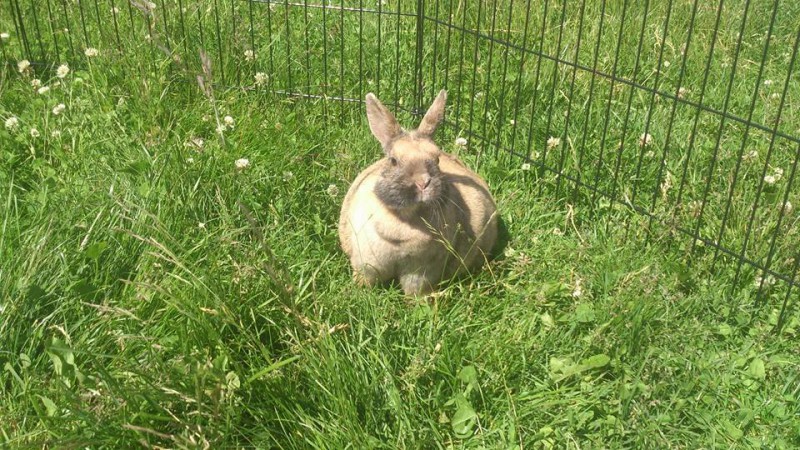
Because dry food has a very high energy content, rabbits feel full quickly and spend far less time eating. Rabbits fed dry food often spend only one-tenth of the normal feeding time.
A rabbit fed a natural diet typically spends around 80% of its active periods eating, foraging, and chewing. This behavior is essential for both physical and mental well-being.
When rabbits no longer spend enough time eating and searching for food, boredom and frustration can lead to behavioral problems such as:
- Bar chewing
- Fur pulling
- Excessive wound licking
Veterinary Research on Commercial Rabbit Food
For many years, veterinarians have recognized that commercially available rabbit food can contribute to serious health problems.
A two-year study conducted at the University of Edinburgh in Scotland scientifically investigated the effects of feeding rabbits muesli-style diets. The results highlighted significant health risks associated with this type of feeding. The results can be seen in this poster:

As a result, some manufacturers and pet store chains have decided to completely remove mixed rabbit food from their product lines.
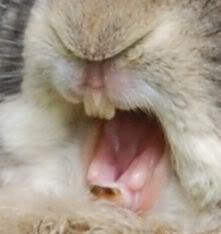
Black Tooth Tips
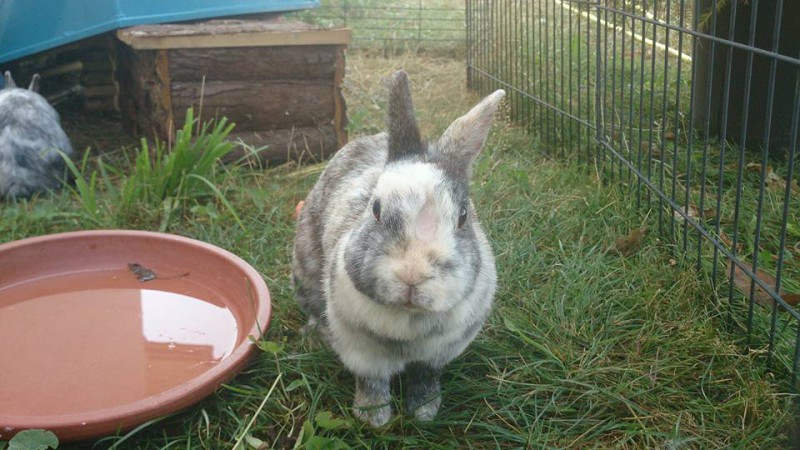
Before (feeding with grain-free dry food) – After (dry food-free feeding)
What Is Dry Rabbit Food Made Of?
Rabbit Food – What’s Inside?
The composition of most rabbit food mixes can be found on the back of the packaging, usually in small print under “Ingredients.” However, some rabbit foods do not fully list their ingredients, and such products should generally be avoided. Even when ingredients are declared, current regulations do not always guarantee complete transparency.
In many cases, the ingredient list is unclear because manufacturers only name broad ingredient groups instead of specific components.
Common Ingredients in Commercial Rabbit Food
Vegetable By-Products
“Vegetable by-products” can include almost any plant material considered industrial waste. These ingredients are commonly used as cheap filler material in commercial rabbit food.
Grain
The term “grain” does not specify which type is used, such as wheat, corn, oats, rye, or spelt. It also does not indicate the form in which the grain is included.
Seeds
The same lack of transparency applies to “seeds,” which may consist of many different components.
Egg Products
“Egg products” are by-products from industrial egg processing. Along with “milk and dairy products,” they do not belong in a rabbit’s natural diet.
Vegetables and Fruits
The term “vegetables” may include all types of vegetables and legumes, including processed forms. “Fruits” can also refer to all kinds of processed fruit ingredients.
Sugar, Oils, and Fats
“Sugar” may include all forms of sugar, while “oils and fats” can refer to either plant-based or animal-based fats and oils.
Cheap Fillers Instead of Species-Appropriate Nutrition
The main component of most commercial rabbit food mixes is inexpensive filler material. These fillers are often made from industrial by-products such as:
- Vegetable by-products
- Pomace
- Wheat bran
- Gluten
- Animal by-products
- Grain-based ingredients
These ingredients are typically selected because they are cheap, not because they are suitable for rabbits.
Rabbits are folivores, meaning they naturally feed on leaves, herbs, and fresh plant material. Commercial dry food mixes do not reflect this natural diet and therefore provide an unsuitable nutritional composition.
Because the ingredients are not chosen for their natural nutritional value, manufacturers often add artificial vitamins and minerals to compensate for nutritional imbalances.
Health Problems Linked to Commercial Rabbit Food
Commercial mixed feeds are often too high in energy for many rabbits. This may contribute to:
- Obesity
- Fat deposits around organs
- Lethargy
- Digestive imbalance
The high starch and sugar content of these foods may also promote excessive yeast growth in the intestinal flora.
The Problem with Commercial Mixed Feeds
Commercial rabbit food is largely made from inexpensive industrial ingredients that are sold at high prices. Instead of supporting a rabbit’s natural dietary needs, these products are primarily designed for low production costs and a long shelf life.
Why Food Structure Matters for Rabbits
Ground Ingredients Lose Their Natural Structure
The ingredients used in commercial rabbit food are first ground into a fine mash. During this process, the natural structure of the food is completely destroyed.
However, rabbits require structured food for proper tooth wear. Natural chewing movements only occur when rabbits consume fibrous, structured foods that require prolonged chewing.
When rabbits eat pellets or extruded dry food, the food is swallowed after only a few chewing motions. This reduces natural tooth abrasion and may contribute to dental problems.
Dental Problems Caused by Dry Rabbit Food
The unnatural chewing motion required to crush pellets and extrudates increases pressure on the tooth roots. This may lead to retrograde tooth growth, where the tooth roots grow into the jaw.
Possible consequences include:
- Jaw pain
- Jaw abscesses
- Tooth root problems
- Watery eyes caused by pressure near the tear ducts
Fine Grinding Can Harm Digestion
Studies have shown that extremely small food particles may cause digestive problems in rabbits. In many commercial feeds, the particles are smaller than 0.3 mm.
Rabbits need structured food to support healthy digestion. Finely ground ingredients are processed differently in the cecum and may contribute to:
- Excessive cecal droppings
- Cecal inflammation
- Constipation
- Diarrhea
Proper food structure also helps move food naturally through the digestive system. Without enough structure, normal digestion may be disrupted.
Dry Rabbit Food Swells in the Stomach
The grinding and heating process changes the physical properties of the food. When dry rabbit food comes into contact with liquid, it swells significantly.
Unlike natural foods, processed dry food may expand up to five times its original volume after contact with water or stomach acid. This places strain on the rabbit’s delicate stomach walls and may cause pain.
Heating Destroys Nutrients
After grinding, the ingredients are mixed, heated, and shaped into pellets or other forms using industrial machinery.
The heating process destroys vitamins and other nutrients, leaving behind a processed mash made largely from industrial by-products with little natural nutritional value.
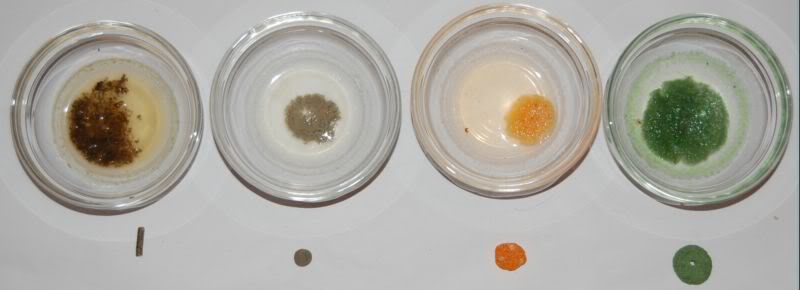
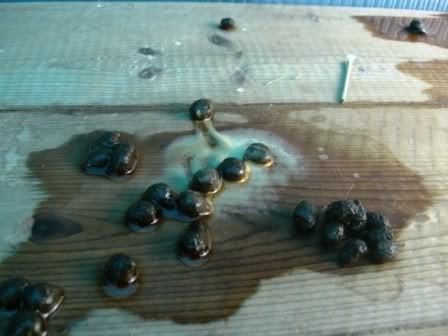
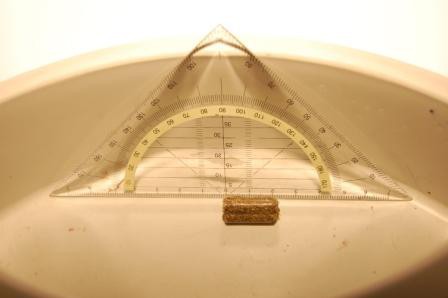
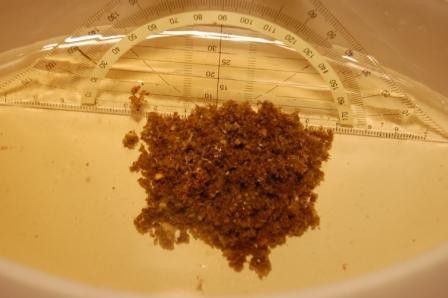
Swelling test with rabbit pellets
- They easily expand to five times their original size and absorb large amounts of liquid.
What additives are included in the food?
Some ingredients do not necessarily have to be listed on the packaging in Germany.
“In pet food within the EU, ingredients such as appetite stimulants, emulsifiers, acid regulators, stabilizers, thickeners, etc., do not have to be separately declared. The German Animal Welfare Association is therefore calling for mandatory labeling for pet food as well. ‘Pet food should be about balance, not overfeeding,’ said Roman Kolar from the German Animal Welfare Association…”
Source: http://dgk.de
Legal Framework: Which Feed Additives Do Not Have to Be Declared?
The “Guideline for the Labeling of Single and Mixed Animal Feeds” issued by the Federal Ministry of Food and Agriculture outlines which additives in animal feed do not need to be declared on the packaging.
This means that rabbit food labels may not always provide a complete overview of all substances contained in the product.
Additives That Do Not Need to Be Listed
Additives Within Approved Preparations
Certain additives that are part of an approved additive preparation do not have to be individually declared. This includes substances such as:
- Antioxidants
- Binders
Additives Without Mandatory Maximum Limits
According to Regulation (EC) No. 767/2009 and Annex VI of Regulation (EC) No. 1831/2003, additives do not need to be declared if they:
- Have no legally required maximum content
- Are not classified as:
- Zootechnical additives
- Coccidiostats and histomonostats
- Urea and its derivatives
- Nutritional additives
Preservatives, Antioxidants, and Colorants
Additives from the functional groups:
- Preservatives
- Antioxidants
- Colorants
only need to be declared under a general category heading rather than by their specific names.
Flavorings in Premixes
Flavorings that are included through premixes only need to be labeled as:
“Mixture of flavorings”
This means the exact flavoring substances used do not have to be individually disclosed.
Additives From Individual Ingredients
Additives contained within individual ingredients used in compound feed also do not have to be separately declared in the final feed product. These may include:
- Preservatives
- Antioxidants
- Flow agents
This is regulated under Article 15, letter f in conjunction with Annex VI and VII.
Restrictions on Advertising Claims
If such undeclared additives are present through individual ingredients, manufacturers are not allowed to advertise the product using claims such as:
- “No preservatives”
- “No antioxidants”
This restriction is defined in Article 11, paragraph 1, letter a in conjunction with Article 13, paragraph 1.
Nutritional Additives in Commercial Rabbit Food
To make the highly processed and vitamin-deficient mash suitable as feed, various nutritional additives are added before the pressing process.
Synthetic Vitamins and Provitamins
Commercial rabbit food is often supplemented with synthetic vitamins and provitamins through a process known as re-vitaminization.
These artificial substances are not equivalent to naturally occurring vitamins. In many rabbit feeds, they are heavily overdosed, which may contribute to organ damage.
Added Amino Acids
Because the processed waste ingredients used in many commercial feeds have an imbalanced amino acid profile, additional amino acids are added to compensate for these deficiencies.
Excess Minerals and Trace Elements
Many rabbit foods commonly used in German households already contain excessive levels of minerals. Nevertheless, some commercial mixed feeds include additional minerals and trace elements.
This mineral surplus may contribute to:
- Bladder stones
- Kidney stones
- Urinary grit
- Bladder sludge
- Deposits in the urinary tract
- Kidney failure
Probiotics in Dry Rabbit Food
Some dry rabbit foods contain added probiotics intended to support gut health.
These are often included because the unnatural composition of processed feed may negatively affect the intestinal flora.
Enzymes Added to Processed Feed
Many commercial dry foods are also supplemented with enzymes to help digest food components that the natural gut flora cannot properly break down.
Additives Designed for the Human Eye
Commercial rabbit food often contains additives that are intended to improve the appearance of the product for consumers rather than benefit the rabbit.
Colorants in Rabbit Food
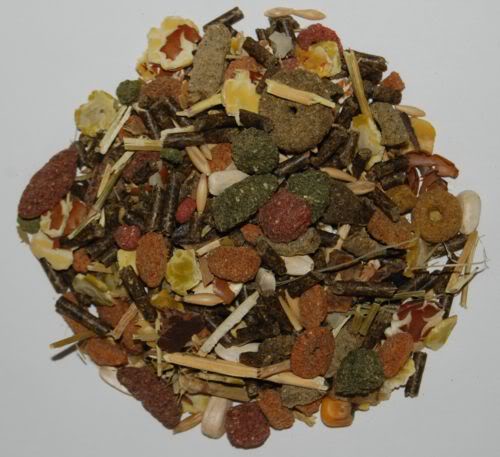
Colorants are commonly used to dye pellets and extrudates in visually appealing colors. Without these additives, the industrial mash used in commercial rabbit food would appear brown and unappetizing.
Different colors are intended to imitate natural ingredients:
- Green pellets are meant to resemble herbs
- Yellow pellets are intended to represent grains
- Red pellets are designed to imitate fruits
This presentation can create the impression that mixed rabbit feed contains herbs or hay-based ingredients.
Anti-Caking Agents
To prevent the individual components of the feed from clumping together, manufacturers use anti-caking agents.
These additives help maintain the appearance and texture of the product during storage.
Preservatives and Packaging Gases
Feed manufacturers use preservatives, antioxidants, and packaging gases to extend the shelf life of commercial rabbit food.
These additives are intended to keep processed feed stable for longer periods.
Emulsifiers in Processed Rabbit Food
Some ingredients used in commercial rabbit food do not naturally combine, such as oils and water.
To bind these substances together, emulsifiers are added during production.
Additives for Flavor
Artificial flavors are added to rabbit food to stimulate appetite, which artificially increases food intake, often leading to obesity. While this is desirable in farm animals for rapid weight gain, it becomes an undesirable side effect in pets.
The feed industry adds artificial flavorings because most pet owners buy the food that their animals prefer and eat the most. Pet owners enjoy watching their animals eagerly devour their food. Numerous studies have shown that flavors significantly increase appetite, leading to better acceptance by animals. Most rabbits eat the food (which is made from low-quality ingredients) only because the artificial flavors influence their food selection. Artificial flavors and flavor enhancers make rabbits addicted.
Are Additives Harmful?
Some additives have been associated with diseases such as allergies, asthma, and cancer. Other additives are considered relatively harmless.
Vitaminized Structured Rabbit Feed – Is It Useful?
Advantages of Structured Rabbit Feed
Unlike many commercial rabbit foods, structured feed contains visible structured components instead of extrudates, pellets, or heavily ground ingredients.
Because of this, the composition is considered higher quality compared to many other dry rabbit foods and lacks some of the disadvantages associated with heavily processed feed.
In certain situations, such as outdoor housing during winter or for large rabbit breeds, it may be used as an energy-rich feed.
The added synthetic vitamins may help prevent deficiency diseases if vitamin requirements are not sufficiently covered through feeding or housing conditions.
Additional advantages include:
- Affordable price
- Easy handling and storage
Disadvantages of Vitaminized Structured Feed
High Energy Content
This type of feed contains around 50% grains and other energy-rich ingredients such as carob.
As a result, it is unsuitable for many indoor rabbits and small breeds and may contribute to problems such as tooth spurs.
Limited Variety of Herbs
The herb content is very limited and mainly consists of de-leafed alfalfa and only a small number of herbs.
Carob and Dental Problems
Ingredients such as carob may negatively affect tooth health and may promote retrograde tooth growth.
Synthetic Vitamins
The added synthetic vitamins are not equivalent to natural vitamins and may negatively affect health, particularly the organs.
They also cannot replace the natural combination of vitamins and plant compounds found in a balanced diet.
If a rabbit already receives a balanced diet with adequate vitamin intake, additional synthetic vitamins become unnecessary.
As a sole food source, this type of feed is not suitable, even if marketed as complete rabbit food.
Conclusion
It cannot replace a healthy and balanced diet that naturally supplies vitamins, minerals, and plant compounds.
Vitamin deficiencies, such as deficiencies in Vitamin A, Vitamin E, or Vitamin D caused by inadequate housing conditions or lack of UV-B exposure, may be partially compensated for by this feed. However, many other essential nutrients may still remain insufficient.
With a balanced and appropriate diet, this feed is generally unnecessary. The synthetic vitamins it contains should be viewed critically because of their potential negative effects on health.
The high energy content may also contribute to obesity in many rabbits.
The Myth of Healthy “Grain-Free” Rabbit Food
Many rabbit owners believe that grains are the main cause of health problems associated with dry rabbit food. However, grain itself is not automatically unhealthy for rabbits.
In nature, wild rabbits consume grain seasonally by eating grain heads during summer, autumn, and early winter. In this natural form, grain can serve as an energy-rich supplement and is generally well tolerated.
When Grain May Become Problematic
Unsuitable Grain Types
Some grain varieties, particularly wheat and rye, are considered less suitable and may be poorly tolerated compared to other grains.
Grain as the Main Food Source
Problems may occur when grain becomes the primary component of the diet instead of a small supplement to species-appropriate feeding.
Incorrect Feeding Form
Grain should not be offered as loose kernels. It should always be fed together with its natural husk, such as whole grain heads or grains with husks intact.
Heavily Processed Grain
When grain is heavily processed, ground, or pressed into dry food, it loses its natural structure.
This lack of structure is one of the major problems associated with commercial dry rabbit food.
Grain and Low Energy Requirements
Regular feeding of grain-rich food may be unsuitable for indoor rabbits or rabbits with low energy requirements.
Seasonal grain heads may be offered occasionally if the rabbit’s primary diet consists of:
- Meadow herbs
- Leafy vegetables
- Herbs
- Other species-appropriate foods
Grain-Free Dry Rabbit Food
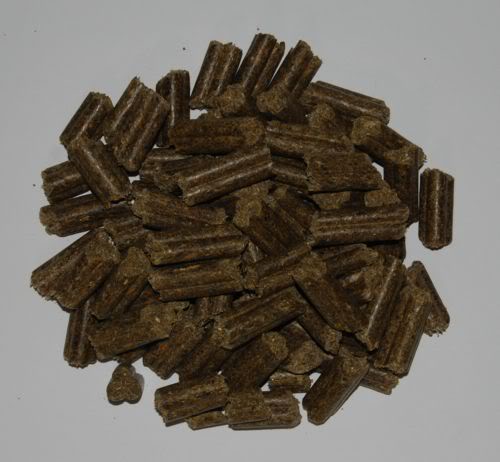
Many commercial rabbit foods advertised as “grain-free” target rabbit owners who consider grains unhealthy.
However, many of these products still contain grain components such as wheat bran.
Examples include:
- Bunny Rabbit Food (Grüner Traum, etc.)
- Vitakraft Emotion Sensitive
- QP3 Rabbit Food
- Mucki Aktiv & Fit
Even though grains are frequently criticized, grain itself is often only a smaller issue in dry rabbit food.
The major problems associated with commercial dry food are typically:
- The overall composition
- Processing and food structure
- Additives used in production
One possible advantage of some grain-free dry foods is a slightly lower energy content, although this does not apply to all products.
Which dry food can I safely feed my rabbit?
If you want to feed your rabbit healthily, you should avoid dry food. It can lead to the health issues mentioned above! There are some dry foods that may be suitable as energy food or a supplement in certain specialized cases. However, their use should be carefully considered to avoid health problems.
Quotes on the topic:
“Obesity is a major and widespread problem in our pet rabbits. The cause is that they are often fed too much of the wrong food and get too little exercise. Commercial pellets and colorful mixed feeds are low in fiber and have too high an energy content and nutritional value. The grains are not bitten off but merely crushed with the molars, so the constantly growing teeth are insufficiently worn down due to the lack of grinding movements. Oversized teeth that injure the tongue or cheek mucosa are the result. Colorful feeds also lead to an imbalanced diet because the ‘delicious’ sugar- and starch-rich parts are preferentially consumed, while the rest is left behind. This disrupts digestion and leads to vitamin deficiencies, among other things. Even snacks like milk and yogurt drops are very rich in those ingredients that rabbits do not need or cannot process. Improper food also affects the animals’ behavior. Rabbits that mainly receive concentrated feed and, as a result, require less time for eating, tend to develop behavioral disorders and increased aggression.” — Federal Association of Practicing Veterinarians (bpt)
“The constant feeding of starch-rich food, especially grain-based food, is not appropriate for rabbits. Sooner or later, it leads to obesity in the animal and chronic diarrhea.”
— Federal Association of Practicing Veterinarians (bpt)
“In pet stores, supermarkets, and drugstores, so-called ‘snacks’ for rabbits and guinea pigs are offered, which are brightly colored and attractively packaged. This suggests to the interested customer that they can give their pet something special and even something particularly healthy. However, when examined more closely, these snacks are made up largely of components that do not belong to the natural or species-appropriate food spectrum of these animals and can, when given long-term, have a very negative impact on their digestive function.
Diarrhea problems and other gastrointestinal disturbances in rabbits and small rodents are common symptoms that are frequently brought up in small animal consultations. It is recommended to first review and, if necessary, correct the feeding regimen. When asking pet owners, it is often observed that children are particularly eager to give their pets snacks—just like the ones they enjoy themselves. To satisfy this desire, the pet food industry has developed and launched a wide range of such ‘snacks’ for rabbits and rodents. Considering anatomical and nutritional aspects, such ‘treats’ should be regarded as inappropriate food for rabbits and rodents.”
— Dr. med vet Birgit Drescher
Sources include:
Arbeitsgemeinschaft für Wirkstoffe in der Tierernährung e.V. (Hrsg.): Aminosäuren in der Tierernährung. Bonn: Agrimedia GmbH, 1998
Arbeitsgemeinschaft für Wirkstoffe in der Tierernährung e.V. (Hrsg.): Enzyme in der Tierernährung. Bonn: Agrimedia GmbH, 2004
Arbeitsgemeinschaft für Wirkstoffe in der Tierernährung e.V. (Hrsg.): Probiotika in der Tierernährung. Bonn: Agrimedia GmbH, 1999
Arbeitsgemeinschaft für Wirkstoffe in der Tierernährung e.V. (Hrsg.): Vitamine in der Tierernährung. Bonn: Agrimedia GmbH, 2001
Bell Flavor & Fragrances; (Stand: Dez. 09)
„Pet and Animal Flavors
Consumers increasing concernfor the well-being of their animals is expected to expand this already booming industry. […]”
Beuch-Arendt, A.: Ernährung von Kaninchen, Meerschweinchen, Degus und Chinchillas, (Stand 12. Mai 09)
Buchmann, M./Geier, U./Strube, J.: Untersuchung zu Veränderungen der Lebensmittelqualität durch Vitaminierung
Czitrich, O.: Nahrungsergänzungsmittel. Sinnvoll oder gefährlich? Wissenschaftlicher Aufsatz. Books on Demand, 2006
Czitrich, O.: Vorsicht vor Vitaminen. Wissenschaftlicher Aufsatz. Books on Demand, 2005
Ewringmann, A.: Leitsymptome beim Kaninchen. Diagnostischer Leitfaden und Therapie. Stuttgart: Enke Verlag, 2005
Foodwatch: Lug und Trog. Der foodwatch-Report über billige Futtermittel, die uns teuer zu stehen kommen. foodwatch Futtermittel-Report, April2005
Hand, M. S.: Klinische Diätetik für Kleintiere, Band 1, 2003
Kaeser, P.: Lebensmittelzusatzstoffe: Einteilung, Funktion, Gewinnung, Zusammensetzung (Leitprogramm), 2004
Kamphues, J.: Kaninchen und Meerschweinchen: Häufige Fütterungsfehler und Hinweise zur Diätetik
Kamphues, J./Coenen, M./Kienzle, E./ Pallauf, J./ Simon, O./ Zentek, J.: Supplemente zu Vorlesungen und Übungen in der Tierernährung. 10., überarb. Auflage. M&H Schaper Verlag, 2004
Kariger, A.: Die Entwicklung der Mischfutterindustrie in Deutschland. Stuttgart: Kohlhammer Verlag, 1963
Lackenbauer, W.: Kaninchenfütterung. Artgerecht. naturnah. wirtschaftlich. Reutlingen: Oertler+Spörer Verlag, 2001
Meredith, A. L., Prebble, J. L., & Shaw, D. J. (2015). Impact of diet on incisor growth and attrition and the development of dental disease in pet rabbits. Journal of Small Animal Practice.
Prebble, J. L., & Meredith, A. L. (2014). Food and water intake and selective feeding in rabbits on four feeding regimes. Journal of animal physiology and animal nutrition, 98(5), 991-1000.
Rymon Lipinski, G.-W. von/ Lück, E.: Lebensmittelzusatzstoffe.
Schlolaut, W.: Das große Buch vom Kaninchen. 3. überarb. Auflage. DLG-Verlag GmBH, 2003
Schlolaut, W.: Ernährungsbedinte Krankheitsrisiken beim Hauskaninchen, Kaninchenzeitung 24/2006
Schmidt, E.: Unterschied zwischen natürlichen und synthetischen Vitaminen
Tschudin, A., Clauss, M., Codron, D., Liesegang, A., & Hatt, J. M. (2011). Water intake in domestic rabbits (Oryctolagus cuniculus) from open dishes and nipple drinkers under different water and feeding regimes. Journal of animal physiology and animal nutrition, 95(4), 499-511.
Wiesenmüller, W./Leibestseder J.: Ernährung monogastischer Nutztiere. Gustav Fischer Verlag Jena, 1993
Wolf, P./Kamphues J.: Kritische Einschätzung kommerzieller Ergänzungspräparate für Kaninchen, Meerschweinchen und Chinchilla, 2003
Gesetze u.a.:
Verordnung (EG) Nr. 1831/2003 des Europäischen Parlaments und des Rates vom 22. September 2003 über Zusatzstoffe zur Verwendung in der Tierernährung. Insbesondere Anhang I
Verordnung (EG) Nr. 767/2009 des Europäischen Parlaments und des Rates vom 13. Juli 2009 über das Inverkehrbringen und die Verwendung von Futtermitteln, zur Änderung der Verordnung (EG) Nr. 1831/2003 des Europäischen Parlaments und des Rates und zur Aufhebung der Richtlinien 79/373/EWG des Rates, 80/511/EWG der Kommission, 82/471/EWG des Rates, 83/228/EWG des Rates, 93/74/EWG des Rates, 93/113/EG des Rates und 96/25/EG des Rates und der Entscheidung 2004/217/EG der Kommission
Leitfaden zur Kennzeichnung von Einzelfuttermitteln und Mischfuttermitteln
Verordnung über Fertigpackungen