

How to Create the Perfect Enclosure for Disabled and Elderly Rabbits
Enclosures for Rabbits with Disabilities – Tips for Species-Appropriate Design
Rabbits with disabilities — meaning those with physical impairments such as paralysis, blindness, amputations, or age-related issues — require special consideration when designing their enclosure. A properly adapted environment can make a significant difference, helping them live safe, enriching lives that still meet their species-specific needs despite their disabilities.
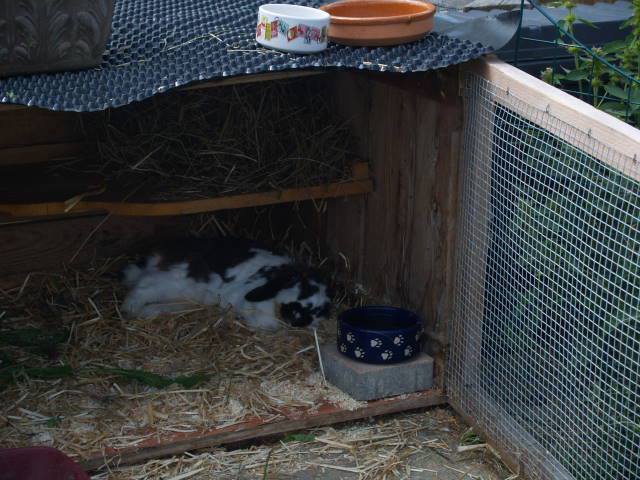
Mobility Impairments: Designing an Accessible Enclosure
A well-designed enclosure enables a disabled rabbit to move around safely and independently, without having to rely constantly on its caregiver. The following measures are particularly important:
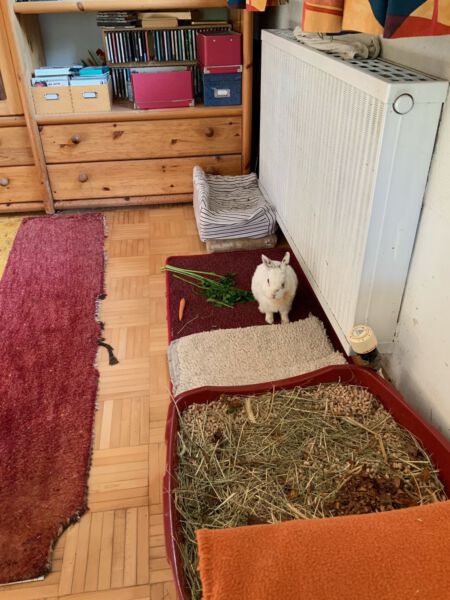
Floor Design
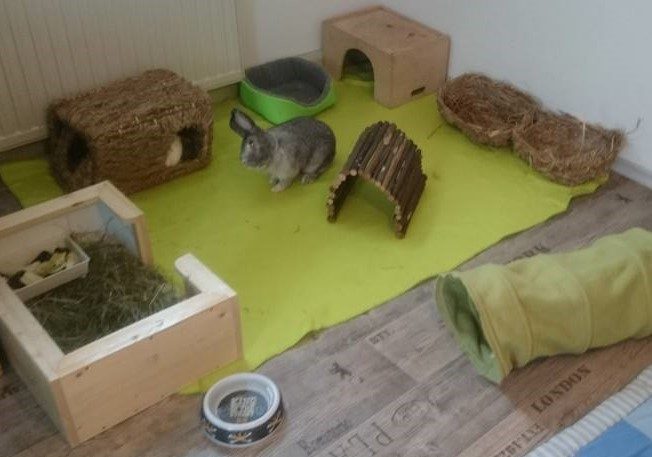
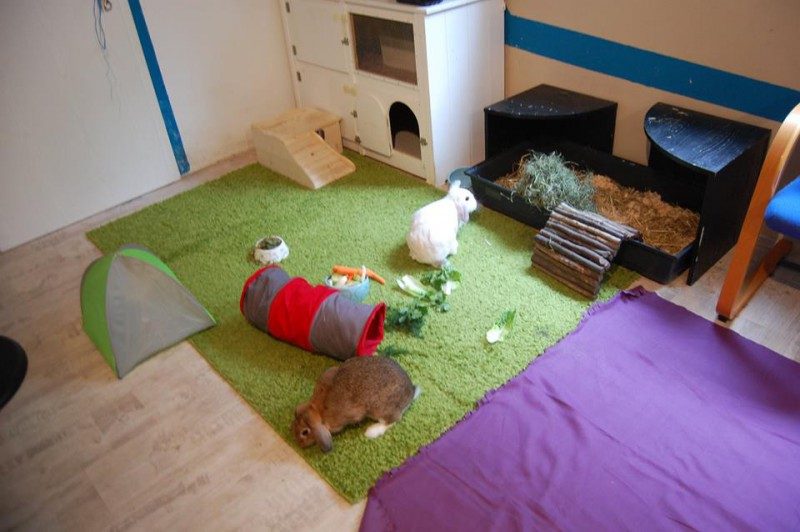
A soft, non-slip floor covering is essential, as rabbits with disabilities may struggle to walk or hop.
Carpets, soft mats, or fleece liners provide good traction and help prevent slipping and injuries.
Blankets can be secured with non-slip rug underlay, weighted down with stones in the corners, tucked beneath furniture, or replaced with rugs that have a rubber backing. Choose floor coverings that are machine-washable and small enough to fit in your washing machine.

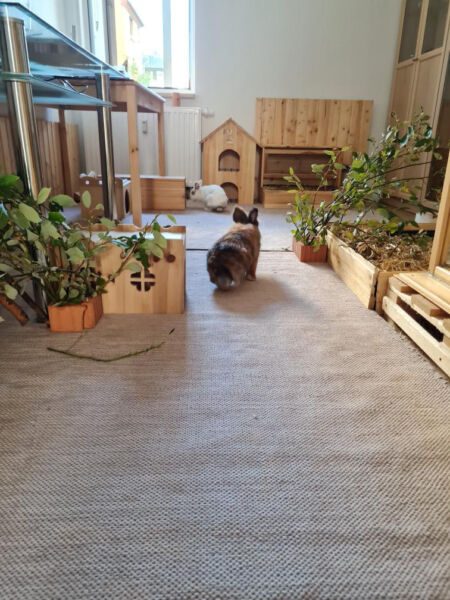
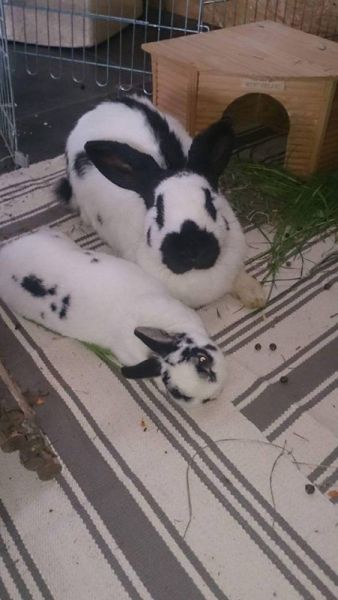
The Right Flooring for Paralyzed or Immobile Rabbits
Important: A rabbit that can no longer move at all and remains lying in one place needs urgent attention. This should never become a long-term condition. Unfortunately, some rabbits are still left to suffer in this state for far too long.
If a rabbit can no longer move independently, its quality of life is severely compromised. It is essential to have the underlying cause thoroughly investigated. If the condition cannot be treated, euthanasia is the kindest option. As difficult as this decision is for the owner, it is not fair to keep a rabbit alive if it can no longer live in a way that meets its basic welfare needs.
If the condition can be treated, caring for a completely immobile rabbit requires a great deal of time, effort, and dedication. Owners who are unable or unwilling to provide this level of care should also consider euthanasia, as otherwise the rabbit is likely to suffer from pressure sores, neglect, etc.
Soft Base Layer
Because paralyzed and immobile rabbits spend a lot of time lying in a single place, they can develop pressure sores if the surface underneath them is too hard. A soft, supportive base can help prevent this. Suitable options include:
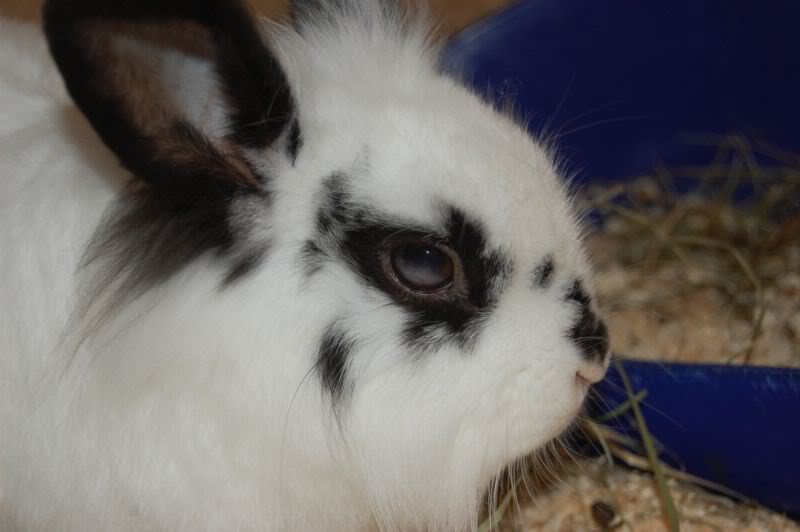
- Dog beds/mats: These are often washable, waterproof, and soft, making them an excellent base. Synthetic leather beds with that are flat or have low, raised edges are particularly suitable.
- Thick carpets: These can also provide good cushioning. However, they are difficult to wash and therefore usually need to be disposed of once soiled.
- VetBeds: VetBeds provide good cushioning while allowing urine to drain away through the surface, helping to keep the rabbit drier.
- Thick layer of hay, straw, or wood shavings: A sufficiently thick layer of hay, straw or wood shavings can also provide soft cushioning.
- Thin exercise mat or camping mat: These can be used as an additional layer to make the surface softer.
- Grass: If possible, a grass surface is ideal. However, precautions must be taken to protect the rabbit from flystrike (for example, by using fly screens).
- Old fabrics, mattresses, or cushions: These can be suitable if covered with a waterproof layer, such as absorbent mats or incontinence/pee pads.
Absorbent Underlayer
A highly absorbent layer should be used, as rabbits that cannot move around will relieve themselves where they are lying. This means that all urine and droppings will collect in one area. Suitable absorbent materials include:
- Disposable Incontinence pads/pee pads: These are available from drugstores, online retailers, and veterinarians and can be thrown away after use. However, they create a lot of household waste. To prevent them from slipping, non-slip rug mats can be helpful. Puppy training pads can also be used.
- Wood pellets or shavings: These can be used as an absorbent layer, as long as a soft layer is placed on top.
Waterproof or Urine-Wicking Top Layer
Choosing the correct top layer of bedding is especially important in caring for rabbits that remain in one place for long periods. It should help prevent pressure sores, keep the rabbit dry, wick urine away, and provide enough grip to prevent slipping.
On surfaces with good traction, even paralyzed rabbits can often move around a little on their own. This is extremely important, as it reduces the risk of pressure sores, minimizes the development of pressure points, and can help reduce the need for physiotherapy. Finding a suitable surface should therefore be a top priority. In our experience, grass works best. Suitable options include:
- Vetbeds: Vetbeds have the advantage of wicking urine away from the rabbit and allowing it to pass through, so the rabbit remains relatively dry. They are washable and can be reused.
- Thick carpets: A thick carpet can also be suitable and provides good traction. Urine can drain through it, and the surface remains reasonably dry depending on the material. However, carpets cannot usually be washed and often need to be discarded once soiled.
- Grass: This is the ideal surface. Even rabbits with severe paralysis can often still move around a little on grass because it provides excellent grip, allows urine to drain away quickly, and helps prevent pressure sores. The area must be covered during rain to keep it dry, and rabbits must be protected from flystrike with fly-proof mesh.
- Hay: A thick layer of hay can be an alternative to Vetbeds or grass, provided it is deep enough that it does not shift easily. Soft hay should be used. It is not suitable for rabbits that spin in circles, as they may injure their eyes on the stems.
Barrier-Free Access
Ramps, steps, and raised platforms should be avoided where possible or designed with a very gentle incline. Rabbits with disabilities often struggle to climb, so a ground-level enclosure is ideal for preventing falls and accidents.
If elevated areas are included, they must have safety edges and wide, low-incline ramps for access. Ramps should also feature side rails or barriers to prevent falls.
If ramps are absolutely necessary, they should be as flat as possible, covered with a non-slip surface to make movement easier and feature side rails or barriers to prevent falls. Access to resting, feeding, and drinking areas should always be easy to reach, without obstacles or steep transitions.
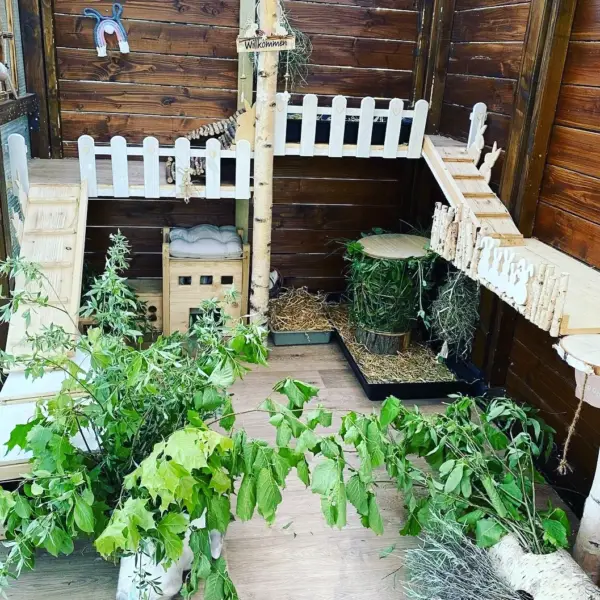
Low, Accessible Openings & Entrances
Houses and hides should have wide, low entrances that the rabbit can enter without difficulty. Avoid raised entrances or narrow openings that could be challenging for a disabled rabbit to use.
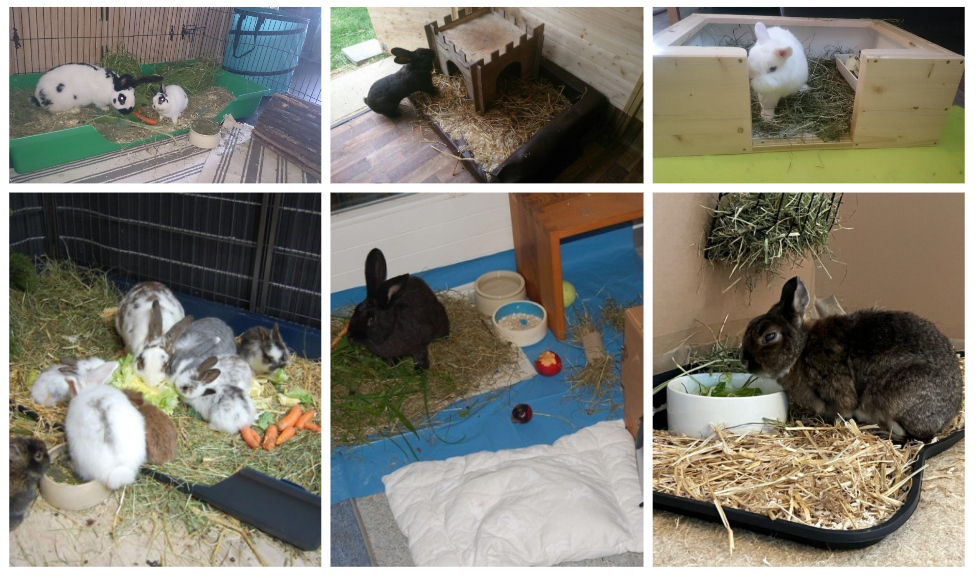
Trash Bag Litter Box Setup
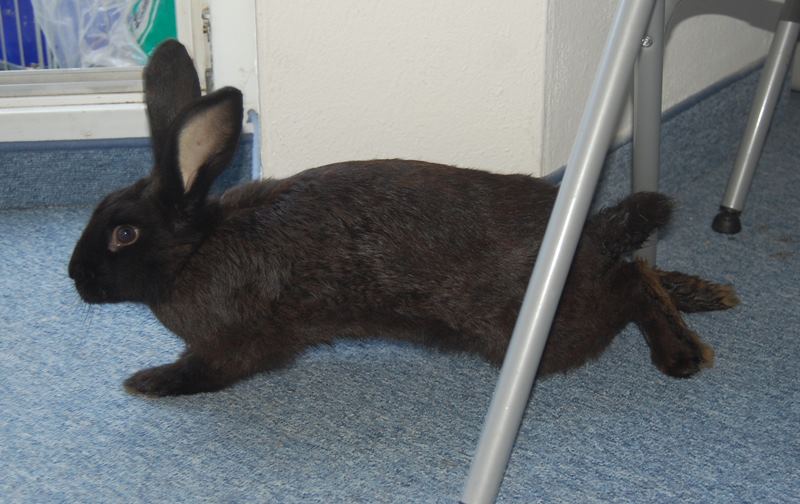
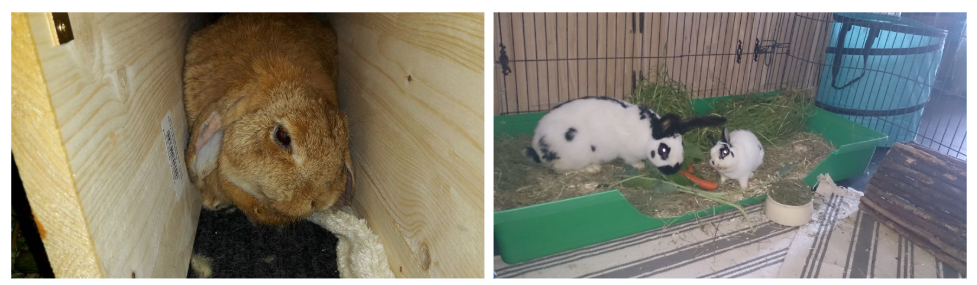
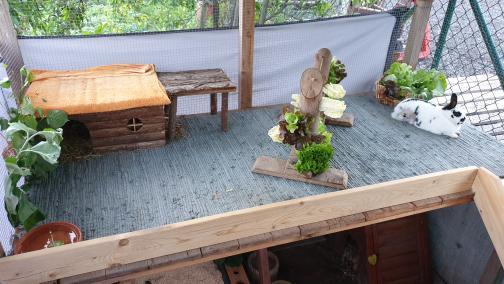
Toilet areas should also be easy for the rabbit to access. A trash bag litter box setup (shown in the bottom-center image with the black rabbit) can be a practical solution for rabbits with very limited mobility. To make one, secure a trash bag all the way around with strips of tape, place newspaper on top, and cover it with hay, straw, or bedding. The newspaper should be rolled up and disposed of once or twice a day.
This type of litter box is particularly suitable for sick rabbits that can barely move around. It is less suitable for rabbits that chew or dig. Alternatively, a plastic sheet or tarp can be used instead.
Spacious Environment
The enclosure should be large enough to give the rabbit plenty of room to move around without encountering obstacles. Narrow passages and difficult-to-reach areas should be avoided.
Rabbits in Wheelchairs?
Many cases of paralysis in rabbits are extremely painful, particularly those caused by spinal injuries. Unfortunately, I often see people rush to use a wheelchair to help a rabbit move more easily before determining whether the underlying condition is painful or not. However, it’s important to remember that a rabbit is not a dog or a human. Rabbits move by hopping, and each hop involves spinal movement — meaning that if the spine is damaged, every attempt to move can cause severe pain.
Moreover, rabbits rarely show pain clearly, so they may appear fine while actually suffering. Unlike dogs, which live closely with us and can be placed in or out of a wheelchair for walks and rest, this isn’t practical for rabbits. A rabbit in a wheelchair cannot choose freely when to rest, stay still, or move.
For this reason, the use of wheelchairs for rabbits must be considered very carefully. Very few people are able to stay with their rabbit around the clock to put the wheelchair on at the right times and remove it when needed.
Adapting Resting Areas for Disabled Rabbits
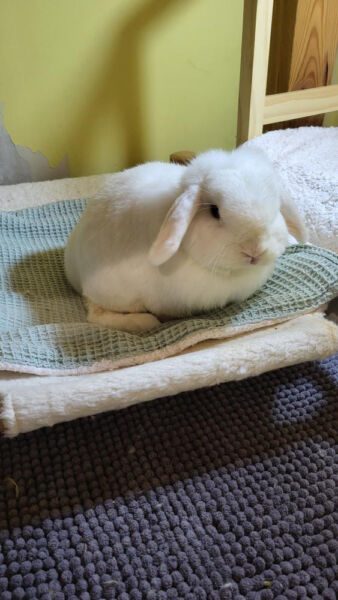
Rabbits with disabilities need especially comfortable resting spots, as they often spend long periods lying down to conserve energy. These areas should be soft, warm, and easily accessible, without steps or barriers. Using padded bedding, fleece blankets, or VetBeds helps prevent pressure sores and provides comfort. The space should also be quiet, free from drafts, and located in a safe corner of the enclosure where the rabbit feels secure and undisturbed.
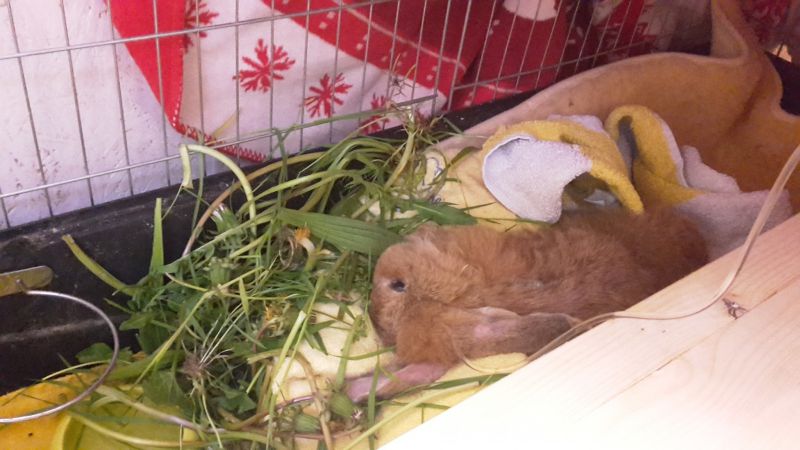
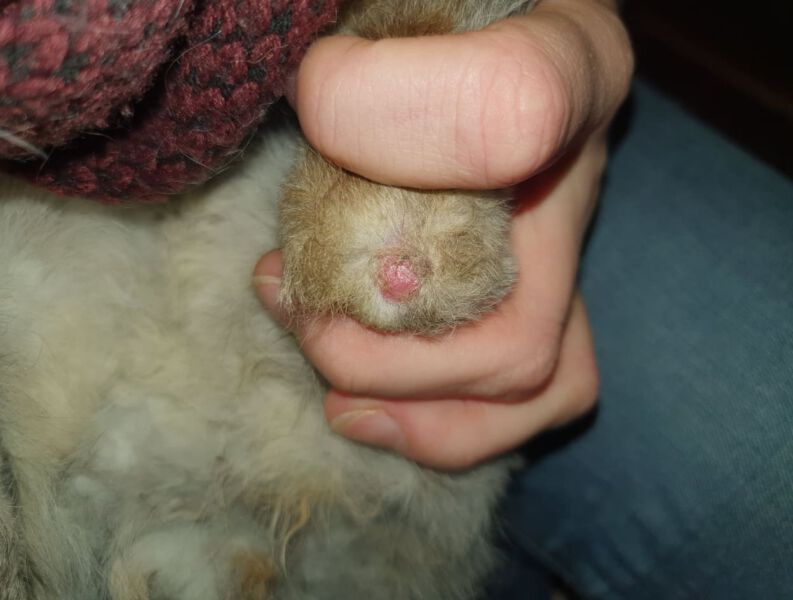
As with humans, longer periods of rest and limited mobility can lead to bedsores. A soft surface is therefore essential to help prevent sore hocks (pododermatitis) and pressure sores.
Tips for Designing Rest Areas
Comfortable resting areas: A soft, well-padded floor — such as blankets or special synthetic leather dog beds — helps relieve pressure on the rabbit’s joints and muscles. These materials should be cleaned regularly to maintain hygiene and comfort. Recommendation: a flat synthetic leather dog bed, a thin exercise mat, or a low-edged bed.
Easy access: Resting areas should be easily accessible. Low shelters or tunnels without high edges are ideal for rabbits with disabilities.
Safe hiding spaces:Like all rabbits, rabbits with disabilities have a natural need for places where they can retreat and feel safe. These should be designed so that the rabbit can easily get in and out, for example with open sides or wide entrances.
Observe your rabbits: Pay attention to which spots they prefer and which they find difficult to use. Adjust the resting areas according to their behavior and needs to improve their comfort and well-being.
Adapting Feeding and Drinking Areas
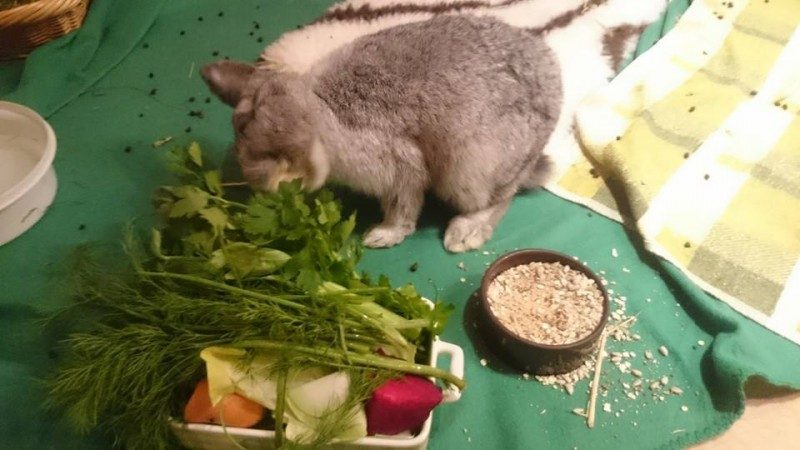
Feeding should be easy and stress-free for rabbits with disabilities, allowing them to reach food and water comfortably without unnecessary effort.
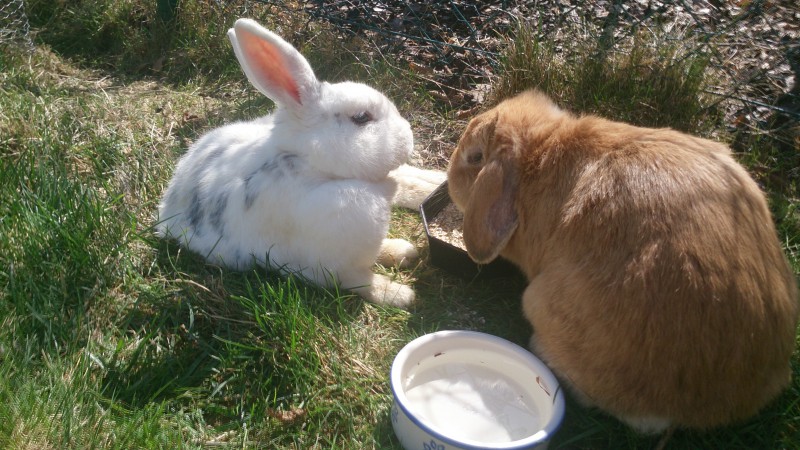
Shallow bowls: Use stable, shallow bowls for food and water that the rabbit can easily reach. Avoid tall or unstable bowls that may be difficult for the rabbit to use. Hanging bird bowls designed to attach to enclosure bars can also work well, as they can be placed at a suitable height and secured in place.
All food and water areas should be at ground level, so the rabbit doesn’t need to stretch or jump. This makes access easier, especially for animals with limited mobility.
Easy Access:
Position food and water areas so that the rabbit can approach them easily from multiple sides. This is particularly important for rabbits with impaired vision or paralysis affecting one side of the body, as they should not have to make unnecessary or difficult maneuvers to reach them.
Disability-Specific Enclosure Accommodations
Enclosure Accommodations for Rabbits with Balance Problems (e.g., due to Encephalitozoon cuniculi – EC)
Rabbits that suffer from balance problems caused by conditions such as Encephalitozoon cuniculi (EC) and that frequently roll or fall over need a particularly safe and adapted environment. Because their lack of stability often makes it difficult for them to move safely or remain upright, the design of their enclosure plays an important role in preventing injuries and reducing additional stress.
Adapted Feeding
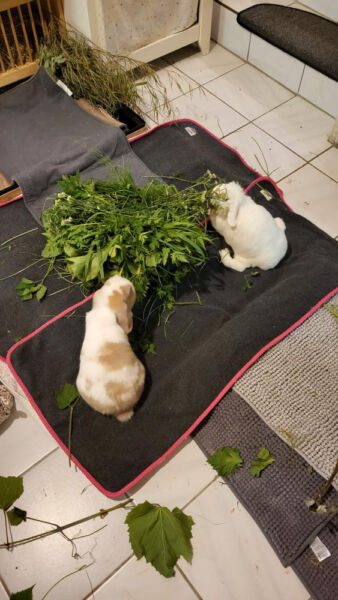
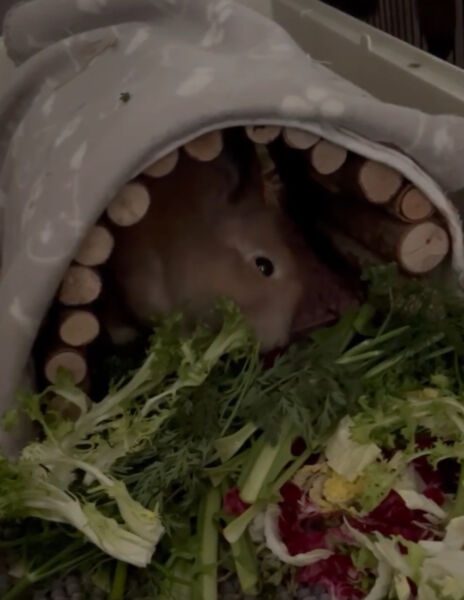
Rabbits with a head tilt or balance issues often struggle to eat from regular bowls. Place food along the edges of the enclosure, scattered on the floor, or in wide, shallow dishes that are easy to reach. This way, the rabbit doesn’t need to stretch or strain to eat, making eating easier and less stressful.
Preventing Eye Injuries from Bedding Substrate
For rabbits that frequently fall or roll over, certain substrates can pose a risk, as particles may get into their eyes and cause irritation or injury. Softer surfaces such as fleece, VetBeds, or special synthetic leather dog beds are a better choice in these cases, as they help minimize the risk of injury.
Wicker/Willow Bridges
Wicker bridges and similar tunnels are ideal for rabbits with balance disorders. They provide stable shelters that the rabbit can lean against, and the overhead cover and dim lighting creates a sense of safety and protection. They have no sharp edges and offer the rabbit a secure space to rest and retreat.
Side Supports using Rolled Towels
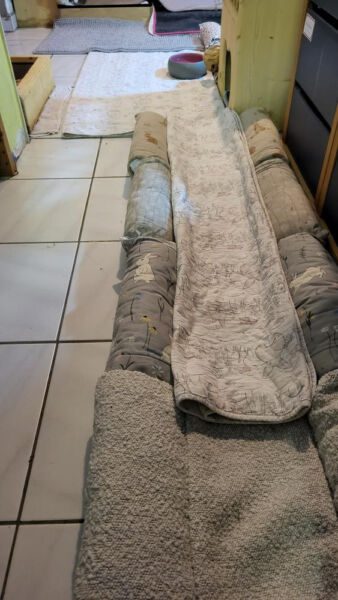
A good way to assist rabbits that frequently fall to one side is to place rolled-up towels or mats around them. You can also use a bottle wrapped in a towel to provide additional support without restricting movement. This helps prevent injuries and reduces constant rolling. The rabbit can move through these supported pathways and, if it tips over, use the side support to regain balance and get back upright.
Non-Slip Surfaces
To help rabbits that fall over regain their footing on their own, they need a stable, grippy surface. VetBeds are an excellent choice because they do not slide when the rabbit pushes off with its legs, providing a firm, secure base.
Barrier-Free Access
(See the previous section.)
Enclosure Accommodations for Blind Rabbits
Blind rabbits need a carefully arranged environment, since they can’t rely on vision and depend heavily on smell, hearing, and touch. A clear and consistent enclosure layout is essential so they can move around safely and without stress.
Consistent layout: Avoid rearranging the enclosure too often, as blind rabbits rely on a familiar arrangement of objects to navigate their surroundings. Once a rabbit knows its environment well, it can move around confidently even without sight.
Scent markers: Blind rabbits use their sense of smell to locate feeding areas, resting spots, and shelters. Adding familiar scents to certain objects can make orientation easier.

Tactile guidance: Flat rugs or slightly raised borders can function as tactile pathways. These “guide rails” help the rabbit find important areas like feeding spots and resting places.
Avoid hazards: Make sure there are no sharp edges, open steps, or other potential dangers in the enclosure. Anything they could bump into should be removed. Edges can be padded with baby crib bumpers or similar protective padding if the rabbit frequently bumps into them.
These adaptations help blind rabbits move around their enclosure safely and with less stress, allowing them to remain active and enjoy a good quality of life.
Enclosure Accommodations for Rabbits with Amputations
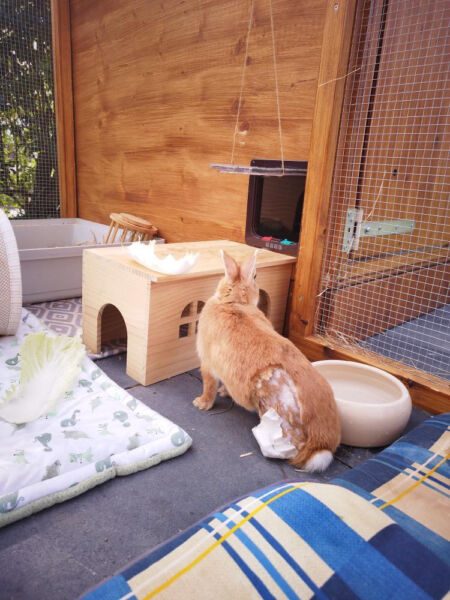
In some rabbits, even after recovery, the enclosure needs adjustments to prevent high jumps (which strain the joints and promote arthritis), sore hocks, and falls:
Securing raised platforms: Raised platforms should be secured with barriers and accessible via ramps or gentle slopes, so that rabbits do not need to make high jumps.
Adjusting flooring: Modify the flooring if needed to prevent sore hocks in the limbs that carry extra weight. A good setup is hay on top of a thick layer of bedding, or dog mats, etc.
Providing non-slip surfaces: Many rabbits need non-slip flooring (rugs, bedding, grass, etc.) in order to move around safely.
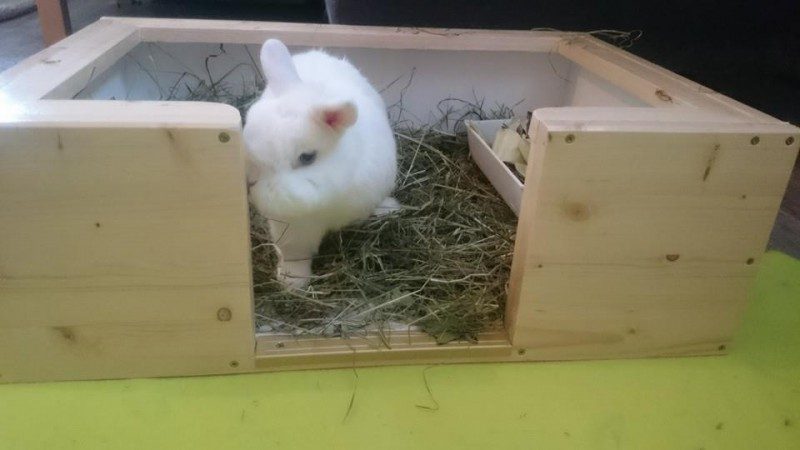
Enrichment and Encouraging Mobility
Even if rabbits have mobility limitations, they still have a natural need to be active and engage with their environment. Adapted enrichment activities and toys can help them stay active and mentally engaged.
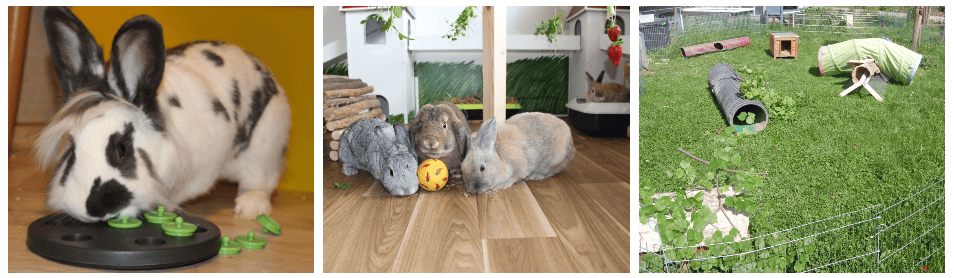
Adapted toys: Use toys the rabbit can interact with even while lying down or with limited mobility, such as lightweight balls, food-dispensing balls, or snuffle mats that the rabbit can explore with its nose.
Gentle encouragement of movement: Add elements that invite the rabbit to move with minimal effort, like low tunnels or boxes it can pass through comfortably. This encourages movement without overexertion.
Varied environment: Rearrange the enclosure or rotate toys from time to time to provide new stimuli and prevent boredom.
Safety and Risk Prevention
A safe enclosure is essential for rabbits with disabilities, since their limitations increase the risk of injuries or dangerous situations.
Safe materials: Use only non-toxic, rabbit-safe materials. Make sure there are no sharp edges or pointed objects in the enclosure. Keep in mind that rugs must not be chewed or ingested, as this can cause life-threatening intestinal blockages.
Stable elements: All items in the enclosure, such as houses, tunnels, and bowls, should be stable and unable to tip over if the rabbit leans against them or uses them for support.
Minimizing hazards: Remove obstacles that the rabbit could trip over and secure areas where it could become trapped.
Creating a suitable enclosure for rabbits with disabilities requires careful attention and adjustments to meet their individual needs. With a well-designed, accessible enclosure, comfortable places to retreat, and easily accessible feeding areas, you can help ensure that a rabbit with disabilities can still enjoy a fulfilling and largely independent life. Always pay attention to your rabbit’s individual needs and adjust the enclosure when necessary to provide the best possible quality of life.

















Seeing so many people struggle with pokelike roguelike because they heal too early and arrive at gyms dry. Save centers for before leaders, not every wild fight. I practice that rhythm in pokelike roguelike runs so I stop throwing items away.
Keeping a usable subscribe bump motion prompt workflow in my notes was getting harder every time a new AI video tool dropped. Every demo looked magical until I tried the same idea with a vague sentence. If you are tired of blank timelines, this subscribe bump motion prompt link pairs each film with the brief so you can iterate like a designer, not a gambler.
If you are comparing tattoo maker ideas, skip the generic galleries. I wanted to see it on my photo first, and tattoo maker did that in a few seconds, free.
If you are comparing designeer web design books options, skip the generic roundups. I wanted to see it run, and designeer web design books did that on one page.
I use the short brand name when I send the homepage to someone. anywear opens the live camera try-on, not a photo studio.