

Loading
  • Link to Instagram
How to rabbit
  • Home
  • Getting a Rabbit
    • Before You Get Rabbits
      • Rabbit Care for Beginners
      • Rabbit Care in 15 Minutes
      • How Much Do Rabbits Cost?
      • Lop Rabbits: Health & Welfare Concerns
      • Rabbit Lifespan: How Long Do Rabbits Live?
    • Choosing & Bringing Home Rabbits
      • Bringing a Rabbit Home
      • Sexing Rabbits: Male or Female?
      • Neutering Male Rabbits
      • Rabbits and Other Pets
      • Rabbit Adoption Contract
  • Housing
    • Outdoor Housing
      • Winter Care for Rabbits
      • Keeping Rabbits in the Garden
      • Building an Outdoor Rabbit Enclosure
      • Overwintering Rabbits
      • Outdoor Rabbit Run Ideas
    • Indoor Housing
      • Rabbit Litter Training Guide
      • Setting Up a Rabbit Room
      • Vitamin D for Indoor Rabbits
      • Keeping Rabbits Indoors
      • Indoor Rabbit Housing Ideas
      • Keeping Rabbits Cool in Summer
    • Balcony Housing
      • Keeping Rabbits on a Balcony
      • Rabbit-Friendly Balcony
  • Feeding
    • Foods for Rabbits
      • Grass & Meadow Plants
      • Pellets for Rabbits
      • Vegetables
      • Culinary herbs
      • Fruits for rabbits
      • Water & Drinking
    • Feeding Guidelines
      • Feeding Guidelines
      • Common Feeding Mistakes
      • Rabbit Feeding Myths
      • How to Feed a Baby Rabbit
    • Feeding tips
      • How to Transition a Rabbit to a New Diet Safely
      • Winter Diet for Rabbits
      • Nutrition for Young Rabbits
      • Diet Changes in Young Rabbits
    • Nutrition Basics
      • What can rabbits eat?
      • Types of Rabbit Diets
      • Is Hay the Main Food for Rabbits?
      • Tooth Wear & Dental Health
      • Crude Fiber & Carbohydrates
      • Secondary Plant Compounds
      • Food selection
      • Between Scarcity and Abundance
      • Rabbit Digestion
      • Wild Rabbit Nutrition
    • Foraging & Plant Identification
      • Foraging Meadows for Beginners
      • Identifying Coniferous Trees
      • Highly toxic plants
    • Food & Plant Lists
      • Safe Branches for Rabbits
      • Best Vegetables for Rabbits
      • Wild Grasses for Rabbits
      • Aromatic Herbs for Rabbits
      • Foraging & Plant Identification
      • Garden plant list
      • Fruit list
  • Companionship & Bonding
    • Rabbit Bonding
    • After a Rabbit Dies: Should the Other Rabbit Live Alone?
    • Can Rabbits Live Alone?
    • Choosing the Right Rabbit Companion
    • Rabbit Bonding Methods
    • Common Bonding Mistakes
    • Bonding of Young Rabbits
    • Keeping Rabbits in Large Groups
    • Hierarchy Fights & Bullying
    • Bonding Disabled or Ill Rabbits
    • Rabbit Socialization
  • Behavior
    • Handling Rabbits
    • Common Behaviors & Problems
      • Rabbits that don’t get along
      • Handling traumatized rabbits
      • Nibbling & Chewing
      • Digging
      • Humping
      • Kicking, Scratching & Wriggling
      • Biting & Aggressive Behavior
    • Body Language & Senses
      • Rabbit Senses
  • Health
    • General Health
      • Is My Rabbit Sick?
      • Recognizing Pain in Rabbits
      • Sudden Death in Rabbits: Possible Causes
      • Rabbit Health Myths
    • Digestive Disorders
      • Gastric Dilatation in Rabbits
      • Bloating in Rabbits
      • Hairballs & Constipation
      • Rabbit Diarrhea & Mushy Poop
      • Stomach Overload
      • Coccidia in Rabbits
      • Yeast in Rabbits
      • Worms in Rabbits
      • Underweight & Overweight Rabbits
      • Megacolon Syndrome
      • Bacterial Enteritis
      • Appendicitis in Rabbits
    • Skin, Fur & Parasites
      • Molting
      • Flystrike in Rabbits (Myiasis)
      • Mites, Ticks, Fleas & Other Parasites
      • Ear Mites
      • Skin Fungus
      • Wounds & Bite Wounds
      • Abscesses
      • When Rabbits Lick Themselves Raw
      • Sore Hocks in Rabbits
      • Injection Necrosis
      • Tumors & Cancer in Rabbits
      • Skin Inflammation
    • Infectious Diseases
      • Rabbit Snuffles
      • E. cuniculi in Rabbits
      • Rabbit Hemorrhagic Disease (RHD)
      • Myxomatosis
      • Ear Infection
      • Rabbit Syphilis
      • Tularemia (Rabbit Fever)
      • Tetanus
      • Toxoplasmosis
      • Listeriosis
      • Rodentiosis
      • Herpesviruses in rabbits
    • Internal & Organ Diseases
      • Liver Diseases
        • Liver Lobe Torsion
      • Cystitis
      • Bladder Sludge & Bladder Stones
      • Kidney Failure
      • Sex & Neutering
      • Uterine Diseases
      • Heart Diseases
      • Thyroid Diseases
      • Heatstroke in Rabbits
      • Stroke in rabbits
      • Schock
      • Hormonal Disorders
    • Other Health Conditions
      • Floppy Rabbit Syndrome
      • Dental Diseases
        • Jaw Abscesses
        • Nutrition for Dental Disease
      • Eye Diseases in Rabbits
        • Watery Eyes
      • Joint Diseases
      • Bone Fractures & Accidents
      • Cramps & Seizures
      • TThymoma, Lymphoma & Other Tumors
      • Poisoning in Rabbits
      • Mold & Mycotoxins
  • Care
    • Rabbit Poop & Urine: What It Means
    • Housing for Disabled & Elderly Rabbits
    • Wheelchairs & Mobility Support for Rabbits
    • Rabbit Health Check
    • Dirty Bottom in Rabbits
    • Why Does My Rabbit Pee & Poop Everywhere?
    • Saying Goodbye to a Rabbit
  • Offspring
    • Breeding that causes animal suffering
  • Service
    • News
    • About Us
    • Legal Disclosure
    • Privacy Policy
  • Click to open the search input field Click to open the search input field Search
  • Menu Menu

Keeping rabbits in summer

How do I protect my rabbits from heat?
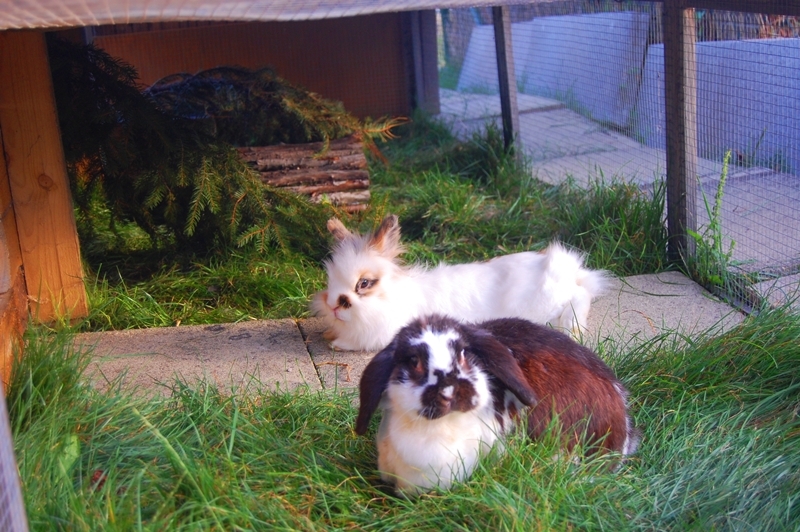
Rabbits are extremely heat-sensitive pets. They ́re often exposed to heat during summer months. As a careful owner you can implement some measures to keep them cool and protected from heat.

  • Ventilate the rooms your rabbits live in at night, in the mornings and in the evenings. Furthermore, you should keep all windows closed during the day, so that heat can ́t reach your flat. If there ́s extreme heat you ́re supposed to close the shutters all day long. Use an air conditioner in case it is available.
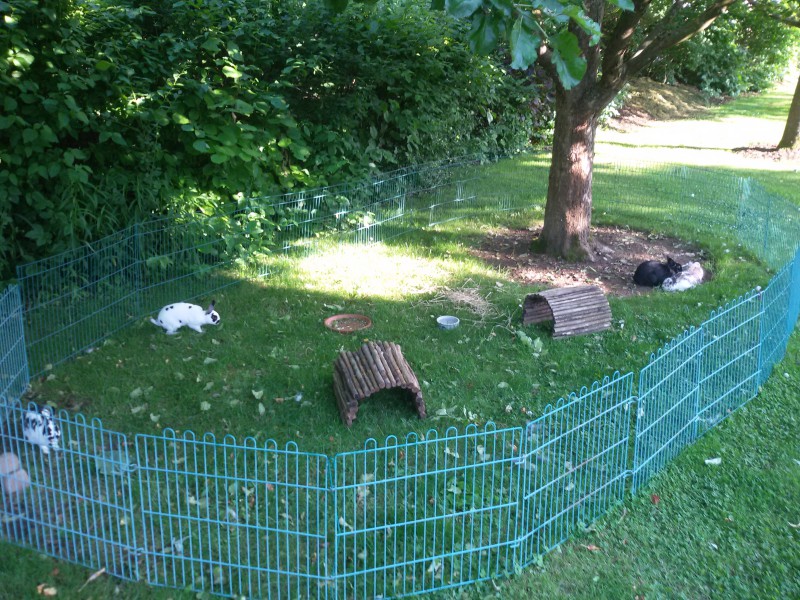
  • Offer your rabbit (in an outdoor enclosure) shadow-areas , preferably natural caused shadows (e.g. from bushes or trees). Make sure the heat can ́t build up under the shade provider (air permeability shade provider, enough open sides for air circulation). Caution: The sun changes its position!
  • On a balcony or a veranda, you can use bushes planted in pots as natural shadow.
  • If there ́s an abnormal and extreme heat, especially when you can ́t provide enough natural shadows, the rabbits should be brought to a cooler place on really hot days. These places could be located in your house, your cellar or in your garage (build an emergency-enclosure before).
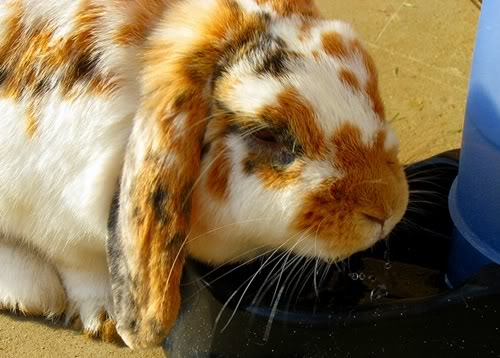
  • Always provide enough fresh water and a lot of fresh food and greens (put it in the shade!) so the rabbit gets enough liquid. Particular groceries, like cucumbers, watermelons and sugar melons have got a high share of water.
  • Put flagstones or tiles on a cool place in the enclosure, most of the rabbits use them as chilly spots to lay down. On hot days you can refrigerate the flagstones with cold water.
  • Offer your rabbits cool spots with wet towels to lay on.
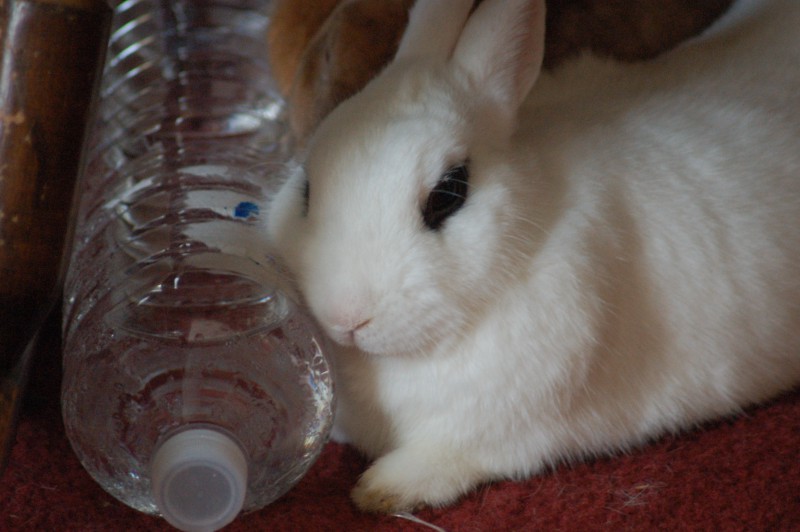
  • Lay down frozen objects (for instance a water-filled frozen plastic-bottle, don ́t fill it completely!) in the enclosure. Yet you have to be aware: the object always needs to be wrapped in a towel or cloth, it shouldn ́t lay there without a covering!
  • Long-haired rabbits are supposed to get a summer- haircut to stand the heat. Especially on their butts they need to be well styled in order to avoid poop sticking on the fur that could lead to a fly maggot infestation. With a Furminator (special brush) you can thin out undercoat.
  • Offer a larger bowl (e.g. a cage tub, an old baking sheet) with moist soil or give your rabbit an opportunity to dig a hollow itself. Therefore the ground might be watered . Rabbits like to lay down on moist soil or into cool grass on shade locations.
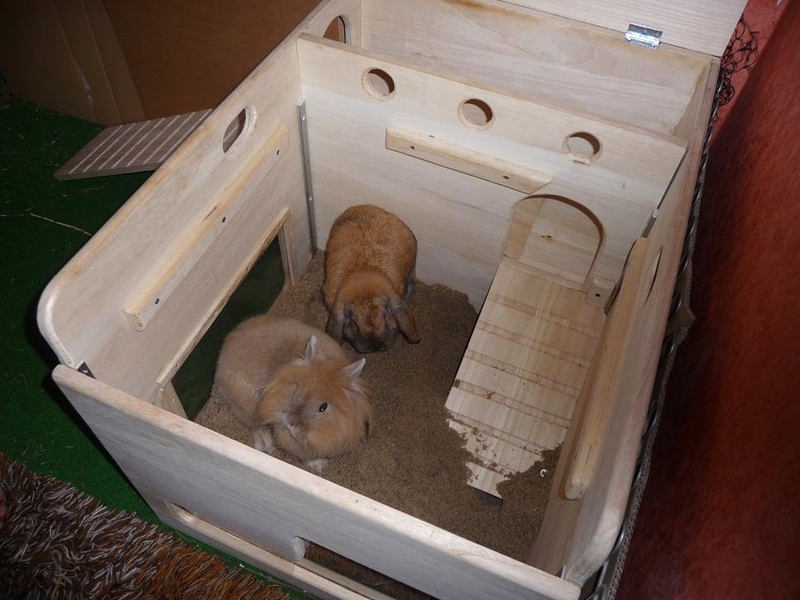
  • The burrowing-box can be moistened with some water as well.
  • Never and in no case put your rabbit outside in closed containers (like transportation boxes, rabbit hutches or cages). Particularly in summer, rabbits need a well structured enclosure with many shadow-spots and sufficient space (not mini outdoor enclosures!) in their outdoor habitat.
  • Avoid transport . Move the rabbit (if transport is necessary) in the evening, at night or in the early morning/dawn hours to the destination. Alternatively, use a car that has air condition (don ́t put the rabbits in the draft!).
  • Control rabbits that tend to get diarrhea , overweight or weakened/sick/old pets daily on their butts to recognize fly maggot infestation (Link!) and soilings as soon as possible. If you see little white eggs in the fur, immediately attend the veterinary emergency service! Remove soilings on the butt and take rabbits with diarrhea or cystitis inside in order to clean them better and to protect them from flies.
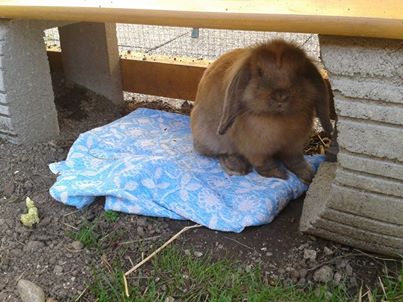
  • Some stores offer chilled ceilings for dogs that slowly dispense cold water as evaporative cold. You can put them into the enclosure yet they need to be wrapped in wire (protection against bites) and then wrapped in a towel due to its toxicity!
  • An upside down plastic or clay pot coaster can provide cooling if you place cool packs under it and a towel or cloth on top. Rabbits like to lay on the pot coasters to cool down. Please never put cooling blocks unprotected into the enclosure, they can be nibbled on and are extremely poisonous!
  • Moreover, cooling blocks can be wrapped in mesh wire (in order to avoid nibbling) and covered with a towel or cloth for a cooling purpose.
Translation: Maxi H.

Who Is Behind How to rabbit?

Veterinarian Viola Schillinger
Who Is Behind How to Rabbit? Viola Schillinger is a veterinarian who has kept rabbits since childhood and has dedicated much of her professional life to improving their health, welfare, and living conditions. Decades of rabbit keeping, intensive observation, and professional study have given her extensive experience in rabbit health, nutrition, behavior, and species-appropriate husbandry. She shares her knowledge through television appearances, webinars, podcasts, radio programs, articles, and books. In 2008, Viola founded Kaninchenwiese.de, which has grown into a leading German-language resource for rabbit care and health, reaching around 500,000 visitors per month. How to Rabbit brings this knowledge to an international English-speaking audience. The English content is translated and adapted by Erika Kühne Escobar and medically reviewed by Viola Schillinger.

Rabbits need space…


How to rabbit…

…is a guide for the appropriate keeping, nutrition and care of rabbits.

Search

Search Search

Never alone


Last Changes

  • Neutering Male Rabbits 2. October 2026
  • Cookie Policy (EU) 7. September 2026
  • Care 26. August 2026
  • Fruit list 27. September 2026
  • Highly toxic plants 30. July 2026
© Copyright - How to rabbit 2024 - Enfold Theme by Kriesi
  • Link to Instagram
Scroll to top Scroll to top Scroll to top