
Loading
  • Link to Instagram
How to rabbit
  • Home
  • Getting a Rabbit
    • Before You Get Rabbits
      • Rabbit Care for Beginners
      • Rabbit Care in 15 Minutes
      • How Much Do Rabbits Cost?
      • Lop Rabbits: Health & Welfare Concerns
      • Rabbit Lifespan: How Long Do Rabbits Live?
    • Choosing & Bringing Home Rabbits
      • Bringing a Rabbit Home
      • Sexing Rabbits: Male or Female?
      • Neutering Male Rabbits
      • Rabbits and Other Pets
      • Rabbit Adoption Contract
  • Housing
    • Outdoor Housing
      • Winter Care for Rabbits
      • Keeping Rabbits in the Garden
      • Building an Outdoor Rabbit Enclosure
      • Overwintering Rabbits
      • Outdoor Rabbit Run Ideas
    • Indoor Housing
      • Rabbit Litter Training Guide
      • Setting Up a Rabbit Room
      • Vitamin D for Indoor Rabbits
      • Keeping Rabbits Indoors
      • Indoor Rabbit Housing Ideas
      • Keeping Rabbits Cool in Summer
    • Balcony Housing
      • Keeping Rabbits on a Balcony
      • Rabbit-Friendly Balcony
  • Feeding
    • Foods for Rabbits
      • Grass & Meadow Plants
      • Pellets for Rabbits
      • Vegetables
      • Culinary herbs
      • Fruits for rabbits
      • Water & Drinking
    • Feeding Guidelines
      • Feeding Guidelines
      • Common Feeding Mistakes
      • Rabbit Feeding Myths
      • How to Feed a Baby Rabbit
    • Feeding tips
      • How to Transition a Rabbit to a New Diet Safely
      • Winter Diet for Rabbits
      • Nutrition for Young Rabbits
      • Diet Changes in Young Rabbits
    • Nutrition Basics
      • What can rabbits eat?
      • Types of Rabbit Diets
      • Is Hay the Main Food for Rabbits?
      • Tooth Wear & Dental Health
      • Crude Fiber & Carbohydrates
      • Secondary Plant Compounds
      • Food selection
      • Between Scarcity and Abundance
      • Rabbit Digestion
      • Wild Rabbit Nutrition
    • Foraging & Plant Identification
      • Foraging Meadows for Beginners
      • Identifying Coniferous Trees
      • Highly toxic plants
    • Food & Plant Lists
      • Safe Branches for Rabbits
      • Best Vegetables for Rabbits
      • Wild Grasses for Rabbits
      • Aromatic Herbs for Rabbits
      • Foraging & Plant Identification
      • Garden plant list
      • Fruit list
  • Companionship & Bonding
    • Rabbit Bonding
    • After a Rabbit Dies: Should the Other Rabbit Live Alone?
    • Can Rabbits Live Alone?
    • Choosing the Right Rabbit Companion
    • Rabbit Bonding Methods
    • Common Bonding Mistakes
    • Bonding of Young Rabbits
    • Keeping Rabbits in Large Groups
    • Hierarchy Fights & Bullying
    • Bonding Disabled or Ill Rabbits
    • Rabbit Socialization
  • Behavior
    • Handling Rabbits
    • Common Behaviors & Problems
      • Rabbits that don’t get along
      • Handling traumatized rabbits
      • Nibbling & Chewing
      • Digging
      • Humping
      • Kicking, Scratching & Wriggling
      • Biting & Aggressive Behavior
    • Body Language & Senses
      • Rabbit Senses
  • Health
    • General Health
      • Is My Rabbit Sick?
      • Recognizing Pain in Rabbits
      • Sudden Death in Rabbits: Possible Causes
      • Rabbit Health Myths
    • Digestive Disorders
      • Gastric Dilatation in Rabbits
      • Bloating in Rabbits
      • Hairballs & Constipation
      • Rabbit Diarrhea & Mushy Poop
      • Stomach Overload
      • Coccidia in Rabbits
      • Yeast in Rabbits
      • Worms in Rabbits
      • Underweight & Overweight Rabbits
      • Megacolon Syndrome
      • Bacterial Enteritis
      • Appendicitis in Rabbits
    • Skin, Fur & Parasites
      • Molting
      • Flystrike in Rabbits (Myiasis)
      • Mites, Ticks, Fleas & Other Parasites
      • Ear Mites
      • Skin Fungus
      • Wounds & Bite Wounds
      • Abscesses
      • When Rabbits Lick Themselves Raw
      • Sore Hocks in Rabbits
      • Injection Necrosis
      • Tumors & Cancer in Rabbits
      • Skin Inflammation
    • Infectious Diseases
      • Rabbit Snuffles
      • E. cuniculi in Rabbits
      • Rabbit Hemorrhagic Disease (RHD)
      • Myxomatosis
      • Ear Infection
      • Rabbit Syphilis
      • Tularemia (Rabbit Fever)
      • Tetanus
      • Toxoplasmosis
      • Listeriosis
      • Rodentiosis
      • Herpesviruses in rabbits
    • Internal & Organ Diseases
      • Liver Diseases
        • Liver Lobe Torsion
      • Cystitis
      • Bladder Sludge & Bladder Stones
      • Kidney Failure
      • Sex & Neutering
      • Uterine Diseases
      • Heart Diseases
      • Thyroid Diseases
      • Heatstroke in Rabbits
      • Stroke in rabbits
      • Schock
      • Hormonal Disorders
    • Other Health Conditions
      • Floppy Rabbit Syndrome
      • Dental Diseases
        • Jaw Abscesses
        • Nutrition for Dental Disease
      • Eye Diseases in Rabbits
        • Watery Eyes
      • Joint Diseases
      • Bone Fractures & Accidents
      • Cramps & Seizures
      • TThymoma, Lymphoma & Other Tumors
      • Poisoning in Rabbits
      • Mold & Mycotoxins
  • Care
    • Rabbit Poop & Urine: What It Means
    • Housing for Disabled & Elderly Rabbits
    • Wheelchairs & Mobility Support for Rabbits
    • Rabbit Health Check
    • Dirty Bottom in Rabbits
    • Why Does My Rabbit Pee & Poop Everywhere?
    • Saying Goodbye to a Rabbit
  • Offspring
    • Breeding that causes animal suffering
  • Service
    • News
    • About Us
    • Legal Disclosure
    • Privacy Policy
  • Click to open the search input field Click to open the search input field Search
  • Menu Menu

Herpesviruses in rabbits

Why even human cold sores can become dangerous

Herpes in rabbits: symptoms, transmission, diagnosis, treatment, and prevention

Herpesviruses are widespread in many animal species. They are best known in humans, where they cause cold sores, chickenpox, or shingles. Rabbits can also become infected with certain herpesviruses. Although such infections are rare, when they do occur the disease is often severe. Particularly important for rabbit owners: herpesviruses can even be transmitted from humans to rabbits.
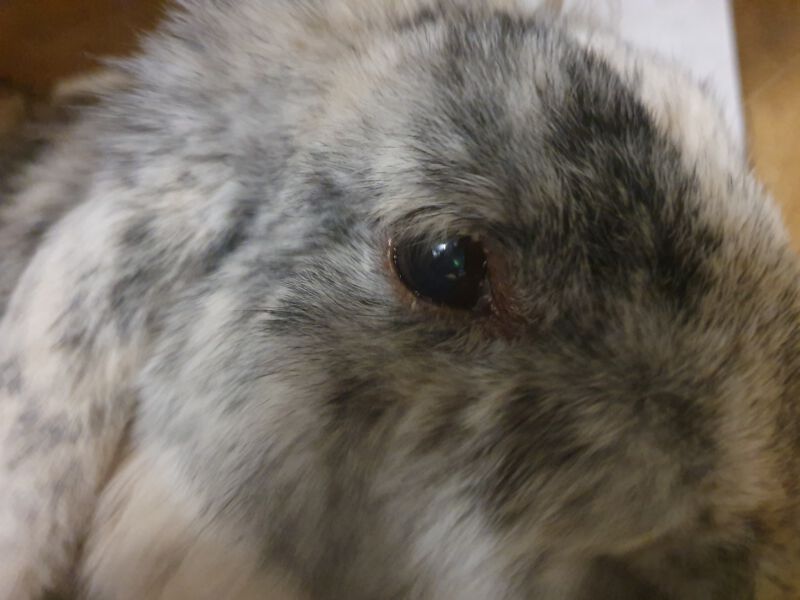
Close-up of a rabbit's eye showing signs of herpesvirus infection.

Eye inflammation can be caused by herpesviruses.

Contents

  • What are herpesviruses?
  • Transmission
  • Symptoms
  • Diagnosis: herpesvirus or something else?
  • Treatment

What are herpesviruses?

Herpesviruses are enveloped DNA viruses. A characteristic feature of this virus family is that they:

  • remain in the body for life after infection (latent infection),
  • can “hide” in specific nerve cells,
  • can become active again under stress or when the immune system is weakened (reactivation).

This means that an animal infected once will remain a lifelong carrier of the virus, even if it appears completely healthy at times.

In rabbits, two herpesviruses have mainly been described:

  • Leporid herpesvirus 4 (LHV-4): A rabbit-specific virus that can cause respiratory disease and inflammation of the eyes.
  • Human herpes simplex virus (HSV): In rare cases, it can be transmitted from humans to rabbits and may trigger very severe illness.

Transmission

Infection can occur via several routes:

  • Direct contact: Viruses are passed on through saliva, nasal and eye secretions, or close physical contact.
  • Droplet transmission: Viruses can be spread when sneezing or coughing.
  • Human-to-rabbit transmission: Contact with a person who has an active cold sore is particularly risky. A brief kiss on the rabbit or handling it with contaminated fingers can be sufficient.

“Kiss of death” – when cold sores become fatal for animals

A well-known example is a chinchilla that died after being kissed by its young owner. The girl had an active cold sore and transmitted the virus to her pet while cuddling. While the virus is usually little more than a nuisance in humans, in this chinchilla it caused fatal encephalitis. The child had “kissed her pet to death,” wrote veterinary pathologist Achim Gruber.

Rabbits are also at risk—which is why they should never be kissed when a person has an active cold sore.

Stress factors such as relocation, loss of a partner, or illness can trigger reactivation of the virus in animals that are already infected.

Symptoms

The clinical signs depend on where the virus is replicating in the body.

Neurological symptoms
If the virus affects the nervous system, the following may occur:

  • Head tilt
  • Circling movements
  • Seizures
  • Movement disorders (ataxia)
Rabbit with herpesvirus showing symptoms, lying on a colorful blanket.
This image depicts a rabbit affected by herpesviruses, highlighting health concerns in pet rabbits.

These symptoms closely resemble those of Encephalitozoon cuniculi (EC) or an inner ear infection, which makes diagnosis difficult.

Eye and respiratory disease

LHV-4 in particular can cause conjunctivitis, corneal inflammation, nasal discharge, or sneezing.

General symptoms

  • Fever
  • Apathy, lethargy
  • Loss of appetite, weight loss
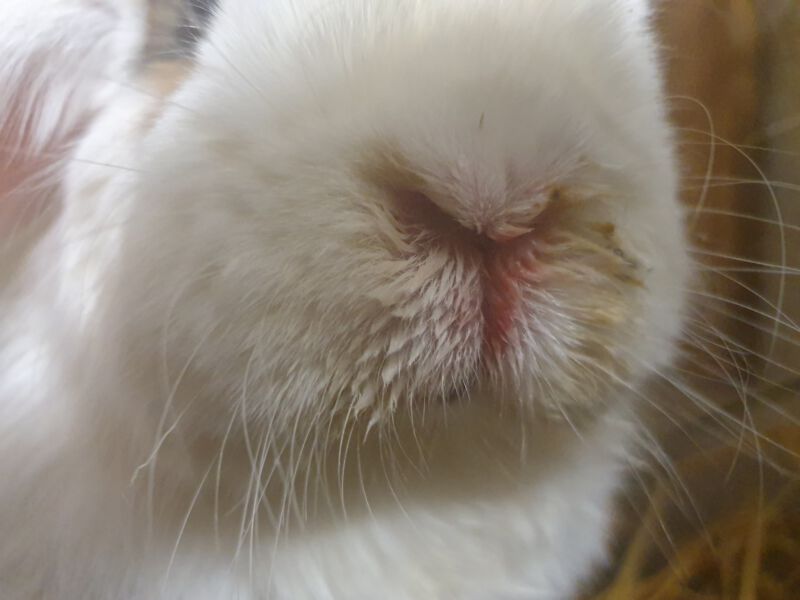
Close-up of a rabbit's face showing herpesvirus symptoms on the nose and mouth.
A rabbit with herpesvirus symptoms, including nasal and oral lesions, highlighting the importance of health monitoring.

Severe courses of disease

In rare cases, the virus spreads to the brain and causes meningoencephalitis (inflammation of the brain and meninges). This condition is almost always fatal.

Diagnosis: herpesvirus or something else?

Because the symptoms are nonspecific, diagnosis is challenging. More common causes (such as EC or an inner ear infection) are often suspected first.

Possible diagnostic methods:

  • PCR: Detection of viral DNA from blood, nasal secretions, or cerebrospinal fluid
  • CSF analysis: If meningoencephalitis is suspected
  • Necropsy and histopathology: A definitive diagnosis is often only possible after the animal’s death

Important: An exact diagnosis is essential because treatment differs—antiparasitic drugs may help in EC, for example, but herpesvirus infections require antiviral medication.

Treatment

A complete cure is not possible because herpesviruses remain in the body. Treatment focuses on relieving symptoms and preventing complications:

  • Antiviral drugs such as aciclovir and interferons
    may be tried in individual cases.
  • Anti-inflammatory drugs and pain relief help control inflammation and improve well-being.
  • Supportive care: assisted feeding, fluid therapy, warmth, and stress reduction are crucial.

Prognosis

The prognosis varies widely: mild infections may resolve, but severe neurological cases unfortunately often end in death.

Prevention

Because treatment is difficult, prevention is of great importance:

No contact during cold sores: People with an active cold sore must not kiss rabbits or handle them without thorough handwashing. Once the cold sore has healed, contact with the animal is unproblematic.
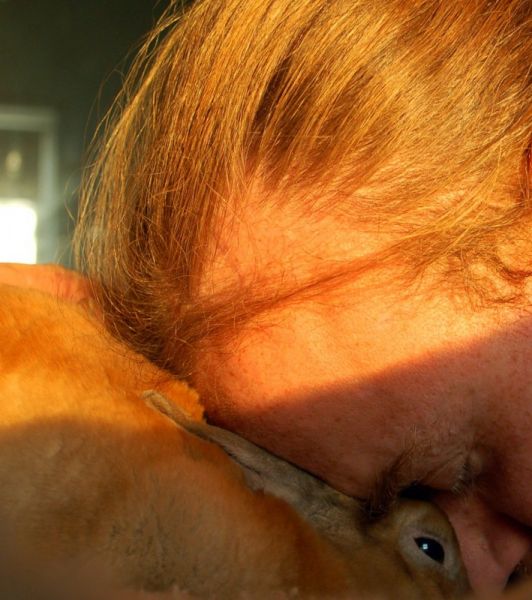
Close-up of a rabbit with herpesvirus symptoms, showing skin lesions and eye issues.
Close contact should be avoided when active cold sore blisters are present. Photo: Ketzirah-Lesser-Art-Drauglis

Avoid stress: Stress weakens the immune system and can trigger viral reactivation.

Quarantine new arrivals: Keep new animals separated at first before integrating them into the existing group.

Sources include, among others:

Beer M, Kaufer B, Sutter G, Truyen U, Vahlenkamp T: Tiermedizinische Mikrobiologie, Infektions- und Seuchenlehre – DNA-Viren. Thieme Verlag 10.1055-f-0008-0001-b000000531

Elion, G. B., Furman, P. A., Fyfe, J. A., de Miranda, P., Beauchamp, L., & Schaeffer, H. J. (1982): Evaluation of the antiherpetic activity of acyclovir in rabbits. Antimicrobial Agents and Chemotherapy, 22(4), 520–527

de Miranda, P., & Good, S. S. (1982): Metabolic disposition of acyclovir in the guinea pig, rabbit, and dog. American Journal of Medicine, 73(1A), 31–3

Müller LS, Thöle M.: Die neurologische Untersuchung beim Kaninchen. Kleintier konkret 2020; 23: 2–11, 10-1055-a-1211-1245

Liebscher J, Hein J.: Typische und untypische Infektionserreger beim Kaninchen: Teil 5 Neurologische Symptome. Kleintier konkret 2023; 26: 12–17, 10-1055-a-2012-8631

Ratiopharm GmbH. (2023): Aciclovir-ratiopharm 50 mg/g Creme – Fachinformation. Ratiopharm.de

Vetmeduni Wien: Was geschah mit diesen Tieren? https://www.vetmeduni.ac.at/forschung/aktuelles-aus-der-forschung/was-geschah-mit-diesen-tieren

Whitley, R. J., Soong, S. J., Dolin, R., Galasso, G. J., Chien, L. T., & Alford, C. A. (1980): Effect of acyclovir on acute and latent herpes simplex virus infections. Journal of Infectious Diseases, 142(4), 474–480


Who Is Behind How to rabbit?

Veterinarian Viola Schillinger
Who Is Behind How to Rabbit? Viola Schillinger is a veterinarian who has kept rabbits since childhood and has dedicated much of her professional life to improving their health, welfare, and living conditions. Decades of rabbit keeping, intensive observation, and professional study have given her extensive experience in rabbit health, nutrition, behavior, and species-appropriate husbandry. She shares her knowledge through television appearances, webinars, podcasts, radio programs, articles, and books. In 2008, Viola founded Kaninchenwiese.de, which has grown into a leading German-language resource for rabbit care and health, reaching around 500,000 visitors per month. How to Rabbit brings this knowledge to an international English-speaking audience. The English content is translated and adapted by Erika Kühne Escobar and medically reviewed by Viola Schillinger.

Rabbits need space…


How to rabbit…

…is a guide for the appropriate keeping, nutrition and care of rabbits.

Search

Search Search

Never alone


Last Changes

  • Neutering Male Rabbits 2. October 2026
  • Cookie Policy (EU) 7. September 2026
  • Care 26. August 2026
  • Fruit list 27. September 2026
  • Highly toxic plants 30. July 2026
© Copyright - How to rabbit 2024 - Enfold Theme by Kriesi
  • Link to Instagram
Scroll to top Scroll to top Scroll to top