
Loading
  • Link to Instagram
How to rabbit
  • Home
  • Getting a Rabbit
    • Before You Get Rabbits
      • Rabbit Care for Beginners
      • Rabbit Care in 15 Minutes
      • How Much Do Rabbits Cost?
      • Lop Rabbits: Health & Welfare Concerns
      • Rabbit Lifespan: How Long Do Rabbits Live?
    • Choosing & Bringing Home Rabbits
      • Bringing a Rabbit Home
      • Sexing Rabbits: Male or Female?
      • Neutering Male Rabbits
      • Rabbits and Other Pets
      • Rabbit Adoption Contract
  • Housing
    • Outdoor Housing
      • Winter Care for Rabbits
      • Keeping Rabbits in the Garden
      • Building an Outdoor Rabbit Enclosure
      • Overwintering Rabbits
      • Outdoor Rabbit Run Ideas
    • Indoor Housing
      • Rabbit Litter Training Guide
      • Setting Up a Rabbit Room
      • Vitamin D for Indoor Rabbits
      • Keeping Rabbits Indoors
      • Indoor Rabbit Housing Ideas
      • Keeping Rabbits Cool in Summer
    • Balcony Housing
      • Keeping Rabbits on a Balcony
      • Rabbit-Friendly Balcony
  • Feeding
    • Foods for Rabbits
      • Grass & Meadow Plants
      • Pellets for Rabbits
      • Vegetables
      • Culinary herbs
      • Fruits for rabbits
      • Water & Drinking
    • Feeding Guidelines
      • Feeding Guidelines
      • Common Feeding Mistakes
      • Rabbit Feeding Myths
      • How to Feed a Baby Rabbit
    • Feeding tips
      • How to Transition a Rabbit to a New Diet Safely
      • Winter Diet for Rabbits
      • Nutrition for Young Rabbits
      • Diet Changes in Young Rabbits
    • Nutrition Basics
      • What can rabbits eat?
      • Types of Rabbit Diets
      • Is Hay the Main Food for Rabbits?
      • Tooth Wear & Dental Health
      • Crude Fiber & Carbohydrates
      • Secondary Plant Compounds
      • Food selection
      • Between Scarcity and Abundance
      • Rabbit Digestion
      • Wild Rabbit Nutrition
    • Foraging & Plant Identification
      • Foraging Meadows for Beginners
      • Identifying Coniferous Trees
      • Highly toxic plants
    • Food & Plant Lists
      • Safe Branches for Rabbits
      • Best Vegetables for Rabbits
      • Wild Grasses for Rabbits
      • Aromatic Herbs for Rabbits
      • Foraging & Plant Identification
      • Garden plant list
      • Fruit list
  • Companionship & Bonding
    • Rabbit Bonding
    • After a Rabbit Dies: Should the Other Rabbit Live Alone?
    • Can Rabbits Live Alone?
    • Choosing the Right Rabbit Companion
    • Rabbit Bonding Methods
    • Common Bonding Mistakes
    • Bonding of Young Rabbits
    • Keeping Rabbits in Large Groups
    • Hierarchy Fights & Bullying
    • Bonding Disabled or Ill Rabbits
    • Rabbit Socialization
  • Behavior
    • Handling Rabbits
    • Common Behaviors & Problems
      • Rabbits that don’t get along
      • Handling traumatized rabbits
      • Nibbling & Chewing
      • Digging
      • Humping
      • Kicking, Scratching & Wriggling
      • Biting & Aggressive Behavior
    • Body Language & Senses
      • Rabbit Senses
  • Health
    • General Health
      • Is My Rabbit Sick?
      • Recognizing Pain in Rabbits
      • Sudden Death in Rabbits: Possible Causes
      • Rabbit Health Myths
    • Digestive Disorders
      • Gastric Dilatation in Rabbits
      • Bloating in Rabbits
      • Hairballs & Constipation
      • Rabbit Diarrhea & Mushy Poop
      • Stomach Overload
      • Coccidia in Rabbits
      • Yeast in Rabbits
      • Worms in Rabbits
      • Underweight & Overweight Rabbits
      • Megacolon Syndrome
      • Bacterial Enteritis
      • Appendicitis in Rabbits
    • Skin, Fur & Parasites
      • Molting
      • Flystrike in Rabbits (Myiasis)
      • Mites, Ticks, Fleas & Other Parasites
      • Ear Mites
      • Skin Fungus
      • Wounds & Bite Wounds
      • Abscesses
      • When Rabbits Lick Themselves Raw
      • Sore Hocks in Rabbits
      • Injection Necrosis
      • Tumors & Cancer in Rabbits
      • Skin Inflammation
    • Infectious Diseases
      • Rabbit Snuffles
      • E. cuniculi in Rabbits
      • Rabbit Hemorrhagic Disease (RHD)
      • Myxomatosis
      • Ear Infection
      • Rabbit Syphilis
      • Tularemia (Rabbit Fever)
      • Tetanus
      • Toxoplasmosis
      • Listeriosis
      • Rodentiosis
      • Herpesviruses in rabbits
    • Internal & Organ Diseases
      • Liver Diseases
        • Liver Lobe Torsion
      • Cystitis
      • Bladder Sludge & Bladder Stones
      • Kidney Failure
      • Sex & Neutering
      • Uterine Diseases
      • Heart Diseases
      • Thyroid Diseases
      • Heatstroke in Rabbits
      • Stroke in rabbits
      • Schock
      • Hormonal Disorders
    • Other Health Conditions
      • Floppy Rabbit Syndrome
      • Dental Diseases
        • Jaw Abscesses
        • Nutrition for Dental Disease
      • Eye Diseases in Rabbits
        • Watery Eyes
      • Joint Diseases
      • Bone Fractures & Accidents
      • Cramps & Seizures
      • TThymoma, Lymphoma & Other Tumors
      • Poisoning in Rabbits
      • Mold & Mycotoxins
  • Care
    • Rabbit Poop & Urine: What It Means
    • Housing for Disabled & Elderly Rabbits
    • Wheelchairs & Mobility Support for Rabbits
    • Rabbit Health Check
    • Dirty Bottom in Rabbits
    • Why Does My Rabbit Pee & Poop Everywhere?
    • Saying Goodbye to a Rabbit
  • Offspring
    • Breeding that causes animal suffering
  • Service
    • News
    • About Us
    • Legal Disclosure
    • Privacy Policy
  • Click to open the search input field Click to open the search input field Search
  • Menu Menu

When Rabbits Lick Themselves Raw

“My rabbit is nibbling on itself or a partner rabbit in a specific spot, pulling out fur, and/or licking and biting the area until it bleeds.”
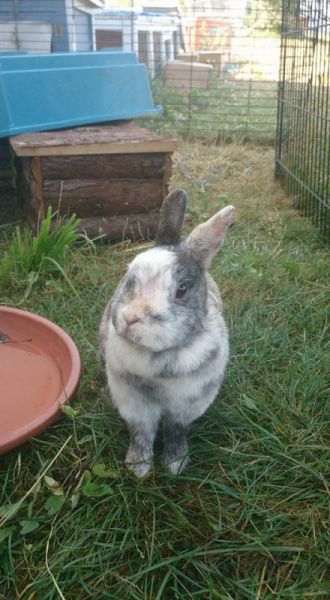
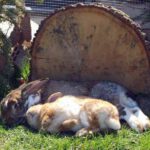
Miniature rabbit sitting outdoors in a grassy enclosure with a wooden shelter and water dish for caring and breeding tips.
Bald spot on the forehead caused by intense grooming from the partner rabbit.

Trichophagy (fur pulling), “shaving,” excessive grooming, overgrooming, barbering, and wound licking by companions as a behavioral disorder

This behavior is a behavioral disorder that can have various causes. In addition to identifying the underlying cause, a veterinarian should always be consulted. It can lead to fur loss/bald spots, sore areas, or even bleeding wounds. These areas are also referred to as lick granulomas.

Common causes include:

Lack of Chewing Opportunities

This behavior occurs noticeably often, or almost exclusively, in indoor housing (see behavioral disorders in indoor housing). In nature, rabbits constantly nibble and graze on grass, which is missing as a natural substrate indoors.

To compensate, it’s important to fully cover the enclosure floor with bedding (e.g., by pulling the PVC flooring up at the edges and layering bedding with a thick layer of straw on top). Additionally, provide multiple piles of straw and scattered fresh food (greens, hay, and fresh branches).

Incorporate natural materials into the living space: tree trunks, branches, leaves, roots, straw, meadow plants, potted plants, chew materials, straw and hay baskets… Keep things interesting by introducing new items daily, rearranging existing ones, and replacing old materials regularly.

It can help to offer fresh, fiber-rich food (hay, grasses, wild plants, branches) several times a day and place it in different spots throughout the enclosure.

Frustration Due to Fundamentally Incorrect Housing (Too Little Space, No Free Roaming, Lack of Enrichment and Stimulation)

Rabbits exhibiting this behavior should have at least 8m² of space available day and night and be provided with plenty of variety and enrichment. They should never experience boredom if possible.
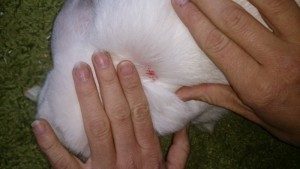
Rabbit health check being performed on a white rabbit outdoors.
Plucking spot caused by the partner rabbit, due to housing or hormonal reasons.

Frustration Due to Lack of a Social Companion (Single Housing)

Rabbits are highly social animals, and keeping them alone does not meet their needs, potentially leading to behavioral issues. It’s important to understand that true incompatibility between rabbits is rare; such problems are usually the result of mistakes in the bonding process, improper partner selection, or separating them too soon. We strongly recommend educating yourself on the correct way to bond rabbits.

Frustration Due to Sexual Drive

This issue occurs in both unneutered males and females. When the sexual drive cannot be expressed, they may engage in substitute behaviors. Neutering can resolve this problem.
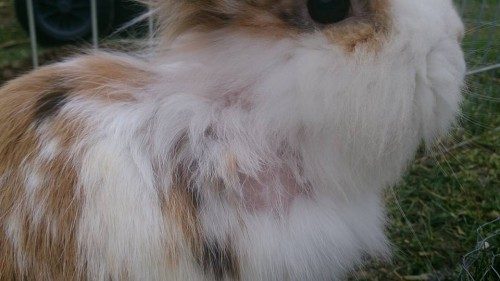
Rabbit grooming and care tips for healthy pet rabbits.
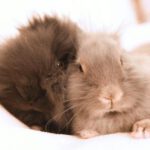
Fur torn from the sides and forehead for nesting (by another doe).

Stress (Due to Various Factors)

Stress of any kind can trigger such behavior. Stressors can include an unharmonious group, significant changes in the environment, the loss of a companion, etc. Heat cycles in females or false pregnancies can also be strong triggers of stress. In the photo on the right, the cause is the heat cycle of a female rabbit.

Nesting Behavior

Many rabbits also pull fur from their partner’s sides to use it for nesting (during heat, false pregnancy, or actual pregnancy).
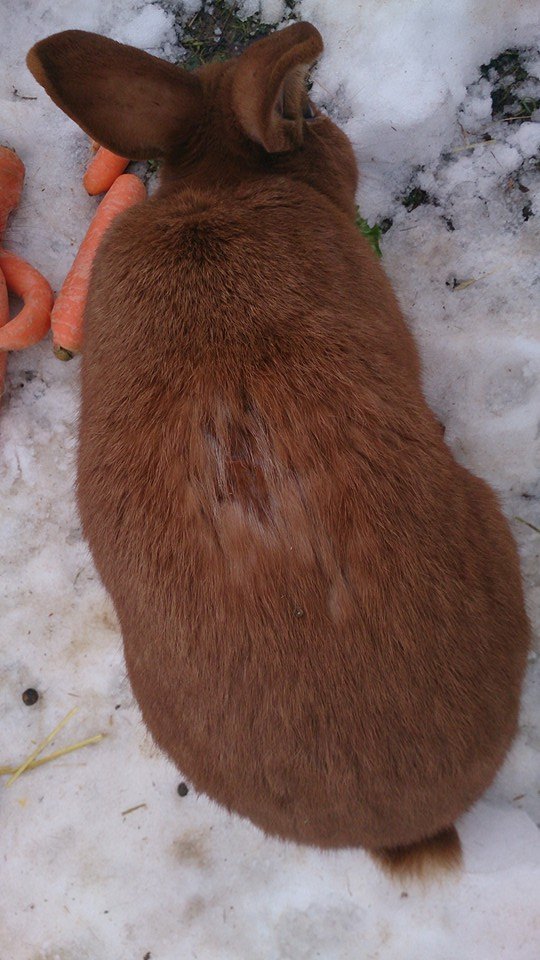
Brown rabbit lying on snow with carrots nearby.
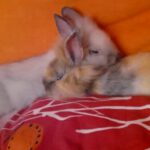
Fur loss on the back due to heat cycle (mounting with biting of the partner rabbit).

Itching

Itching caused by mites, lice, allergies, medication reactions, fungi, or other parasites can lead to self-inflicted damage in the affected area. The rabbit scratches and bites itself until it bleeds, chews on its fur, and tries to relieve the itching in any way possible.

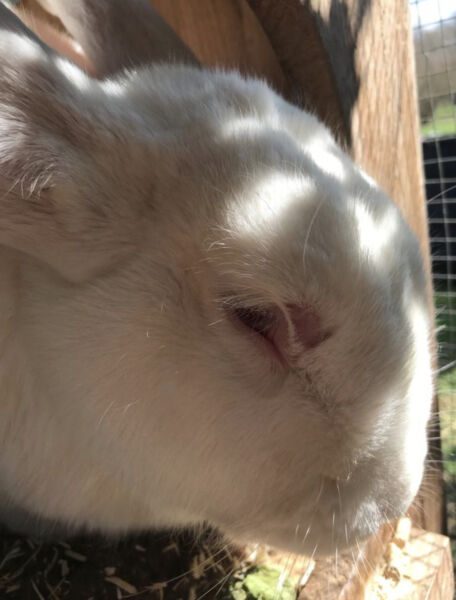
Eye Discharge

Eye discharge is often lovingly licked away by the partner rabbit and may go unnoticed. However, due to the discharge and constant grooming, it can lead to bald spots and lick granulomas, as shown in the image on the right.
Fluffy white rabbit resting outdoors, perfect for learning how to care for rabbits.

Other Illnesses

There are many diseases related to self-mutilation or mutilation by others. For example, a rabbit with dental misalignments that drools may injure itself while grooming the wet fur on its chin. Conditions that cause pain can lead to self-inflicted injuries. With worm infestations, rabbits often chew on their fur. If a rabbit experiences pain in a certain area, it may gnaw and lick that spot intensively. For instance, rabbits with arthritis may chew the inner thighs bald when they experience severe pain (as seen in the photos).

Incorrect Feeding

A diet that is too low in fiber can lead rabbits to chew on their own or others’ fur. If sufficient stimulation is not provided through food, it can result in boredom, which then reinforces such behavior. In these cases, food-related activities, such as scattered, varied, diverse, and hidden food, are essential. It’s important to remember that, in the wild, rabbits primarily engage in grazing, nibbling, and foraging. Providing multiple bins scattered around the living space with straw, leaves, soil, hay, grass, and fresh kitchen herbs in pots, as well as generously bedding areas with straw and small animal bedding, can help. Also, widely distributing food in various hay racks is beneficial
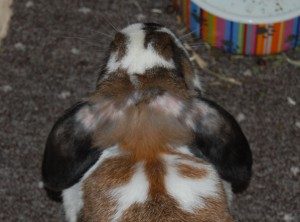
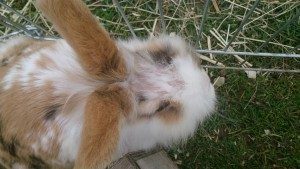
Rabbit from behind with floppy ears, close-up.
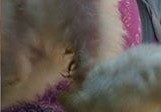
Bald spots on the head due to intense licking by the partner rabbit.
Pulled fur due to the partner rabbit’s lack of roughage (incorrect feeding).
Miniature rabbit sitting outdoors in a grassy enclosure with a wooden shelter and water dish for caring and breeding tips.
Bald patches on the inner thighs due to arthritis pain.

The cause should be urgently identified and addressed. In mild cases, even a heat cycle can lead to nibbling on a partner, and this behavior will subside once the heat cycle is over.
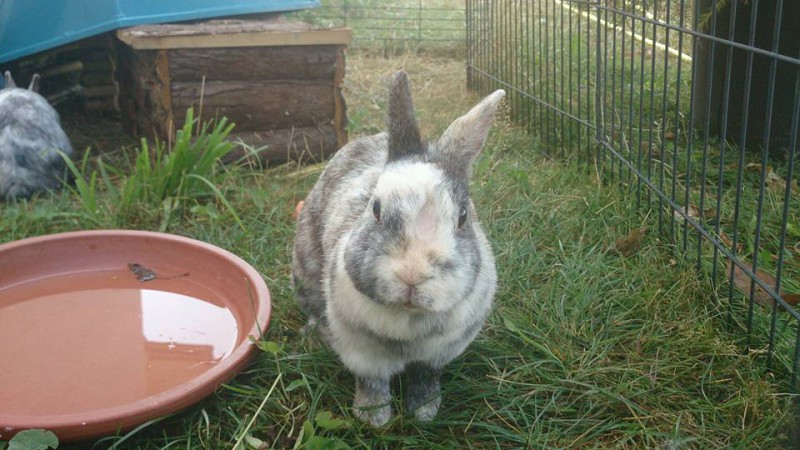
Rabbit in outdoor enclosure.

If physical causes such as mites or fungi are ruled out (these can also occur in areas that are being chewed) and your own efforts are not sufficiently resolving the behavior, a veterinarian specializing in behavioral therapy with a focus on rabbits/small mammals can help. Alternatively, you can book a behavioral therapy consultation through our advisory service. It would be ideal to provide photos of the affected areas, information on what you have already tried and whether it helped, as well as photos of the feeding areas and living space so I can best assist your rabbit!

Sources include:

Berthelsen, H., & Hansen, L. T. (1999). The effect of hay on the behaviour of caged rabbits (Oryctolagus cuniculus). Animal Welfare, 8(2), 149-157.

Döring D, Erhard M H. (2015): Verhaltensprobleme bei Kaninchen. kleintier konkret 18(S01): 2 – 6
Who Is Behind How to rabbit?

Veterinarian Viola Schillinger
Who Is Behind How to Rabbit? Viola Schillinger is a veterinarian who has kept rabbits since childhood and has dedicated much of her professional life to improving their health, welfare, and living conditions. Decades of rabbit keeping, intensive observation, and professional study have given her extensive experience in rabbit health, nutrition, behavior, and species-appropriate husbandry. She shares her knowledge through television appearances, webinars, podcasts, radio programs, articles, and books. In 2008, Viola founded Kaninchenwiese.de, which has grown into a leading German-language resource for rabbit care and health, reaching around 500,000 visitors per month. How to Rabbit brings this knowledge to an international English-speaking audience. The English content is translated and adapted by Erika Kühne Escobar and medically reviewed by Viola Schillinger.

Rabbits need space…


How to rabbit…

…is a guide for the appropriate keeping, nutrition and care of rabbits.

Search

Search Search

Never alone


Last Changes

  • Neutering Male Rabbits 2. October 2026
  • Cookie Policy (EU) 7. September 2026
  • Care 26. August 2026
  • Fruit list 27. September 2026
  • Highly toxic plants 30. July 2026
© Copyright - How to rabbit 2024 - Enfold Theme by Kriesi
  • Link to Instagram
Scroll to top Scroll to top Scroll to top