
Loading
  • Link to Instagram
How to rabbit
  • Home
  • Getting a Rabbit
    • Before You Get Rabbits
      • Rabbit Care for Beginners
      • Rabbit Care in 15 Minutes
      • How Much Do Rabbits Cost?
      • Lop Rabbits: Health & Welfare Concerns
      • Rabbit Lifespan: How Long Do Rabbits Live?
    • Choosing & Bringing Home Rabbits
      • Bringing a Rabbit Home
      • Sexing Rabbits: Male or Female?
      • Neutering Male Rabbits
      • Rabbits and Other Pets
      • Rabbit Adoption Contract
  • Housing
    • Outdoor Housing
      • Winter Care for Rabbits
      • Keeping Rabbits in the Garden
      • Building an Outdoor Rabbit Enclosure
      • Overwintering Rabbits
      • Outdoor Rabbit Run Ideas
    • Indoor Housing
      • Rabbit Litter Training Guide
      • Setting Up a Rabbit Room
      • Vitamin D for Indoor Rabbits
      • Keeping Rabbits Indoors
      • Indoor Rabbit Housing Ideas
      • Keeping Rabbits Cool in Summer
    • Balcony Housing
      • Keeping Rabbits on a Balcony
      • Rabbit-Friendly Balcony
  • Feeding
    • Foods for Rabbits
      • Grass & Meadow Plants
      • Pellets for Rabbits
      • Vegetables
      • Culinary herbs
      • Fruits for rabbits
      • Water & Drinking
    • Feeding Guidelines
      • Feeding Guidelines
      • Common Feeding Mistakes
      • Rabbit Feeding Myths
      • How to Feed a Baby Rabbit
    • Feeding tips
      • How to Transition a Rabbit to a New Diet Safely
      • Winter Diet for Rabbits
      • Nutrition for Young Rabbits
      • Diet Changes in Young Rabbits
    • Nutrition Basics
      • What can rabbits eat?
      • Types of Rabbit Diets
      • Is Hay the Main Food for Rabbits?
      • Tooth Wear & Dental Health
      • Crude Fiber & Carbohydrates
      • Secondary Plant Compounds
      • Food selection
      • Between Scarcity and Abundance
      • Rabbit Digestion
      • Wild Rabbit Nutrition
    • Foraging & Plant Identification
      • Foraging Meadows for Beginners
      • Identifying Coniferous Trees
      • Highly toxic plants
    • Food & Plant Lists
      • Safe Branches for Rabbits
      • Best Vegetables for Rabbits
      • Wild Grasses for Rabbits
      • Aromatic Herbs for Rabbits
      • Foraging & Plant Identification
      • Garden plant list
      • Fruit list
  • Companionship & Bonding
    • Rabbit Bonding
    • After a Rabbit Dies: Should the Other Rabbit Live Alone?
    • Can Rabbits Live Alone?
    • Choosing the Right Rabbit Companion
    • Rabbit Bonding Methods
    • Common Bonding Mistakes
    • Bonding of Young Rabbits
    • Keeping Rabbits in Large Groups
    • Hierarchy Fights & Bullying
    • Bonding Disabled or Ill Rabbits
    • Rabbit Socialization
  • Behavior
    • Handling Rabbits
    • Common Behaviors & Problems
      • Rabbits that don’t get along
      • Handling traumatized rabbits
      • Nibbling & Chewing
      • Digging
      • Humping
      • Kicking, Scratching & Wriggling
      • Biting & Aggressive Behavior
    • Body Language & Senses
      • Rabbit Senses
  • Health
    • General Health
      • Is My Rabbit Sick?
      • Recognizing Pain in Rabbits
      • Sudden Death in Rabbits: Possible Causes
      • Rabbit Health Myths
    • Digestive Disorders
      • Gastric Dilatation in Rabbits
      • Bloating in Rabbits
      • Hairballs & Constipation
      • Rabbit Diarrhea & Mushy Poop
      • Stomach Overload
      • Coccidia in Rabbits
      • Yeast in Rabbits
      • Worms in Rabbits
      • Underweight & Overweight Rabbits
      • Megacolon Syndrome
      • Bacterial Enteritis
      • Appendicitis in Rabbits
    • Skin, Fur & Parasites
      • Molting
      • Flystrike in Rabbits (Myiasis)
      • Mites, Ticks, Fleas & Other Parasites
      • Ear Mites
      • Skin Fungus
      • Wounds & Bite Wounds
      • Abscesses
      • When Rabbits Lick Themselves Raw
      • Sore Hocks in Rabbits
      • Injection Necrosis
      • Tumors & Cancer in Rabbits
      • Skin Inflammation
    • Infectious Diseases
      • Rabbit Snuffles
      • E. cuniculi in Rabbits
      • Rabbit Hemorrhagic Disease (RHD)
      • Myxomatosis
      • Ear Infection
      • Rabbit Syphilis
      • Tularemia (Rabbit Fever)
      • Tetanus
      • Toxoplasmosis
      • Listeriosis
      • Rodentiosis
      • Herpesviruses in rabbits
    • Internal & Organ Diseases
      • Liver Diseases
        • Liver Lobe Torsion
      • Cystitis
      • Bladder Sludge & Bladder Stones
      • Kidney Failure
      • Sex & Neutering
      • Uterine Diseases
      • Heart Diseases
      • Thyroid Diseases
      • Heatstroke in Rabbits
      • Stroke in rabbits
      • Schock
      • Hormonal Disorders
    • Other Health Conditions
      • Floppy Rabbit Syndrome
      • Dental Diseases
        • Jaw Abscesses
        • Nutrition for Dental Disease
      • Eye Diseases in Rabbits
        • Watery Eyes
      • Joint Diseases
      • Bone Fractures & Accidents
      • Cramps & Seizures
      • TThymoma, Lymphoma & Other Tumors
      • Poisoning in Rabbits
      • Mold & Mycotoxins
  • Care
    • Rabbit Poop & Urine: What It Means
    • Housing for Disabled & Elderly Rabbits
    • Wheelchairs & Mobility Support for Rabbits
    • Rabbit Health Check
    • Dirty Bottom in Rabbits
    • Why Does My Rabbit Pee & Poop Everywhere?
    • Saying Goodbye to a Rabbit
  • Offspring
    • Breeding that causes animal suffering
  • Service
    • News
    • About Us
    • Legal Disclosure
    • Privacy Policy
  • Click to open the search input field Click to open the search input field Search
  • Menu Menu

Yeasts

Yeast Fungus, Yeasts

Yeasts always appear as a secondary condition accompanying other diseases or as a result of an improper diet.

Diarrhea or a feces-soiled anal area can quickly become life-threatening for rabbits due to flystrike! Rabbits with a dirty anal area must be cleaned, brought indoors, and closely monitored. Additionally, rabbits that frequently have mushy poop should be carefully monitored and checked regularly.
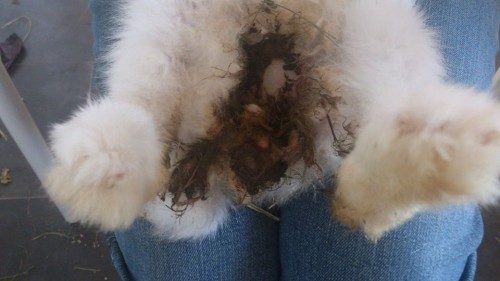
Naughty rabbit with tangled fur and dirty bottom, emphasizing grooming and care needs.
Foul-smelling diarrhea is often a result of a yeast infection.

Contents

  • Symptoms: How do yeast infections manifest?
  • Causes
  • Diagnosis
  • Treatment

Symptoms: How do yeast infections manifest?

When the intestinal environment changes, it can lead to an overgrowth of these fungi, which may result in diarrhea.

Symptoms may include chronic diarrhea, which can occur repeatedly. Typically, only the cecotrope is affected, while the other poop remains well-formed. Mushy poop is also common. The poop of affected rabbits may have a sour smell and can sometimes be mushy. It is not uncommon for the anal area of the animals to be soiled with feces, and the genital area may also be contaminated. Unfortunately, during warmer months, this can lead to flystrike.

Causes

Intestinal mycoses are primarily caused by yeast fungi (Saccharomycoptes guttulatus). Small amounts of these yeast fungi are also present in the cecum of healthy rabbits.
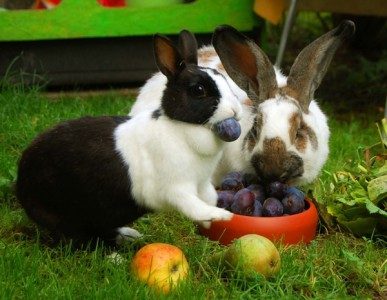
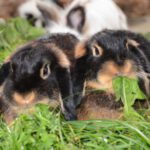
Bunnies eating fresh blueberries outdoors in a garden.
Feeding fruit and firm vegetables can trigger a yeast mycosis and should always be given only as a supplement to a large portion of leafy greens, with fruit being fed as a treat. In the case of a yeast infection, these should be completely eliminated initially.

Intestinal mycoses are caused by yeast fungi (Saccharomycoptes guttulatus). These yeast fungi are not a disease in themselves but indicate an imbalance in digestion. Every rabbit has yeast in its digestive tract, and when an imbalance occurs, they multiply.

The following conditions and feeding errors can lead to the overgrowth of yeasts:

  • Coccidia or worms (in this case, they don’t need treatment and will resolve once the parasites are treated)
  • Gastritis, enteritis
  • Dental spurs, dental diseases
  • The hereditary disease Megacolon
  • Feeding with dry food (including grain-free dry food, pellets, vet food, dried vegetables/fruits, dry bread, treats)
  • A diet too rich in sugar, with excessive grains, starchy foods, root vegetables, or fruits: The main component of the diet should be hay.
  • Sugar-containing medications
  • Diet changes (no treatment for the yeast is necessary)
  • Diseases that lead to reduced/no food intake
  • Spoiled or heavily pesticide-treated food (change hay, fresh food, etc.)
  • Herb-rich hay, dried herbs, or ground feed components that overload the cecum.

Diagnosis

Yeast infections are diagnosed through a fresh fecal sample, as heat can cause even a small number of insignificant yeasts to multiply rapidly. This is especially the case with pooled fecal samples that have been stored or transported without refrigeration.
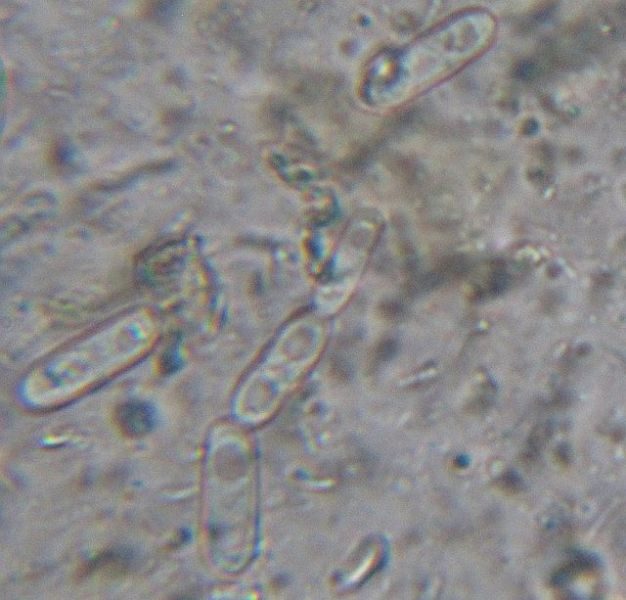
Microscopic view of rabbit parasites, illustrating health risks for pet rabbits.
Yeast fungi under the microscope, “shoe sole-like shape.”

To assess the yeast infection level, the feces should be examined directly in a native smear. This examination can be done at a rabbit-savvy veterinary clinic or sent to a laboratory.

Yeasts are visible under the microscope at approximately 40x magnification (right).

It is important to note that after detecting yeast, the primary cause of the disease must always be investigated (possible causes listed above).

In parasitic fecal samples that have been collected or shipped without refrigeration for an extended period, yeasts are usually a secondary finding due to the storage and transport conditions, without the rabbit actually having a yeast problem.

If a yeast infection is only detected in the feces, it can be distinguished from a true yeast infection, as no symptoms are present.

Treatment

First and foremost, the underlying condition should be treated, and the diet should be adjusted. The yeast will then resolve on its own. Yeasts are naturally present in the cecum in a latent state (without causing issues, in small amounts). When rabbits are improperly fed, or when diseases or diet changes damage the gut flora, the yeast can multiply rapidly.
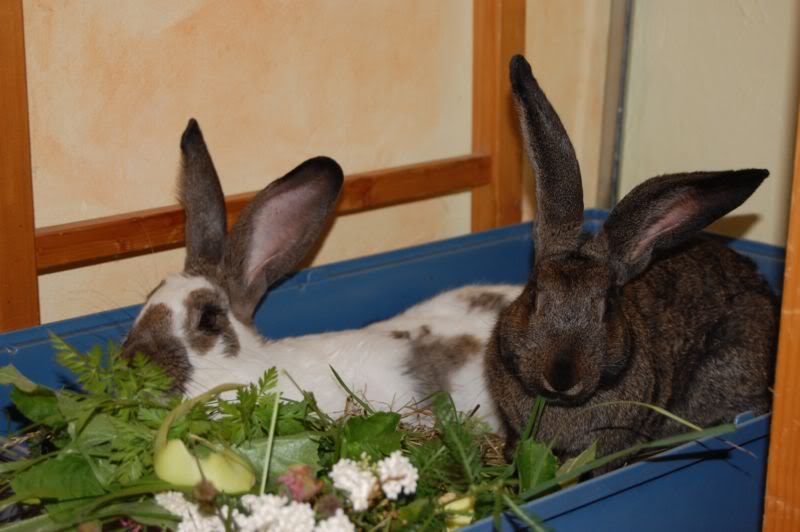
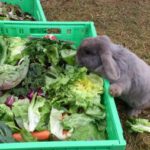
Fresh hay and vegetables for healthy rabbit diet in a cozy enclosure.
An ideal treatment is a diet consisting solely of meadow plants!
  • Yeasts are particularly promoted by feed powders (pellets, extrudates, which are the colorful rings and clumps in dry food) and sugar (e.g., in medications), but also by an overall incorrect diet (dry food, even grain-free, too much grain, pellets, excessive treats, sweets, medications with a high sugar content, bread, too much root vegetables/fruits, and insufficient green food). If the rabbits are switched to a healthy diet—mainly fresh food like meadow herbs, grasses, leafy vegetables, herbs, and limited fruit, hay, dried herbs, and a small amount of seeds—the yeast will naturally disappear.
  • If a yeast infection occurs despite optimal feeding, there is always an underlying condition as the cause! The triggering factor is often related to other diseases that damage digestion.
  • A common cause is intestinal parasites (e.g., worms or coccidia). A fecal sample and a tape test over three days should be examined in a lab using flotation. Often, the vet may not detect coccidia or worms in their sample, especially if only native smears are performed. If necessary, send a follow-up fecal sample for further testing.
  • Dental diseases are also a common cause. If no intestinal parasites are found to be the cause and the diet is optimal, consisting mainly of green food, dental issues should be ruled out. For this, consult a rabbit dental specialist (just as we wouldn’t go to a general doctor for dental pain, right?) and have the head X-rayed from multiple angles, as well as a thorough examination of the teeth through the mouth. Only about 20% of dental issues are visible by looking into the mouth, so X-rays and professional interpretation are crucial!
  • Supportive treatments include the administration of healing clay, as well as brewer’s yeast, apple pectin, or prebiotics/probiotics to help regenerate the gut flora, along with Rodicare Acute.
  • A treatment with Nystatin (60,000-100,000 I.U. per kg orally twice a day for 10 days) should only be used if identifying the cause is taking time and the symptoms are severe (e.g., strong diarrhea), requiring quick action, or to speed up the elimination of the yeast (in addition to the diet change and addressing the underlying cause). Treatment is not always necessary. Most Nystatin medications contain a lot of sugar, which negatively affects the gut flora. During the treatment, many rabbits may eat poorly, and after treatment, the yeast often returns because the sugar has damaged the gut flora. Unfortunately, there is currently no sugar-free version available. Dechra Nystatin is available for rabbits, but it contains sugar, so its use should be carefully considered on a case-by-case basis

Caution: The sugar-free Nystatin for humans (brand name Candio-Hermal Ready Suspension by ALMIRALL HERMAL) contains Xylitol (E 967), which is safe for humans but toxic to rabbits! The LD50 (lethal dose for 50% of the population) is greater than 2,000 mg/kg body weight

Sources/Further Reading:

Herzlichen Dank an den Tierarzt Dr. M. Hallinger vom Labor Exomed (www.exomed.de) für die fachliche Beratung und Unterstützung für diesen Text.

Ewringmann, A. (2009): Kotuntersuchung beim Kaninchen. Tierarzthelfer/in konkret, 5(02), 16-17.
Ewringmann, A. (2016): Leitsymptome beim Kaninchen: Diagnostischer Leitfaden und Therapie. Georg Thieme Verlag.
Hein, J. (2016): Durchfall beim Kaninchen–Ursachen und Therapie. kleintier konkret, 19(S 01), 2-9.
Hein, J. (2017): Durchfallerkrankungen bei Kleinsäugern: Ursache, Diagnostik, Therapie. Schlütersche
Kraft, W., Emmerich, I. U., & Hein, J. (2012): Dosierungsvorschläge für Arzneimittel bei Kleinnagern, Kaninchen und Frettchen. Schattauer Verlag.
Who Is Behind How to rabbit?

Veterinarian Viola Schillinger
Who Is Behind How to Rabbit? Viola Schillinger is a veterinarian who has kept rabbits since childhood and has dedicated much of her professional life to improving their health, welfare, and living conditions. Decades of rabbit keeping, intensive observation, and professional study have given her extensive experience in rabbit health, nutrition, behavior, and species-appropriate husbandry. She shares her knowledge through television appearances, webinars, podcasts, radio programs, articles, and books. In 2008, Viola founded Kaninchenwiese.de, which has grown into a leading German-language resource for rabbit care and health, reaching around 500,000 visitors per month. How to Rabbit brings this knowledge to an international English-speaking audience. The English content is translated and adapted by Erika Kühne Escobar and medically reviewed by Viola Schillinger.

Rabbits need space…


How to rabbit…

…is a guide for the appropriate keeping, nutrition and care of rabbits.

Search

Search Search

Never alone


Last Changes

  • Neutering Male Rabbits 29. September 2026
  • Cookie Policy (EU) 7. September 2026
  • Care 26. August 2026
  • Fruit list 27. September 2026
  • Highly toxic plants 30. July 2026
© Copyright - How to rabbit 2024 - Enfold Theme by Kriesi
  • Link to Instagram
Scroll to top Scroll to top Scroll to top