
Loading
  • Link to Instagram
How to rabbit
  • Home
  • Getting a Rabbit
    • Before You Get Rabbits
      • Rabbit Care for Beginners
      • Rabbit Care in 15 Minutes
      • How Much Do Rabbits Cost?
      • Lop Rabbits: Health & Welfare Concerns
      • Rabbit Lifespan: How Long Do Rabbits Live?
    • Choosing & Bringing Home Rabbits
      • Bringing a Rabbit Home
      • Sexing Rabbits: Male or Female?
      • Neutering Male Rabbits
      • Rabbits and Other Pets
      • Rabbit Adoption Contract
  • Housing
    • Outdoor Housing
      • Winter Care for Rabbits
      • Keeping Rabbits in the Garden
      • Building an Outdoor Rabbit Enclosure
      • Overwintering Rabbits
      • Outdoor Rabbit Run Ideas
    • Indoor Housing
      • Rabbit Litter Training Guide
      • Setting Up a Rabbit Room
      • Vitamin D for Indoor Rabbits
      • Keeping Rabbits Indoors
      • Indoor Rabbit Housing Ideas
      • Keeping Rabbits Cool in Summer
    • Balcony Housing
      • Keeping Rabbits on a Balcony
      • Rabbit-Friendly Balcony
  • Feeding
    • Foods for Rabbits
      • Grass & Meadow Plants
      • Pellets for Rabbits
      • Vegetables
      • Culinary herbs
      • Fruits for rabbits
      • Water & Drinking
    • Feeding Guidelines
      • Feeding Guidelines
      • Common Feeding Mistakes
      • Rabbit Feeding Myths
      • How to Feed a Baby Rabbit
    • Feeding tips
      • How to Transition a Rabbit to a New Diet Safely
      • Winter Diet for Rabbits
      • Nutrition for Young Rabbits
      • Diet Changes in Young Rabbits
    • Nutrition Basics
      • What can rabbits eat?
      • Types of Rabbit Diets
      • Is Hay the Main Food for Rabbits?
      • Tooth Wear & Dental Health
      • Crude Fiber & Carbohydrates
      • Secondary Plant Compounds
      • Food selection
      • Between Scarcity and Abundance
      • Rabbit Digestion
      • Wild Rabbit Nutrition
    • Foraging & Plant Identification
      • Foraging Meadows for Beginners
      • Identifying Coniferous Trees
      • Highly toxic plants
    • Food & Plant Lists
      • Safe Branches for Rabbits
      • Best Vegetables for Rabbits
      • Wild Grasses for Rabbits
      • Aromatic Herbs for Rabbits
      • Foraging & Plant Identification
      • Garden plant list
      • Fruit list
  • Companionship & Bonding
    • Rabbit Bonding
    • After a Rabbit Dies: Should the Other Rabbit Live Alone?
    • Can Rabbits Live Alone?
    • Choosing the Right Rabbit Companion
    • Rabbit Bonding Methods
    • Common Bonding Mistakes
    • Bonding of Young Rabbits
    • Keeping Rabbits in Large Groups
    • Hierarchy Fights & Bullying
    • Bonding Disabled or Ill Rabbits
    • Rabbit Socialization
  • Behavior
    • Handling Rabbits
    • Common Behaviors & Problems
      • Rabbits that don’t get along
      • Handling traumatized rabbits
      • Nibbling & Chewing
      • Digging
      • Humping
      • Kicking, Scratching & Wriggling
      • Biting & Aggressive Behavior
    • Body Language & Senses
      • Rabbit Senses
  • Health
    • General Health
      • Is My Rabbit Sick?
      • Recognizing Pain in Rabbits
      • Sudden Death in Rabbits: Possible Causes
      • Rabbit Health Myths
    • Digestive Disorders
      • Gastric Dilatation in Rabbits
      • Bloating in Rabbits
      • Hairballs & Constipation
      • Rabbit Diarrhea & Mushy Poop
      • Stomach Overload
      • Coccidia in Rabbits
      • Yeast in Rabbits
      • Worms in Rabbits
      • Underweight & Overweight Rabbits
      • Megacolon Syndrome
      • Bacterial Enteritis
      • Appendicitis in Rabbits
    • Skin, Fur & Parasites
      • Molting
      • Flystrike in Rabbits (Myiasis)
      • Mites, Ticks, Fleas & Other Parasites
      • Ear Mites
      • Skin Fungus
      • Wounds & Bite Wounds
      • Abscesses
      • When Rabbits Lick Themselves Raw
      • Sore Hocks in Rabbits
      • Injection Necrosis
      • Tumors & Cancer in Rabbits
      • Skin Inflammation
    • Infectious Diseases
      • Rabbit Snuffles
      • E. cuniculi in Rabbits
      • Rabbit Hemorrhagic Disease (RHD)
      • Myxomatosis
      • Ear Infection
      • Rabbit Syphilis
      • Tularemia (Rabbit Fever)
      • Tetanus
      • Toxoplasmosis
      • Listeriosis
      • Rodentiosis
      • Herpesviruses in rabbits
    • Internal & Organ Diseases
      • Liver Diseases
        • Liver Lobe Torsion
      • Cystitis
      • Bladder Sludge & Bladder Stones
      • Kidney Failure
      • Sex & Neutering
      • Uterine Diseases
      • Heart Diseases
      • Thyroid Diseases
      • Heatstroke in Rabbits
      • Stroke in rabbits
      • Schock
      • Hormonal Disorders
    • Other Health Conditions
      • Floppy Rabbit Syndrome
      • Dental Diseases
        • Jaw Abscesses
        • Nutrition for Dental Disease
      • Eye Diseases in Rabbits
        • Watery Eyes
      • Joint Diseases
      • Bone Fractures & Accidents
      • Cramps & Seizures
      • TThymoma, Lymphoma & Other Tumors
      • Poisoning in Rabbits
      • Mold & Mycotoxins
  • Care
    • Rabbit Poop & Urine: What It Means
    • Housing for Disabled & Elderly Rabbits
    • Wheelchairs & Mobility Support for Rabbits
    • Rabbit Health Check
    • Dirty Bottom in Rabbits
    • Why Does My Rabbit Pee & Poop Everywhere?
    • Saying Goodbye to a Rabbit
  • Offspring
    • Breeding that causes animal suffering
  • Service
    • News
    • About Us
    • Legal Disclosure
    • Privacy Policy
  • Click to open the search input field Click to open the search input field Search
  • Menu Menu

Rabbit syphilis

Occasionally, rabbit populations are affected by rabbit syphilis (spirochetosis). This condition is caused by the bacterium Treponema cuniculi. The disease gets its name due to its similarity to syphilis in humans (Treponema pallidum).

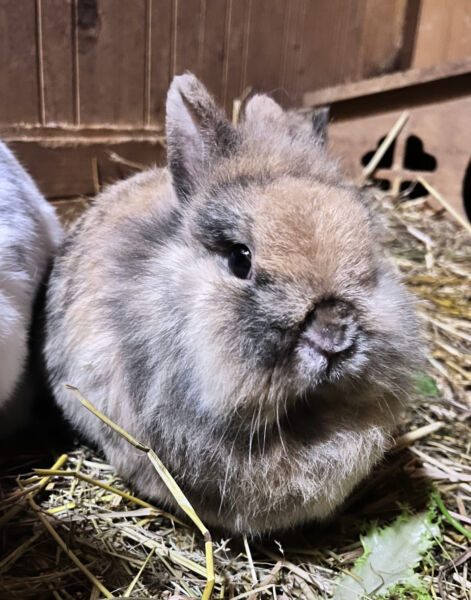
Cute white rabbit resting on hay and leaves in natural setting.

Contents

  • Symptoms: How Can I Recognize Syphilis in Rabbits?
  • Differential Diagnoses: Could It Be Something Other Than Rabbit Syphilis?
  • Transmission and Risk of Infection
  • Treatment: How Can Syphilis Be Treated?

Symptoms: How Can I Recognize Syphilis in Rabbits?

Affected rabbits may exhibit the following:

Swelling and redness (inflammation) or even pus in the genital area, and/or
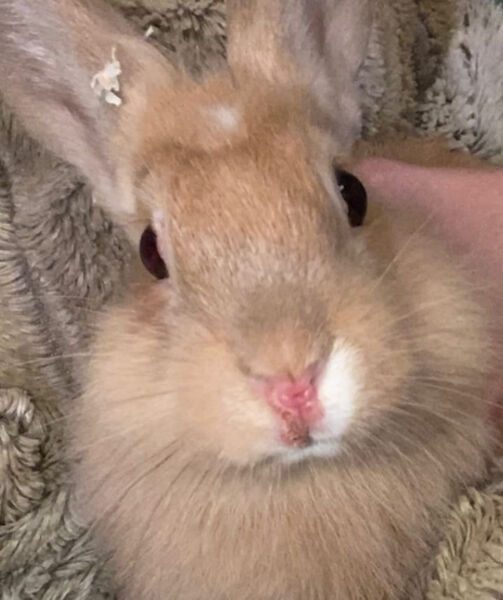
Inflammation and crusts around the nose (often mistaken for rabbit snuffles), and/or
Inflammation and crusts on the lips,
Rarely, inflammation and crusts around the eyes, and occasionally around the mammary glands.
Very rarely, other areas may be affected first.
When there is inflammation in the genital area, diarrhea is often a secondary symptom.

These inflammations progressively spread and, if left untreated, can lead to death in weakened animals. Immunocompetent but untreated rabbits often experience recurring symptoms over a long period or have the disease persistently.

Typically, affected rabbits initially show skin changes in only one area (either on the nose or the genital area).
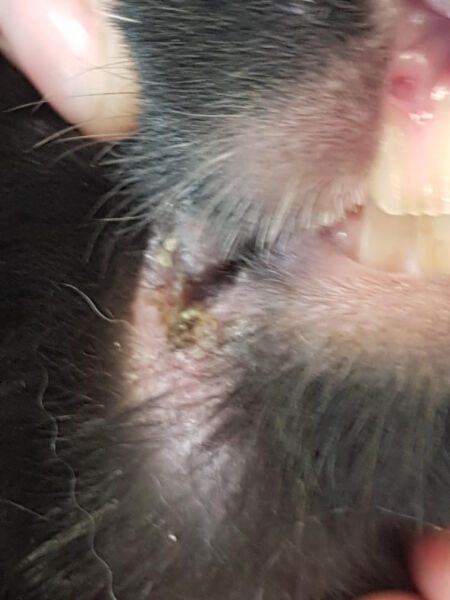
Difficult to see, but appears to be a close-up of a rabbit's skin or mouth in need of veterinary care.

The diagnosis is usually made based on the clinical presentation as a suspected case. However, it is also possible to confirm the pathogen through a blood test, though this process takes some time (approximately two weeks).

Differential Diagnoses: Could It Be Something Other Than Rabbit Syphilis?

The clinical symptoms can often resemble those of myxomatosis, rabbit snuffles, or skin irritation caused by diarrhea, stuck cecotropes, or shaving-related irritation after diarrhea. Because of this, the diagnosis may not always be straightforward. In unclear cases, confirming the pathogen with a laboratory test is recommended (this takes approximately two weeks).

For mild symptoms, it may be reasonable to wait and apply local treatment initially—for example, if the area was cleaned after diarrhea and appears irritated. However, if the inflamed areas do not heal promptly, if no underlying cause for the diarrhea can be found (such as through a fecal exam for parasites or dental X-rays), or if the symptoms keep recurring, a laboratory pathogen test should be performed without delay.

Important: Be sure to visit a veterinarian experienced with rabbits. Many veterinarians are highly knowledgeable about dogs and cats but lack the specialized expertise required for rabbits. This can lead to conditions specific to rabbits, such as rabbit syphilis or dental disorders, being overlooked or improperly treated.
Tiny rabbit, cute black-and-white bunny, adorable pet rabbit on the floor, young rabbit with soft fur and big eyes.

Transmission and Risk of Infection

Especially if left untreated, syphilis often spreads rapidly within a population, affecting multiple rabbits. Infected rabbits can also experience relapses. However, rabbits that have been successfully treated and no longer show symptoms typically do not transmit the disease. The infection is transmitted through mating and contact with rabbit saliva (bites, licking). Young rabbits are usually infected by their mother during the first few days of life. Therefore, syphilis is considered an exclusion disease for breeding. Currently, a vaccine is not available.

Treatment: How Can Syphilis Be Treated?

Standard antibiotics typically do not work, so it is crucial to choose one of the following antibiotics:

  • Penicillin (usually Duphamox, 10-20 mg/kg once daily, or Veracin RS 0.1 ml/kg once daily). However, penicillin is often fatal for rabbits if given orally, so it must always be administered via injection. It is also possible to conduct an antibiogram to identify which antibiotic is effective.
  • Azithromycin (e.g., Zithromax, 15 to 50 mg/kg per day), given orally (by mouth).
    In addition, the affected area is often treated with antibiotic eye drops and ointments.
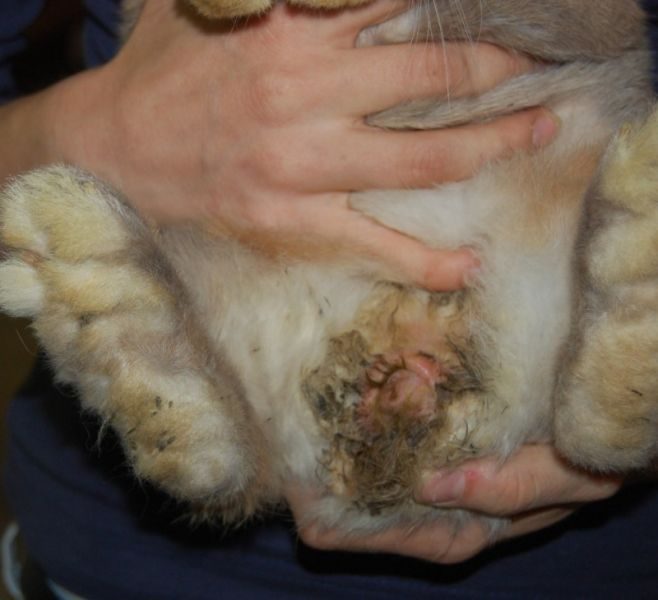
Injured rabbit being examined for health issues, veterinary care for rabbit injuries, caring for injured or sick rabbits.
Syphilis on the genital area with swelling and diarrhea.

The penicillin treatment should be supported by eliminating stressors (poor living or feeding conditions, stress within the group, frequent handling, etc.). The immune system can also be supported with (sea) radish, which has antibacterial properties and can be easily mixed with banana (or another favorite food) for administration. It should be introduced gradually (begin with small amounts and increase slowly) and given beyond the healing period, though it is typically effective quite quickly.

Pre- and probiotics can be helpful, as both antibiotics can negatively affect digestion.

For additional support, zinc ointment or coconut oil (available online, in health food stores, or pharmacies) can be used for skin care. This helps reduce inflammation, promotes healing, and kills some of the bacteria. Apply it daily to the affected areas.

Colloidal silver can also be used externally (apply to the affected areas) to combat the pathogen.

Often, supporting the immune system is also necessary.

All of these supportive measures should be used as local treatments alongside penicillin and not as the sole therapy.
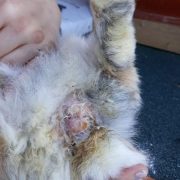
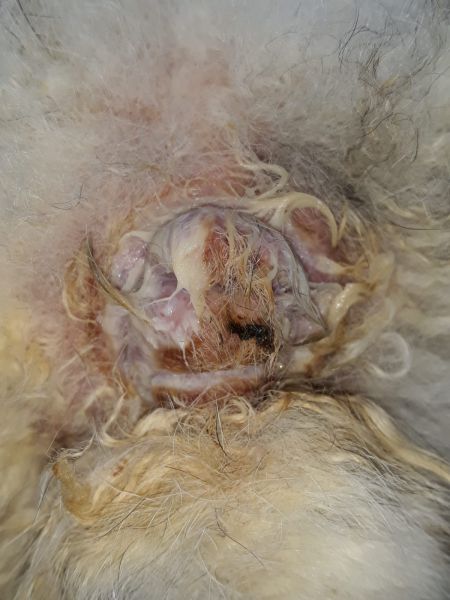
Open wound on a rabbit’s abdomen with injury and fur loss.
Deceased rabbit ear with visible infection and hair loss, health issues in rabbits.

Rabbit syphilis before and after treatment with antibiotics and zinc ointment:
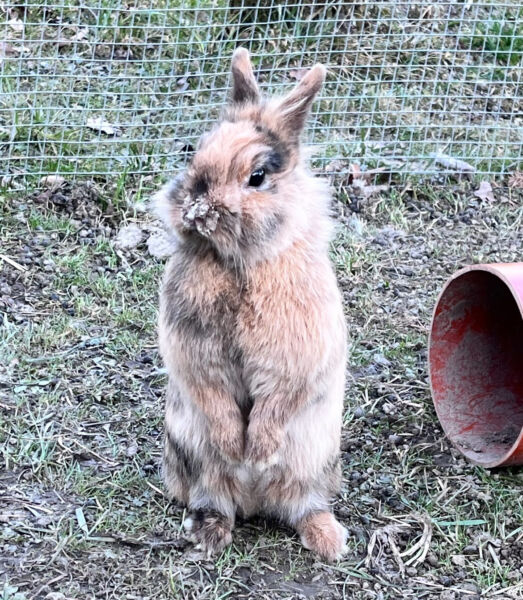
Fluffy brown rabbit standing upright outdoors in a garden enclosure.
Adorable brown rabbit resting on hay in a cozy bunny hutch.

Before-and-after photos of rabbit syphilis in a young rabbit.

Fluffy rabbit with large ears and adorable facial features, perfect for pet care and rabbit husbandry tips.
Tiny domesticated rabbit close-up, fluffy fur, pink nose, big eyes, cute pet rabbit for beginners.

Who Is Behind How to rabbit?

Veterinarian Viola Schillinger
Who Is Behind How to Rabbit? Viola Schillinger is a veterinarian who has kept rabbits since childhood and has dedicated much of her professional life to improving their health, welfare, and living conditions. Decades of rabbit keeping, intensive observation, and professional study have given her extensive experience in rabbit health, nutrition, behavior, and species-appropriate husbandry. She shares her knowledge through television appearances, webinars, podcasts, radio programs, articles, and books. In 2008, Viola founded Kaninchenwiese.de, which has grown into a leading German-language resource for rabbit care and health, reaching around 500,000 visitors per month. How to Rabbit brings this knowledge to an international English-speaking audience. The English content is translated and adapted by Erika Kühne Escobar and medically reviewed by Viola Schillinger.

Rabbits need space…


How to rabbit…

…is a guide for the appropriate keeping, nutrition and care of rabbits.

Search

Search Search

Never alone


Last Changes

  • Neutering Male Rabbits 2. October 2026
  • Cookie Policy (EU) 7. September 2026
  • Care 26. August 2026
  • Fruit list 27. September 2026
  • Highly toxic plants 30. July 2026
© Copyright - How to rabbit 2024 - Enfold Theme by Kriesi
  • Link to Instagram
Scroll to top Scroll to top Scroll to top