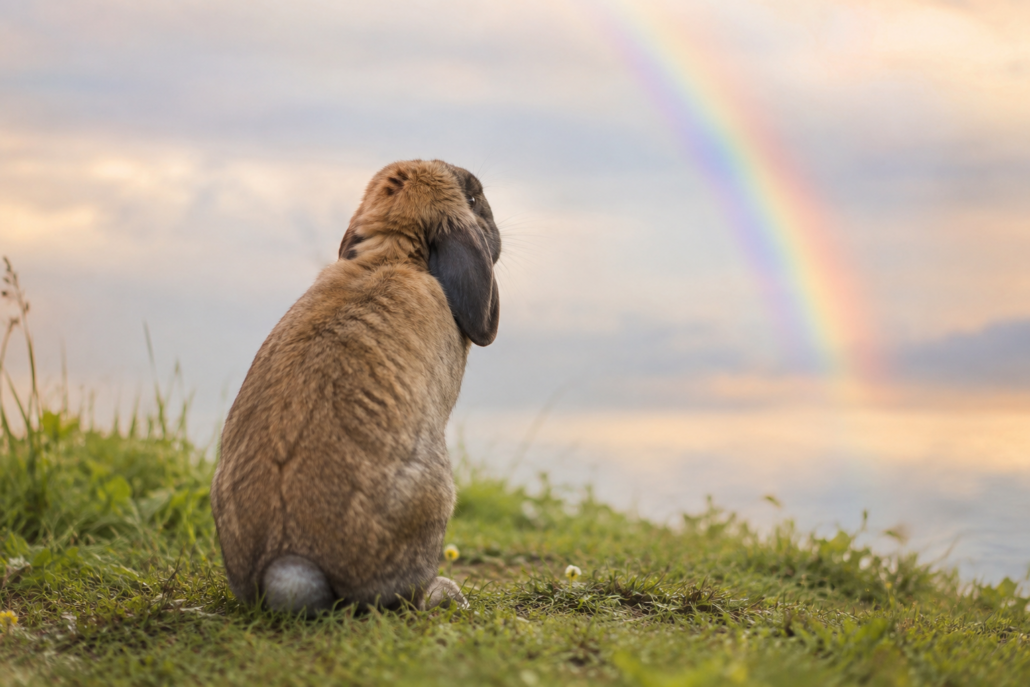

The Right Time: Euthanasia and Natural Death in Rabbits
Life begins and life ends. It is part of the natural cycle of all living beings. However, when a rabbit is seriously ill, suffering constantly, or there is no longer any realistic chance of improvement, there comes a moment when we must ask ourselves what quality of life truly remains.
As long as the animal still has the will to live, there are treatment options available, or it can adapt to its limitations, euthanasia is usually not necessary. Many rabbits can continue to have a good quality of life even with certain disabilities, such as blindness, reduced mobility, or after an amputation. With proper care, a calm environment, and effective pain management, these animals can still enjoy life.
The situation changes when suffering can no longer be relieved. If pain persists despite medication, the rabbit stops eating, withdraws, barely reacts, or its vital functions begin to fail, it may be time to let go. In such cases, euthanasia can become the final act of love and responsibility toward the animal, sparing it from a long and painful decline.
A veterinarian can help assess the rabbit’s condition and the realistic chances of recovery. Even so, the final decision always belongs to the person who lives with the animal and knows its behavior and ways of expressing suffering best. Listening to one’s own intuition is also important.
If the decision for euthanasia is made, many veterinarians offer the possibility of performing it at home, in a calm and familiar environment, to reduce the animal’s stress during its final moments.
Euthanasia should always be carried out humanely. The correct procedure is for the rabbit to first receive sedation or deep anesthesia, and only afterward the medication that gently stops the vital functions. Administering a lethal injection without prior anesthesia is not ethical and can cause severe suffering.
Saying goodbye to a rabbit is never easy. But sometimes, allowing them to leave without pain is also a form of love.
The Rabbit’s Body After Death
Losing a rabbit is a deeply painful experience. Alongside the emotional grief, many people are confronted for the first time with difficult decisions about what to do with the body of their companion. There are different possibilities, and each depends on personal circumstances and on how each person wishes to say goodbye to their animal.
The Veterinarian and Collection of the Body
Most veterinary clinics offer to take care of the animal’s body after death through specialized collection services and communal cremation. Depending on the clinic, this service may be free of charge or available at a reduced cost.
However, many people prefer not to choose this option because they wish to say goodbye to their rabbit in a more intimate, peaceful, and respectful way.
Cremation at a Pet Crematorium
An increasingly common option is cremation at a pet crematorium. Although it is usually more expensive, it allows for a more personal farewell.
These facilities often guide and support families throughout the entire process. Before the cremation, an urn is usually selected in which the animal’s ashes will later be returned. There are individual cremations, where the ashes belong exclusively to the animal itself, and communal cremations.
For many people, keeping the ashes or having a symbolic place of remembrance can help during the grieving process.
Pet Cemeteries
In many cities there are pet cemeteries where it is possible to rent a grave and bury the rabbit in a dignified way. Some people find comfort in being able to visit this place of remembrance afterward.
Burial in the Garden
One of the most personal and common ways of saying goodbye is still burial in one’s own garden, provided there is private land available and local laws allow it.
During winter, when the ground is frozen, some veterinarians offer temporary storage of the body in freezing conditions until burial becomes possible.
If it is not emotionally overwhelming, the body can also be temporarily stored in a household freezer inside a well-sealed bag.
The grave should contain only biodegradable materials, such as hay, straw, natural fabrics, or wood. The rabbit may be buried directly, in a cardboard box, in a small coffin, or placed on a soft surface.
It is also advisable to cover the grave with large stones to prevent foxes or other animals from digging up the body.

Legal Aspects
In Germany, domestic rabbits may be buried on private property — or on someone else’s property with the owner’s permission — as long as the land is not located within a water protection area.
The animal must not have suffered from notifiable diseases such as tularemia, echinococcosis, toxoplasmosis, or certain orthopoxviruses. Diseases such as myxomatosis or RHD are not notifiable in Germany. If in doubt, it is always advisable to consult a veterinarian.
The grave must not be located next to public paths and should be covered with at least 50 centimeters of soil.
Burial in Nature
Some people who do not have a garden look for a quiet place in nature to bury their animal. However, this practice is prohibited by law in many countries.
Grief in Rabbits
When a rabbit dies, the companion left behind often suffers deeply from the loss. Rabbits form very strong bonds with one another, and the sudden absence of a companion can affect them both emotionally and physically.
Especially when a rabbit is left alone, it is not uncommon for it to become ill shortly afterward. In older animals, it may even happen that they pass away soon after losing their companion.
Some rabbits stop eating, isolate themselves, or lose interest in their surroundings. Many become quieter, move less, and gain weight. The appearance of illnesses such as E. cuniculi after the loss of a companion is also frequently observed.
For this reason, when a rabbit is left alone, it is very important to provide companionship again as soon as possible. If one wishes to continue keeping rabbits, a new rabbit can be introduced or the animal can be integrated into another existing group.
If long-term rabbit keeping is no longer desired, it is often recommended to look for a companion of a similar age or to contact shelters and specialized rescue organizations. Some organizations even offer “temporary companion rabbits” that stay with the animal until the end of its life and are later returned to the organization.
A Rabbit Has Died: Should the Remaining Rabbit Be Left Alone?
Grief and Remembering a Rabbit
Losing a rabbit with whom years of life have been shared leaves a deep emptiness behind. Although many people may see it as “just an animal,” anyone who has lived with a rabbit knows how much affection, routine, and special moments are part of that bond.
Each person experiences grief differently, and there is no right or wrong way to cope with it. Some people need to talk a lot about the loss; others prefer to process their pain more quietly. What matters is giving oneself time and allowing those feelings to exist.
Many people find comfort in saying goodbye to their rabbit in a special way: visiting the grave, placing flowers, lighting a candle, or creating a small memorial corner with photographs, paw prints, toys, or objects that remind them of their companion. Others prefer to put those things away for a while because seeing them feels too painful. Both reactions are completely normal.
Grief can also appear unexpectedly days or even weeks later. There are moments when the absence becomes especially noticeable: while preparing food, entering the room, or looking at a place where the rabbit used to rest. Gradually, the pain changes, and memories begin to occupy more space than sadness.
Many people find comfort in thinking that although a rabbit’s life is much shorter than ours, during that time it received love, care, and a safe home. And that has enormous value.
There is also a well-known story called The Rainbow Bridge, which has comforted many people after the loss of an animal companion. Perhaps it may also help you through the farewell.
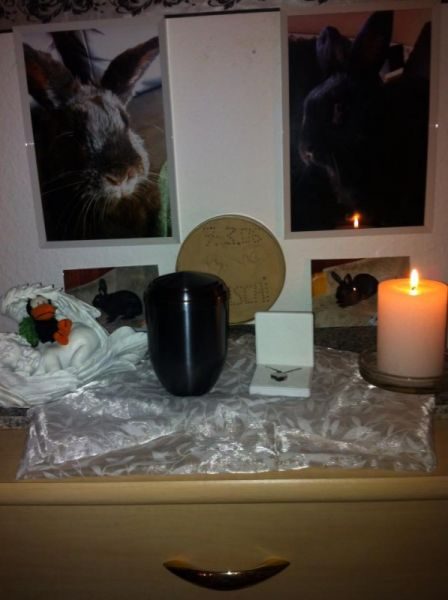
The Rainbow Bridge
There is a bridge connecting Heaven and Earth.
Because it shines with so many colors, it is called the Rainbow Bridge.On the other side of the bridge lies a beautiful place,
with flower-filled meadows, green grass, and lush forests.When a beloved animal must leave this world,
it arrives in that wonderful place.There is always plenty of food and water there,
and the weather is warm and gentle, like an eternal spring.
Old animals become young again,
and those who were sick regain their health.
All of them run and play together happily throughout the day.And yet, something is missing for them to be completely happy:
they are not together with the people they loved on Earth.So the days pass as they play together,
until suddenly, one of them stops and looks into the distance.Its nose catches a familiar scent,
its ears rise,
and its eyes begin to shine brightly.Then it leaves the group and starts running across the green grass.
It runs faster and faster,
because it has seen you.And when you and your beloved companion are finally reunited,
the joy of that moment has no end.You hold them tightly in your arms,
they kiss you again and again,
and your hands once more stroke their soft fur.At last, you look again into the eyes of that deeply loved friend,
who never truly disappeared from your heart.And then, together, you cross the Rainbow Bridge,
never to be separated again.