

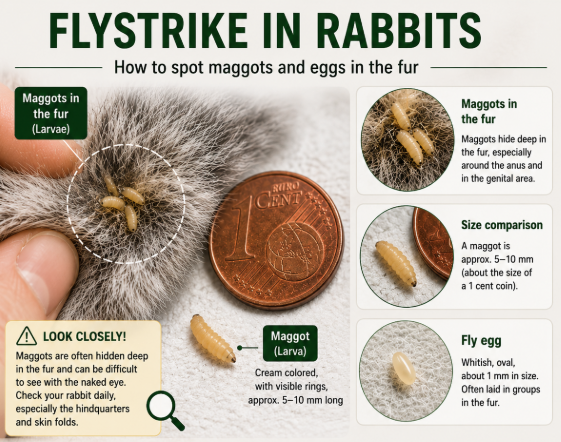
Rabbit fly strike, also called myiasis, is a life-threatening emergency caused by blowfly maggots. Flies lay eggs on dirty fur, wounds, urine-soaked skin, or feces around the rabbit’s hindquarters. Once the eggs hatch, the maggots begin feeding on the rabbit’s tissue.
Fly strike mainly affects sick, elderly, overweight, disabled, or weakened rabbits during warm summer months. Rabbits with diarrhea, wounds, obesity, arthritis, dental disease, or mobility problems are especially at risk because they may struggle to groom themselves properly.
Blowfly eggs can hatch within 8–12 hours, and severe tissue damage can develop very quickly. Without immediate veterinary treatment, fly strike is often fatal.
Symptoms of Fly Strike in Rabbits
Early symptoms can be difficult to notice, so close inspection is extremely important.
Signs of rabbit fly strike include:
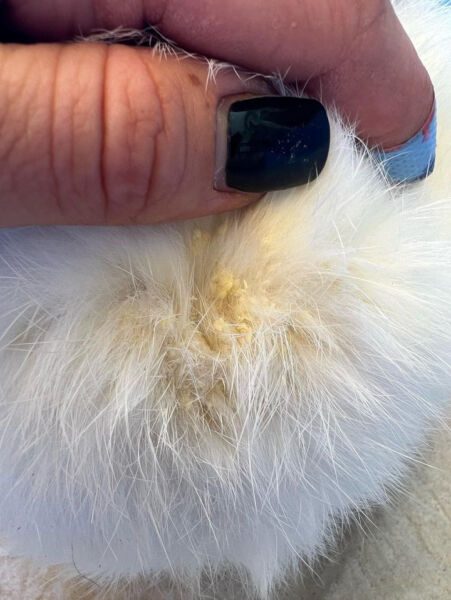
- Small white or yellowish eggs in the fur
- Tiny maggots around the anus, genitals, or wounds
- Dirty or wet fur around the hindquarters
- Strong odor from the skin or wound
- Red, inflamed, or irritated skin
- Fur loss or peeling skin
- Lethargy and weakness
- Loss of appetite
- Hiding or unusual behavior
- Restlessness, twitching, or excessive grooming
Maggots often hide deep inside skin folds around the genital area and may be difficult to spot in thick undercoat fur.
They are often hidden in the dark skin folds to the right and left of the genital area (inguinal glands, perineal glands, genital corners).
What Causes Fly Strike?
Fly strike develops when flies are attracted to moisture, feces, urine, blood, or infected wounds on the rabbit’s body.
Rabbits at highest risk include:
- Rabbits with diarrhea
- Overweight rabbits unable to clean themselves
- Elderly rabbits
- Rabbits with arthritis or mobility problems
- Weak or sick rabbits
- Rabbits with urine scald
- Long-haired rabbits
- Rabbits with open wounds
Healthy, active rabbits are less commonly affected, but any rabbit can develop fly strike under the right conditions.
How Fast Can Fly Strike Kill a Rabbit?
Fly strike can become fatal within 24 hours.
Blowfly eggs may hatch in as little as 8 hours during warm weather. Once the maggots hatch, they quickly burrow into the skin and tissue, causing severe pain, infections, internal bleeding, shock, and organ damage.
This is a true veterinary emergency.
First Aid for Rabbit Fly Strike
If you discover maggots or fly eggs on your rabbit, contact an emergency veterinarian immediately.
Before transport:
- Carefully remove visible maggots with tweezers. By placing the rabbit in a warm water bath, the maggots can be encouraged to come out. They flee from light and can be lured out by darkness and warmth. However, caution is required! If there are any open wounds, do not bathe the rabbit, as water could enter its body.
- Keep the rabbit warm and calm
- Check the entire body thoroughly
- Remove dirty bedding
- Monitor eating and behavior closely
A warm water bath may encourage maggots to emerge, but open wounds must never be submerged because water can enter damaged tissue.
Maggots avoid light and are attracted to warmth, so they often hide deep inside warm skin folds around the genitals and hindquarters.
We recommend keeping Nitenpyram (Capstar® 1mg/kg orally) in the emergency first aid kit and using it in an emergency. This medication causes the maggots to quickly flee the rabbit. Some veterinarians may not have this medication on hand, and it could potentially save the rabbit’s life.
Veterinary Treatment
Immediate veterinary treatment is essential.
The veterinarian will usually:
- Remove maggots and eggs
- Clip or shave contaminated fur
- Clean and disinfect wounds
- Treat infections and inflammation
- Administer pain relief
- Provide fluids and supportive care
- Use antiparasitic medications if necessary
Commonly used medications may include ivermectin-based treatments, selamectin, or Nitenpyram (Capstar®), depending on the individual case and veterinary judgment.
Severely affected rabbits often require hospitalization and intensive monitoring because internal tissue damage may not be immediately visible.
Veterinary Treatment for Rabbit Fly Strike Wounds
The veterinarian will remove all visible maggots and eggs, often by shaving or trimming the fur around the affected area. The skin and wounds are then cleaned and disinfected using an antibacterial shampoo or antiseptic wound solution such as Rivanol®.
Blowfly maggots prefer warm, dark skin folds around the genital area and may hide deep inside the fur. Because they avoid light, gentle warm air from a blow dryer after cleaning may encourage hidden maggots to emerge.
Some rabbit owners use coconut oil on irritated skin surrounding the wound to help soothe and protect the skin. However, it should never be applied directly to open wounds unless recommended by a veterinarian.
Veterinarians may administer antiparasitic medications such as ivermectin-based treatments, Stronghold®, or Nitenpyram (Capstar®) to eliminate remaining maggots. Depending on the severity, rabbits may also require pain relief, antibiotics, fluids, wound care, and close monitoring.
Fly Strike Necrosis and Recovery
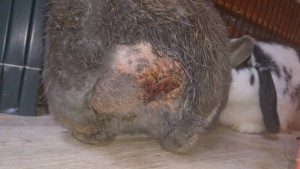
Rabbits with severe fly strike often require intensive monitoring because the extent of internal tissue damage is not always immediately visible. Depending on the severity, treatment may include pain relief, wound care, fluids, antibiotics, and supportive care to stabilize the rabbit.
Even after treatment, rabbits should be checked several times daily for overlooked maggots and monitored closely for appetite, behavior, and overall condition.
Fly strike is frequently fatal if not detected and treated early. In severe cases with extensive tissue damage or organ involvement, euthanasia may be necessary. The underlying cause of the infestation, such as diarrhea, obesity, wounds, or mobility problems, must also be treated to prevent reinfestation.
Can a Rabbit Survive Fly Strike?
Yes, but survival depends on how quickly treatment begins.
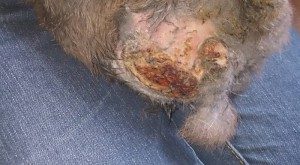
Rabbits treated during the early stages often recover well. Advanced fly strike cases, however, may cause severe tissue destruction, infections, organ damage, or shock.
Unfortunately, delayed treatment is frequently fatal.
How to Prevent Fly Strike in Rabbits
Prevention is extremely important during warm weather.

Keep the Environment Clean
- Clean litter boxes daily
- Remove urine-soaked bedding quickly
- Clean diarrhea immediately
- Perform regular deep-cleaning of the enclosure
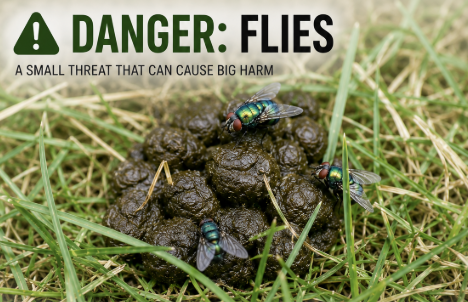
Flies are strongly attracted to urine, feces, and damp organic material.
During the summer months, litter boxes should be cleaned at least every one to two days, ensuring that heavy soiling is removed. Diarrhea or any substances that attract flies should be cleaned up multiple times a day. The entire enclosure should be thoroughly cleaned weekly. Urine and feces attract flies, so it’s a good idea to wipe down the enclosure with vinegar essence and clean up any diarrhea, as this strongly repels flies.
Important
The best prevention is to check the rabbits twice daily to ensure they are moving normally, eating properly, and displaying their usual behavior. Any changes in behavior, reduced appetite, or signs of retreat should prompt an immediate thorough inspection. Rabbits with diarrhea or wounds must also be checked twice daily (including the genital areas!) and treated by a veterinarian right away. Diarrhea can generally be treated. This way, you can spot fly maggots before they cause any harm!
Check High-Risk Rabbits Twice Daily
Carefully inspect:
- The anus
- Genital folds
- Tail area
- Wounds
- Dirty fur
This is especially important for elderly, overweight, disabled, or sick rabbits.
Long-haired rabbits may benefit from trimming or shaving around the hindquarters.
Use Fly Screens
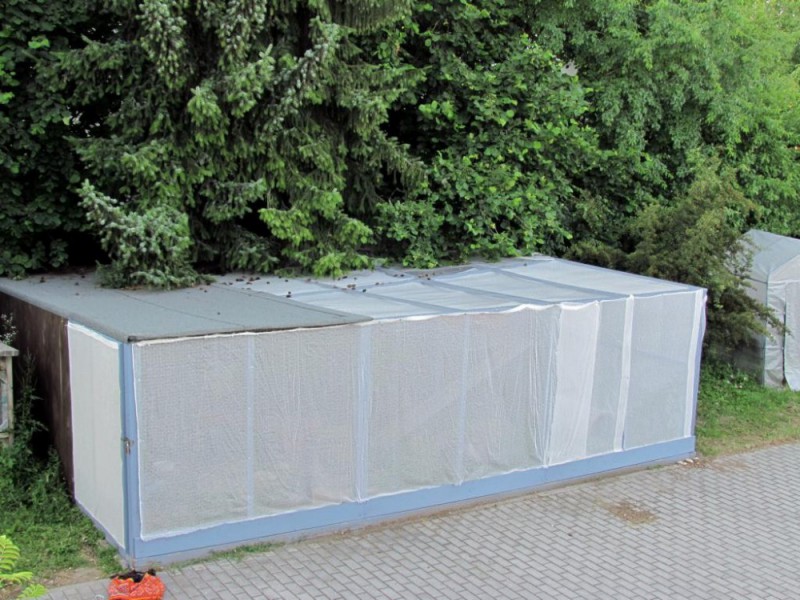
Fly screens are one of the safest and most effective preventive measures.
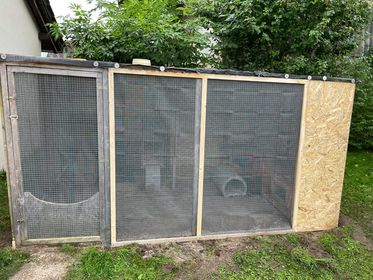
You can install fly screens:
- On indoor windows
- Around outdoor enclosures
- Over aviaries and hutches
This helps prevent flies from reaching vulnerable rabbits.
Natural Fly Repellents
Some plants may help repel flies naturally, including:
- Lavender
- Geraniums
- Tomato leaves
- Walnut tree leaves
These should only be used as supportive measures and not as a replacement for proper hygiene and daily inspections.
Fly Strike Prevention Products
Spot-on Treatment for Preventing Fly Strike in Vulnerable Rabbits
These products are applied to the back of the rabbit’s neck and help ensure that any maggots that infest the rabbit will die quickly, causing minimal damage or even preventing fatal consequences. These treatments are available from your veterinarian.
Recommended Products:
Permethrin & Imidacloprid (Advantix®): Available over-the-counter, see the link. Apply 10-30 mg/kg every two weeks to the skin on the neck (part the fur). Be careful not to apply too much to one spot! A 40mg spot-on is suitable for rabbits weighing 1.3 to 4kg. Alternatively, a spot-on with a higher mg dosage can be applied at 0.1 ml/kg. Some rabbits may experience mild skin reactions (hair loss, irritation). This product is toxic to cats (e.g., if you have cats that may lick the rabbits).
Other Options:
Fluralaner (Bravecto®): Lasts about 2 months.
Selamectin and Sarolaner (Stronghold Plus®).
Pyrethrum (Ixotan®).
Pyrethrum (Inuzid-Spray®): Apply daily to your hand or cloth and rub against the fur, especially in vulnerable areas.
Permethrin (Exspot®).
Deltamethrin (Butox® Protect 7.5 mg/ml pour-on): Apply evenly along the rabbit’s backline from the base of the skull to the tail base, refreshing every 35 days.
Vectra 3D (Dinotefuran, Pyriproxifen, Permethrin): Use in the dog dosage. Be cautious as this is toxic to cats—choose a different product if you have close contact with cats.
Nexgard Spectra (Afoxolaner and Milbemycinoxim) or FRONTPRO (Afoxolaner) in the dog dosage, refreshing every 4 weeks.
In some countries, additional products may be available, such as Dicyclanil (CLIK 5% pour-on) (30–100 mg/kg Spot-on, applied once in the spring for 16 weeks of protection) or Cyromazin (Reaguard rabbits).
Discuss with your veterinarian whether preventive treatment is appropriate and necessary in your specific case.
Insecticides and Fly Control
Fly traps, UV light traps, fly strips, insect sprays, and insecticide-coated window adhesives can help reduce flies around rabbit enclosures. However, rabbits must never come into direct contact with insecticides.
Insecticides should only be used outside the enclosure and on surfaces the rabbits cannot reach or lick. If airborne insect sprays are used, rabbits should be removed during application and only returned once the area is fully ventilated.
Products such as Ardap® spray are commonly used for environmental fly control, but they must never be applied to surfaces accessible to rabbits.
Rabbits Most at Risk
The rabbits most vulnerable to fly strike include:
- Elderly rabbits
- Obese rabbits
- Rabbits with arthritis
- Rabbits with dental disease
- Rabbits with diarrhea
- Rabbits with wounds
- Disabled rabbits
- Long-haired rabbits
Any rabbit that cannot properly clean itself is at significantly higher risk.
Sick and elderly rabbits, especially those who cannot groom themselves (such as weak rabbits, rabbits with arthritis or other diseases that limit movement), as well as those with diarrhea, urine or other soiling, or wounds in their fur, should be kept indoors (with fly screens) or cleaned several times a day and checked for maggots. Long-haired rabbits should have the area around their anus shaved. Weak rabbits with diarrhea are particularly vulnerable.
Healthy, active rabbits are generally not affected. Always address any health issues in sick rabbits promptly. Rabbits with wounds, urine-soaking, feces on their hindquarters, weakened rabbits, or those struggling to groom themselves (e.g., due to obesity or joint disease) are at much higher risk.
Frequently Asked Questions
Is fly strike painful for rabbits?
Yes. Fly strike causes severe pain, tissue damage, inflammation, and infection.
Can indoor rabbits get fly strike?
Yes. Indoor rabbits can also develop fly strike if flies enter the home.
How often should rabbits be checked in summer?
High-risk rabbits should be checked at least twice daily during warm weather.

Sources include:
Beck, W., & Pantchev, N. (2012): Praktische Parasitologie bei Heimtieren: Kleinsäuger-Vögel-Reptilien-Bienen. Schlütersche.
Ewringmann, A. (2016): Leitsymptome beim Kaninchen: diagnostischer Leitfaden und Therapie; 33 Tabellen. Georg Thieme Verlag.
Kraft, W., Emmerich, I. U., & Hein, J. (2012). Dosierungsvorschläge für Arzneimittel bei Kleinnagern, Kaninchen und Frettchen. Schattauer Verlag.
Zinke, J. (2004): Ganzheitliche Behandlung von Kaninchen und Meerschweinchen: Anatomie, Pathologie, Praxiserfahrungen; 14 Tabellen. Georg Thieme Verlag.