
Loading
  • Link to Instagram
How to rabbit
  • Home
  • Getting a Rabbit
    • Before You Get Rabbits
      • Rabbit Care for Beginners
      • Rabbit Care in 15 Minutes
      • How Much Do Rabbits Cost?
      • Lop Rabbits: Health & Welfare Concerns
      • Rabbit Lifespan: How Long Do Rabbits Live?
    • Choosing & Bringing Home Rabbits
      • Bringing a Rabbit Home
      • Sexing Rabbits: Male or Female?
      • Neutering Male Rabbits
      • Rabbits and Other Pets
      • Rabbit Adoption Contract
  • Housing
    • Outdoor Housing
      • Winter Care for Rabbits
      • Keeping Rabbits in the Garden
      • Building an Outdoor Rabbit Enclosure
      • Overwintering Rabbits
      • Outdoor Rabbit Run Ideas
    • Indoor Housing
      • Rabbit Litter Training Guide
      • Setting Up a Rabbit Room
      • Vitamin D for Indoor Rabbits
      • Keeping Rabbits Indoors
      • Indoor Rabbit Housing Ideas
      • Keeping Rabbits Cool in Summer
    • Balcony Housing
      • Keeping Rabbits on a Balcony
      • Rabbit-Friendly Balcony
  • Feeding
    • Foods for Rabbits
      • Grass & Meadow Plants
      • Pellets for Rabbits
      • Vegetables
      • Culinary herbs
      • Fruits for rabbits
      • Water & Drinking
    • Feeding Guidelines
      • Feeding Guidelines
      • Common Feeding Mistakes
      • Rabbit Feeding Myths
      • How to Feed a Baby Rabbit
    • Feeding tips
      • How to Transition a Rabbit to a New Diet Safely
      • Winter Diet for Rabbits
      • Nutrition for Young Rabbits
      • Diet Changes in Young Rabbits
    • Nutrition Basics
      • What can rabbits eat?
      • Types of Rabbit Diets
      • Is Hay the Main Food for Rabbits?
      • Tooth Wear & Dental Health
      • Crude Fiber & Carbohydrates
      • Secondary Plant Compounds
      • Food selection
      • Between Scarcity and Abundance
      • Rabbit Digestion
      • Wild Rabbit Nutrition
    • Foraging & Plant Identification
      • Foraging Meadows for Beginners
      • Identifying Coniferous Trees
      • Highly toxic plants
    • Food & Plant Lists
      • Safe Branches for Rabbits
      • Best Vegetables for Rabbits
      • Wild Grasses for Rabbits
      • Aromatic Herbs for Rabbits
      • Foraging & Plant Identification
      • Garden plant list
      • Fruit list
  • Companionship & Bonding
    • Rabbit Bonding
    • After a Rabbit Dies: Should the Other Rabbit Live Alone?
    • Can Rabbits Live Alone?
    • Choosing the Right Rabbit Companion
    • Rabbit Bonding Methods
    • Common Bonding Mistakes
    • Bonding of Young Rabbits
    • Keeping Rabbits in Large Groups
    • Hierarchy Fights & Bullying
    • Bonding Disabled or Ill Rabbits
    • Rabbit Socialization
  • Behavior
    • Handling Rabbits
    • Common Behaviors & Problems
      • Rabbits that don’t get along
      • Handling traumatized rabbits
      • Nibbling & Chewing
      • Digging
      • Humping
      • Kicking, Scratching & Wriggling
      • Biting & Aggressive Behavior
    • Body Language & Senses
      • Rabbit Senses
  • Health
    • General Health
      • Is My Rabbit Sick?
      • Recognizing Pain in Rabbits
      • Sudden Death in Rabbits: Possible Causes
      • Rabbit Health Myths
    • Digestive Disorders
      • Gastric Dilatation in Rabbits
      • Bloating in Rabbits
      • Hairballs & Constipation
      • Rabbit Diarrhea & Mushy Poop
      • Stomach Overload
      • Coccidia in Rabbits
      • Yeast in Rabbits
      • Worms in Rabbits
      • Underweight & Overweight Rabbits
      • Megacolon Syndrome
      • Bacterial Enteritis
      • Appendicitis in Rabbits
    • Skin, Fur & Parasites
      • Molting
      • Flystrike in Rabbits (Myiasis)
      • Mites, Ticks, Fleas & Other Parasites
      • Ear Mites
      • Skin Fungus
      • Wounds & Bite Wounds
      • Abscesses
      • When Rabbits Lick Themselves Raw
      • Sore Hocks in Rabbits
      • Injection Necrosis
      • Tumors & Cancer in Rabbits
      • Skin Inflammation
    • Infectious Diseases
      • Rabbit Snuffles
      • E. cuniculi in Rabbits
      • Rabbit Hemorrhagic Disease (RHD)
      • Myxomatosis
      • Ear Infection
      • Rabbit Syphilis
      • Tularemia (Rabbit Fever)
      • Tetanus
      • Toxoplasmosis
      • Listeriosis
      • Rodentiosis
      • Herpesviruses in rabbits
    • Internal & Organ Diseases
      • Liver Diseases
        • Liver Lobe Torsion
      • Cystitis
      • Bladder Sludge & Bladder Stones
      • Kidney Failure
      • Sex & Neutering
      • Uterine Diseases
      • Heart Diseases
      • Thyroid Diseases
      • Heatstroke in Rabbits
      • Stroke in rabbits
      • Schock
      • Hormonal Disorders
    • Other Health Conditions
      • Floppy Rabbit Syndrome
      • Dental Diseases
        • Jaw Abscesses
        • Nutrition for Dental Disease
      • Eye Diseases in Rabbits
        • Watery Eyes
      • Joint Diseases
      • Bone Fractures & Accidents
      • Cramps & Seizures
      • TThymoma, Lymphoma & Other Tumors
      • Poisoning in Rabbits
      • Mold & Mycotoxins
  • Care
    • Rabbit Poop & Urine: What It Means
    • Housing for Disabled & Elderly Rabbits
    • Wheelchairs & Mobility Support for Rabbits
    • Rabbit Health Check
    • Dirty Bottom in Rabbits
    • Why Does My Rabbit Pee & Poop Everywhere?
    • Saying Goodbye to a Rabbit
  • Offspring
    • Breeding that causes animal suffering
  • Service
    • News
    • About Us
    • Legal Disclosure
    • Privacy Policy
  • Click to open the search input field Click to open the search input field Search
  • Menu Menu

Feeding

The nutrition of rabbits is actually not that complicated but might be prone to errors that quickly lead to negative effects for the rabbit.
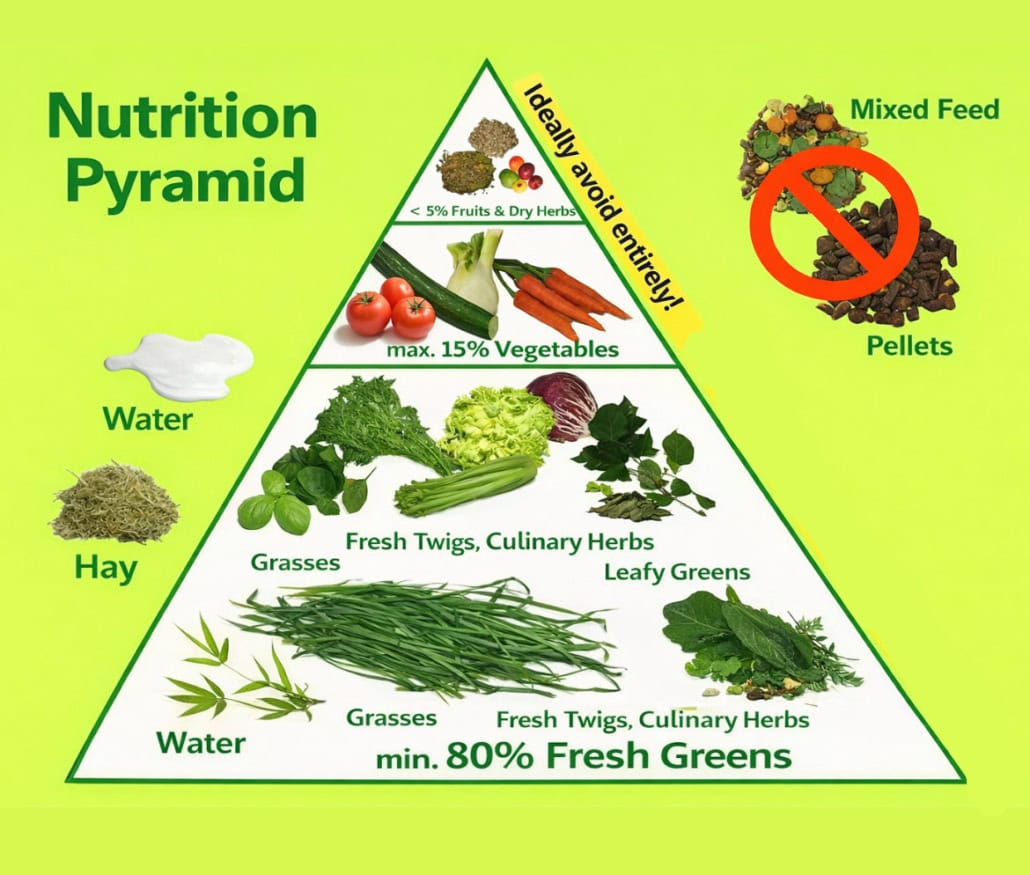
Fresh greens and herbs for rabbits, high in water, with limited vegetables, avoid pellets and mixed feed.
A colorful nutrition pyramid shows ideal rabbit diet with fresh greens, vegetables, and water, avoiding pellets.

Rabbits are folivores (browsers), their wild relatives are mostly feeding on green vegetation, buds and leaf tips. Additionally, they might pick up some roots and bark. Due to the short time of domestication, our pet rabbits still need this type of nutrition.

Main Nutrition
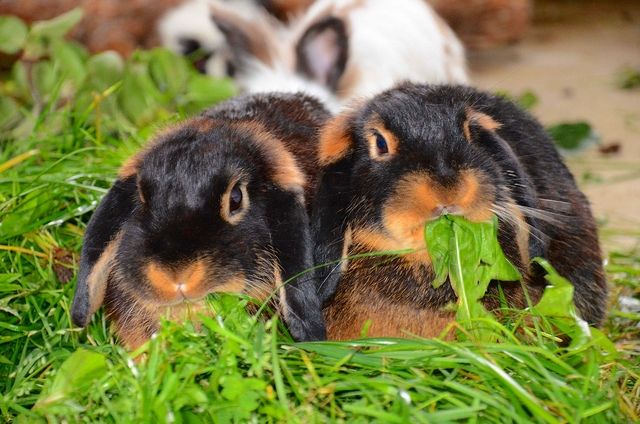
Rabbits need fresh food: The main part of their nutrition should always consist of fresh, diverse food. During spring, summer and autumn, it may be advisable to collect this food directly in nature as plants from meadows. Branches and leaves are not only for free but also the healthiest food for rabbits. Of course, rabbits that live outside can also graze this food themselves; these rabbits only need collected food for the night. Sometimes, you can also find wild plants during winter.

If you do not have the possibility or it is not possible to find sufficient food, it is advisable to buy leafy vegetables (bitter salads, cabbage, spinach …), green vegetables (carrot greens, the leaves of turnip cabbage, stalk celery) and kitchen herbs as a main part of food. Food must be available to the rabbits all the time as rabbits are continuously feeding in small quantities to evenly keep their digestive parts busy. If there is not enough food there until you feed your rabbit for the next time, digestive problems may occur.

Fibres
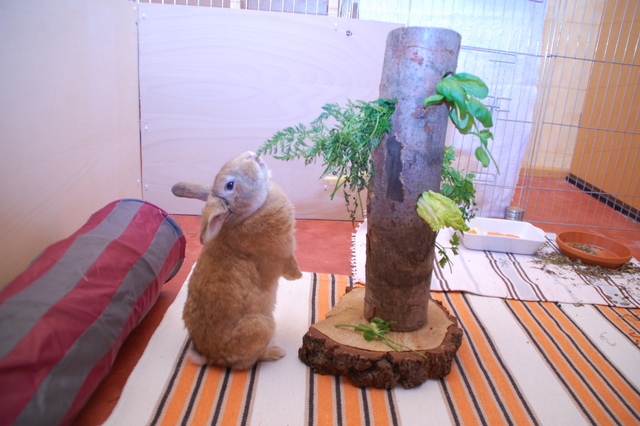
It is important to offer hay of high quality all the time, in addition to food. A mixture of diverse dried herbs also balances the small level of secondary plant compounds in leafy vegetables. Hence, dried herbs are not needed if the rabbits are fed with high quantities of wild herbs on a daily basis. However, dried herbs should be fed only in small amounts, not more than a handful for two rabbits per day. The same applies to branches which are also very important if leafy vegetables are fed as a main component.

Supplementary Food

In addition to the main nutrition, root and tuber vegetables may be offered. From time to time, (local) fruits may also be fed, especially in autumn.

Water

The best is to offer fresh water in a stable ceramic bowl. To prevent dirt, it is best to put this bowl on an elevated position without litter. Nipple drinkers are unsuitable as the only water source.

Change of Food

The feeding should only be changed very slowly. New kinds of food need to be tested for tolerance in small amounts. If you want to change the feeding, give more and more of the new food and less and less of the old food, every day.

Tipp: Feeding schedule for rabbits

Bought feed mixtures are unhealthy
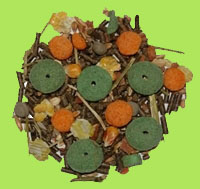
Most feed mixtures that can be bought make the rabbits sick after some time. It is composed of industrial garbage of minor quality which are grounded, coloured and flavoured. The artificial flavours influence the sense of taste of the rabbits so that they eat this minor quality. Dry food is unnatural and damages the entire organism of the rabbits! The consequences are diverse diseases (such as diarrhea and flatulence) and, thus, high bills for the vet.

Why are bought feed mixtures harmful?

“Commercial dry food mixtures are aimed at the increased needs of breeding and fattening animals which are not getting old. As single nutrition, they lack of crude fibers and have too much energy and calcium for pet rabbits which should reach an age of up to ten years. In case of permanent feeding, they cause:

Reduced tooth abrasion

Adiposis

Dysbiosis

Urolithiasis/Calcinosis

Diarrhea

To prevent permanent damage to pet rabbits the feeding should be changed to physiological fresh food as soon as possible after purchase.”

(Translated into English from Dr. med. Vet. Hein – one of the leading rabbit specialists in Germany. Additional title pet animals / small mammals, diploma ECZM).

Healthy concentrated food

You can offer food which you have mixed yourself as a healthy concentrated food or treat. You can find a comparison of dried food with valuation here. If you like to buy bagged food, you can find a valuation, here.


Who Is Behind How to rabbit?

Veterinarian Viola Schillinger
Who Is Behind How to Rabbit? Viola Schillinger is a veterinarian who has kept rabbits since childhood and has dedicated much of her professional life to improving their health, welfare, and living conditions. Decades of rabbit keeping, intensive observation, and professional study have given her extensive experience in rabbit health, nutrition, behavior, and species-appropriate husbandry. She shares her knowledge through television appearances, webinars, podcasts, radio programs, articles, and books. In 2008, Viola founded Kaninchenwiese.de, which has grown into a leading German-language resource for rabbit care and health, reaching around 500,000 visitors per month. How to Rabbit brings this knowledge to an international English-speaking audience. The English content is translated and adapted by Erika Kühne Escobar and medically reviewed by Viola Schillinger.

Rabbits need space…


How to rabbit…

…is a guide for the appropriate keeping, nutrition and care of rabbits.

Search

Search Search

Never alone


Last Changes

  • Neutering Male Rabbits 2. October 2026
  • Cookie Policy (EU) 7. September 2026
  • Care 26. August 2026
  • Fruit list 27. September 2026
  • Highly toxic plants 30. July 2026
© Copyright - How to rabbit 2024 - Enfold Theme by Kriesi
  • Link to Instagram
Scroll to top Scroll to top Scroll to top