

Contents
- Raising Rabbits Without Cages or Solitary Housing: A Complete Guide to Group Housing
- Is it possible to raise rabbits in groups?
- Alternatives to Isolation in Breeding Rabbits
- Recommended approaches
- How Group Housing Works in Rabbit Breeding
- Basic requirements
- Benefits of Raising Rabbits Without Cages
- Is Group Housing Suitable for All Rabbits?
- Conclusion: A More Natural and Responsible Approach
- Experience 1: Housing Breeding Males in a Giant Rabbit Breeding Setup
- Access Tunnels for Young Animals (and Guinea Pigs)
- Breeding Management
- Experience 2: Birth and Rearing Within a Rabbit Group
- Experience 3: Group Housing in Rabbit Breeding
- Important considerations
- Breeding and Birth Process
- Development in the Group
- Observed benefits
Raising Rabbits Without Cages or Solitary Housing: A Complete Guide to Group Housing
Is it possible to raise rabbits in groups?
Breeding rabbits without cages or isolation is an increasingly popular alternative for breeders who want to improve animal welfare and respect the natural social behavior of rabbits.
Rabbits are highly social animals. Keeping them alone can lead to stress and behavioral problems. Group housing allows for a more natural and balanced development.
Alternatives to Isolation in Breeding Rabbits
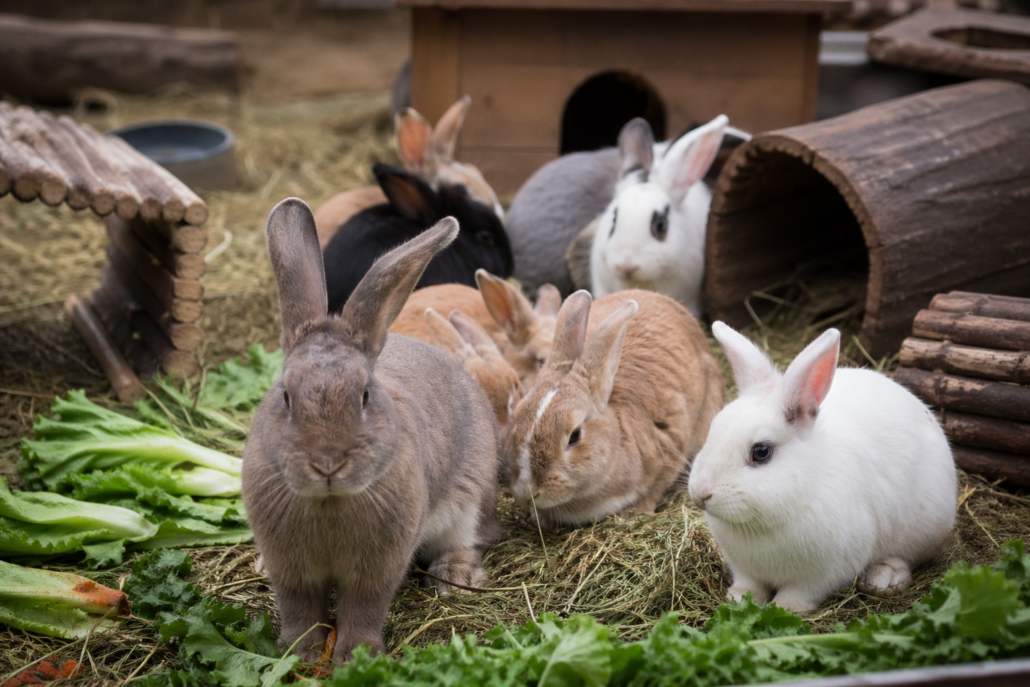
In traditional rabbit breeding, males are usually kept alone. However, there are better options:
Recommended approaches
- Keeping males with a neutered companion (male or female)
- Using neutered former breeding males as social partners
- Neutering males after their breeding period
Rabbits that are well socialized and neutered at a young age adapt best to group living.
How Group Housing Works in Rabbit Breeding
Group housing involves keeping several females together with one or more neutered rabbits in a shared space.
Basic requirements
- Sufficient space
- Hiding places and resting areas
- A stable and compatible group
Females are only separated briefly for mating and then return to the group to raise their young.
Benefits of Raising Rabbits Without Cages
- Improved animal welfare
- More social and balanced rabbits
- Less stress for mothers
- Natural behavioral development
Is Group Housing Suitable for All Rabbits?
Not all rabbits are suitable for this system. Only animals that are:
- Social
- Non-aggressive
- Well adjusted
should be used for breeding.
Rabbits with problematic behavior should not be bred.
Conclusion: A More Natural and Responsible Approach
Breeding without isolation is a viable alternative to traditional rabbit farming. When applied correctly, it improves animal welfare and promotes more ethical and responsible breeding.
Experience 1: Housing Breeding Males in a Giant Rabbit Breeding Setup
As a small hobby breeder focused on animal welfare, we asked ourselves a key question: how should we keep our breeding males?
Our goal is to give them as much space as possible. Therefore, they also live in enclosures where they are not kept alone.
One successful method has been housing young males together with adult males. This often works very well—at least until the young male has contact with a female. In some cases, it works even longer.
However, this setup is not recommended for pet groups. In those cases, neutering is clearly the better option.
Another effective approach has been keeping two brothers together, then later neutering one while using the other for breeding.
Access Tunnels for Young Animals (and Guinea Pigs)
A very effective structural solution has been adding small tunnels between the group enclosure and the male area. In our case, these openings measure about 7 × 7 cm (for giant breeds; smaller breeds require adjustments).
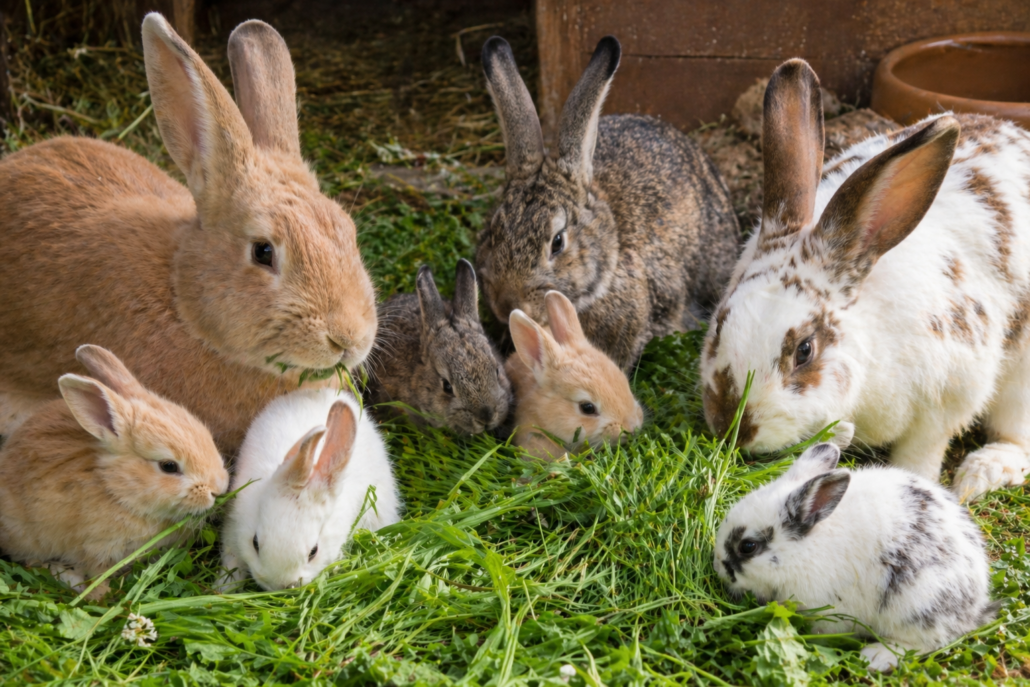
This allows young rabbits—and even guinea pigs—to visit the males freely at any time. They use this opportunity frequently to interact, rest together, and share feeding areas.
Breeding Management
In a welfare-oriented breeding system, reproduction still plays a role. In our case, females visit the males in their enclosures.
Because of the larger space, mating can take longer, as the female can move away if needed. For this reason, females stay with the males for about 2–3 weeks.
After around two years, the males are neutered and then integrated into female groups, where their calmer temperament contributes to group stability.
Today, animal-friendly breeding systems can be found in many settings: private breeders, associations, and even shelters.
Annick (RiesenFreude)
Experience 2: Birth and Rearing Within a Rabbit Group
Motivated by animal welfare and the desire to keep my rabbits as naturally as possible, I decided in 2010 to attempt something unusual: allowing a birth within a group.
After unsuccessful research, I followed nature’s example.
At that time, a stable group lived together: Luna (an experienced doe), Blue (another female), and Yeti (a neutered male).
When Luna came into heat, she was briefly taken to the male and then returned to the group without any hierarchy issues.
About a week before birth, Luna built a nest. Surprisingly, Blue helped by pulling fur and lining the nest.
The birth occurred overnight. The next morning, I found six healthy, strong babies—none injured or neglected.
Luna remained calm, and the group behaved normally. Soon, everything returned to routine.
When the babies opened their eyes, they began exploring. The adults showed no aggression—it was as if the babies had always been part of the group.
They played with the adults and even tried to nurse from the neutered male. This clearly showed how natural group rearing can be.
The most remarkable aspect was the social behavior: the young bonded not only with their mother but also with other adults, who helped care for them.
Today, group births and shared rearing are becoming more common.
Experience 3: Group Housing in Rabbit Breeding
I would like to share my experience with group breeding. The idea came about a year ago and was implemented shortly after.
In nature, pregnant does remain within the group, supported by other rabbits. In contrast, traditional breeding isolates the mother in a small cage, often causing stress.
Group housing offers clear advantages.
Important considerations
- The group must be stable and harmonious
- It should exist for at least one month before breeding
- One or two neutered rabbits should be included
- No aggressive or dominant animals
Breeding and Birth Process
Females are separated for about one week for mating and then reintegrated.
Before birth, the doe builds a nest. In well-functioning groups, she may even use fur from other rabbits.
After birth, the babies remain in the nest for about 10 days. Only the mother enters to nurse, and the group respects the space.
Development in the Group
After about 10 days, the babies begin exploring—earlier than in cage systems.
They interact with all group members and may try to nurse from any rabbit. Gentle corrections occur, but no harm is done.
If multiple litters are present, they may share nests, and mothers nurse all young.
From weeks 3 to 10, young rabbits fully participate in group life. Social learning reduces stress for the mother.
Observed benefits
- More social offspring
- Calmer mothers
- Less physical strain
- Easier integration later
- Reduced stress
In my experience, the results have been entirely positive.
⚠️ Important:
The group must function well, and the mother must not be aggressive.
Thanks to Nadine for this valuable report.
Heike Müller
www.kaninchen-vom-suedhang.de.tl