
Maple (Norway maple, field maple, sycamore maple, box elder maple, purple-leaved sycamore maple, viburnum-leaved maple)
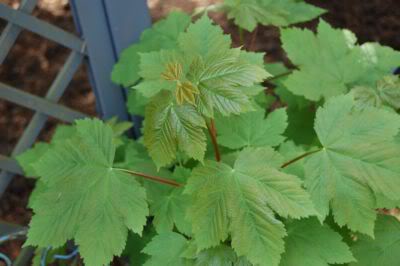
Maple can be fed.
Maple poisoning has not been reported in Germany, but it does occur in other countries, so caution is advised with maple abroad. The seeds/fruits should not be fed.
American sweetgum / star-leaved gum tree
Edible, but the fruits are not suitable for feeding.
Apple tree (all varieties, including crab apple)
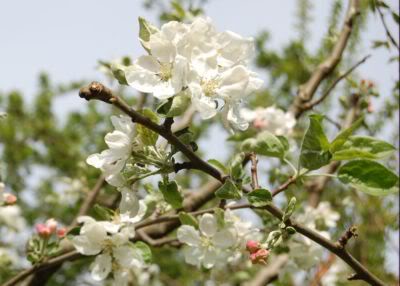
Apple branches are popular with rabbits and can be fed safely.
Chokeberry (Aronia, purple chokeberry, or black chokeberry)
The branches can be offered to rabbits.
Apricot tree
Apricot branches can be offered. They do not contain cyanide compounds, despite common misconceptions.
Barberry
Not suitable for rabbits.
Bamboo

Garden bamboo is an ideal feed because it stays green even in winter. It belongs to the grass family and is very suitable for feeding. Anyone who has the opportunity should plant this decorative plant somewhere in the garden, as it provides fresh greenery for rabbits during winter.
Garden bamboo (all species) as well as ornamental garden grasses are non-toxic.
Warning: There is a risk of confusion with lucky bamboo, which is commonly sold as a table decoration or houseplant. It is not true bamboo and is toxic.
Birch (bog birch, silver birch, black birch, cut-leaved birch, and all other birch species)
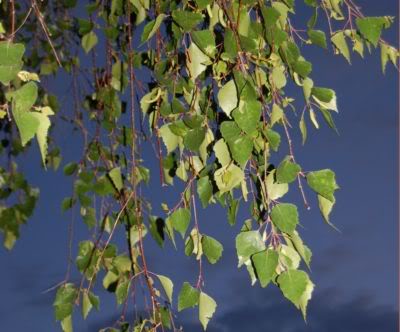
Birch branches can be offered as food. Due to their diuretic and anti-inflammatory properties, birch branches are an ideal dietary supplement for rabbits with urinary tract problems.
Their black/brown-and-white bark makes them very easy to identify.
Pear tree
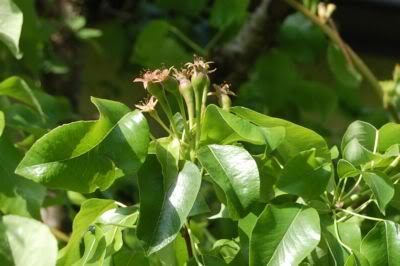
Pear tree branches are suitable as feed and are generally well tolerated.
Bitternut hickory
Can be fed.
Wisteria
Highly toxic!
Purpleleaf plum
Can be fed.
Boxthorn (goji berry bush)
Common boxthorn can be fed. Both the leaves and the berries can be offered as supplementary feed. In China, the young leaves are traditionally eaten by humans as well.
Blackberry
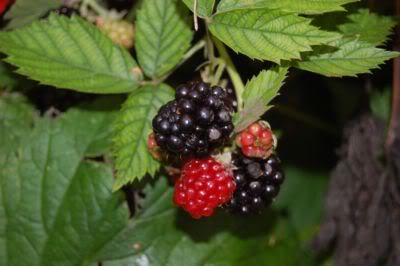
Blackberry branches can be offered. The berries are not only tasty feed, but may also help against diarrhea.
The leaves stay fresh and green even during winter, making them an ideal and popular winter feed. Blackberry brambles can be found in gardens and forests.
Beech (European beech, hornbeam — also called white beech or common hornbeam — and all other beech species)

Hornbeam can be fed and is closely related to hazel.
European beech is often described as toxic or mildly toxic because of oxalic acid. However, only the beechnuts contain oxalic acid, saponins, and thiaminase — the leaves and branches do not contain these substances and can also enrich the rabbits’ diet.
Beech may help with rabbit respiratory infections and fever.
Boxwood
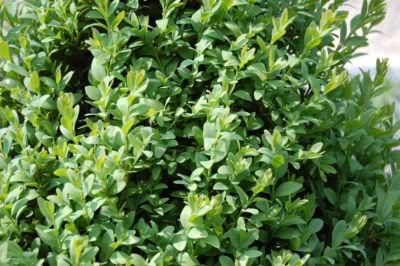
Boxwood is toxic and is usually avoided by rabbits after an initial test bite, provided they have access to a wide variety of fresh food at all times. Therefore, it is generally harmless in free-range garden areas. However, it should not be offered in an enclosure or cage.
Deutzia
Deutzia can be fed to rabbits and is a typical garden shrub.
Douglas fir
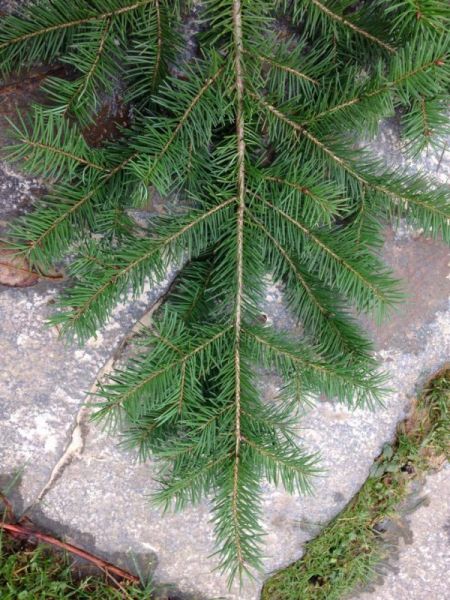
It is edible. Risk of confusion with the highly toxic yew!
Rowan / mountain ash (rowanberry tree)
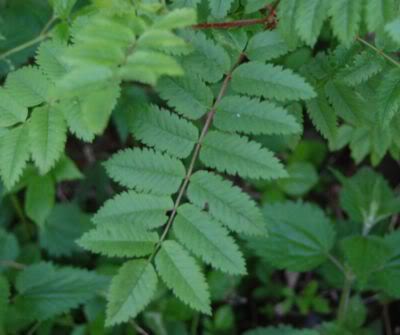
Rowan branches can be fed to rabbits. However, the leaves contain very small amounts of cyanogenic glycosides.
Caution is advised with the berries: in larger quantities, they can cause diarrhea and vomiting.
Yew
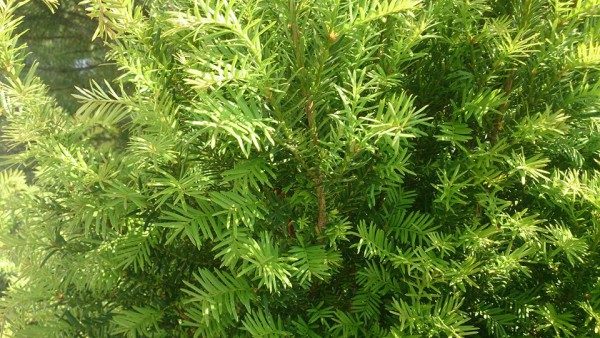
Yew is the most poisonous tree in Germany. Cases of poisoning have even been reported in wild rabbits.
The seed inside the fruit and the needles are highly toxic. The flesh of the fruit itself is non-toxic, but there is a risk that toxic residue from the seed may remain on the fruit flesh when the seed is removed.
Oak (holm oak, downy oak, and English/pedunculate oak)

Oak is not toxic and can be fed to rabbits. It may help against diarrhea, support digestion, and has a strengthening effect. The fruits (acorns) should only be offered when fully ripe. Do not feed green acorns!
Service tree
Service tree branches can be fed. The berries are also suitable for rabbits and may help against diarrhea.
Angel’s trumpet
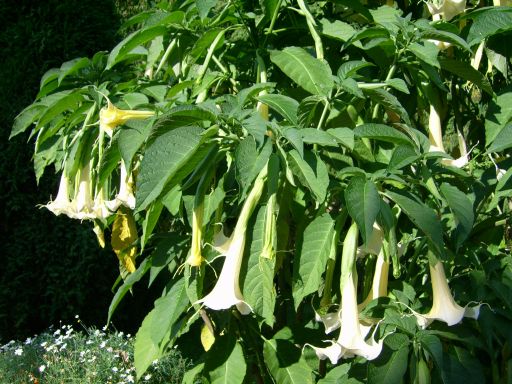
Angel’s trumpet is highly toxic to rabbits!
Alder (black alder, grey alder, and green alder)
Alder branches are tasty and therefore readily eaten.
Ash (common ash and manna ash)

Ash branches may be fed to rabbits. The bark has pain-relieving and anti-inflammatory properties.
Staghorn sumac / vinegar tree
Usually avoided by rabbits; mildly toxic. Generally harmless in free-range garden areas.
Buckthorn / alder buckthorn
Alder buckthorn is probably toxic to rabbits (toxic substances include anthranol glycosides).
Fig (fig tree)
Fig trees are becoming increasingly popular in German gardens. Fig branches can be offered to rabbits.
Serviceberry
Serviceberry can be fed.
Spruce (Norway spruce, red spruce)

Spruce branches are suitable, but are usually eaten only in small amounts. Therefore, they are also well suited as “decoration” in rabbit enclosures. Rabbits with respiratory infections or digestive problems may benefit from spruce branches as supportive feed. However, spruce should never be used as a main food source and should only be offered in small amounts alongside a varied fresh diet.
Warning: There is a risk of confusion with the highly toxic yew!
Calcium-phosphorus ratio: 13.57
Cinquefoil shrub
Cinquefoil shrubs may be fed to rabbits.
Lilac
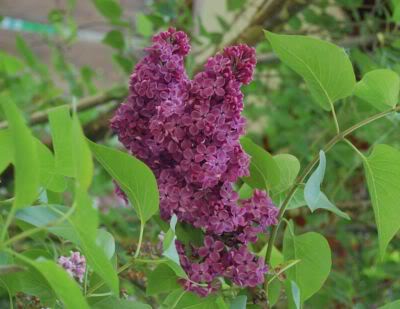
Lilac is rarely eaten by rabbits, but it can be offered. Therefore, it is ideal for planting in rabbit enclosures.
Forsythia
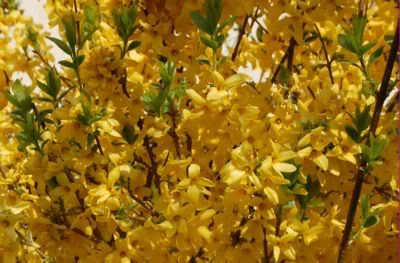
Forsythia is readily eaten and is safe for rabbits.
Broom
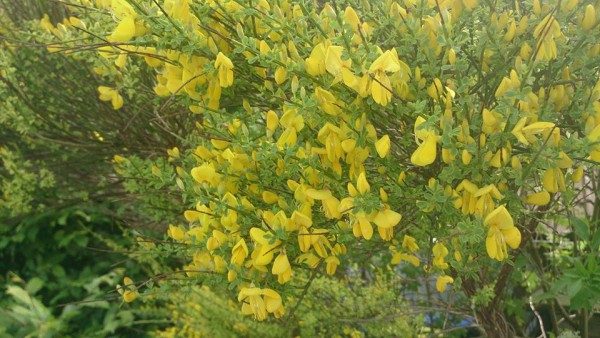
For rabbits, it is edible in very small amounts as part of a well-balanced mix.
Ginkgo
Can be fed to rabbits. It may have positive effects on the central nervous system and promote blood circulation.
Honey locust / thorny locust / Christ’s thorn
Harmless in free-range garden areas or as part of a balanced mix.
Golden chain tree (laburnum)

Golden chain tree (laburnum) is toxic and should not be fed! The same applies to wisteria.
Hornbeam (belongs to the birch family)
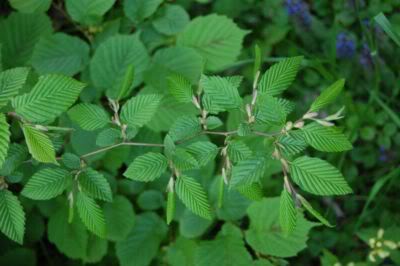
Hornbeam can be offered to rabbits and is readily eaten.
Calcium-phosphorus ratio: 9.56
Dogwood (Cornelian cherry)
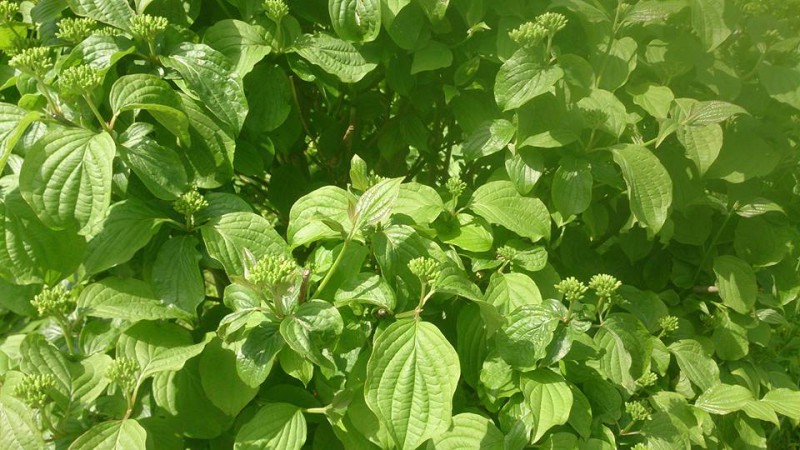
Dogwood is suitable as feed when mixed with other forage plants, although it is rarely eaten.
Hazel (hazelnut, including corkscrew hazel)

Hazel is one of the most popular branches and is completely safe. Both red and green hazel varieties are suitable. The leaves may help with liver and gallbladder problems. The nuts are quite high in energy.
Blueberry (blueberry bush)
Blueberry branches are suitable for rabbit nutrition. The plant has various medicinal properties. It can be used supportively for diarrhea. It may also help with circulation problems, tissue healing, diabetes, urinary tract disorders or bladder infections, and digestion. The berries strengthen the immune system.
Hibiscus
Suitable as feed.
Raspberry
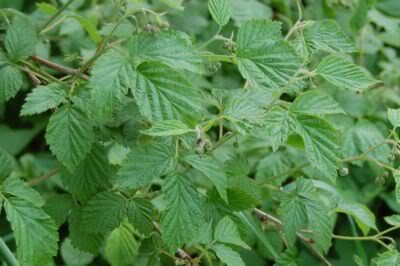
Raspberry branches may be fed. The leaves have anti-inflammatory properties and may help against diarrhea.
Elder (red elder, black elder, dwarf elder, and mountain elder)

Elder is toxic, but even rabbits on a heavily restricted diet usually avoid it completely, so it is generally harmless in free-range garden areas. It also helps repel pests such as flies.
Dwarf elder is more toxic than the other species. Black elder and mountain elder are only mildly toxic.
The flowers and small amounts of raw ripe berries are non-toxic.
Japanese bush cherry (Prunus tomentosa)
Edible, including the fruits.
Currant bush
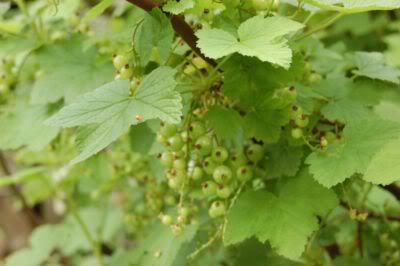
Currant bushes are non-toxic in all parts of the plant and can be fed to rabbits.
Jostaberry bush / josta bush
Edible.
Chestnut (horse chestnut, sweet chestnut)
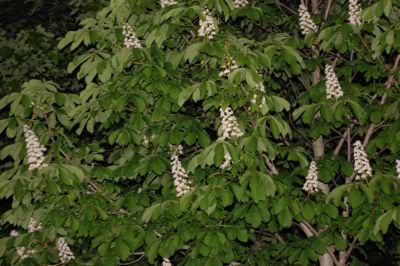
Chestnut branches can occasionally be offered in small amounts, although they are usually eaten sparingly. The chestnuts themselves are generally unpopular and are only suitable as feed when rabbits receive an especially high-quality natural ad-libitum diet.
Pine (Scots pine, mountain pine, Swiss stone pine, eastern white pine)
Pine branches can be offered to rabbits. Since they are eaten only in small amounts, they are also ideal as natural enclosure enrichment. Pine is especially valued as supportive feed for rabbits with respiratory infections or diarrhea. However, it should never be used as a main food source and should only be offered in small amounts alongside a varied fresh diet.
Calcium-phosphorus ratio: 3.69
Cherry (cherry tree, sour cherry, sweet cherry, wild cherry, Cornelian cherry)

Cherry tree branches (all varieties) can be offered. Contrary to common claims, they do not contain cyanide compounds.
Larch
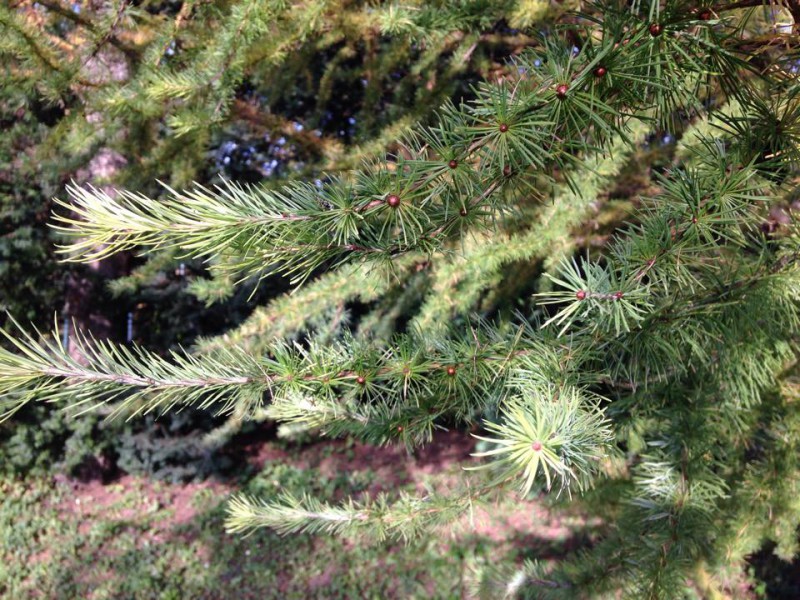
Larch can be fed to rabbits. It is especially valued for its supportive effects on respiratory illnesses such as rabbit snuffles.
Privet
Privet branches are usually not eaten willingly. They may be fed in small amounts.
Linden / lime tree (small-leaved lime, large-leaved lime, Dutch linden, and American linden)

Linden branches are very popular with rabbits. The plant has diuretic, calming, and antispasmodic properties. The bark is recommended for kidney disorders, bladder infections, and urinary gravel.
Laurel / cherry laurel
Laurel is mildly toxic to rabbits, but generally harmless in free-range garden areas.
Magnolia
Magnolia leaves and bark are toxic to rabbits, but they are usually not eaten in free-range garden settings. The flower petals may be eaten.
Mulberry tree
Mulberry leaves are not especially popular with rabbits, but dried leaves are usually accepted better.
Mirabelle plum
Mirabelle branches may be offered to rabbits. Contrary to common claims, they do not contain cyanide compounds.
Medlar
Medlar may be fed.
Olive tree
Edible for rabbits.
Poplar (aspen, black poplar, silver poplar, grey poplar, Canadian poplar, Lombardy poplar)
Poplar is fairly well liked by rabbits and can be offered. It has a diuretic effect.
Smoke bush
It is unclear whether this plant is safe to feed; it is probably toxic to rabbits.
Peach (peach tree)

Peach branches may be fed. Contrary to common claims, they do not contain cyanide compounds.
Mock orange / false jasmine / summer jasmine / farmer’s jasmine (Philadelphus species)
False jasmine is not suitable for rabbits.
Plum (plum tree, cherry plum, purpleleaf plum)
Plum branches are safe and do not contain cyanide compounds, despite common misconceptions.
Bladdernut
Suitable for rabbits.
Plane trees (Oriental plane, London plane)
Plane tree branches may be fed.
Lingonberry / cowberry
Edible for rabbits.
Quince
Quince branches can be fed to rabbits without problems. Quince belongs to the pome fruit family.
Buttercup shrub / Kerria
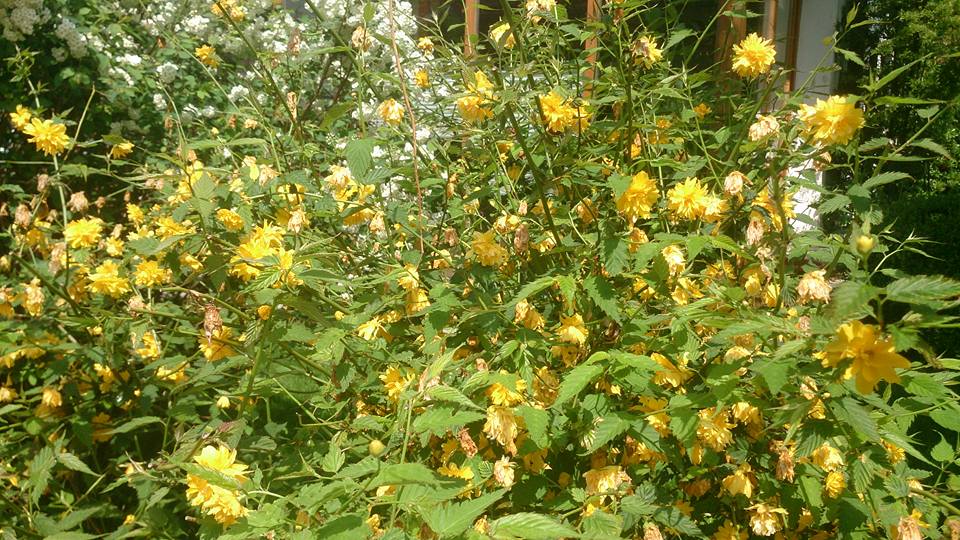
Kerria / Japanese rose is harmless to rabbits and may be fed.
Rhododendron
Rhododendron is toxic to rabbits and should therefore not be fed. In free-range garden areas, however, it is generally harmless because rabbits avoid it.
Black locust / false acacia
Black locust trees are harmless to rabbits when fed as part of a mixed diet with other plants.
Rose
Edible and very popular with rabbits. For rabbits with dental problems, only feed thornless branches.
Sea buckthorn
Suitable as feed for rabbits.
Viburnum / snowball bush
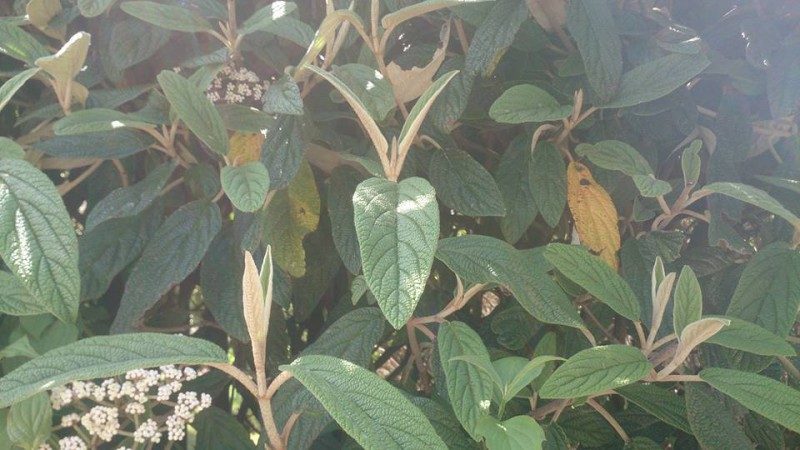
Toxic to rabbits — do not feed.
Blackthorn (sloe)
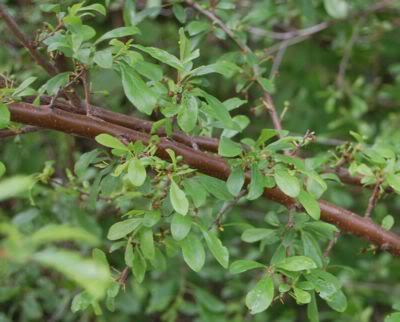
Blackthorn branches may be fed to rabbits. The fruit (sloe berries) is best offered only after the first frost or after spending a night in the freezer.
Warning: blackthorn has thorns and should not be fed to rabbits with dental problems.
Butterfly bush / summer lilac
Do not feed. However, it is generally harmless in free-range garden areas.
Spirea (all species, e.g. bridal wreath spirea, snowmound spirea, dwarf spirea, meadowsweet spirea, Japanese spirea, etc.)
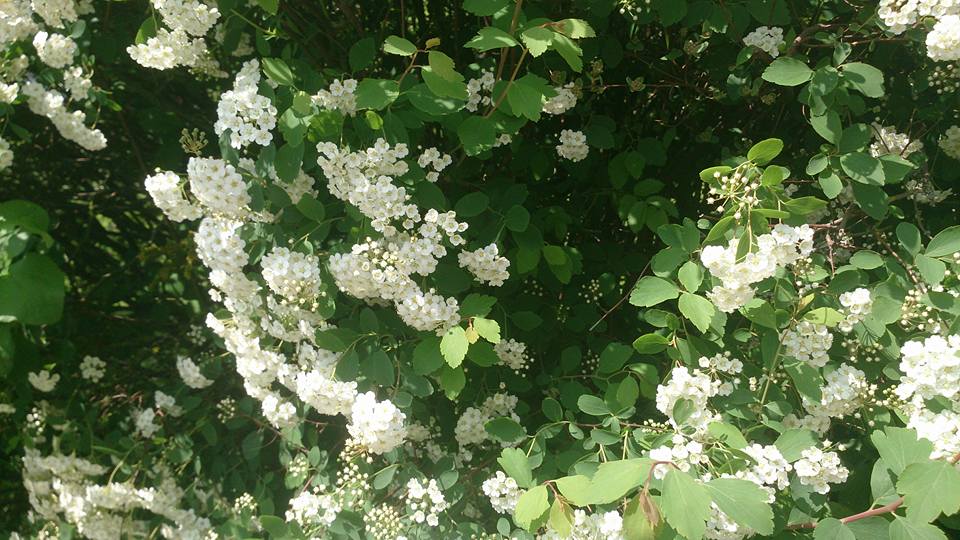
Spirea is very popular with rabbits and is readily eaten.
Gooseberry
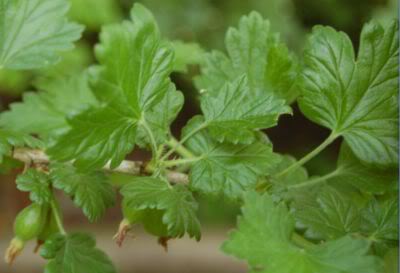
Gooseberry can be fed without problems. The berries are also suitable as feed and may stimulate appetite, purify the blood, and help against constipation. The leaves may help with internal bleeding.
Fir (silver fir, red fir/spruce, Nordmann fir, etc.)
Fir branches may be offered to rabbits. Since they are only nibbled occasionally, they are ideal as natural enclosure enrichment. However, they are not suitable as a main food source and should only be given in small amounts alongside a varied fresh diet. Rabbits with digestive problems often enjoy them because the tannins they contain may help.
Christmas trees are heavily treated with chemicals and are therefore unsuitable!
Warning: Risk of confusion with the highly toxic yew!
Thuja / arborvitae (tree of life)

Thuja / arborvitae is often described as toxic, but in small amounts it is generally harmless and may even support health. For rabbits with respiratory infections (“snuffles”), it can be a useful dietary supplement. However, it should never be used as a main food source and should only be offered in small amounts alongside a varied fresh diet.
Bird cherry
Bird cherry is classified as toxic to rabbits in the literature. It contains cyanogenic glycosides and should therefore only be used, if at all, in very small amounts for a short period of time. It may help with skin conditions and eczema.
Catalpa / trumpet tree
Mildly toxic — do not feed. Generally harmless in free-range garden areas.
Elm (European white elm, field elm, wych elm)
Elm leaves are not especially popular, but they can be offered safely. Elm may help with diarrhea and inflammation in the digestive tract. In large amounts, however, it can cause constipation.
Rowan / mountain ash

Rowan branches can be fed to rabbits. However, the leaves contain very small amounts of cyanogenic glycosides.
Caution is advised with the berries: in larger quantities, they can cause diarrhea and vomiting.
Wild cherry / bird cherry
Wild cherry may be fed occasionally. The fruits may also be offered. They have diuretic and calming properties and may help against diarrhea and fever.
Juniper (common juniper and savin juniper)
Common juniper (branches and leaves) may be fed. However, there is a risk of confusion with the highly toxic yew.
The juniper berries are toxic and should not be fed.
Common juniper may help with stomach pain and digestive problems.
Savin juniper is highly toxic!
Walnut tree

Walnut leaves and branches are only suitable as feed in small amounts and are generally not eaten very eagerly. The nuts are very high in energy.
The tree also repels insects. For pododermatitis (sore hocks), dried walnut leaves can be scattered over the bedding.
Willow (all varieties: silver willow, goat willow, grey willow, basket willow, corkscrew willow, weeping willow)
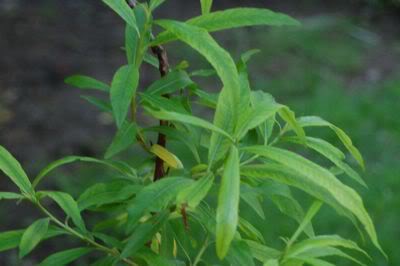
Willow branches are especially popular with rabbits. They may help against bloating and diarrhea and contain salicylic acid (the active ingredient in aspirin), which has pain-relieving properties.
There is a risk of confusion with the highly toxic oleander (although oleander is not a tree, but a low-growing plant/small shrub).
Weigela
May be fed to rabbits.
Grapevine & Virginia creeper / wild vine

Grapevine leaves, branches, and fruits can be fed to rabbits. Grapes may also be offered.
There is a risk of confusion with the highly toxic castor bean plant (similar leaves), but unlike grapevine it is a bush and does not climb.
Hawthorn (common hawthorn and midland hawthorn)
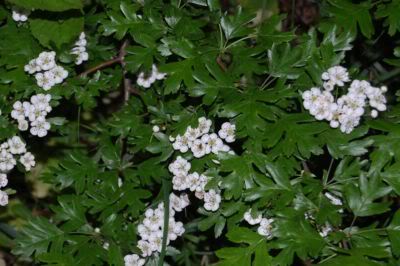
Hawthorn can be fed with all parts of the plant. With long-term use, it may improve circulation and help lower blood pressure. Hawthorn is beneficial for the heart.
Caution: thorns! Do not feed to rabbits with dental problems.
Japanese loquat
Readily eaten by rabbits and remains green even in winter.
Castor bean plant

The castor bean plant is highly toxic!
Cedar (cedar of Lebanon, blue Atlas cedar, Himalayan cedar)
Cedar may be fed to rabbits. It is especially valued for its supportive effects on respiratory illnesses such as rabbit snuffles.
There is a risk of confusion with the highly toxic yew!
Plum tree (European plum / prune plum)

Plum tree branches are suitable as rabbit feed. Contrary to widespread belief, they do not contain cyanide compounds.
Sources include:
DLG e. V.: DLG-Datenbank Futtermittel; https://www.dlg.org/landwirtschaft/tierhaltung/futter-und-fuetterung/datenbank-futtermittel
Nehring, K. (1967): Handbuch der Futtermittel (Vol. 3). M. Becker (Ed.). Parey.
Nehring, K. (1955): Lehrbuch der Tierernährung und Futtermittelkunde. (No Title).
Rahmann, G. (2004): Gehölzfutter-eine neue Quelle für die ökologische Tierernährung. In Naturschutz als Aufgabe des Ökologischen Landbaus (pp. 29-42). Bundesforschungsanstalt für Landwirtschaft (FAL).
Schlolaut, W., K… Lange, K… Löhle, Löliger, H. C., & W… Rudolph. (2003): Das große Buch vom Kaninchen. DLG-Verlags.