

There is no one-size-fits-all answer to this question, but in general, rabbits can live for around eight to twelve years if they receive proper care and live in a suitable environment.
Many different factors can influence how long a rabbit lives. While genetics play a role, everyday care, environment, diet, and overall health all have a significant impact on a rabbit’s lifespan. The following factors can help determine whether a rabbit enjoys a long and healthy life:
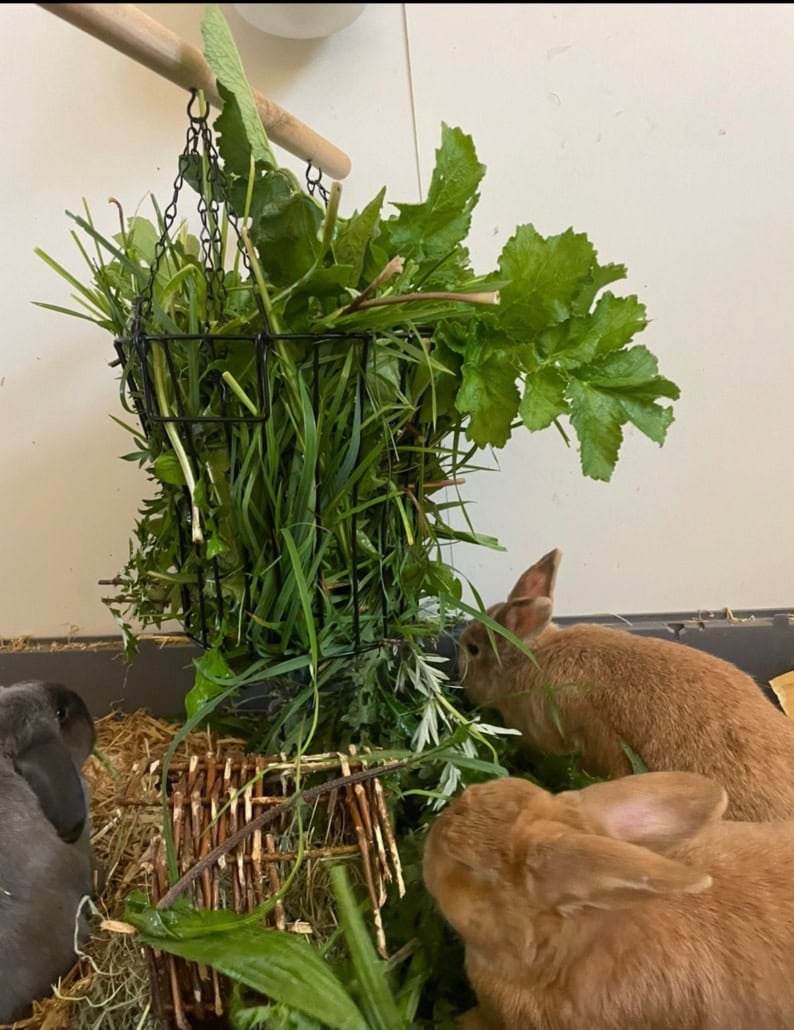
A Species-Appropriate Diet
A healthy, species-appropriate diet without processed dry food and with a wide variety of fresh greens can help keep rabbits fit and healthy. Rabbits that receive a balanced, natural diet generally have a better chance of living a long and healthy life than rabbits that are poorly fed.
An unsuitable diet can increase the risk of digestive problems, dental disease, and urinary tract disorders.
Interestingly, severely undernourished rabbits that receive very little energy, fat, and protein may sometimes reach an unusually old age. In such cases, their metabolism can slow down significantly, and they may become much less active. A similar phenomenon has also been observed in humans, where individuals living under extremely frugal conditions have occasionally reached a remarkably old age.
A diet based primarily on fresh, locally grown plants, especially plants from your own garden, may also contribute to a healthy and potentially longer life.
Proper Rabbit Housing and Care
Plenty of exercise, fresh air, sunlight, and space to roam can help rabbits stay healthy and may contribute to a longer lifespan. Providing a suitable living environment that meets a rabbit’s natural needs is an important part of responsible rabbit care.
Learn more about proper rabbit housing and care:
Stress and Rabbit Lifespan
Stress can negatively affect a rabbit’s health. Rabbits living in harmonious groups with compatible companions and experiencing minimal stress may therefore have a better chance of living a long and healthy life.
Rabbit Breed and Size
A rabbit’s breed and size can influence its life expectancy. Small rabbits generally tend to live longer than larger breeds. While giant rabbit breeds may be considered old after only a few years, some small rabbits can live to 13 or even 14 years of age.
A rabbit’s lifespan can also depend on its breed, genetics, and breeding line.
Rabbit Years in Human Years – Rabbit Age Compared to Human Age
The figures shown are approximate equivalents in human years. A rabbit’s exact age equivalent depends on many different factors.

Veterinary Care for Rabbits
Rabbits that receive appropriate veterinary care generally have a better chance of living a longer and healthier life than rabbits that go untreated. However, it is important to choose a veterinarian who is experienced in treating rabbits, as not every vet has specialist knowledge of rabbit medicine.
In the worst cases, incorrect treatment by an inexperienced veterinarian can negatively affect a rabbit’s health and may even shorten its lifespan. Some medications can be lifesaving or help extend a rabbit’s life, while the unnecessary or excessive use of medication may have negative effects.
Predator-Proof Housing and a Safe Environment
One of the most common dangers for outdoor rabbits is being attacked by predators or escaping from an inadequately secured enclosure. A properly secured, predator-proof rabbit enclosure is essential for keeping outdoor rabbits safe.

Other Dangers for Rabbits
Chewing on plastic, electrical cables, and other hazardous objects can cause serious injuries or even be fatal to rabbits. Providing a rabbit-safe environment can help prevent accidents and contribute to a longer, healthier life.
Rabbit Vaccinations
Vaccinations can have a significant impact on a rabbit’s life expectancy, especially in areas where serious infectious diseases such as Rabbit Hemorrhagic Disease (RHD) or myxomatosis are present.
Knowledge and Experience with Rabbit Care
Understanding your rabbits’ needs, health, diet, behavior, and housing requirements can significantly improve their quality of life and may help them live longer.
Learn as much as possible about proper rabbit care and regularly keep up to date with reliable information about rabbit diseases, nutrition, housing, behavior, and general health.
Exceptions
Of course, there will always be individual cases that do not follow these general patterns. This is not unique to rabbits. People who eat a healthy diet and follow a healthy lifestyle generally have a better chance of living longer, yet there are still exceptional cases of centenarians who smoked heavily or followed an unhealthy diet throughout their lives.
A Long Life Does Not Always Mean a Good Life
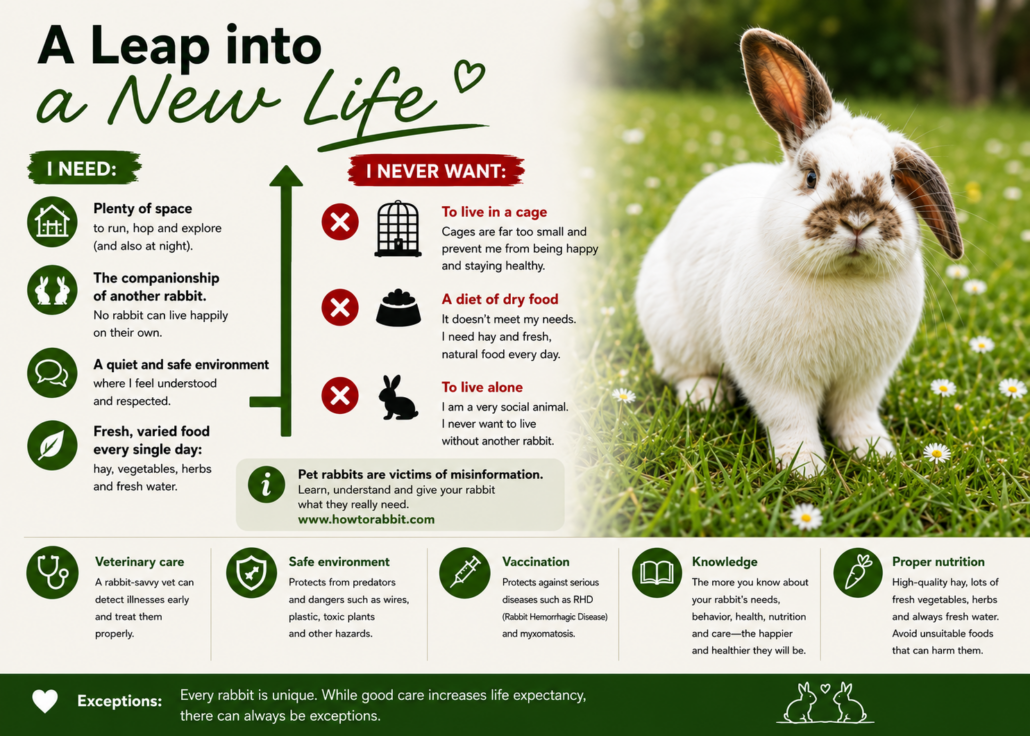
I often hear stories about rabbits that lived alone in cages, were fed dry food, and still reached the age of 12. Of course, such cases do exist, but they are extremely rare. Many rabbits kept under these conditions die far too young, sometimes at just a few months or a few years of age. By contrast, rabbits provided with proper care, a suitable living environment, companionship, and a healthy diet generally have a much better chance of living a long and healthy life.
Personally, I find stories of very old rabbits kept alone in cages particularly upsetting. A rabbit would surely prefer to spend five fulfilling years in a spacious enclosure, living with other rabbits and enjoying a varied diet of fresh greens, rather than ten years in poor conditions, without a rabbit companion to groom, understand, and bond with, without enough space to move freely, and without enrichment or variety.
A long lifespan alone is not enough. What truly matters is giving rabbits a life worth living, with companionship, freedom of movement, proper nutrition, mental stimulation, and the opportunity to express their natural behavior.