

Why even human cold sores can become dangerous
Herpes in rabbits: symptoms, transmission, diagnosis, treatment, and prevention
Herpesviruses are widespread in many animal species. They are best known in humans, where they cause cold sores, chickenpox, or shingles. Rabbits can also become infected with certain herpesviruses. Although such infections are rare, when they do occur the disease is often severe. Particularly important for rabbit owners: herpesviruses can even be transmitted from humans to rabbits.
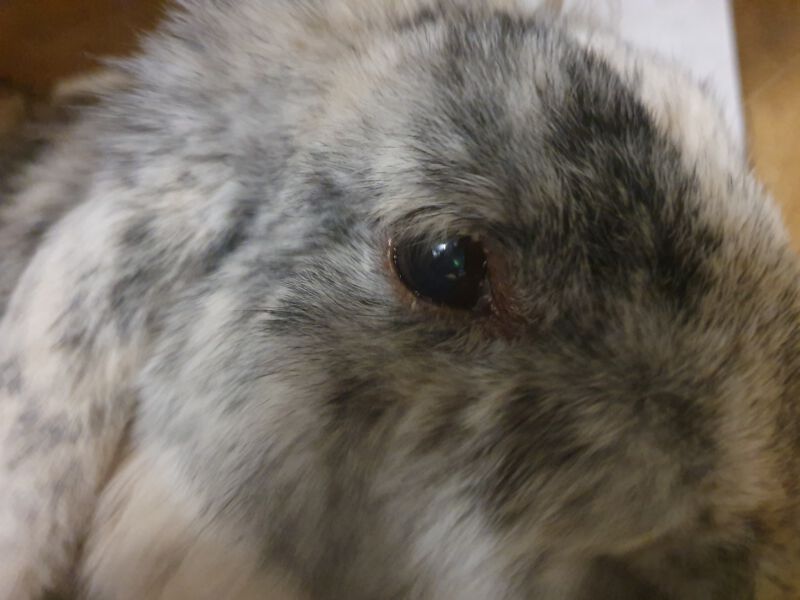
Eye inflammation can be caused by herpesviruses.
Contents
What are herpesviruses?
Herpesviruses are enveloped DNA viruses. A characteristic feature of this virus family is that they:
- remain in the body for life after infection (latent infection),
- can “hide” in specific nerve cells,
- can become active again under stress or when the immune system is weakened (reactivation).
This means that an animal infected once will remain a lifelong carrier of the virus, even if it appears completely healthy at times.
In rabbits, two herpesviruses have mainly been described:
- Leporid herpesvirus 4 (LHV-4): A rabbit-specific virus that can cause respiratory disease and inflammation of the eyes.
- Human herpes simplex virus (HSV): In rare cases, it can be transmitted from humans to rabbits and may trigger very severe illness.
Transmission
Infection can occur via several routes:
- Direct contact: Viruses are passed on through saliva, nasal and eye secretions, or close physical contact.
- Droplet transmission: Viruses can be spread when sneezing or coughing.
- Human-to-rabbit transmission: Contact with a person who has an active cold sore is particularly risky. A brief kiss on the rabbit or handling it with contaminated fingers can be sufficient.
“Kiss of death” – when cold sores become fatal for animals
A well-known example is a chinchilla that died after being kissed by its young owner. The girl had an active cold sore and transmitted the virus to her pet while cuddling. While the virus is usually little more than a nuisance in humans, in this chinchilla it caused fatal encephalitis. The child had “kissed her pet to death,” wrote veterinary pathologist Achim Gruber.
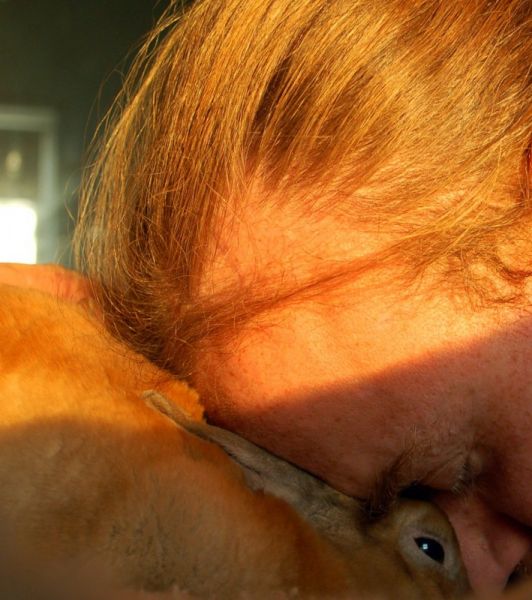
Rabbits are also at risk—which is why they should never be kissed when a person has an active cold sore.
Stress factors such as relocation, loss of a partner, or illness can trigger reactivation of the virus in animals that are already infected.
Symptoms
The clinical signs depend on where the virus is replicating in the body.
Neurological symptoms
If the virus affects the nervous system, the following may occur:
- Head tilt
- Circling movements
- Seizures
- Movement disorders (ataxia)

These symptoms closely resemble those of Encephalitozoon cuniculi (EC) or an inner ear infection, which makes diagnosis difficult.
Eye and respiratory disease
LHV-4 in particular can cause conjunctivitis, corneal inflammation, nasal discharge, or sneezing.
General symptoms
- Fever
- Apathy, lethargy
- Loss of appetite, weight loss
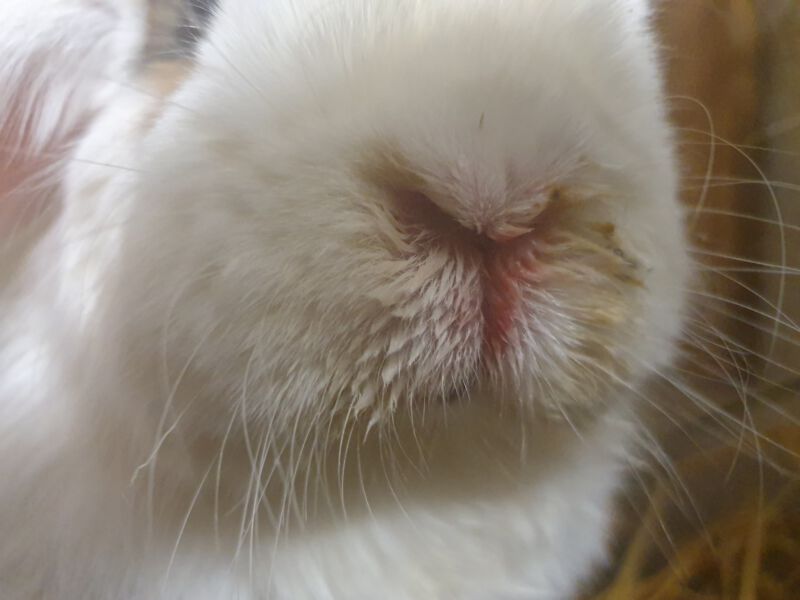
Severe courses of disease
In rare cases, the virus spreads to the brain and causes meningoencephalitis (inflammation of the brain and meninges). This condition is almost always fatal.
Diagnosis: herpesvirus or something else?
Because the symptoms are nonspecific, diagnosis is challenging. More common causes (such as EC or an inner ear infection) are often suspected first.
Possible diagnostic methods:
- PCR: Detection of viral DNA from blood, nasal secretions, or cerebrospinal fluid
- CSF analysis: If meningoencephalitis is suspected
- Necropsy and histopathology: A definitive diagnosis is often only possible after the animal’s death
Important: An exact diagnosis is essential because treatment differs—antiparasitic drugs may help in EC, for example, but herpesvirus infections require antiviral medication.
Treatment
A complete cure is not possible because herpesviruses remain in the body. Treatment focuses on relieving symptoms and preventing complications:
- Antiviral drugs such as aciclovir and interferons
may be tried in individual cases. - Anti-inflammatory drugs and pain relief help control inflammation and improve well-being.
- Supportive care: assisted feeding, fluid therapy, warmth, and stress reduction are crucial.
Prognosis
The prognosis varies widely: mild infections may resolve, but severe neurological cases unfortunately often end in death.
Prevention
Because treatment is difficult, prevention is of great importance:
No contact during cold sores: People with an active cold sore must not kiss rabbits or handle them without thorough handwashing. Once the cold sore has healed, contact with the animal is unproblematic.
Avoid stress: Stress weakens the immune system and can trigger viral reactivation.
Quarantine new arrivals: Keep new animals separated at first before integrating them into the existing group.
Sources include, among others:
Beer M, Kaufer B, Sutter G, Truyen U, Vahlenkamp T: Tiermedizinische Mikrobiologie, Infektions- und Seuchenlehre – DNA-Viren. Thieme Verlag 10.1055-f-0008-0001-b000000531
Elion, G. B., Furman, P. A., Fyfe, J. A., de Miranda, P., Beauchamp, L., & Schaeffer, H. J. (1982): Evaluation of the antiherpetic activity of acyclovir in rabbits. Antimicrobial Agents and Chemotherapy, 22(4), 520–527
de Miranda, P., & Good, S. S. (1982): Metabolic disposition of acyclovir in the guinea pig, rabbit, and dog. American Journal of Medicine, 73(1A), 31–3
Müller LS, Thöle M.: Die neurologische Untersuchung beim Kaninchen. Kleintier konkret 2020; 23: 2–11, 10-1055-a-1211-1245
Liebscher J, Hein J.: Typische und untypische Infektionserreger beim Kaninchen: Teil 5 Neurologische Symptome. Kleintier konkret 2023; 26: 12–17, 10-1055-a-2012-8631
Ratiopharm GmbH. (2023): Aciclovir-ratiopharm 50 mg/g Creme – Fachinformation. Ratiopharm.de
Vetmeduni Wien: Was geschah mit diesen Tieren? https://www.vetmeduni.ac.at/forschung/aktuelles-aus-der-forschung/was-geschah-mit-diesen-tieren
Whitley, R. J., Soong, S. J., Dolin, R., Galasso, G. J., Chien, L. T., & Alford, C. A. (1980): Effect of acyclovir on acute and latent herpes simplex virus infections. Journal of Infectious Diseases, 142(4), 474–480