

Contents
- Tetraparesis: sudden paralysis, but not a death sentence
- Brief definition: What is Floppy Rabbit Syndrome?
- Typical symptoms: What does Floppy Rabbit Syndrome look like?
- Important: Not everything that looks like it is Floppy Rabbit Syndrome!
- What does the current literature say?
- Possible causes of Floppy Rabbit Syndrome (FRS)
- Diagnosis: How is Floppy Rabbit Syndrome diagnosed?
- Blood values in Floppy Rabbit Syndrome: CK often markedly elevated
- Feces, diet, and environment history
- Treatment: How is Floppy Rabbit Syndrome treated?
- Very important
- Prognosis: Can rabbits recover?
- First aid at home (until you reach a veterinarian)
- Frequently asked questions (FAQ)
Tetraparesis: sudden paralysis, but not a death sentence
Floppy Rabbit Syndrome (FRS) is a rare and often very alarming clinical condition in rabbits: within a short period of time, the animal can suddenly become extremely floppy and lose the ability to stand or even hold up its head. For owners, this often looks like a stroke or a serious accident.
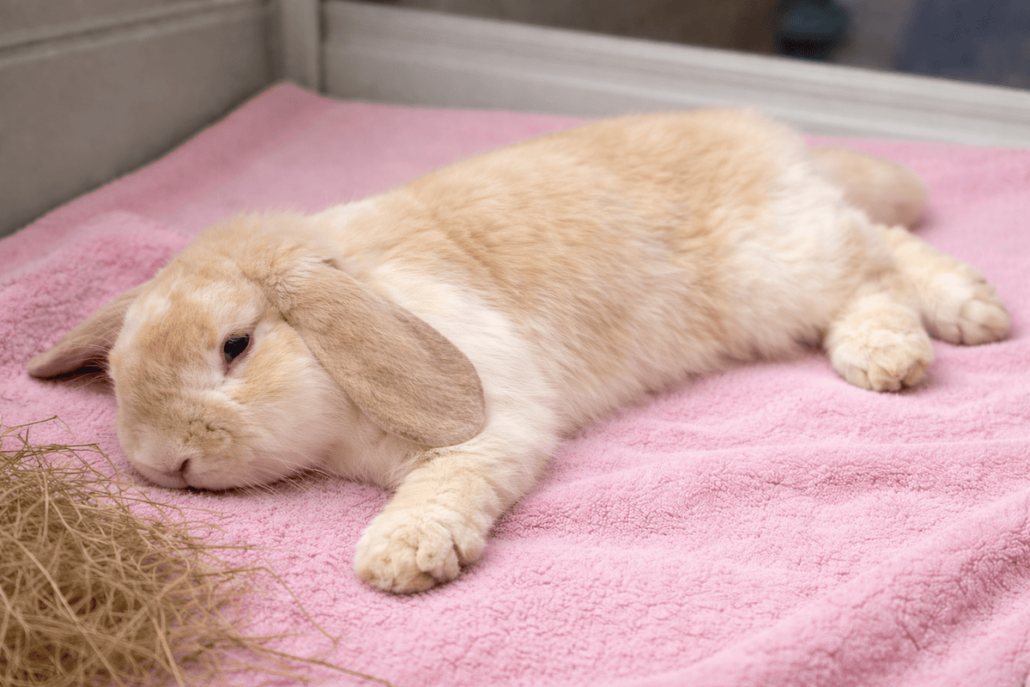
The problem: Floppy Rabbit Syndrome is still not fully understood scientifically, and several other diseases can present in a very similar way. That is exactly why it is crucial to act quickly and not give up prematurely.
In this article, you will learn:
- what Floppy Rabbit Syndrome means
- which symptoms are typical
- which differential diagnoses must be urgently ruled out
- what treatment and prognosis may look like
- and what you should do immediately as an owner
Brief definition: What is Floppy Rabbit Syndrome?
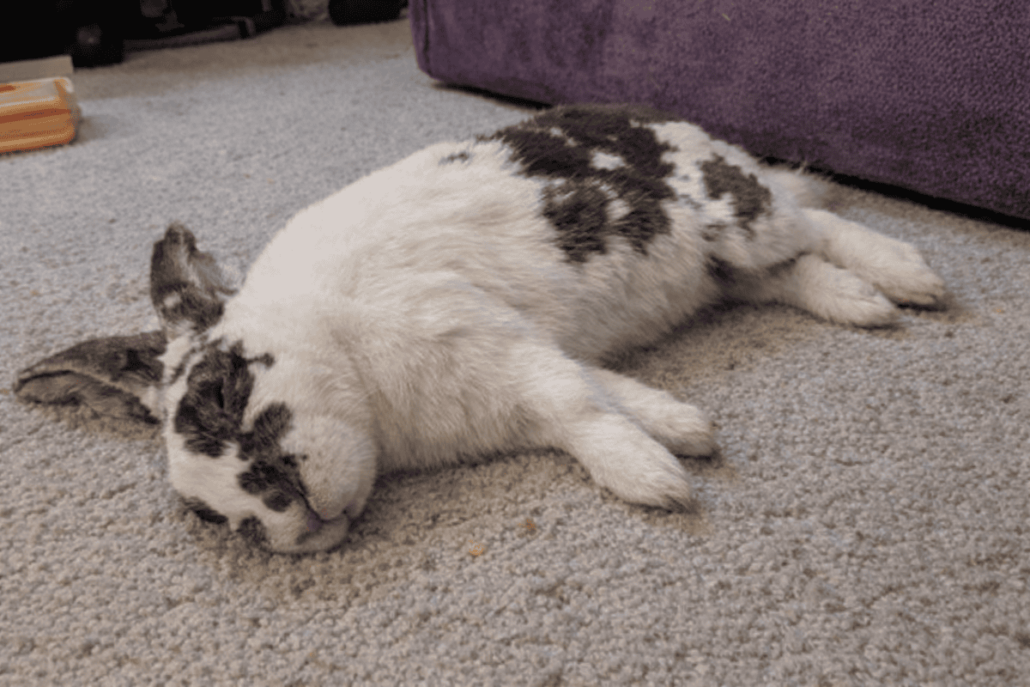
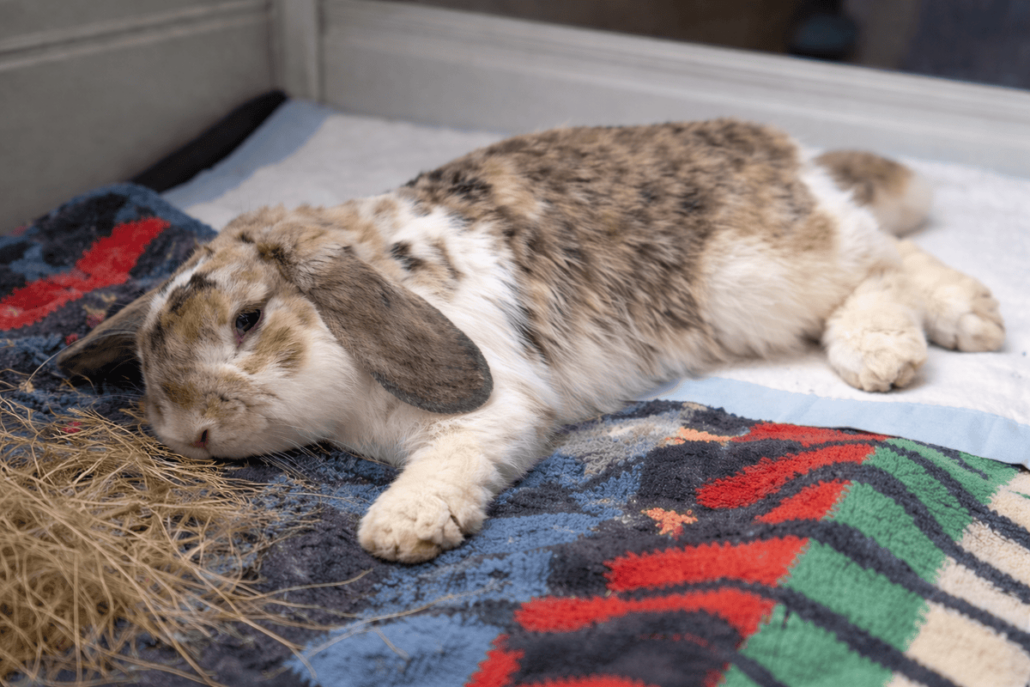
Floppy Rabbit Syndrome (FRS) describes a condition in which a rabbit suddenly develops severe muscle weakness or flaccid paralysis, usually without any obvious injury. The animal can no longer stand, loses muscle tone, and appears “like a wet rag.”
Important: Floppy Rabbit Syndrome is not a specific diagnosis, but rather a clinical syndrome (i.e. a combination of symptoms) that can have different underlying causes.
Typical symptoms: What does Floppy Rabbit Syndrome look like?
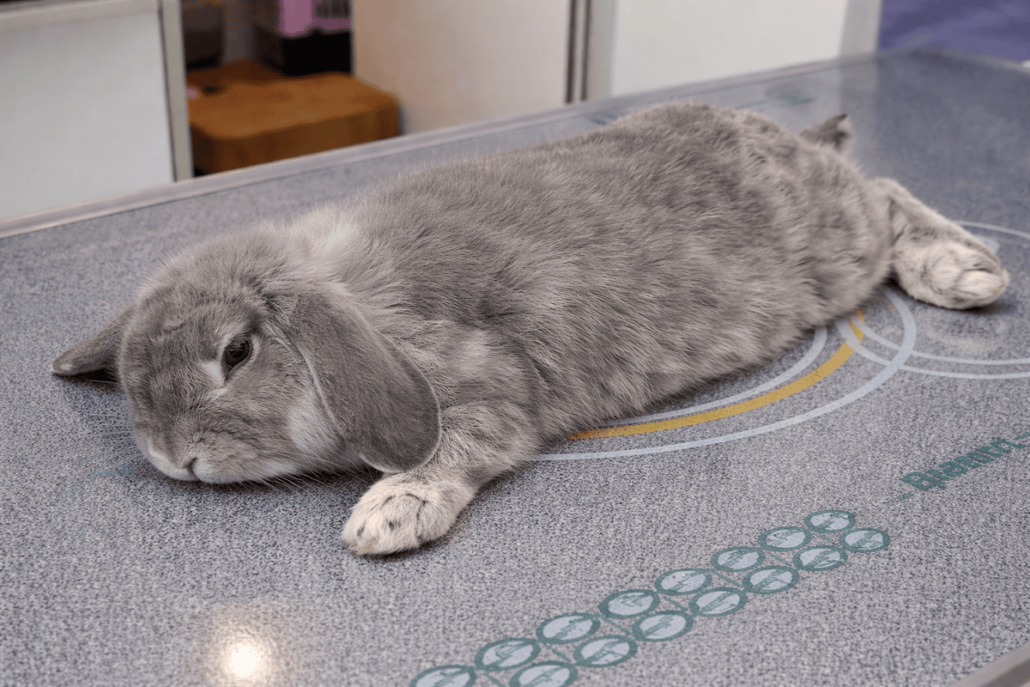
Floppy Rabbit Syndrome often appears suddenly (within minutes to hours). Common signs include:
- The rabbit can no longer stand or walk
- Stretched limbs (tetraparesis)
- Flaccid muscle tone (“floppy,” very soft)
- The head can usually still be moved, but sometimes can no longer be lifted
- Animals are often conscious and responsive but appear weak
- In some cases, low body temperature (hypothermia)
- Reduced food intake (secondary); many will still eat and drink if food is offered directly to the mouth
- Often no obvious pain (but this is not certain)
- More commonly affects young animals
Key feature: In many cases, rabbits appear neurologically alert (“they are present”), but the body does not respond.
Important: Not everything that looks like it is Floppy Rabbit Syndrome!
This is the most critical part.
Many life-threatening conditions can look similar and must be ruled out quickly. These include:
1) Spinal or pelvic injury (trauma)
- Falls, sudden movements, being stepped on, improper handling, or jumping in poorly muscled animals
- Paralysis, pain, possible asymmetry in pupils or pain response
- Obvious injuries may be seen on X-rays; more subtle ones may require MRI
- Orthopedic and neurological examination is essential
2) E. cuniculi (EC)
E. cuniculi can cause neurological disorders ranging from movement abnormalities to paralysis. Blood tests can show exposure, but this does not confirm active disease. EC is therefore a diagnosis of exclusion—only considered once other causes have been ruled out.
Do you know your rabbits’ EC status? Do you take measures to prevent outbreaks?
Toxoplasmosis is also considered a possible cause.
3) Intoxication (very rare)
Toxins can cause flaccid paralysis.
Clues:
- Sudden onset
- Possibly multiple animals affected (food source!)
- Potential for rapid deterioration
4) Severe metabolic disturbances
For example:
- Hypoglycemia (low blood sugar)
- Electrolyte imbalances (e.g. potassium)
- Severe liver disease
- Sepsis
👉 Blood tests are therefore essential.
5) Pain / GI stasis / shock / circulatory failure
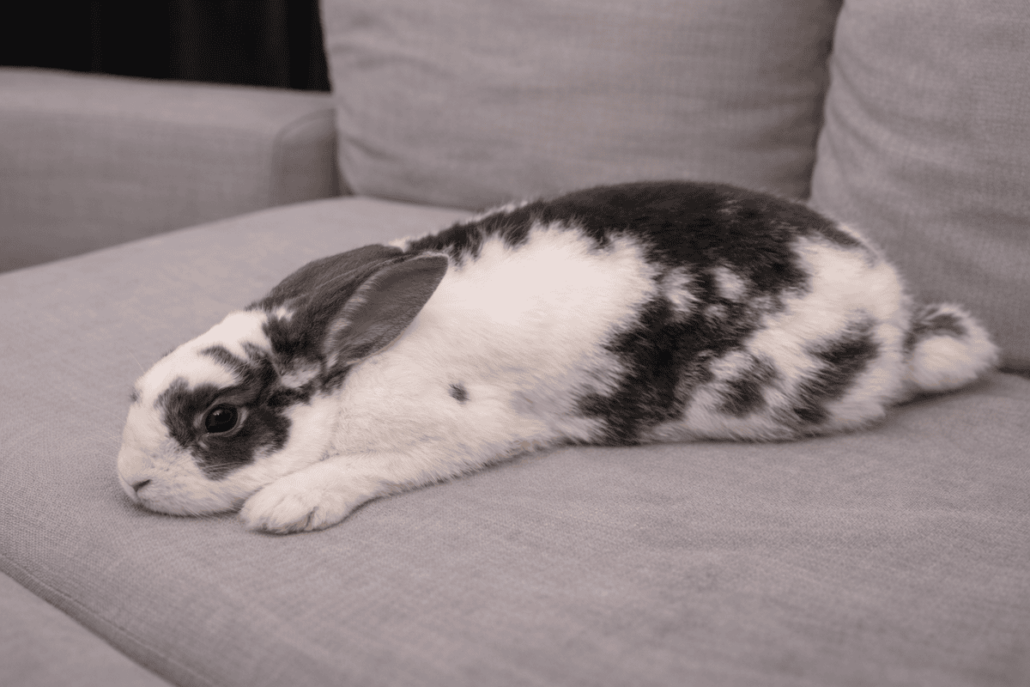
Some rabbits lie flat because they are in severe pain or developing circulatory failure.
⚠️ Important: “Just lying there” does not automatically mean paralysis.
6) Splay legs (congenital limb deformity)
A congenital condition in which young rabbits splay their front and/or hind legs away from the body.
They often compensate by building muscle and can move, albeit differently. They should be kept on non-slip surfaces (thick straw, grass, VetBeds, carpets, etc.).
A brace (orthosis) for the front legs can help significantly and may improve the condition.
What does the current literature say?
Floppy Rabbit Syndrome has been described for years, but there is limited high-quality, systematic research.
A recent retrospective study from the University of Veterinary Medicine Vienna (Glöckel, 2023) classifies Floppy Rabbit Syndrome clinically as consistent with a generalized lower motor neuron lesion and highlights the risk of misdiagnosis (e.g. trauma) and premature euthanasia.
Clinical reports (e.g. Richardson, 2013) also suggest that some “collapsing rabbit / floppy rabbit” cases were associated with hypokalemia, although this is not the cause in all cases.
Possible causes of Floppy Rabbit Syndrome (FRS)
The exact cause of Floppy Rabbit Syndrome (FRS) is still not fully understood. It is therefore described as a syndrome—a group of symptoms with different possible triggers.
Most discussed are metabolic disturbances such as electrolyte imbalances (especially hypokalemia), hypoglycemia, low potassium or calcium levels, acute circulatory problems, and in rare cases toxins (e.g. spoiled food).
Nutritional deficiencies (e.g. selenium, vitamin E) are also considered. Autoimmune mechanisms (similar to Guillain-Barré syndrome in humans) are suspected in some cases.
Case reports also describe rabbits becoming suddenly flaccid while remaining conscious, suggesting a disorder at the level of muscle or peripheral nerve transmission.
Diagnosis: How is Floppy Rabbit Syndrome diagnosed?
Floppy Rabbit Syndrome is a diagnosis established after ruling out other causes. A veterinarian will typically proceed as follows:
Clinical examination
- Level of consciousness / neurological status
- Temperature, heart rate, respiratory rate
- Neurological and orthopedic exam (reflexes, pain response)
Imaging (very important)
- X-rays of spine and pelvis
- CT or MRI if subtle fractures are suspected
Blood tests (essential!)
- Glucose
- Electrolytes (potassium, calcium, sodium)
- Liver and kidney parameters
- Inflammatory markers
- CK (muscle enzyme)
- E. cuniculi titer (only indicates exposure, not causation)
Blood values in Floppy Rabbit Syndrome: CK often markedly elevated
Blood tests in rabbits with FRS often show abnormalities. A particularly typical finding is elevated creatine kinase (CK), sometimes accompanied by increased AST.
In one case series, CK was elevated in all affected rabbits. This suggests a myopathy.
It was also observed that as CK levels returned to normal, rabbits regained motor function simultaneously. This indicates that muscle involvement may play a key role and that blood tests are useful for monitoring progression.
Feces, diet, and environment history
- Spoiled or decomposing food?
- Hay quality?
- New foods or treats?
- Access to toxic plants?
If in doubt, consult a veterinarian specialized in neurology.
Treatment: How is Floppy Rabbit Syndrome treated?
“The main problem when presenting rabbits with FRS is that, due to the limited data available, this condition is not well known among practicing veterinarians. This creates a risk that, due to misinterpretation as a traumatic spinal cord injury, affected animals may be euthanized prematurely.”
— Glöckel, 2023
Because the cause may be unclear, treatment is primarily symptomatic and often requires intensive care.
Clinical management includes:
1) Thermal support
- Continuous temperature monitoring
- Safe heat sources (e.g. protected heat pads, SnuggleSafe)
- Avoid overheating
2) Fluid therapy and circulatory support
- Balanced electrolyte solutions (preferably IV)
- Adjust according to glucose and electrolyte levels
- Monitor perfusion and circulation
3) Pain management
- Analgesics as indicated
4) Nutritional and GI support
- Assisted feeding (e.g. Critical Care)
- Prokinetics if needed
5) Supplementation
- Vitamin E and selenium if deficiency suspected
6) Physiotherapy
- Passive movement
- Regular repositioning
Overall, management must be intensive, with close monitoring and continuous adjustment.
Very important
Do not just wait. Many rabbits can develop shock or digestive problems very quickly without veterinary care.
Prognosis: Can rabbits recover?
Yes—and in most cases, quite well.
- Symptoms can improve within hours to days
- Near-complete recovery often occurs within 2–7 days
- Some rabbits recover fully
- Others may have residual deficits or relapses
Prognosis depends on:
- How quickly treatment is started
- Whether it is truly Floppy Rabbit Syndrome or another condition
- Prevention of secondary complications (hypothermia, GI stasis)
First aid at home (until you reach a veterinarian)
If your rabbit suddenly becomes floppy or immobile:
Immediately:
- Provide warmth (not too hot)
- Keep the rabbit calm and avoid unnecessary handling
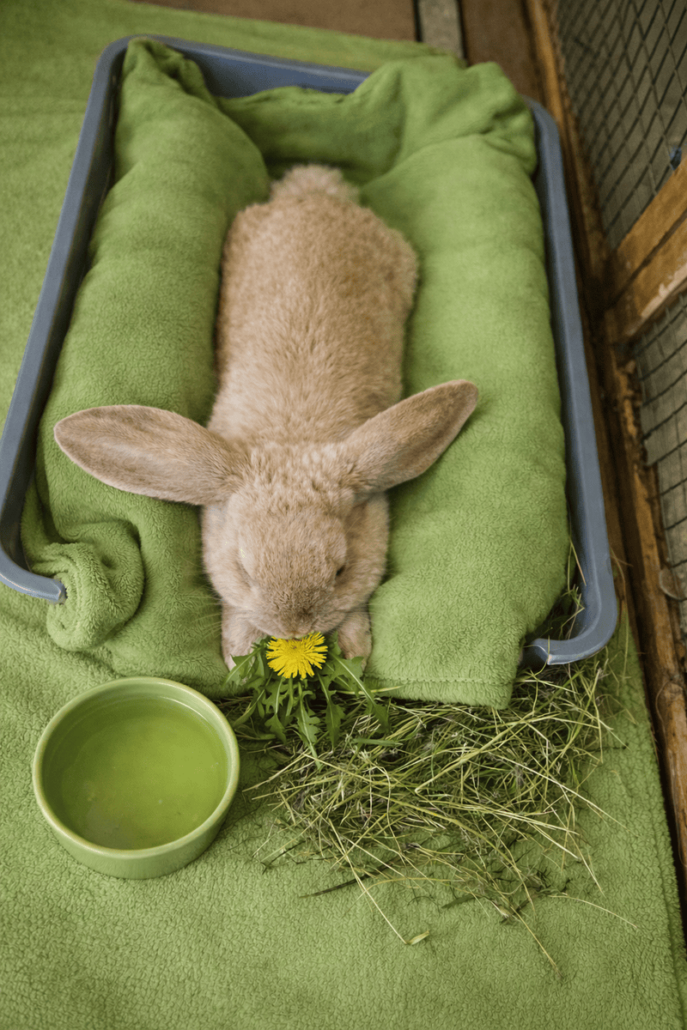
- Offer food and water directly
- If eating: monitor and see a rabbit-savvy vet promptly
- If not eating/drinking: emergency vet
Do not:
- Move the rabbit roughly
- Give medications “just in case” (especially human medications)
Frequently asked questions (FAQ)
Is Floppy Rabbit Syndrome contagious?
No, the syndrome itself is not contagious, but underlying causes (e.g. toxins, feed issues) may affect multiple animals.
Is it a stroke?
Strokes are rare in rabbits. This condition is usually muscle weakness/paralysis rather than a brain infarction.
Can it be caused by E. cuniculi?
It can look similar, but FRS is not automatically EC. Proper differentiation is essential.
Should a rabbit with Floppy Rabbit Syndrome be euthanized?
Definitely not by default. Many cases that appear hopeless can stabilize and recover.
Euthanasia should only be considered after proper diagnostics and realistic prognosis assessment.
Sources, among others:
Ewringmann A, Hrsg. Leitsymptome beim Kaninchen – Diagnostischer Leitfaden und Therapie. 3., überarbeitete und erweiterte Auflage. Stuttgart: Enke Verlag; 2016
Glöckel J: Retrospektive Auswertung von Kaninchen mit Anzeichen einer generalisierten unteren Motoneuron Läsion („Floppy Rabbit Syndrome“), Veterinärmedizinische Universität Wien, 2023.
Richardson V: Collapsing rabbit, Companion Animal, 2013.
Skinner A: Floppy Rabbit Syndrome: A case series (Kongressbeitrag/Fallserie, z.B. FASAVA Proceedings).
Harcourt-Brown F: Textbook of Rabbit Medicine, 2. Auflage, Elsevier, 2013.
Varga M: Textbook of Rabbit Medicine, Elsevier, 2022.
Mayer J, Donnelly TM: Clinical Veterinary Advisor: Birds and Exotic Pets, Elsevier, 2013.