
Feces or urine stuck to the anogenital area
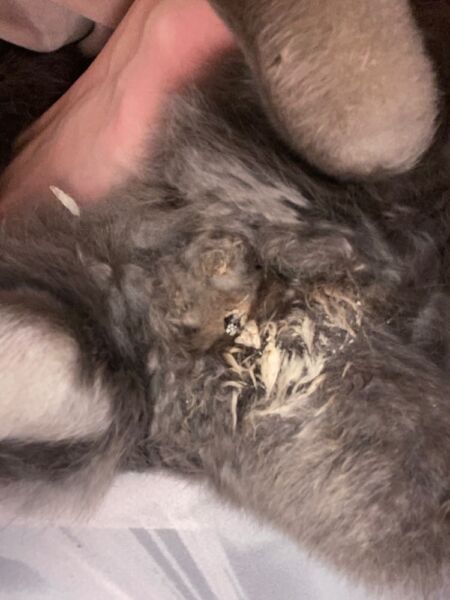
Many illnesses can cause diarrhea, increased production of cecotropes, or urinary incontinence. As a result, the genital region may become completely dirty, with feces or urine stuck to it and the fur soiled.
Rabbits should be checked regularly to ensure that this area remains clean and dry.
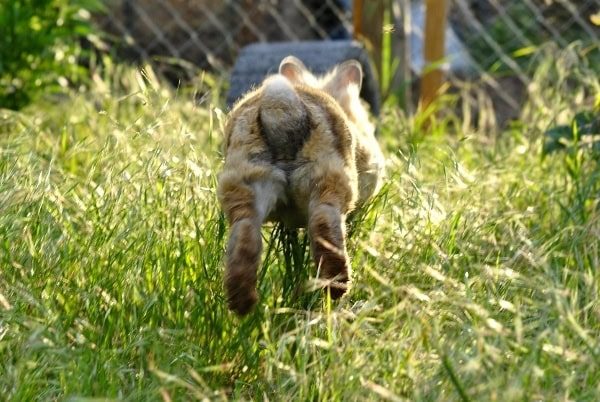
A gentle way to check is to observe the area while the rabbit is hopping or when it is relaxed and stretching its hind legs backward. This allows the area to be inspected without causing stress and without needing to lift the rabbit.
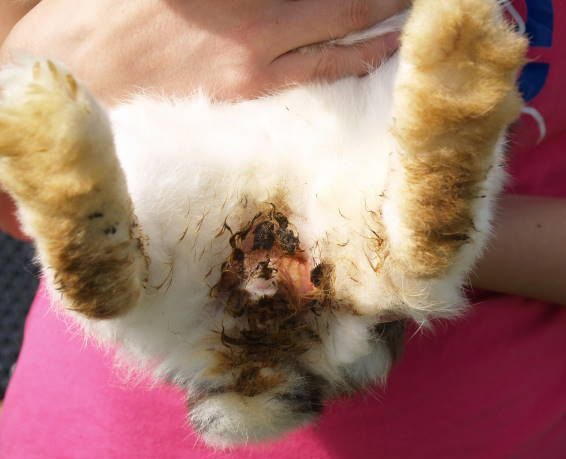
Many animals suffer from a condition that goes untreated. Cleaning the bottom alone is not enough! There is always an underlying cause behind it.
Rabbits with a dirty tail are very attractive to flies, which may lay their eggs there. When the eggs hatch, the larvae feed on the sick animal.
It is one of the most serious and cruel conditions they can suffer from. That is why every rabbit must be well protected to prevent this from happening.
In rabbits with dirt or damp fur, there is a higher risk of flystrike during the summer months. The underlying cause must be identified and treated quickly. The genital area must be kept extremely clean, and the rabbit should be temporarily protected by keeping it indoors, using antiparasitic spot-on treatments, and installing fly screens to prevent flies from laying eggs.
The genital region should be checked at least twice a day, cleaned if necessary, and carefully examined for possible larvae. These often hide in the folds on both sides of the genitals as well as at the base of the tail.
Contents
- Proper care when a rabbit’s bottom is dirty
- Hygienic trimming around a rabbit’s tail
- How to bathe a rabbit properly
- How to do it correctly
- Drying and brushing (essential)
- Attention: skin problems in rabbits
- Cleaning the perianal sacs
- A dirty tail always has a cause!
- Urine-stained tail:
- Chronic problem – how to manage it properly
Proper care when a rabbit’s bottom is dirty
Carefully check the rabbit for signs of flystrike. Look for very small eggs, especially above the tail, around the genital area, and in the folds on either side of the genitals.
Hygienic trimming around a rabbit’s tail
When a rabbit has a dirty tail, it may be necessary to perform a hygienic trim of the fur around the tail, anus, and genitals.
If there is matted fur or dried debris, it can be removed with small round-tipped scissors, cutting only the fur and taking great care not to injure the skin or the genitals. Never use pointed scissors.
In practice, it is often safer to use a clipper. With rabbits, this greatly reduces the risk of injury and makes the procedure faster and less stressful.
Keep in mind that rabbit fur is fine but very dense. Many low-power clippers get stuck easily. For this reason, it is important to use a clipper suitable for thick fur that can cut effectively.
How to bathe a rabbit properly
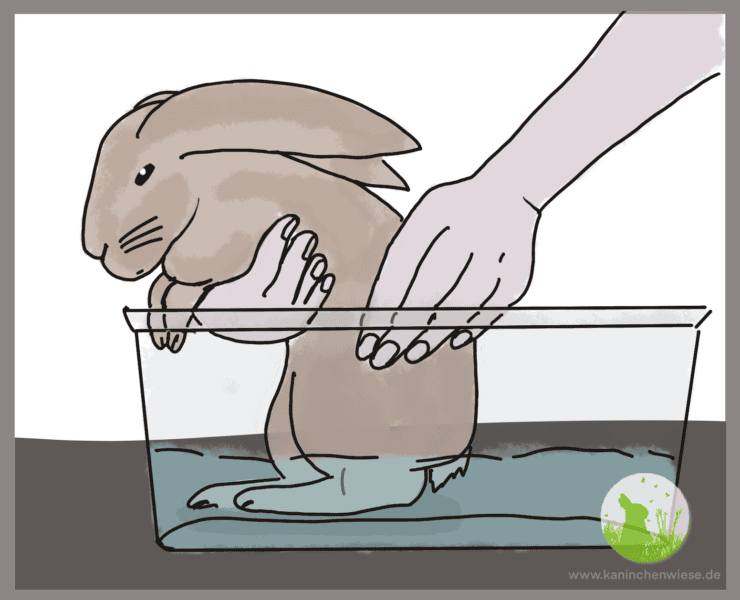
If a rabbit has a dirty tail, bathing should be limited to the affected area. The whole body should not be bathed unless it is completely dirty, which usually only occurs in cases of serious illness or neglect.
How to do it correctly
Place the rabbit with its bottom in a container of lukewarm water with a small amount of mild soap. It is best to use neutral soap, natural soap, or a gentle baby shampoo.
You can also clean only the dirty area under the tap in the sink.
It is advisable to place a non-slip mat, a towel, or another firm surface in the container or bathtub to prevent the rabbit from slipping during the bath.
Make sure the rabbit remains seated with its bottom in the water long enough for the crusts to soften. To make this easier, you can gently cover its head with a towel, hold it firmly without squeezing, offer some food, or place it in a small box to limit movement.
After a few minutes, clean the genital area with a damp cloth, carefully removing the softened crusts and dirt.
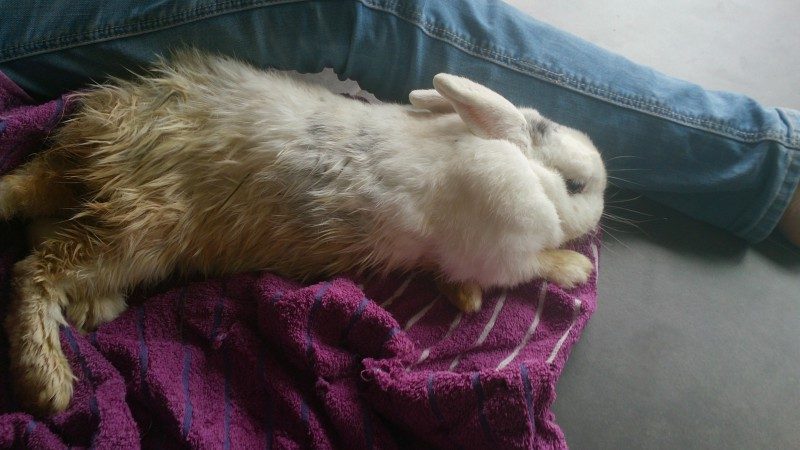
Afterwards, wrap the rabbit in a towel and dry it thoroughly.
Drying and brushing (essential)
It is essential to dry the fur completely with a hair dryer and brush it until it becomes loose and fluffy again. Only then can the fur properly protect the skin and better repel urine and feces.
To remove tangles in the anogenital area, the following work well:
- Fine-toothed combs
- Flea combs
Ideally, the fur should be brushed while drying. If the fur is not brushed, it can become matted, the skin may become irritated, and dirt will easily accumulate again.
The hair dryer should not be too hot and must be kept at a safe distance from the animal.
After drying, the rabbit should remain in a warm, draft-free place until it is completely dry. Otherwise, it may catch a cold.
Once the most severe crusts have been removed, the area can be kept clean daily with a damp cloth or with fragrance-free baby wipes (99% water). This reduces the need for frequent bathing, as washing too often can cause skin irritation.
Attention: skin problems in rabbits
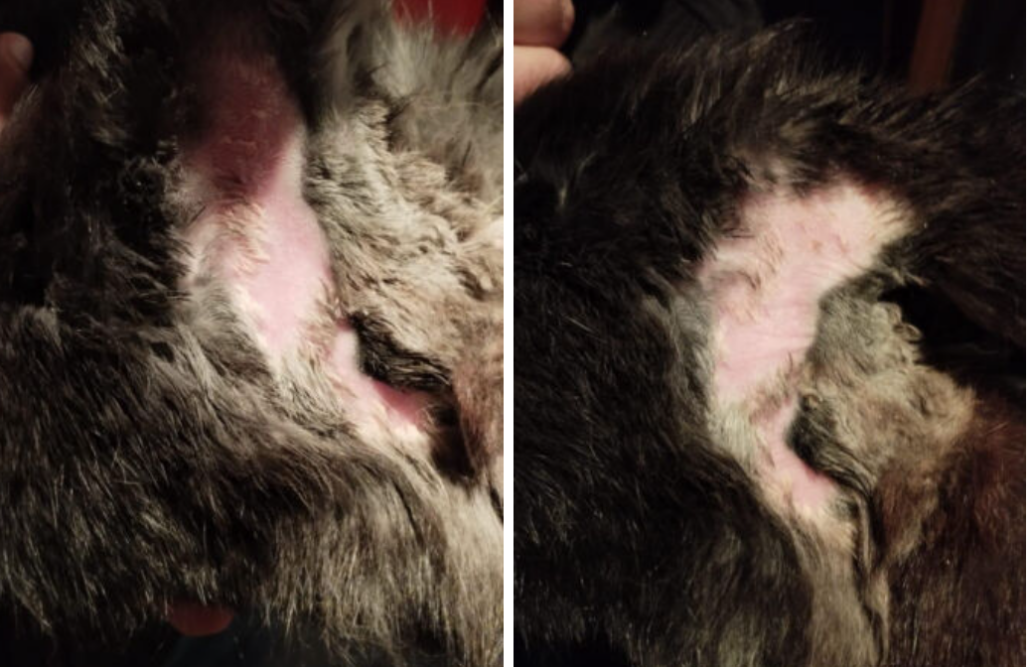
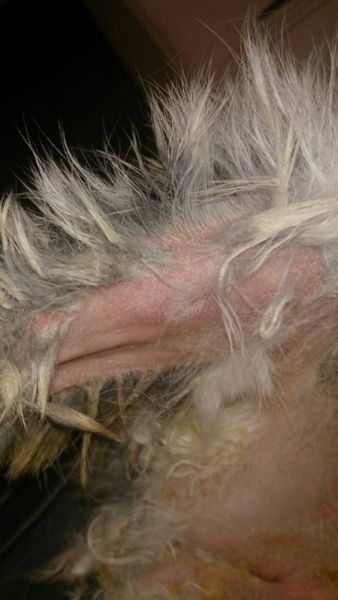
If the skin shows flaking, white or yellowish plaques, hair loss, redness, or inflamed areas, this indicates a skin condition. Rabbit skin is very sensitive and can deteriorate quickly.
These inflammations are very painful and should not be underestimated. They require veterinary attention and treatment with anti-inflammatory pain medication, along with proper skin care. Without treatment, the problem can worsen in a short time.
As a supportive measure, soothing baths with tannin-rich substances can be used, for example with a concentrated mallow infusion. This type of bath helps dry the skin, reduce irritation, and support recovery.
Cleaning the perianal sacs
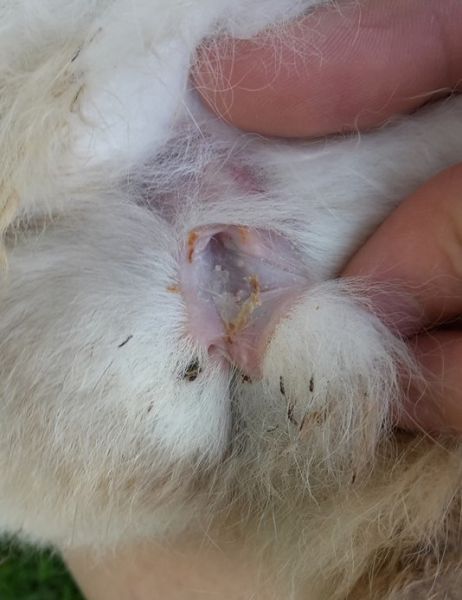
On either side of the genital organs there is a skin pocket that contains the anal glands (scent glands used for marking territory) and the inguinal glands.
These perianal sacs are not cleaned by all rabbits and, especially after episodes of diarrhea or problems with cecotropes, they can become quite dirty. In that case, they should be cleaned carefully using a cotton swab slightly moistened with water or oil.
The secretion, which may be yellowish, whitish, or brown, has an unpleasant smell and can harden inside the glands. If you suspect there is dirt or a problem, it is best to clean them.
The perianal sacs are also a common place for fly larvae to appear; they are often found there first.
A dirty tail always has a cause!
In cases of stuck feces, incontinence, or the accumulation of feces stuck to the fur, a veterinary examination is essential. If possible, bring a fecal sample collected over three days or a sample of the diarrhea.
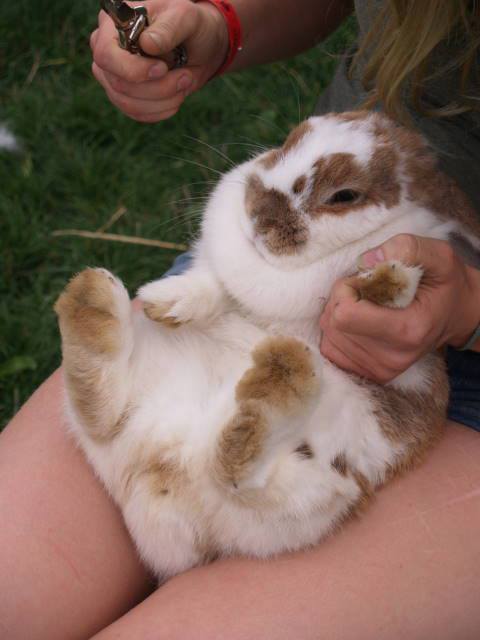
Possible causes of a dirty anogenital region
Bottom area soiled with feces:
- Overweight: The rabbit cannot eat its cecotropes because it cannot physically reach them. The rabbit needs to lose weight.
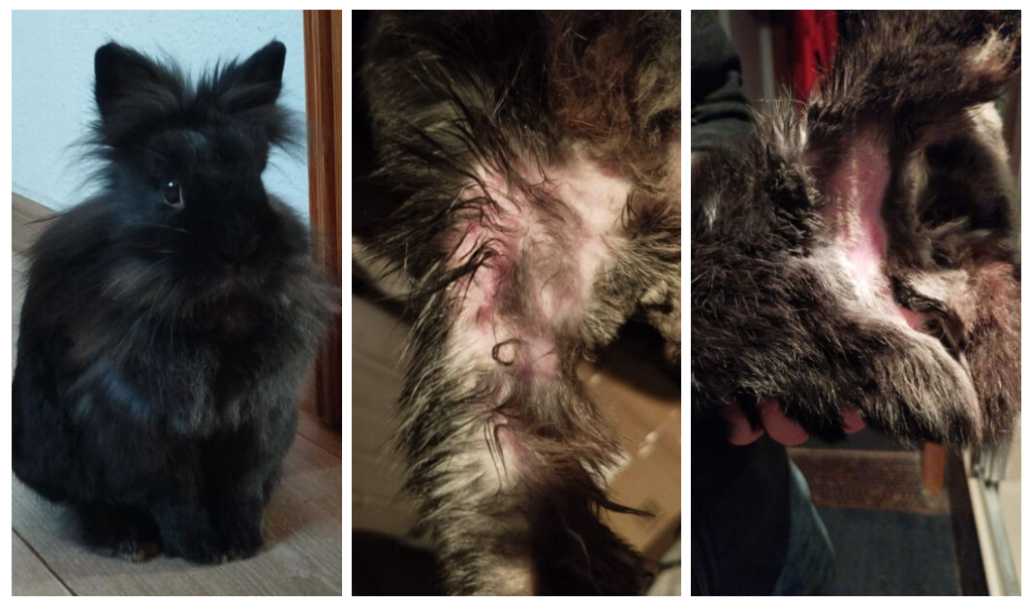
- Very dense fur around the rabbit’s bottom (depending on the breed: Lionhead, Angora, Teddy, etc.): the fur must be trimmed regularly.
- Intestinal parasites (worms, coccidia): detectable through a fecal test and usually easy to treat.
- Yeasts (often due to overly energy-rich diets; rabbits need about 80% leafy greens and should not receive commercial dry feed or unhealthy treats).
- Dental disease: A simple inspection of the mouth reveals only about 20% of dental problems. X-rays from several angles and planes are required to detect up to 95% of dental diseases. If dental problems are present, consult a veterinarian specialized in rabbit dentistry. Proper treatment allows the rabbit to eat and digest normally again.
- Dry feed: Often leads to uneaten cecotropes. Learn about appropriate feeding without dry feed.
- Excess energy or nutrients (diet too rich), for example when too many root vegetables or fruits are fed. Switch to a diet based mainly on green forage.
- Food that is too crumbly (such as pellets or dry feed components that are ground and then pressed or baked; in some cases also certain very herb-rich hays or dried herbs).
- Sudden dietary changes (for example hay during the day and large amounts of fresh or dry food in the evening: first low energy, then very energy-rich).
- Medications or other causes that alter the taste of cecotropes, leading the rabbit to refuse to eat them.
- Joint diseases (spondylosis, osteoarthritis, etc.): The rabbit feels pain when trying to eat its cecotropes and therefore leaves them or sits on them. Detectable by X-ray.
- Inflammation of the cecum: Cecotropes are often expelled as a pasty mass in the early morning hours (not in the typical cluster form) and stick to the fur like thick diarrhea; during the rest of the day, normal hard droppings are passed.
- Dirty housing conditions: The rabbit sits in its own droppings. → More frequent cleaning is required.
- Other causes of diarrhea, such as megacolon in “butterfly” rabbits, viral diseases, bacterial infections, or antibiotic treatments.
As this list shows, there are many possible causes. Only a veterinarian experienced with rabbits and proper diagnostics can identify the underlying problem. Seek out a specialist—there is always a cause.
Urine-stained tail:
Urinary incontinence caused by bladder diseases such as cystitis or bladder sludge (sediment accumulation), which can lead to matted fur and sticky residues. → An X-ray can help diagnose these conditions. In some cases, a urine test is also necessary.
Kidney failure: diagnosed through blood tests and, if needed, X-rays to rule out kidney stones.
Paralysis of various causes, for example associated with Encephalitozoon cuniculi.
Joint diseases, such as spondylosis: the rabbit cannot adopt the proper posture when urinating due to pain and ends up wetting itself.
Incontinence caused by Encephalitozoon cuniculi (commonly treated with fenbendazole, e.g., Panacur). It may occur shortly after infection—for example when a new rabbit lives with carrier animals—or during periods of stress or immunosuppression.
Anatomical deviation of the genital organs (penis or vulva): the rabbit urinates to one side. If care becomes too difficult or skin lesions develop, surgical correction should be considered.
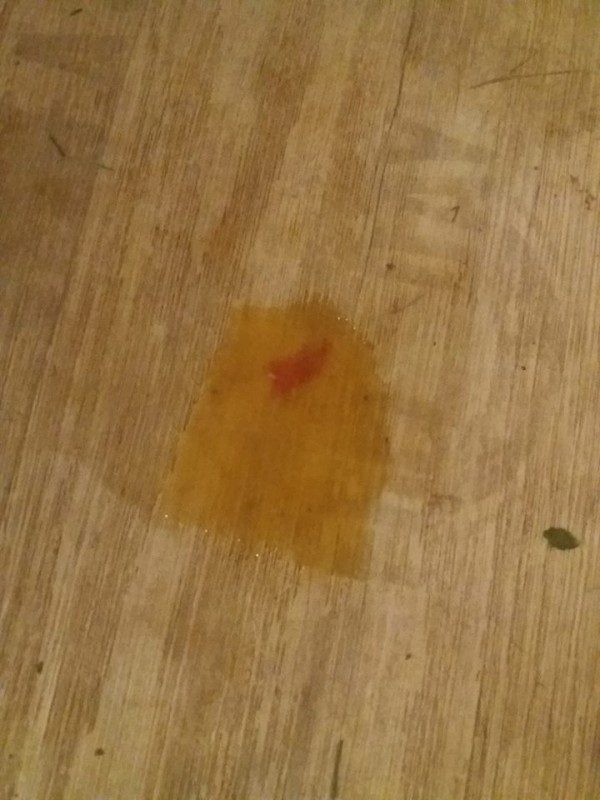
In most rabbits, diseases of the urinary tract remain unnoticed; they suffer silently. Blood in the urine is rarely seen.
Chronic problem – how to manage it properly
If the cause cannot be resolved immediately or the problem persists, it is essential to adapt the care routine. The most effective measure is to trim the fur in the affected area as short as possible. This makes drying easier, reduces moisture buildup on the skin, and lowers the risk of dermatitis.
A suitable clipper should be used for this purpose, one that can cut the rabbit’s dense fur without difficulty.
Once a week, all matted and dirty fur should be carefully removed and the area washed with a mild product suitable for rabbit skin. This helps prevent skin irritation and infections.
Daily cleaning can be done with a damp cloth or fragrance-free baby wipes (99% water), which helps keep the area clean and reduces the need for more frequent baths.
It is important not to bathe the rabbit too often, as repeated washing can promote skin inflammation.
In addition, strict monitoring for fly larvae is necessary, especially during warm periods, with daily checks carried out without exception.
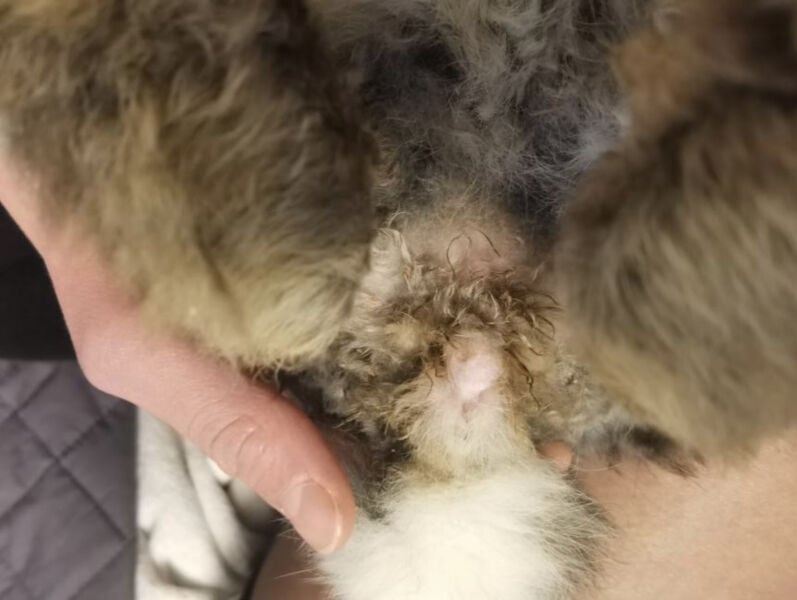
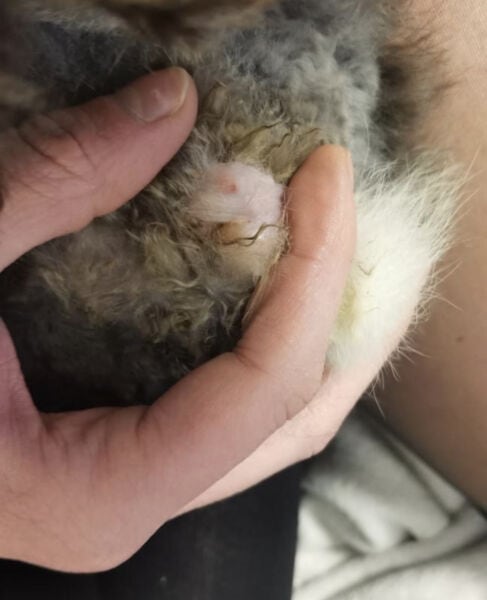
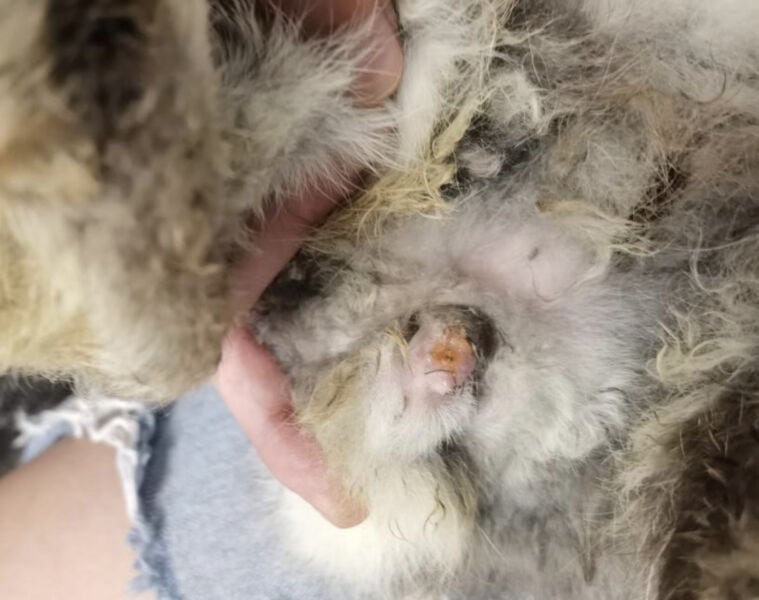
A deviated penis caused the neutered male to wet himself with urine, even the leg. Corrective penile surgery resolved the problem.
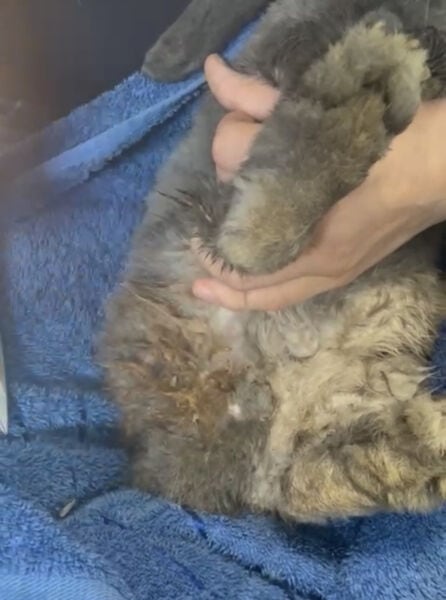
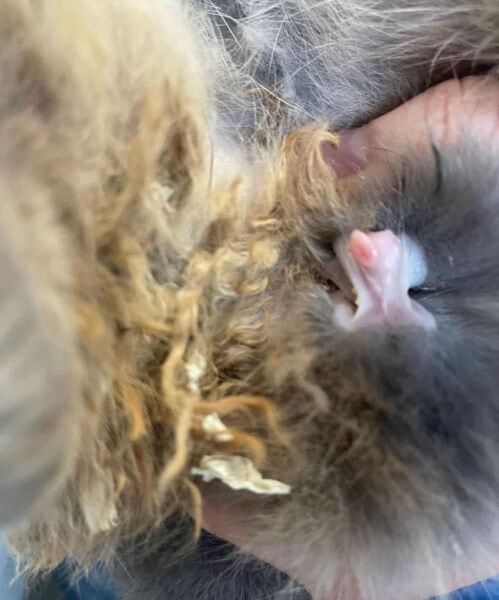
…caused by a deviated penis.
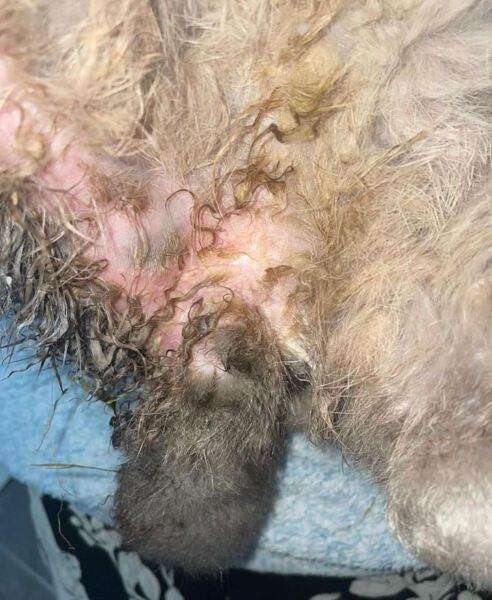
Everything is sore and painful…
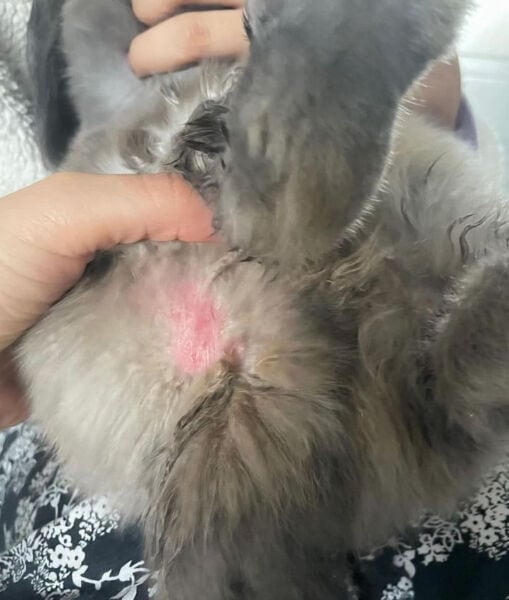
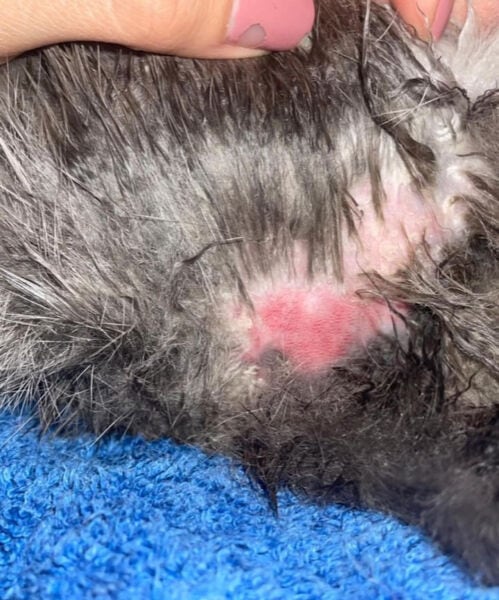
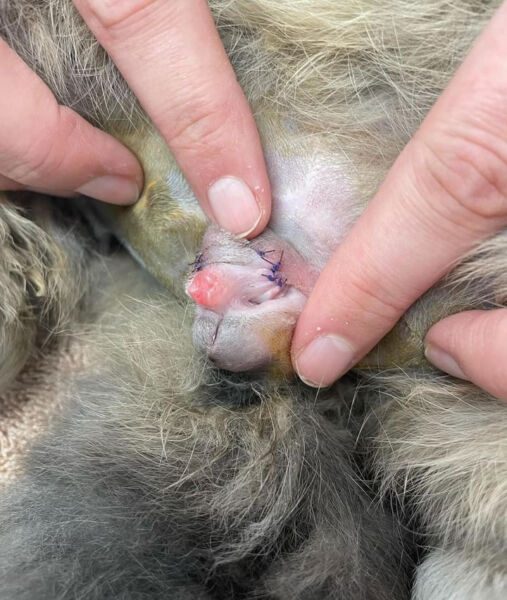
Deviated vulva, causing the female rabbit to wet herself with urine. The leg also becomes wet:
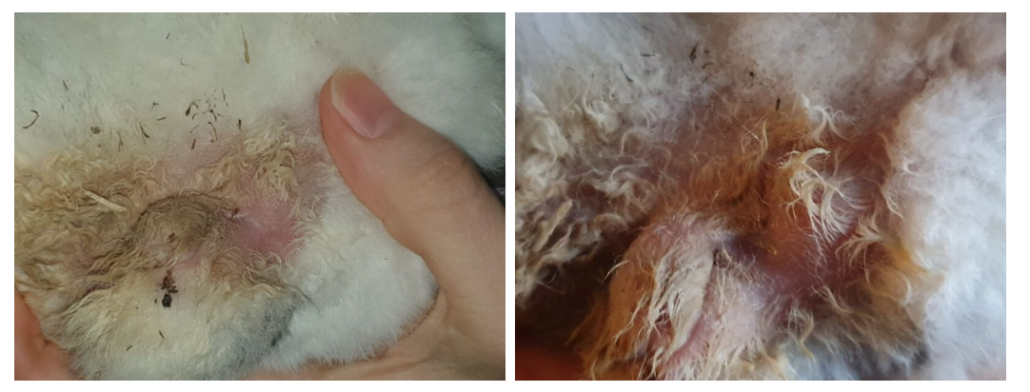
Penis injury caused by housing unneutered male rabbits together during puberty. The males were later neutered and became compatible again, but due to the bite injury to the penis he developed permanent urinary wetting and had to receive daily care and be checked for flystrike.
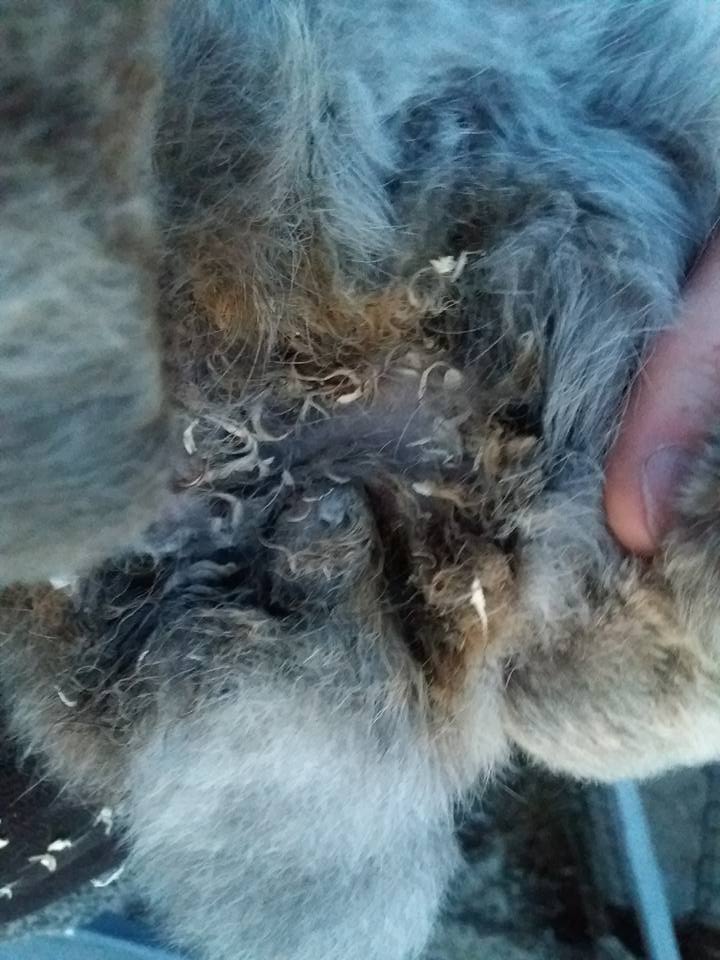
Matted, dirty and tangled fur should be trimmed.
Parvus has a deviated penis and therefore urinated on himself. By keeping the fur short and using RoboCare Purexam (letting it act for a short time), he no longer has skin inflammation or hair loss today.