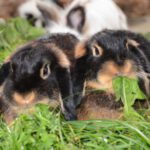

Proper nutrition for young rabbits is essential for a healthy life. During the first months, the teeth, jaw, and intestinal flora develop very rapidly; mistakes at this stage often lead to permanent dental disease, digestive problems, or developmental disorders.
This article explains how to feed baby rabbits optimally, which types of food are suitable, and why the early introduction of fresh forage is indispensable.
Why Nutrition Is So Important for Young Rabbits
Development of Teeth and Jaw
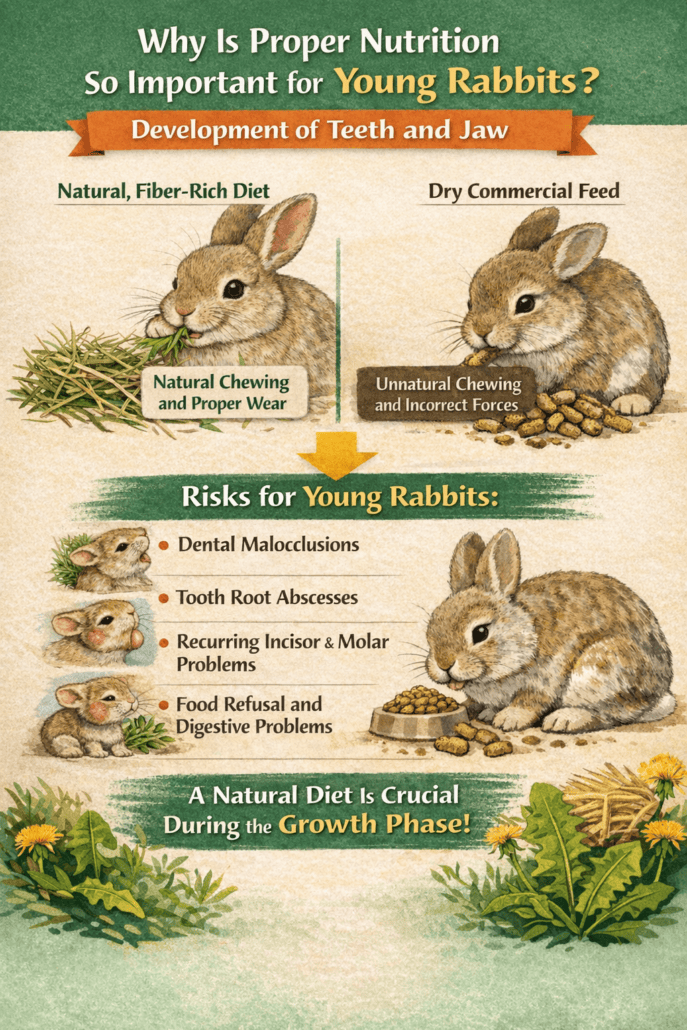
A rabbit’s teeth grow throughout its entire life. For them to wear down properly and for the jaw to develop in a healthy way, young rabbits need a diet rich in fiber and with sufficient structure, allowing natural chewing. Rabbits move their jaw from right to left in a horizontal motion, so that all teeth rub against each other and wear down evenly.
Dry commercial feed, by contrast, crumbles when chewed, causes almost no wear, and makes the rabbit chew in an unnatural way. This creates incorrect forces on the jaw and on the growth zones of the teeth. In young animals, these forces can lead to deformities of the skull and jaw, with lifelong consequences such as:
– dental malocclusions
– tooth root abscesses
– recurring problems with incisors and molars
– increased risk of food refusal and gas
For this reason, a natural diet is especially crucial during the growth phase.
Development of a Stable Intestinal Microbiota
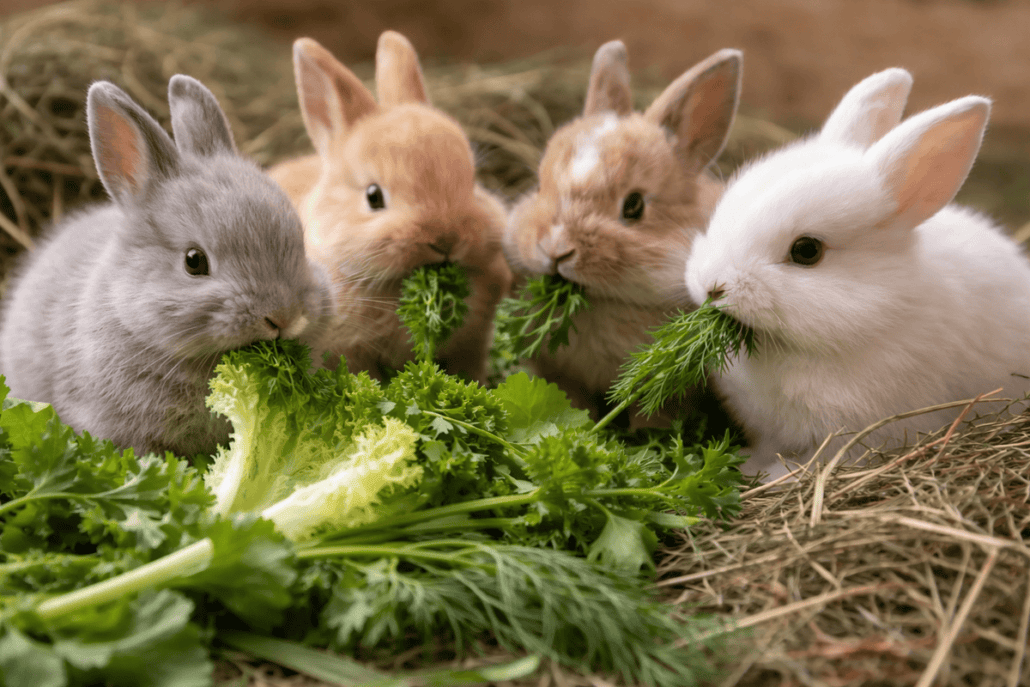
The digestive system of young rabbits is physiologically adapted to digest fresh green forage. This provides:
- natural crude fiber
- moisture
- secondary plant compounds
- structural components that promote gut motility and intestinal health
Industrial feed such as pellets, compound feeds, or grain-based products overloads the digestive system and can lead to dysbiosis.
The intestinal microbiota develops through the intake of the mother’s cecotrophs. Animals that are separated during the first four months of life cannot develop a healthy microbiota properly. This microbiota is the foundation of a functional and resilient immune system.
A third key factor is the absence of coccidia: these intestinal parasites disrupt digestion and can cause growth retardation, malnutrition, and permanent damage to the intestinal microbiota.
What Young Rabbits Should Eat: Optimal Basic Diet
1. Plenty of Fresh Green Forage
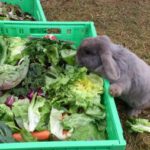
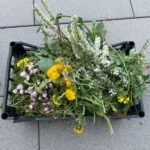
Green forage is the natural basis of the diet. Suitable foods include, among others:
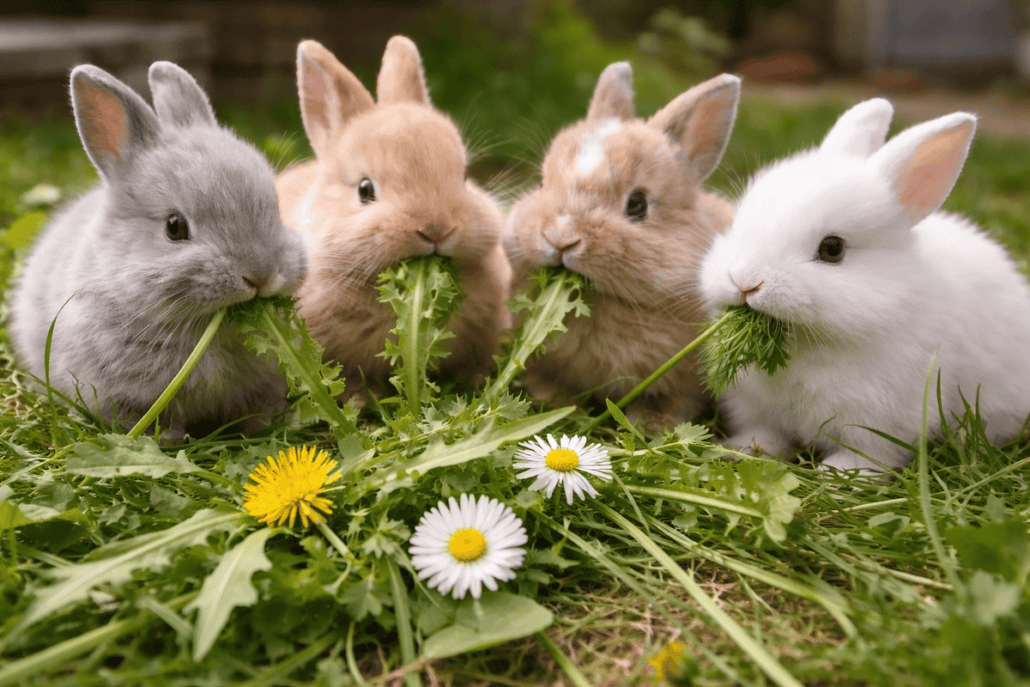
- Meadow plants with herbs and grasses (e.g. dandelion, broadleaf and ribwort plantain, wild parsley, daisies, etc.)
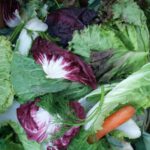
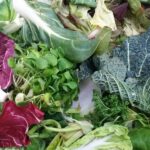
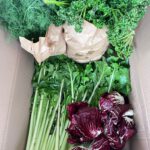
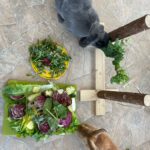
- Bitter salads: endive, chicory, escarole, radicchio, dandelion leaves
- Carrot tops, celery leaves
- Herbs such as dill, parsley, basil
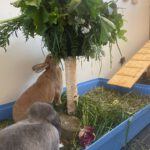
- Fresh branches and leaves from non-toxic trees
Young rabbits generally tolerate fresh greens very well, as their digestive system adapts quickly, provided it is not disrupted by dry commercial feed such as pellets.
Food Lists:
List of Wild Herbs
List of Grasses
List of Vegetables
List of Culinary Herbs
List of Branches
List of Fruits
List of Seeds
List of Garden Plants
List of Houseplants
2. High-Quality Hay as a Supplement
Hay serves as a supplement, not as the main food. Herb-rich meadow hay supports digestion and the natural wear of the teeth.
3. Fresh Water
Preferably offered in a bowl and available at all times.
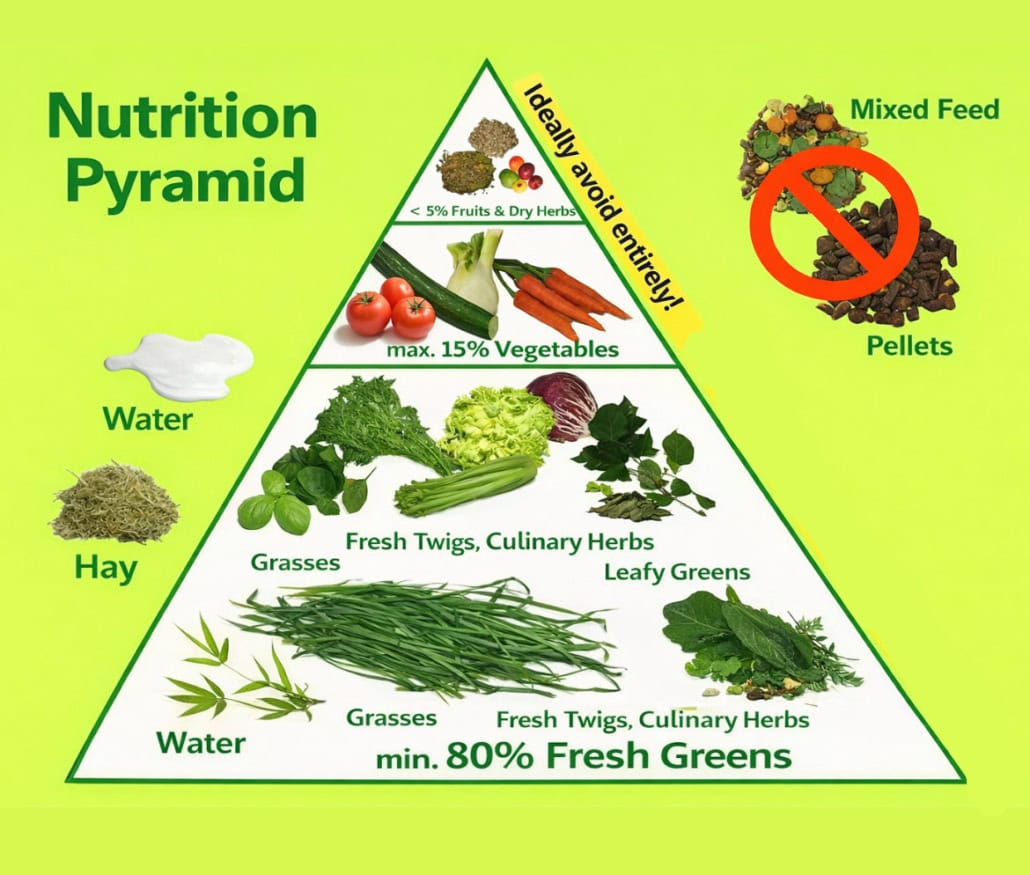
What Young Rabbits Must NOT Eat
Dry feed / pellets / rabbit muesli
Dry commercial feed is one of the main causes of dental and digestive problems.
It should be completely removed within three days. A gradual withdrawal is not necessary; prolonging it only maintains the harmful overload on the teeth.
Grain-based snacks and gnawing sticks
Too energy-dense and unnatural for the rabbit’s digestive system.
Cabbage and clover
Introduce only two weeks after dry feed has been eliminated and only gradually, once the intestinal microbiota has stabilized.
Proper Transition in Young Rabbits – Step by Step
Many young animals are fed incorrectly. Even so, a rapid change is possible and necessary to prevent dental and digestive problems as early as possible.
1. Remove dry feed
Eliminate it completely within a few days.
2. Introduce easily digestible green forage
Start with:
- dandelion
- plantain
- fresh grass
- endive
- aromatic herbs
Increase the amount daily and continue to raise it as long as the poop remain normal.
3. After two weeks: introduce cabbage and clover
Once dry feed has been completely removed and the rabbit is eating stably, different types of cabbage and clover can be added gradually.
More information on the transition in young animals (coming soon).
Fecal Analysis Before Changing the Diet: Detect Coccidia Early
Young rabbits are especially susceptible to coccidia.
Before offering large amounts of fresh green forage, a fecal examination of a three-day pooled sample should be carried out by a veterinarian experienced with rabbits to check for coccidia and other parasites.
Important:
→ If coccidia are detected, treatment must be carried out first and the diet changed only afterwards.
A dietary change in the presence of an infection can worsen the course of the disease.
Why the Origin Is Crucial
Even the best diet is of limited value if a young rabbit has already been raised improperly.
It is therefore essential to make sure the animal comes from a responsible breeder where young rabbits:
- are raised without any dry feed, exclusively on fresh green forage and grass
- live in stable social groups with plenty of space
- receive regular fecal examinations and appropriate vaccinations
- are demonstrably free of coccidia
- are already accustomed to a wide range of natural foods
Rabbits raised under such conditions develop a stable intestinal microbiota, healthy tooth and jaw development, and overall a much more resilient organism.
More information on purchasing rabbits (coming soon)
Practical Tips for Everyday Care
- Offer at least five different types of fresh green forage per day.
- Introduce new plants gradually.
- Provide branches (to reduce boredom and promote dental wear).
- Do not ration food: rabbits need unlimited access to fresh green forage day and night; it should be offered in sufficient quantity so that some is still left when fresh food is given again.
- Check the poop daily, especially during the growth phase.
A Natural Diet for Young Rabbits Protects Them for Life
Young rabbits do not need pellets, dry feed, or artificial snacks. They need fresh plants, structured food, and a stable intestinal microbiota.
An early and consistent transition to a green forage–based diet protects the teeth, digestion, and overall health, and lays the foundation for a long, problem-free life.
The more natural the diet, the healthier the rabbit.
Frequently Asked Questions
Common Questions About Feeding Young Rabbits
How long do baby rabbits drink milk?
During the first weeks of life, young rabbits feed on their mother’s milk. From the third week on, they begin to eat solid food, but depending on their development they may continue nursing for several more weeks— in some cases even up to 14–16 weeks if they remain with the mother.
What is the best food for baby rabbits?
The best diet consists of fresh green forage (meadow plants, herbs, leaves), supplemented with hay and water. A natural diet supports digestion, dental health, and balanced growth.
Can they eat wild herbs and plants from nature?
Yes—and they should, as soon as they start eating solid food.
From when can they be given fresh food?
From the moment they begin to eat solids. The food must be well tolerated and introduced gradually.
How sensitive is their digestion?
Young rabbits digest fiber-rich foods such as wild plants, hay, carrot tops, and bitter salads very well, but they cannot digest starch. This is why dry feed is harmful and can cause serious digestive disorders.
How often should they eat?
They must have constant access to suitable food. Green forage, hay, and water should be available 24 hours a day.
Do they need hay?
Yes. Hay is part of the basic diet and should always be available, even if large amounts of fresh greens are eaten.
Can they be given pellets or dry feed?
It is neither necessary nor recommended. Dry feed damages teeth, digestion, and the urinary tract.
Which vegetables are suitable?
Mainly leafy vegetables, herbs, bitter salads, and green leaves. New foods must be introduced slowly.
Can they eat fruit?
It is not necessary and is best avoided. If at all, only in minimal amounts as an occasional treat, since sugar can disrupt the microbiota and cause diarrhea.
Why is changing the diet delicate?
Because the intestinal microbiota is still developing. Sudden changes, too much concentrated food, or unfamiliar foods can cause diarrhea and other digestive problems.
How can you tell if a food does not agree with them?
Warning signs: diarrhea, soft or foul-smelling poop, gas, loss of appetite, or a bloated abdomen. In such cases, a rabbit-savvy veterinarian should be consulted; coccidia are often involved.
How much should they eat?
During the growth phase, they can eat large amounts. The goal is not a fixed quantity, but constant access to suitable food and good body development. Rabbits may eat as much as they want as long as the food is healthy: fresh wild plants, vegetable leaves, and hay.
Can they eat clover and cabbage?
Yes, but not as staple foods—only as part of a varied diet, in moderate amounts, and only once dry feed has been completely eliminated.
How should they be properly accustomed to their diet?
When changing homes, it is advisable to keep their previous diet for one or two days and make any changes gradually.