
Litter-Trained Rabbits For rabbits living indoors, being litter trained is an important topic. Even for rabbits kept in enclosures, litter-trained rabbits make everyday life much easier.
Why doesn’t my rabbit pee or poop in the litter box?
… and what can I do to help it become clean and tidy?
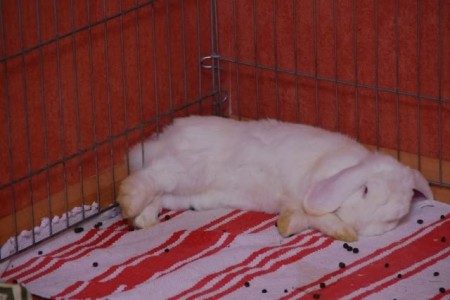
A white rabbit is lying relaxed on a blanket in its cage. Not all, but the vast majority of rabbits can become litter trained with the right approach. With a few simple tricks and some background knowledge, most rabbits can be taught to use a litter box. However, poops will still occasionally end up outside the box. Daily vacuuming is usually recommended.
Just like with dogs or cats, some kind of “toilet training” is necessary. However, since rabbits cannot really be “trained” in the same way, it is more about supporting their natural cleanliness. Rabbits are naturally very tidy animals and usually do their business in one or a few specific spots. Even in the wild, they have “toilet areas” that all group members use together.
A rabbit should never be punished for leaving a puddle somewhere (shouting, locking it in a cage, etc.). This is not only completely ineffective, it also frightens the rabbit. Rabbits do not understand the connection between punishment and their toileting behavior.
Tips and Tricks for Helping Your Rabbit Become Litter Trained
Preparation for Litter Training
- Place litter boxes, cage bases, or other easy-to-clean trays in all room or enclosure corners!
Rabbits need very large litter boxes with low sides so they can jump in quickly. Otherwise, they’re unlikely to become reliably litter trained.
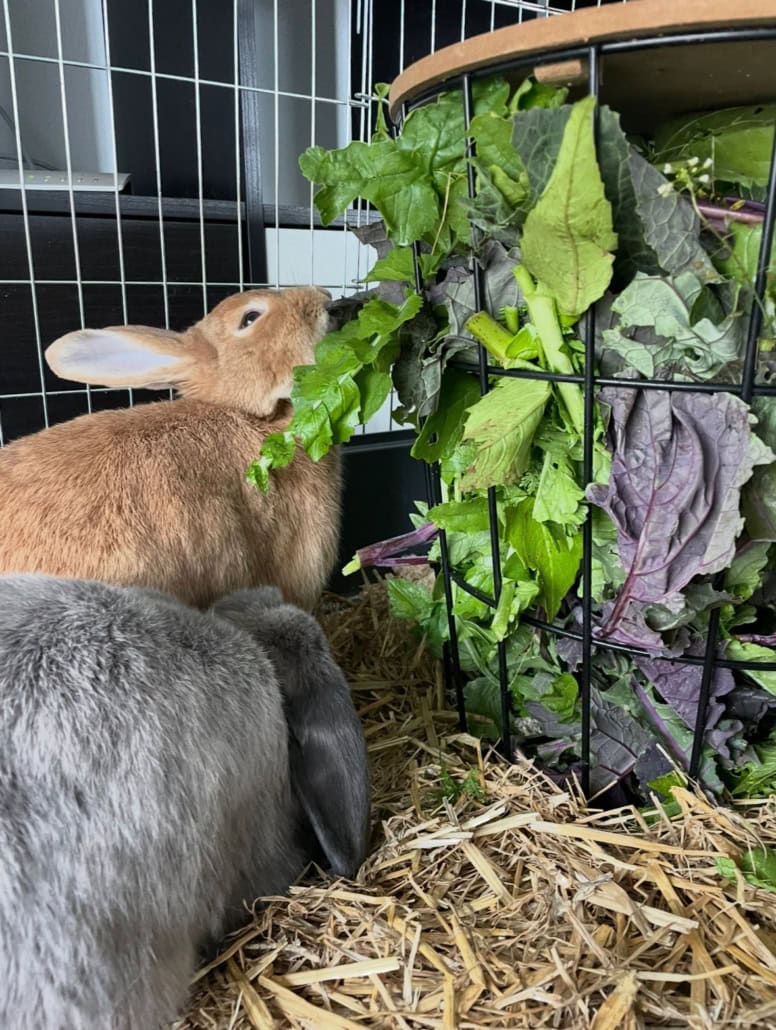
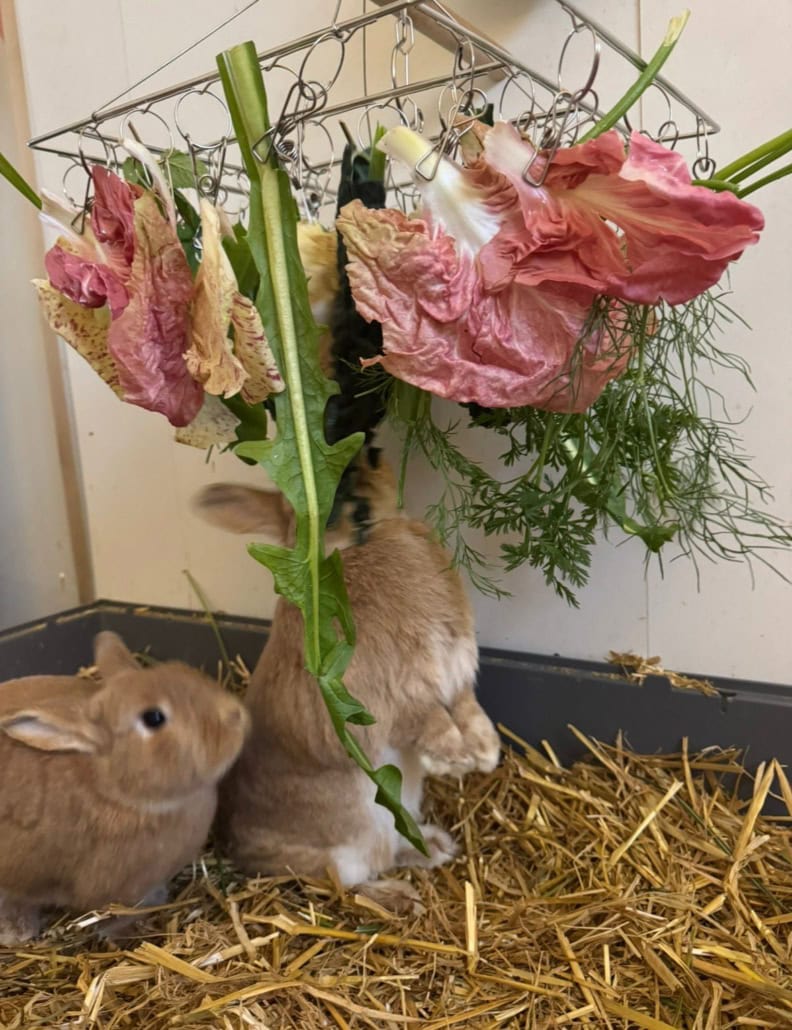
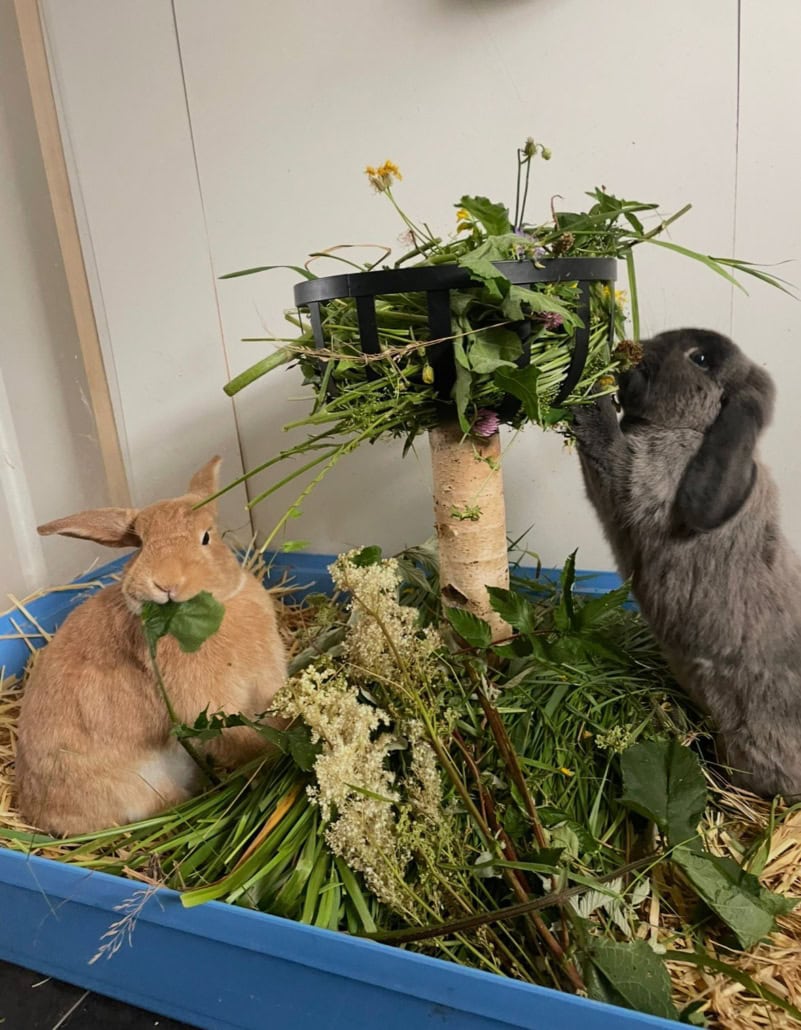
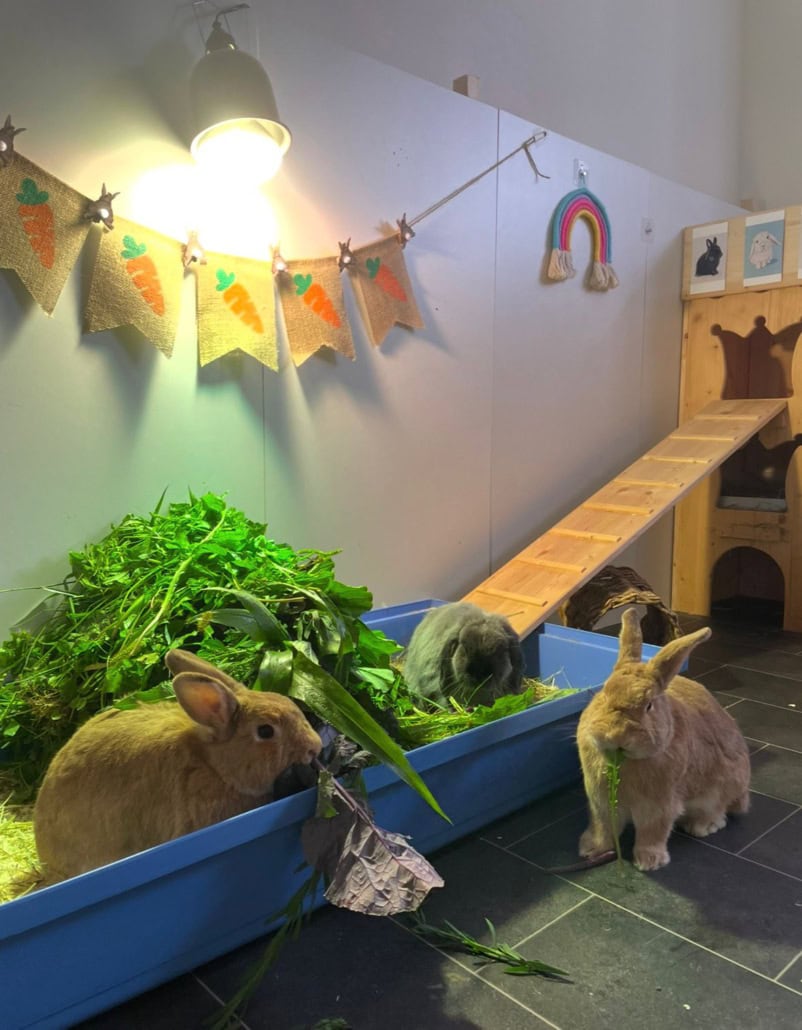
- Wherever food is offered (hay, fresh food, treats…), there must always be a large tray underneath. Rabbits pee and poop a lot while eating and will not stay clean in feeding areas without litter. Set things up so the rabbit is always sitting on a littered surface while eating! A large cage tray is recommended so the rabbit sits inside it while eating instead of sitting next to it and just pulling food out.
- The litter boxes should be cozy but very absorbent. A layer of wood pellets works well because they absorb moisture and control odor, and this should be covered with straw so the rabbit enjoys sitting there, feels comfortable, and doesn’t get dirty while peeing. For the training phase, sand can also work well because many rabbits like using it — but long term it smells too much.
- At the beginning, fill the litter boxes with used litter that smells like urine.
Litter boxes must always be easily accessible at all times!

The Training Process
- Place the rabbit in the litter box when it arrives so it becomes familiar with it. It can also help to associate the litter box with something positive (for example, food).
- Set up several large litter boxes in each room or enclosure, especially in all corners. Later, gradually remove the boxes that are not being used.
- At the beginning, keep the rabbit in a slightly smaller, enclosed area until it knows its resting place, feeding place, and toilet area and reliably uses the litter box there. Then gradually expand the area.
- If the rabbit goes next to the box, wipe up the spot with a paper towel and place the towel in the litter box so the rabbit smells that this is its toilet.
- If the rabbit keeps choosing a specific spot to pee or poop, place a litter box exactly there.
Helpful Things to Try if Litter Training Still Isn’t Working
- Set up even more large, flat litter boxes (for example cage trays) and later gradually remove the ones that are no longer being used.
- Feed your rabbit in or above the litter box — many rabbits pee and poop where they eat.
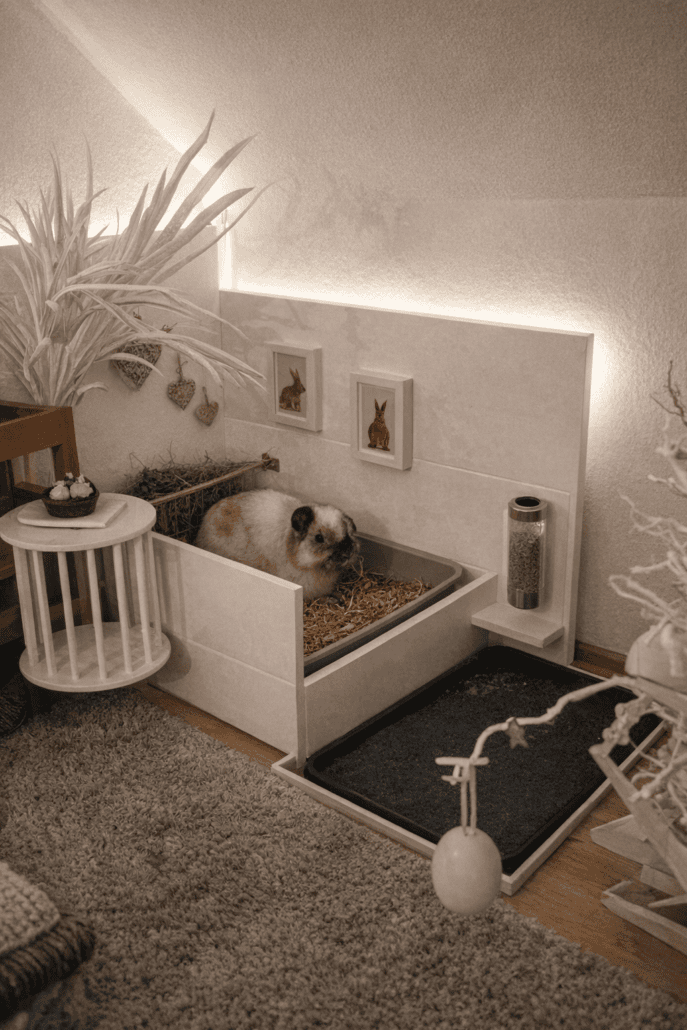
- Increase the attractiveness of the litter box: your rabbit should feel comfortable there, be able to eat inside it, sit and lie down easily, and ideally have some protection from above (like a roof).
- Remove carpets, blankets and other soft materials from the enclosure. Some rabbits prefer to pee on soft surfaces. Once your rabbit is reliably litter trained, you can slowly reintroduce them. To protect the floor temporarily, you can place pee pads under carpets.
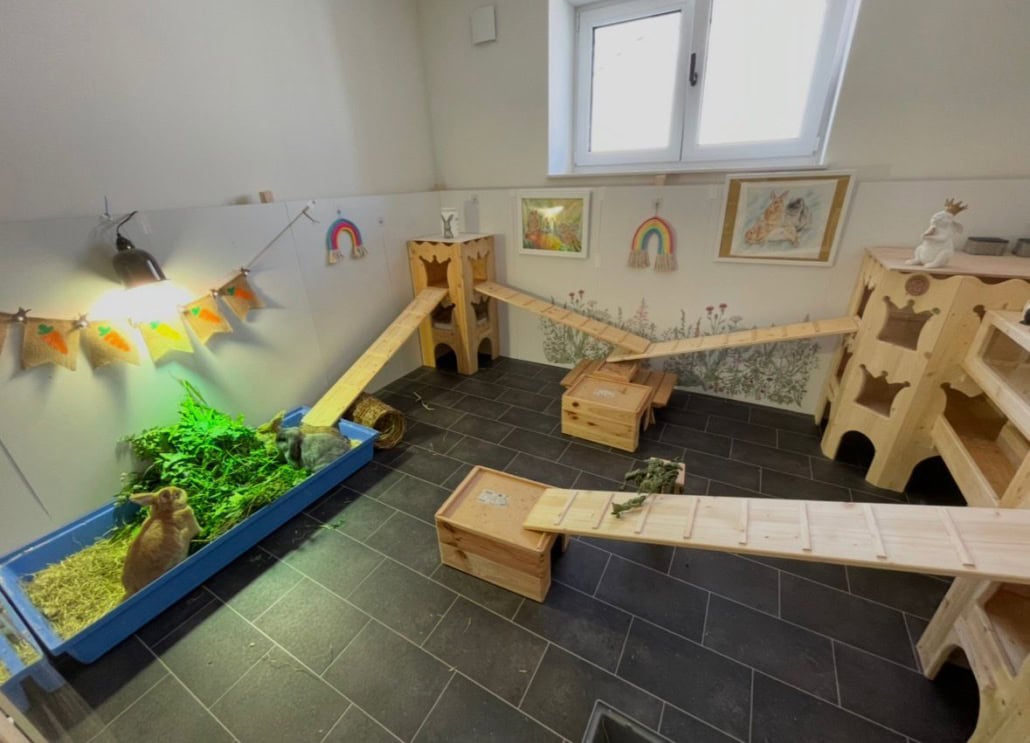
- Confine the rabbits to an area of about 4 m², use an easy-to-clean floor (PVC, tiles), and place large cage trays in all four corners.
- Check whether the rabbit has recently been bonded with another rabbit (territorial marking), is in heat, or may be ill (see below). Go through all listed points carefully! Problems also commonly occur during puberty (around the first year of life).
- Training takes time and patience. No rabbit becomes litter trained overnight!
If an accident happens…
With a few simple tricks, urine stains can be removed quite well. On mattresses and carpets, it often helps to spray glass cleaner onto the stain, let it soak in briefly, and then rub it out. In many cases, the stain almost completely disappears.
If you want to be extra sure, we’ve had very good experiences with “Fleckenteufel” by Dr. Beckmann (the version for fruit, red wine, and vegetables). We also use it successfully to remove stubborn dandelion stains from picking greens.
Causes of Litter Problems
- Territorial Marking
Rabbits don’t only mark their territory with scent glands, they also use urine and droppings. This is especially common in unneutered rabbits.
- Unneutered Males
This behavior is particularly extreme in unneutered males. Unneutered bucks are therefore hardly suitable for living indoors.
- Heat and False Pregnancy
During heat or false pregnancy, temporary loss of litter habits often occurs.
- Other Rabbits in the Household
Rabbits especially mark territory borders (along walls, enclosure bars, etc.) to mark their area. If there are additional rabbit groups in the same home, this behavior becomes even stronger and reliable litter training is often nearly impossible.
- New Areas or Freshly Cleaned Areas
When rabbits are introduced to a new area, or when smells or surroundings change (new furniture, after cleaning), marking behavior often increases.
- Group Size and Group Harmony
The larger and less harmonious the group, the stronger the marking behavior tends to be.
- Loss of Cleanliness After Adding a New Rabbit
Anyone adding a new rabbit should expect heavy marking and poor litter habits during bonding and for some time afterward, as the rabbits claim territory and clarify hierarchy.
- Marking During Puberty
Between about 6 and 12 months of age, many rabbits experience increased litter issues as they mature.
- (Not Yet Visible) Illness
Various illnesses can cause urine or stool incontinence. Possible causes include diarrhea, bladder stones, bladder infections, and many others. It is especially concerning if a previously clean rabbit suddenly becomes messy and urine appears everywhere. During shedding season, when rabbits produce “poop chains,” droppings may also be scattered more frequently.
- Rabbits with Arthritis, Spondylosis, etc.
Your rabbit may technically still be able to get into the litter box, but it may be painful or difficult due to skeletal or joint problems. Older rabbits are particularly affected and prefer to go next to the litter box rather than struggle into it.
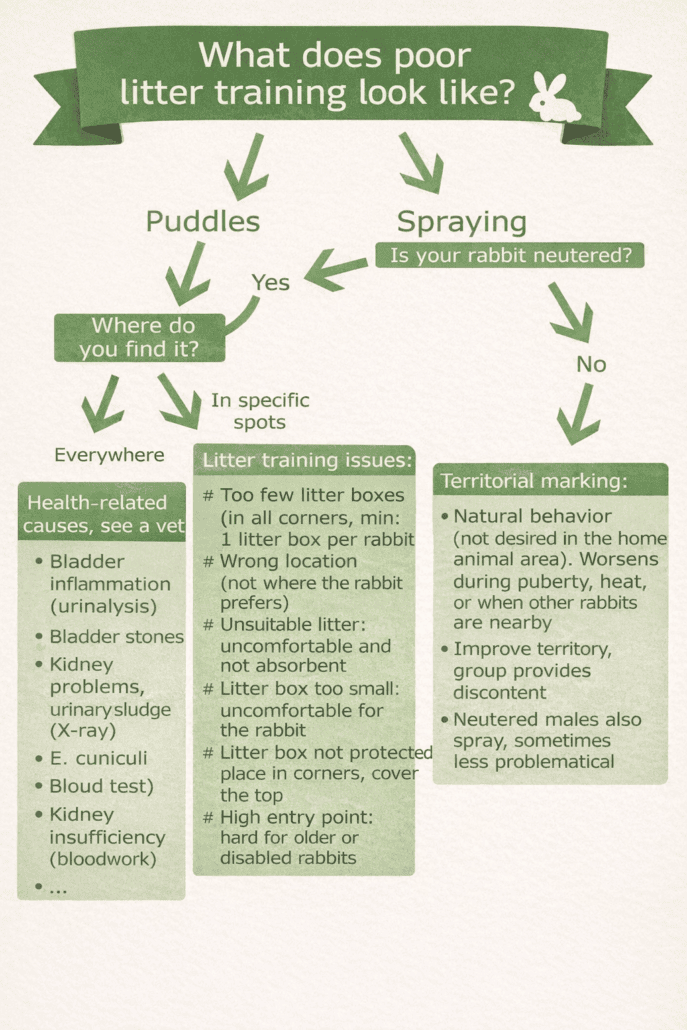
The right litter box and its location are the most important factors in successful litter training
- Litter box in the wrong place
Rabbits will only become litter trained if they accept their litter boxes. The toilet area is not chosen by humans — rabbits choose it themselves. Litter boxes must be placed where the rabbit most frequently urinates and poops. These are often room corners or quiet, sheltered areas.
- No large litter tray under the feeding area
The feeding area should also be a large litter tray (like a cage base), because rabbits especially like to relieve themselves while eating. Make sure you only feed in this area and arrange food so the rabbit has to sit inside the tray — with its rear inside the litter box — to reach the food.
- Unsuitable litter tray
The litter box must be large enough. Cat litter boxes, cage trays, or other large containers work well. Commercially sold “rabbit toilets” are rarely accepted. The rim must also not be too high so rabbits can enter quickly and easily.
- Unsuitable litter
The rabbit must feel comfortable in its litter box, and the litter needs to be absorbent enough to stay clean. Wood pellets with a layer of straw or hay on top work very well.
- Too few litter boxes
Have at least one litter box per rabbit — better a few too many than too few. Not enough litter boxes is one of the most common reasons for litter problems.
If things still don’t work…
If rabbits do not become litter trained despite all efforts, outdoor housing is recommended. If that is not possible, a practical indoor solution is needed. A good option is fencing off part of a room with panels and protecting the floor with PVC covering. On top of the PVC, you can place small carpets (for example from IKEA or furniture stores). These fit easily into the washing machine. Towels or blankets can also be used.
Another option is painter’s fleece (available cheaply at hardware stores). It is waterproof underneath and absorbent on top, soaking up urine. It can be washed in the washing machine. Baby changing pads are also suitable. However, painter’s fleece and pads must not be chewed. Often it helps to place a cloth or straw on top to prevent chewing.
What kind of litter box should you use?
The litter box is the most important piece of “furniture” for rabbits, because it usually determines whether they become litter trained or not. It can also make cleaning the enclosure either much harder or much easier!
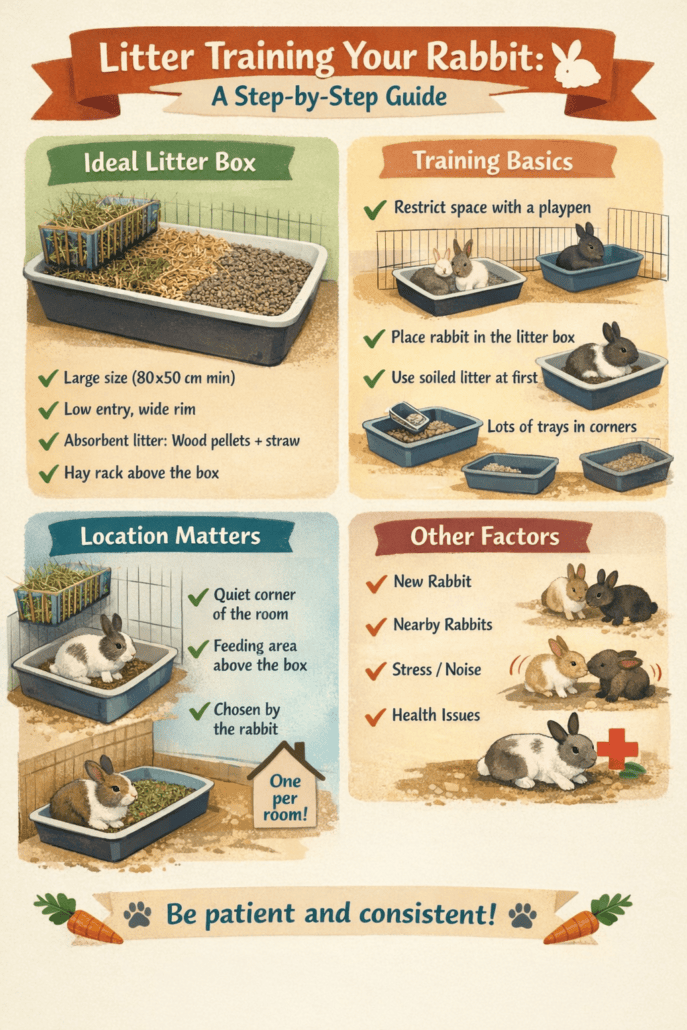
The Ideal Rabbit Litter Box
- Minimum size:
80 × 50 cm. For already reliably litter-trained and rather small rabbits, 60 × 40 cm or 55 × 45 cm may be possible. Anything smaller is unsuitable.
- Number:
At least number of rabbits + 1. For rabbits that are not yet litter trained, even more at first!
- Hay rack & fresh food:
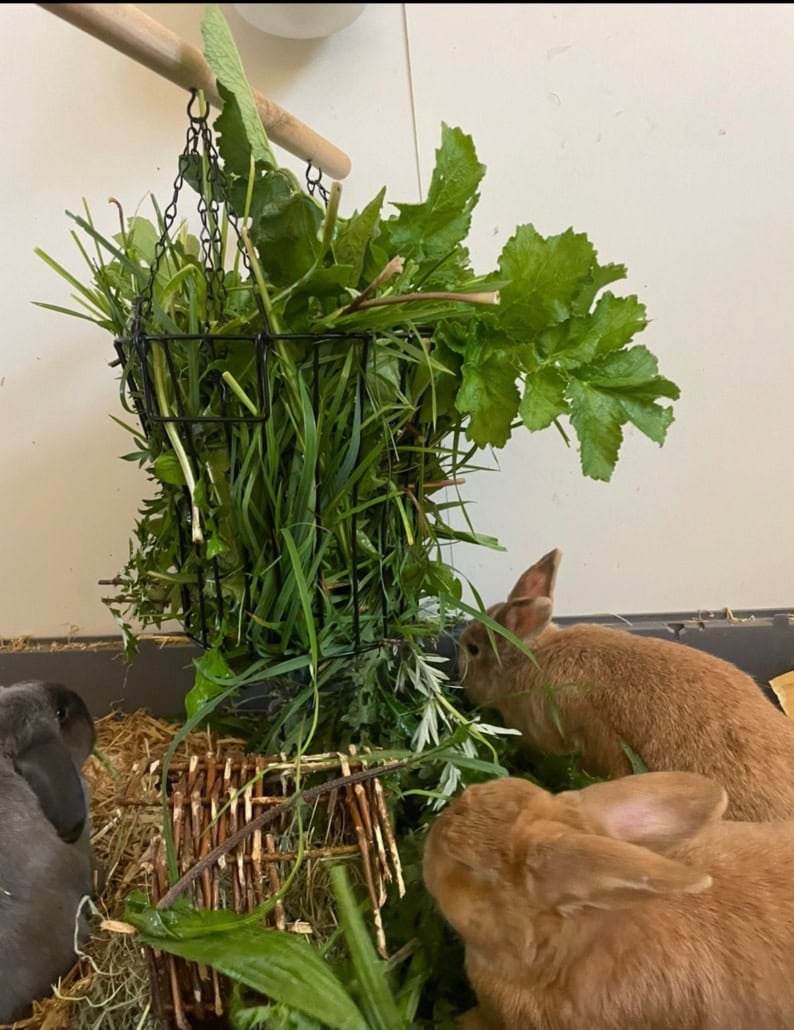
Place hay racks above the litter box and feed fresh food inside the tray. This greatly supports litter training, as rabbits tend to use the litter box while eating.
- Litter material:
For indoor housing, wood pellets / heating pellets with a layer of straw or hay on top work best. Typical “small pet litter” spreads all over the home, absorbs poorly, and doesn’t control odor well.
- Rim height:
Not too high — ideally about 12–19 cm.
- Rim width:
Does your rabbit dig the litter out of the box? Then you need a litter box with a wide rim — this massively reduces digging mess!
- Location:
Rabbits choose the toilet spot themselves! Place the litter box where they naturally establish their toilet corner — this is usually in the back corners.
Rabbit Litter Boxes with a Low Entry
These litter boxes have proven especially useful for rabbits that struggle with litter training. They are ideal for baby rabbits, disabled rabbits (e.g., E. cuniculi, arthritis, spondylosis), elderly rabbits, and rabbits that are generally not clean. You should offer hay and fresh food inside the litter box (rabbits often go to the toilet where they eat!), which means it must be kept hygienic and cleaned regularly.
Step-by-Step Guide to a Litter-Trained Rabbit
Here you’ll find all possible causes and how to fix them.
The Litter Box Itself
☑️ Size:
Litter trays that are too small
Minimum: 100 × 50 cm (larger for giant breeds)
☑️ Litter material:
Litter that is too hard (pellets without a soft top layer — always cover with straw)
or litter that is not very absorbent
☑️ Number of litter boxes:
Too few litter boxes
Minimum: number of rabbits + 1
(Example: 2 rabbits = 3 litter boxes)
☑️ Entry height:
Rim too high to jump in
Older rabbits or those with arthritis/spondylosis often go next to the box.
Lazy rabbits sometimes do, too.
☑️ Rim width:
Rim too narrow
Rabbit accidentally pees over the edge → choose a litter box with a wider rim
☑️ Cleanliness:
Too dirty → rabbit looks for another spot
Too clean → rabbit no longer recognizes it as a toilet
☑️ Cover / protection:
Rabbits like boundaries on at least two sides (place in a corner)
and a roof or cover above the litter box
Location of the Litter Box
☑️ Quiet place (not in a busy walkway)
☑️ Corner of the room (usually preferred)
☑️ Place chosen by the rabbit — put litter boxes where the rabbit naturally creates toilet spots, or block those spots if necessary
☑️ Feeding area: rabbits pee where they eat — place hay racks and food above the litter box
☑️ Accessibility: too few litter boxes causes problems — at least one per room, and temporarily more if cleanliness is an issue
Preparation for Litter Training
☑️ Restrict the rabbit’s space until it is reliably litter trained (use puppy panels or a small-animal playpen) — but do not lock it in a cage
☑️ Protect the floor, e.g., with PVC/vinyl as a base layer (large enough so the rabbit can’t chew the edges)
☑️ Provide many large litter trays, at least one in every corner
Use cage trays, cat litter boxes, or plastic storage boxes.
Minimum size: 80 × 50 cm (commercial “rabbit toilets” are too small!)
Litter Training
☑️ At first, fill the litter boxes with used litter that smells like urine
☑️ Litter boxes must be accessible 24/7
☑️ When the rabbit arrives, place it in the litter box so it finds it and recognizes it as an important place
☑️ If the rabbit pees elsewhere, soak it up with paper towel and place that in the litter box
☑️ If the rabbit prefers a certain spot, put a litter box exactly there
☑️ For difficult cases, make the litter box more attractive (see above) and temporarily use sand as litter
☑️ Only reduce the number of litter boxes once the rabbit is reliably litter trained — slowly remove the least-used ones
Environment and Stress Factors
☑️ Tension within the group (during bonding, rabbits are often messier until hierarchy stabilizes)
☑️ Other rabbits nearby that can be seen or smelled → territorial marking
☑️ New arrivals — hierarchy must first be clarified
☑️ Too few hiding places / stressful environment (children, noise, chaos)
☑️ Other disturbances in the household
☑️ Flooring that is too similar to the litter area (carpets or full-area bedding should be avoided at first)
☑️ Special case: bed and sofa peeing — there are solutions!
Hormonal Causes
☑️ Unneutered males mark their territory → neuter!
☑️ Unspayed females may also mark with urine during heat — in some cases spaying is necessary
☑️ Uterine diseases in females can cause hormonal imbalance → spay
☑️ Heat, false pregnancy, and puberty can temporarily worsen litter habits
Health-Related Causes
☑️ Joint problems: rim too high to jump in; older rabbits may pee beside the box or even wet themselves due to pain
☑️ Diarrhea: liquid or mushy poop cannot be controlled → vet visit, x-ray teeth, have stool examined, check further causes
☑️ Bladder stones or bladder infection: can cause incontinence → requires intensive treatment
☑️ E. cuniculi: sometimes the only symptom is urinary incontinence → blood testing and Panacur treatment
☑️ Uterine disease: causes hormone imbalance → spaying
☑️ Cecotropes: sticky poop stains — may happen if they can’t eat them (arthritis, obesity), diet too rich/too processed, or cecum disease (infection, parasites)