
Nutrition of Wild Rabbits – What Do Rabbits Really Eat in the Wild?
The diet of wild rabbits (Oryctolagus cuniculus) is often heavily oversimplified. Statements such as “wild rabbits mainly eat hay” or “rabbits are grain eaters” are not supported by scientific studies. In fact, the natural diet of wild rabbits has been thoroughly researched and in many respects differs significantly from common pet-feeding advice.
This article summarizes the current scientific knowledge on wild rabbit nutrition.
Contents
- 1. Basic Principle: Highly Selective Plant Eaters
- 2. Main Food Sources: Grasses, Herbs & Meadow Plants (70–90%)
- 3. Leaves, Twigs, Bark & Woody Plants (5–15%)
- 4. Seeds, Fruits & Grains: Only Marginal (< 5%)
- 5. Hay: Not a Natural Part of the Wild Rabbit’s Diet
- Digestion in Wild vs. Domestic Rabbits – Are There Differences?
- Caecotrophy: Identical Mechanism in Wild and Domestic Rabbits
- Domestication Has Not Changed Digestion
- Why Domestic Rabbits Still Suffer Digestive Problems More Often
- Why These Findings Are Relevant for Domestic Rabbits
- Conclusion
1. Basic Principle: Highly Selective Plant Eaters
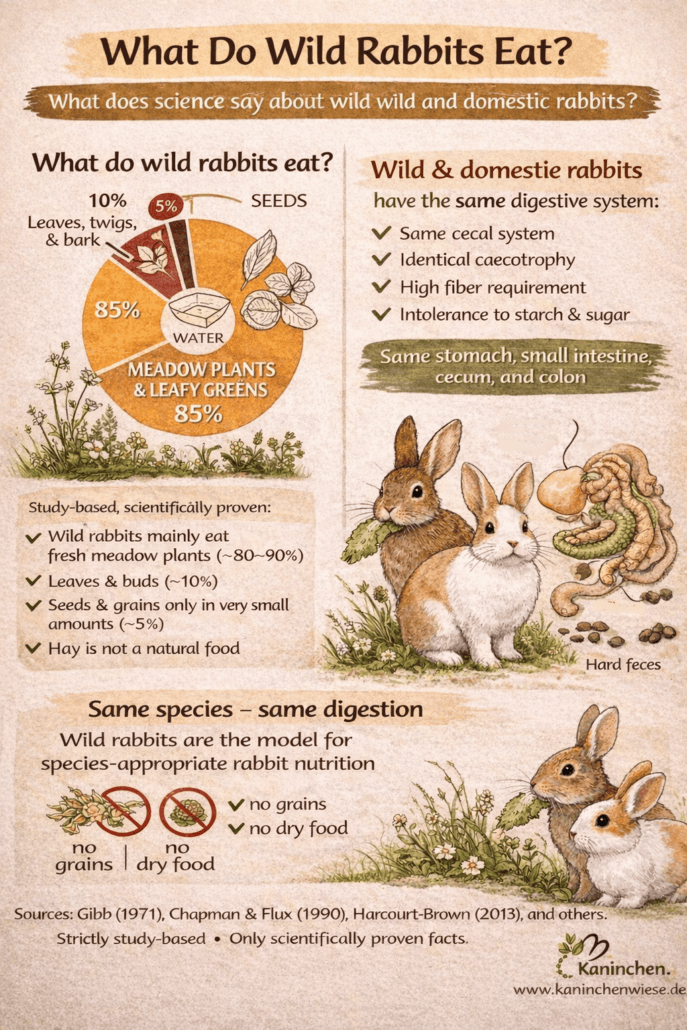
Wild rabbits are obligate herbivores/folivores with a highly specialized digestive system. They are not omnivores and they are not seed or grain eaters.
Long-term field studies show that wild rabbits select their food very deliberately:
- they prefer high-fiber plants
- young plant parts are chosen over older ones
This selective behavior is crucial for intestinal health and caecotrophy.
More information on selective feeding behavior
2. Main Food Sources: Grasses, Herbs & Meadow Plants (70–90%)
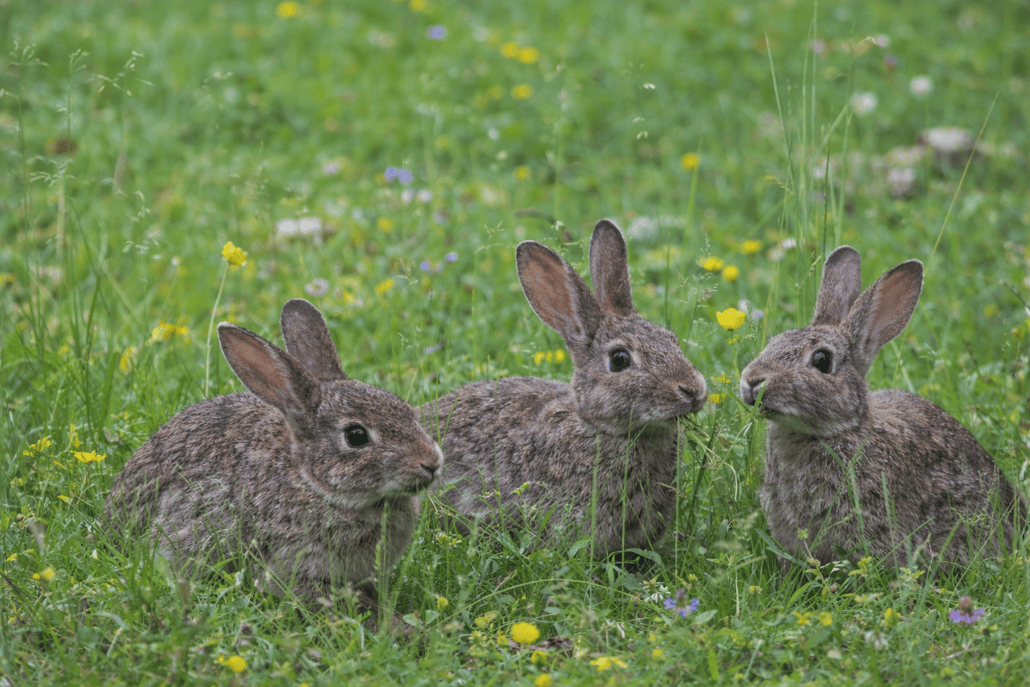
The majority of a wild rabbit’s diet consists of:
- wild grasses
- herbs
- herbaceous meadow plants
Depending on habitat and season, these make up around 70 to over 90% of the food they consume.
Typical characteristics are:
- plants with a lot of structure and fiber
- high water content
- low starch and fat content
Wild rabbits eat in small amounts almost continuously throughout the day, which matches the constant metabolic activity of their cecum.
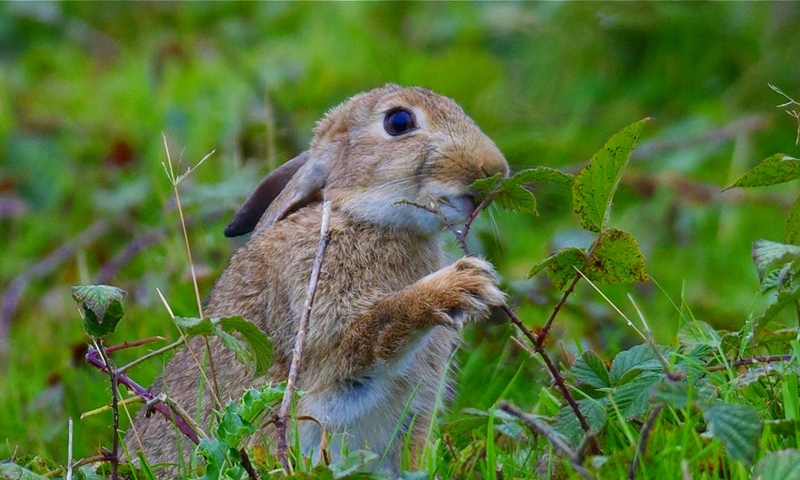
3. Leaves, Twigs, Bark & Woody Plants (5–15%)
Another part of the natural diet consists of:
- leaves from trees and shrubs
- young shoots
- bark and buds
This share increases:
- in winter
- during periods of drought
- when meadow vegetation is scarce
Woody plants provide:
- additional dietary fiber
- secondary plant compounds
- natural tooth wear
However, they do not replace meadow plants — they only supplement them.
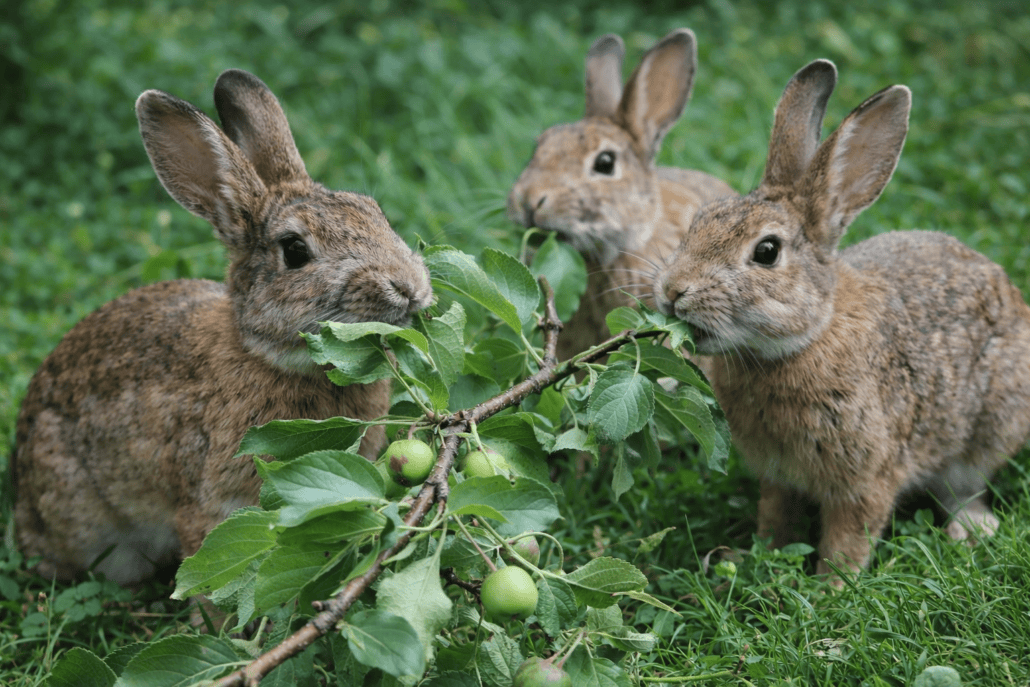
4. Seeds, Fruits & Grains: Only Marginal (< 5%)
Contrary to popular belief,
- seeds
- grains
- fruits
play only a very minor role in the natural diet of wild rabbits.
They are generally:
- consumed incidentally
- eaten seasonally
- not actively sought out
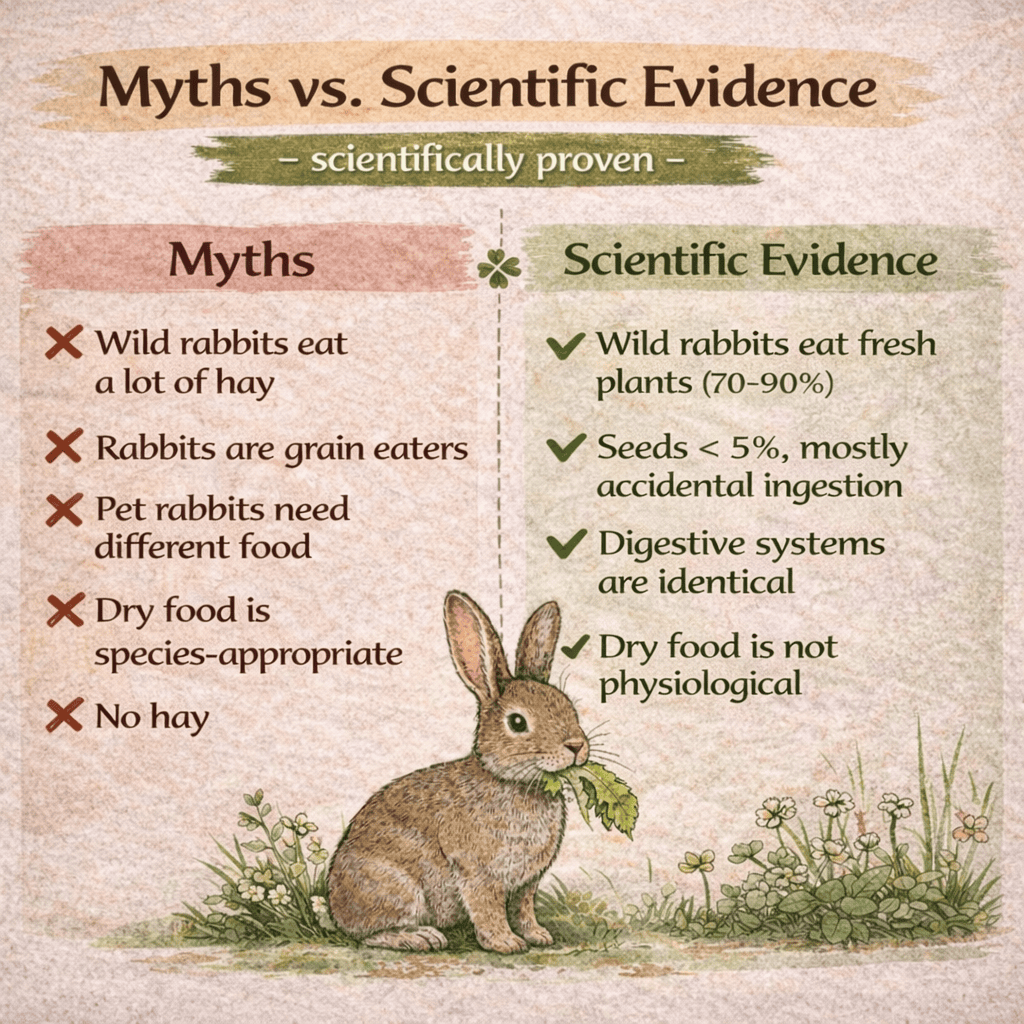
Multiple studies show that the proportion of seeds remains below 5% and does not represent a significant energy source for wild rabbits.
5. Hay: Not a Natural Part of the Wild Rabbit’s Diet
An important point:
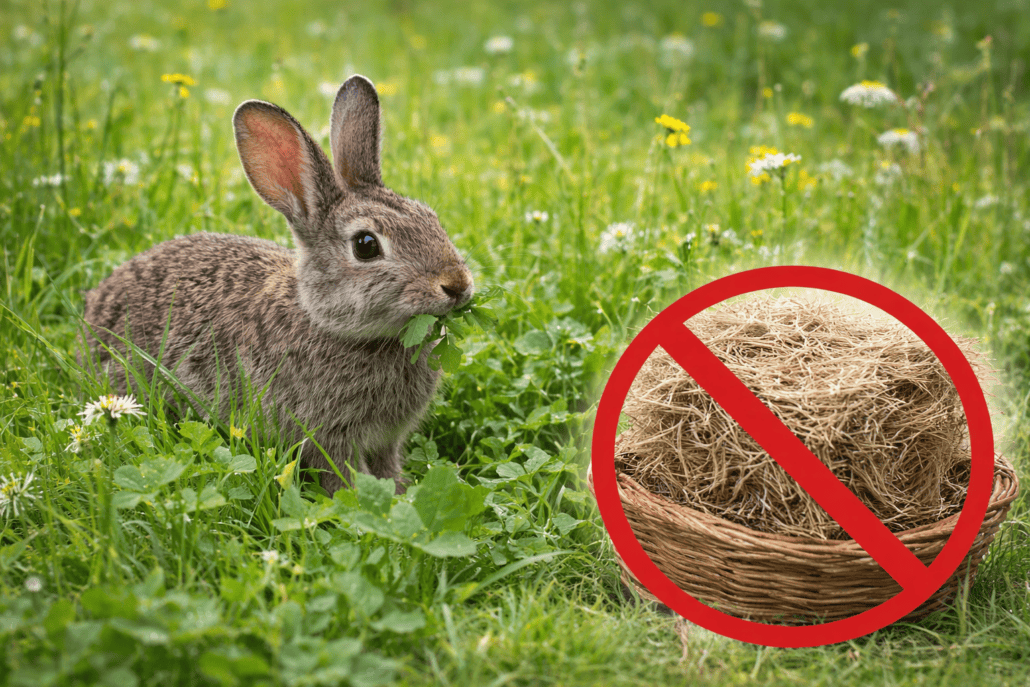
Wild rabbits do not eat hay. Their food is fresh, not dried.
Hay is simply a management substitute that becomes necessary when:
- fresh meadow plants are unavailable
- year-round feeding with fresh greens is not possible
In the wild, rabbits meet their fiber requirements exclusively through fresh plants. The high water content of this food is essential for healthy digestive function.
Digestion in Wild vs. Domestic Rabbits – Are There Differences?
It is often claimed that domestic rabbits have a “different digestive system” than wild rabbits and therefore need to be fed differently. However, scientific literature paints a very clear picture.
Same Species – Same Digestive Physiology
Domestic rabbits (Oryctolagus cuniculus domesticus) are domesticated wild rabbits (Oryctolagus cuniculus).
From a zoological and veterinary perspective, they are not different species, but the same species with external variations.
Studies show:
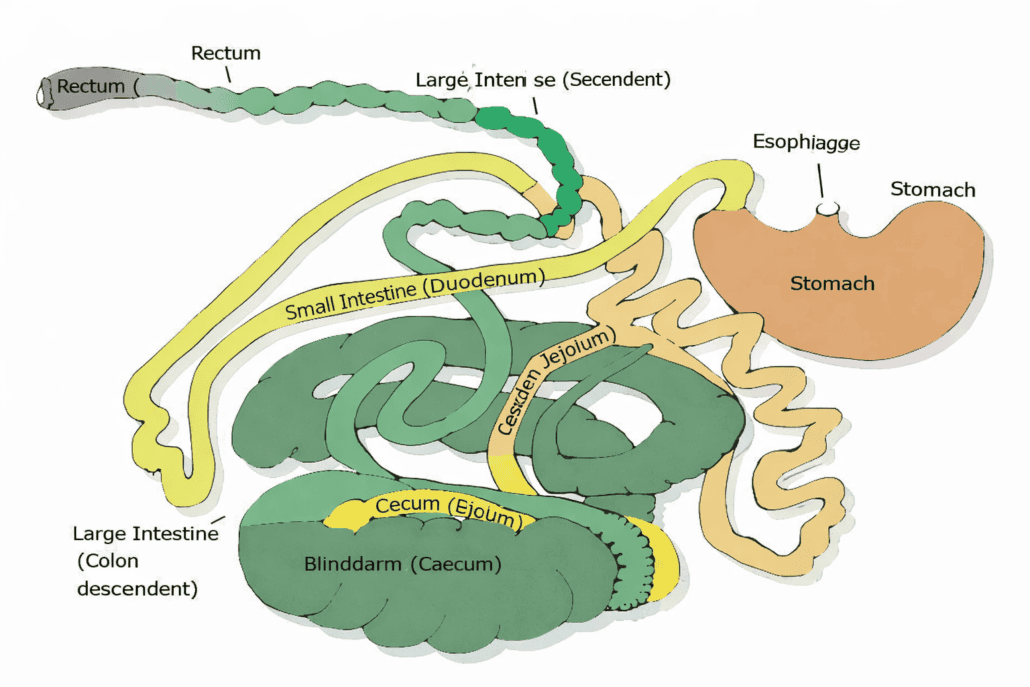
- identical structure of stomach, small intestine, cecum, and colon
- the same ratio of cecum volume to body weight
- identical intestinal motility and separation mechanisms of feed components
Caecotrophy: Identical Mechanism in Wild and Domestic Rabbits
Caecotrophy is the central element of rabbit digestion.
Comparative studies between wild and domesticated rabbits show:
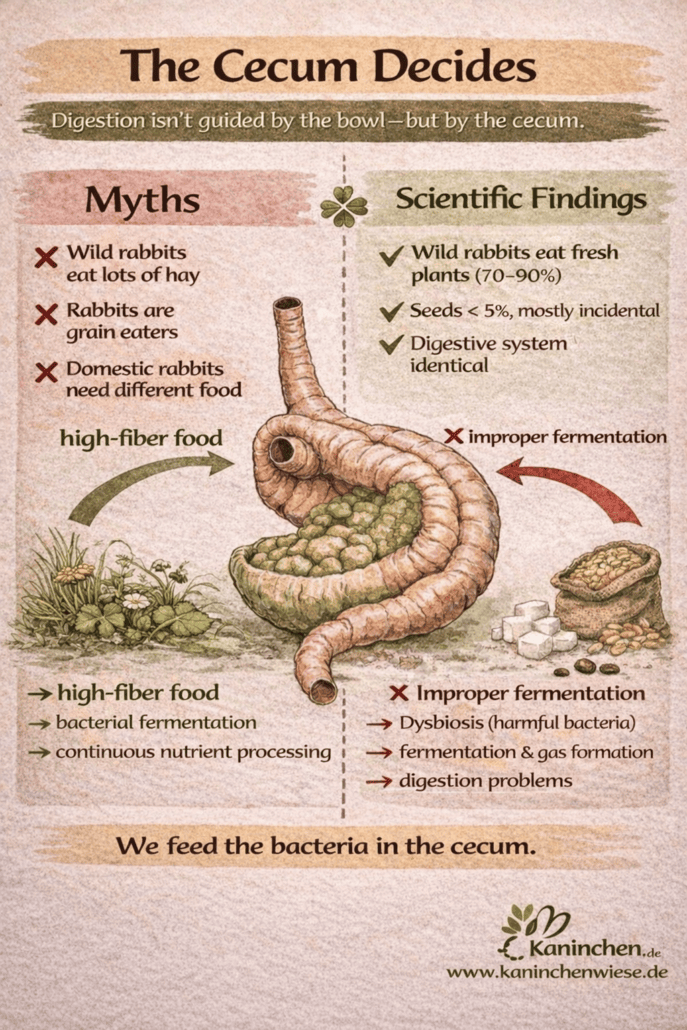
- identical bacterial fermentation in the cecum
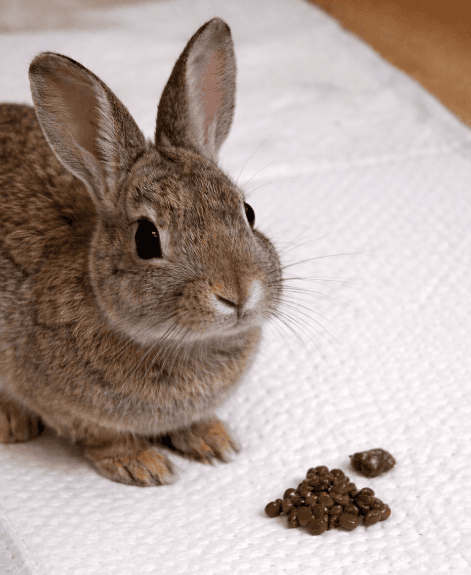
- the same production of cecotrophs (cecal pellets)
- the same timing of intake and the same nutrient content
The ability to extract nutrients from high-fiber food is species-specific and has not been altered by domestication.
No Adaptation to Energy-Rich or Starchy Food
Several studies on feed utilization show:
- wild and domestic rabbits react equally sensitively to starch and sugar
- even moderate amounts can destabilize the cecal flora
- misfermentation, gas formation, and digestive disorders occur equally in both
Domestic rabbits do not tolerate energy-rich food better than wild rabbits — they are simply exposed to it more often.
Domestication Has Not Changed Digestion
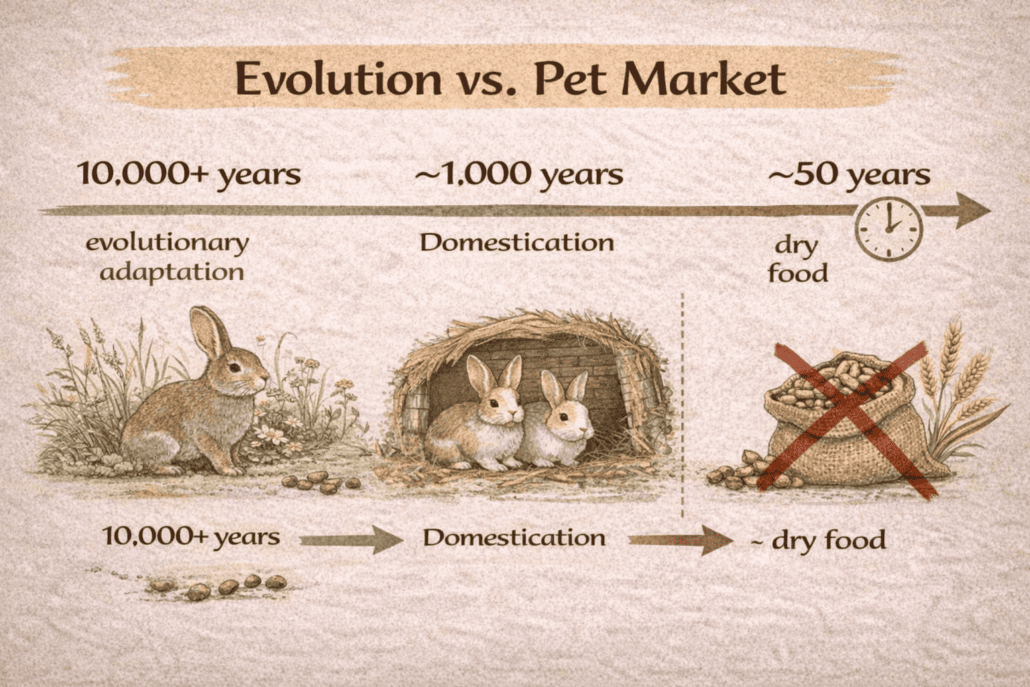
Rabbit domestication occurred:
- relatively late
- over a short evolutionary timespan
- with a focus on coat colors, body size, and behavior
There is no evidence of selection for changes in the digestive system or adaptation to a different type of diet.
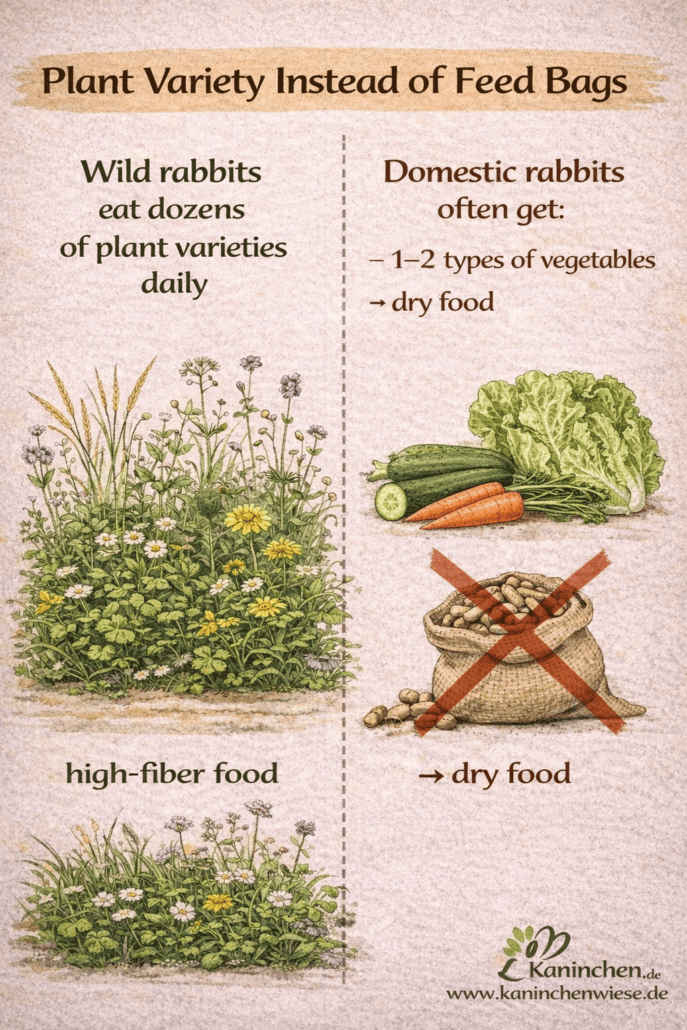
Why Domestic Rabbits Still Suffer Digestive Problems More Often
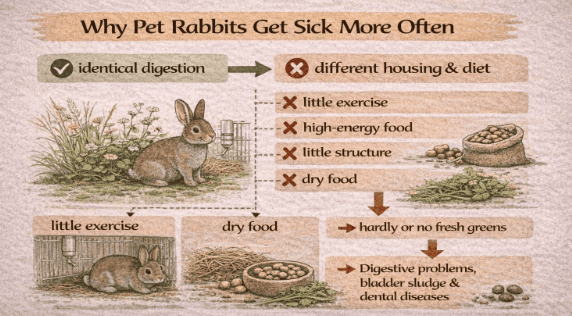
The difference is not biological, but due to husbandry conditions:
- reduced opportunities for movement
- limited dietary variety
- feeding mistakes and problematic recommendations
- consistently overly energy-rich diets (leading to obesity)
- lack of natural selection
Wild rabbits with digestive problems usually do not survive in nature, whereas domestic rabbits can sometimes continue to live despite improper feeding (for example with chronic diarrhea or recurring refusal to eat).
Why These Findings Are Relevant for Domestic Rabbits
Domestic rabbits are not a different species but relatively recently domesticated wild rabbits.
Their digestive system is almost identical in structure.
This means:
- the natural diet provides the reference framework for species-appropriate feeding
- deviations (pelleted feeds, grain mixes, sugar) are not physiological
- many nutrition-related diseases can be directly traced back to improper feeding
Conclusion
The scientific evidence is clear:
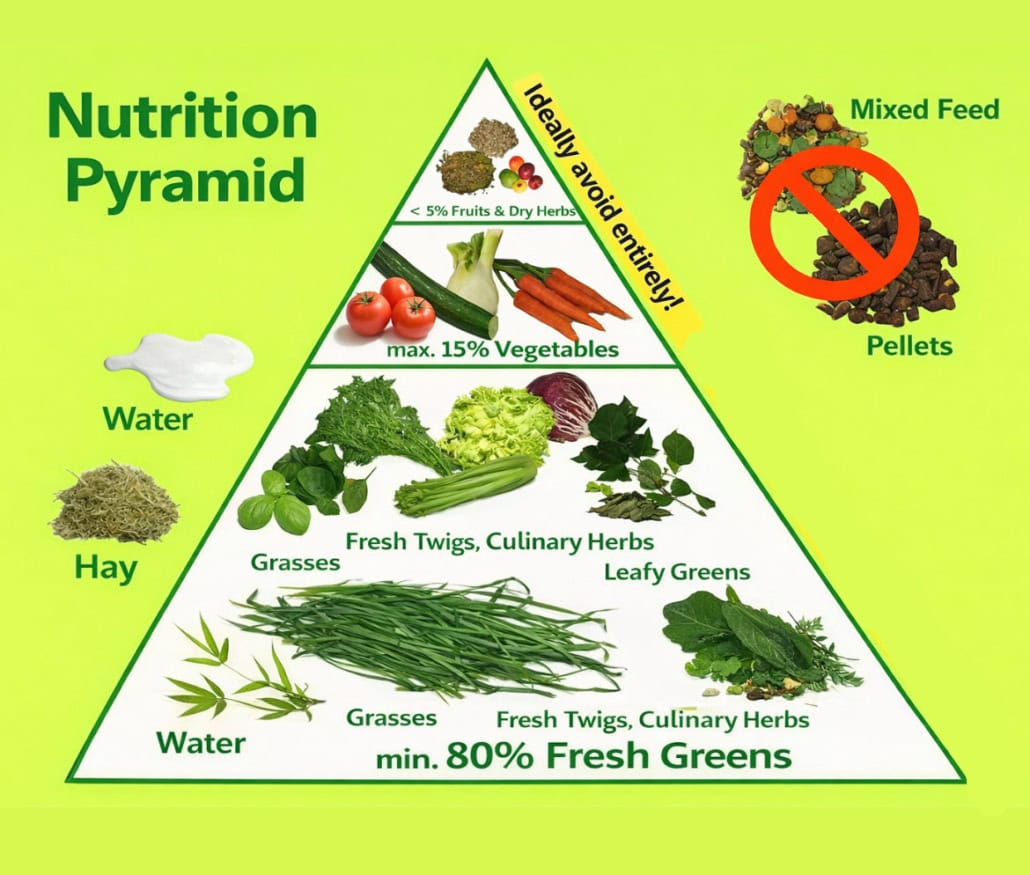
- Wild rabbits are not grain eaters, and pellets do not exist in nature.
- Wild rabbits do not eat hay; their diet consists mainly of fresh greens.
- Their diet is predominantly made up of fresh meadow plants.
- Woody plants (branches, twigs, bark, leaves) can supplement the diet but do not replace fresh greens.
- Hay is a management substitute used in captivity, not a natural food source.
- Seeds and grains play virtually no role, or only a minimal one.
Therefore, species-appropriate rabbit nutrition should not be based on what the pet market offers, but on what rabbits have consumed over thousands of years of evolution.
References (Selection):
- Gibb, J. A. (1971). The ecology of the European rabbit (Oryctolagus cuniculus). Advances in Ecological Research, 6, 1–54. https://doi.org/10.1016/S0065-2504(08)60202-2
- Harcourt-Brown, F. (2002). Textbook of rabbit medicine. Butterworth-Heinemann.
- Harcourt-Brown, F. (2013). BSAVA manual of rabbit medicine (2nd ed.). British Small Animal Veterinary Association.
- Mykytowycz, R., & Dudzinski, M. L. (1972). Food intake and caecal fermentation in the rabbit (Oryctolagus cuniculus). Journal of Applied Ecology, 9(2), 509–520. https://doi.org/10.2307/2402453
- Chapman, J. A., & Flux, J. E. C. (1990). Rabbits, hares and pikas: Status survey and conservation action plan. International Union for Conservation of Nature (IUCN).
- Clutton-Brock, J. (1999). A natural history of domesticated mammals (2nd ed.). Cambridge University Press.
- British Ecological Society. (n.d.). Studies on the feeding ecology and habitat use of European rabbits (Oryctolagus cuniculus). British Ecological Society.
- European Rabbit Research Group. (n.d.). Comparative studies on wild and domestic rabbit nutrition and digestion. European Rabbit Research Group.
- University of Bristol, School of Biological Sciences. (n.d.). Comparative studies on rabbit digestion, feeding behaviour and caecotrophy. University of Bristol.