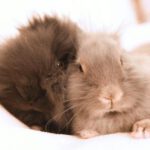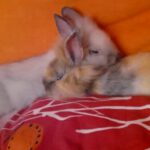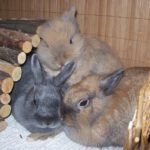

Excessive sexual behavior (hypersexuality)
Rabbits naturally display relatively strong sexual behavior, which is often mistaken for a medical problem. With sufficient experience, affected rabbits can be identified quite easily, as they show truly extreme behavior. For example, they may not leave their partner’s side and engage in persistent mounting, to the point that the other rabbit can only move while being mounted. Resting and normal feeding behavior may also cease.
Mounting, persistent mounting/sexual behavior, chasing, and aggression in male rabbits
A male rabbit with excessive sexual behavior is not only a behavioral and bonding issue (incompatibility due to excessive harassment of the female), but also a concern when preventing uncontrolled reproduction (is the rabbit truly neutered?). In some cases, it may even indicate a serious medical condition if the behavior is caused by tumors.
When male rabbits behave as if they were not neutered, there can be several underlying causes:
• The rabbit is not neutered.
• The rabbit is incompletely neutered (cryptorchidism — retained testicle, ectopic/third testicle, or residual testicular tissue).
• The rabbit is neutered but has a sex hormone–producing tumor, for example involving the adrenal glands (adrenal hyperplasia or neoplasia) or the pituitary gland.
• Behavioral issue: commonly seen in poorly stimulated young males living with sick, older, or weakened rabbits, or as prolonged dominance-related behavior following neutering (typically resolves within 2–3 months).
Determining the underlying cause
If sexual behavior does not subside after neutering, it is quite likely that hormone-producing tissue remains (residual testicular tissue, an additional testicle, or a retained abdominal testicle — cryptorchidism).
If a neutered rabbit has behaved normally for years but suddenly develops excessive sexual behavior later in life, this may indicate a tumor or hyperplasia of the adrenal glands or the pituitary gland. Older rabbits are most commonly affected, and the condition is only rarely accompanied by hair loss.
Assessment becomes more difficult when very old males are neutered (commonly rescue animals) and testosterone levels fail to decline afterward, or when acquiring an older rabbit with an unknown history. In such cases, it is often unclear when the behavior first appeared and whether the claim of complete neutering is reliable. There have even been cases where unneutered males were presented as neutered to improve adoption chances.
Physical examination / inspection
• Is the genitalia regressed, as is typical for neutered males?
• Are testicles visible? (Note: rabbits can retract their testicles through the inguinal canal.)
• Is a neutering scar present?
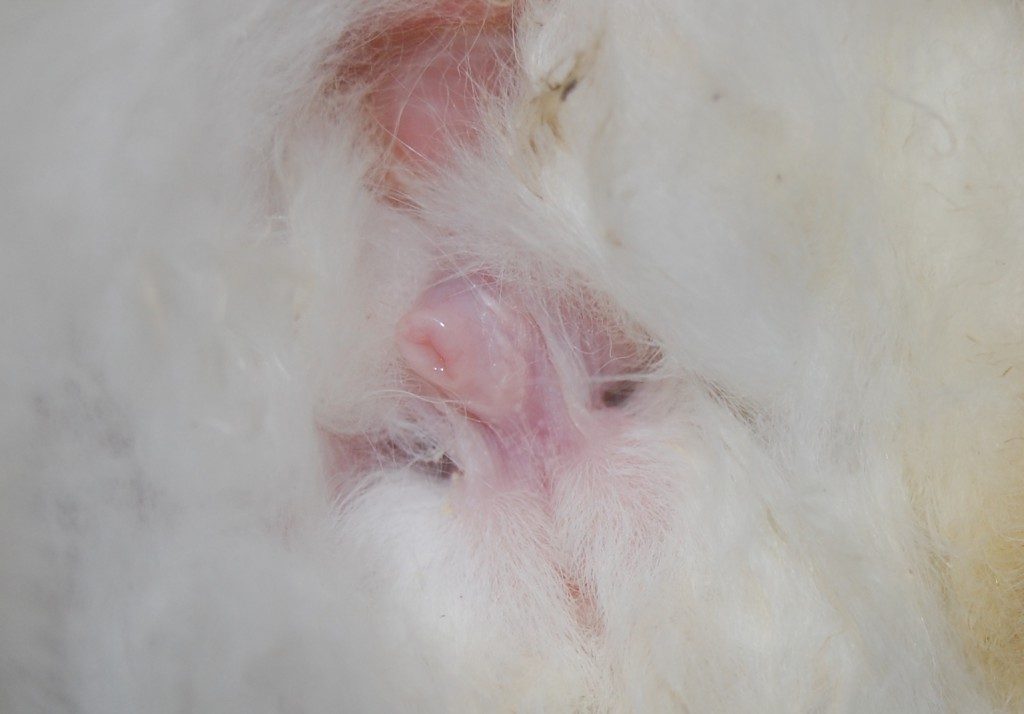
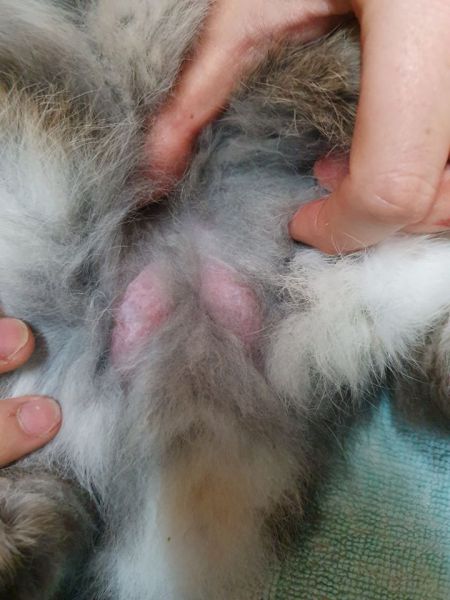
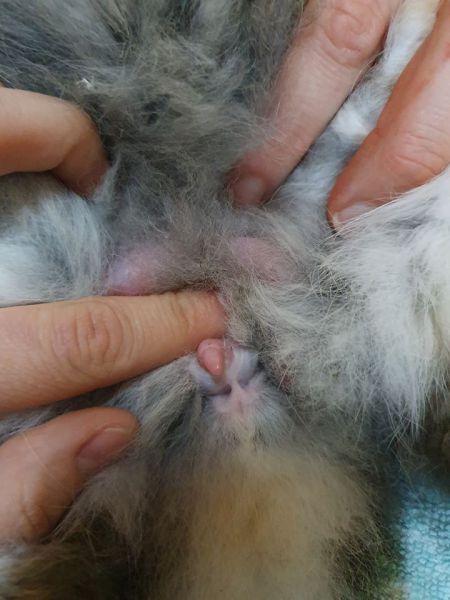
Physical examination / Testicular palpation
Are the testicles palpable?
(Note: Rabbits are able to retract their testicles through the inguinal canal, which can make palpation difficult.)
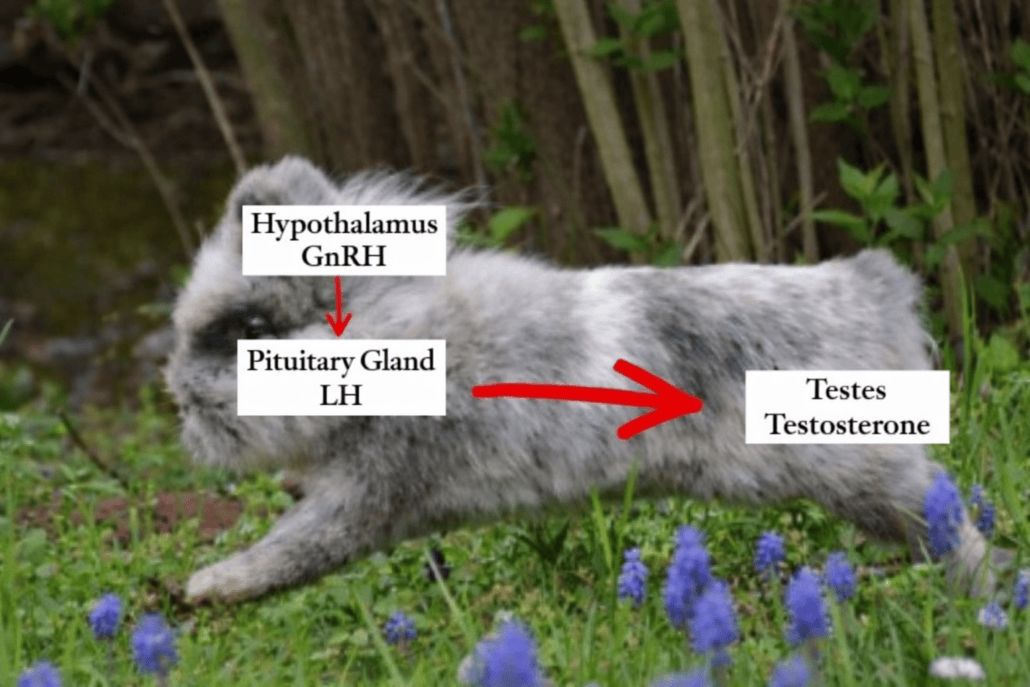
Serum testosterone measurement (blood test)
Is an elevated testosterone level present? High values indicate the presence of hormone-producing tissue. In cases of low or borderline values, an hCG stimulation test may be performed.
Interpretation:
• < 0.5 ng/mL – consistent with neutered status
• 0.5–1.0 ng/mL – inconclusive range
• > 1.0 ng/mL – hormone-producing tissue likely present
hCG stimulation test (blood test)
More reliable than a single testosterone measurement, particularly in animals with low baseline values.
Procedure:
• Obtain first blood sample for baseline testosterone
• Administer hCG (100–250 IU per rabbit, intramuscular injection)
(e.g., Ovogest®, Suigonan®)
• Obtain second blood sample after approximately 1 hour
• Measure testosterone concentration again
Interpretation:
• > 1.0 ng/mL – hormone-producing tissue present
• < 0.1 ng/mL – no hormone-producing tissue detected
Anti-Müllerian Hormone (AMH) (blood test)
Used to evaluate neuter status.
Interpretation:
• < 0.07 ng/mL – neutered
• > 3.16 ng/mL – intact (unneutered)
Abdominal ultrasound
Ultrasonographic evaluation of the abdominal cavity (retained testicles?) and adrenal glands.
(Note: Imaging of the adrenal glands in rabbits is technically challenging due to their very small size.)
Treatment
Treatment depends on the underlying cause:
Cryptorchidism (retained abdominal testicle, additional/third testicle, incomplete neutering, residual testicular tissue):
Surgical neutering or removal of retained testicles / residual testicular tissue.
Sex hormone–producing tumors (e.g., adrenal glands — adrenal cortical carcinoma or adenoma, adrenal hyperplasia, hyperadrenocorticism / Cushing’s syndrome, or pituitary tumors):
• Surgical removal of the affected adrenal gland (adrenalectomy)
• Hormonal implant / chemical castration (deslorelin, trade name: Suprelorin)
Rabbits may be chemically neutered using a GnRH agonist implant (deslorelin).
Behavioral disorder:
Behavioral management / environmental modification.
If the rabbit is housed with an old, ill, or weakened partner, bonding with a healthy and compatible rabbit often resolves the issue.
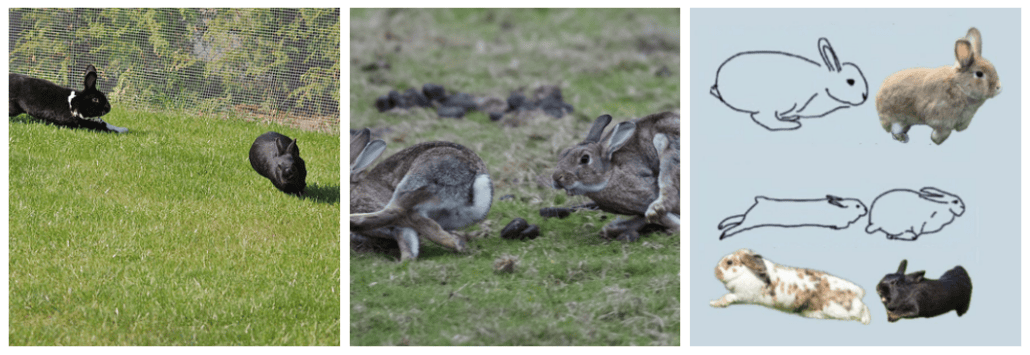
Chasing is relatively normal within a group, but male rabbits with hormonal disorders are usually very conspicuous.
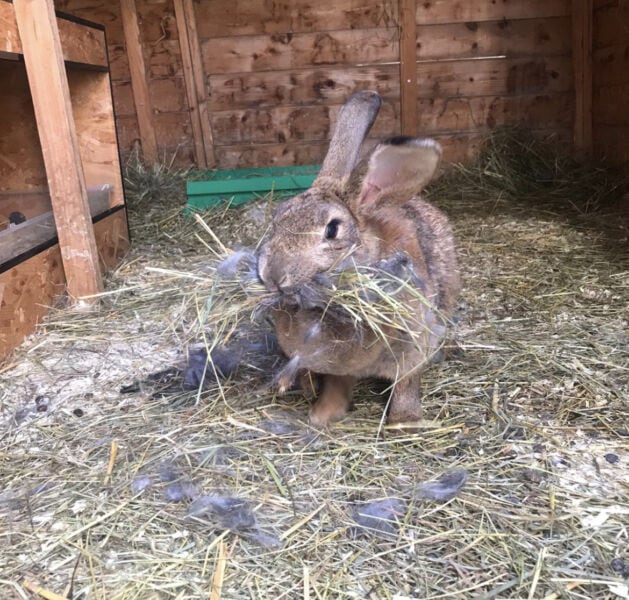
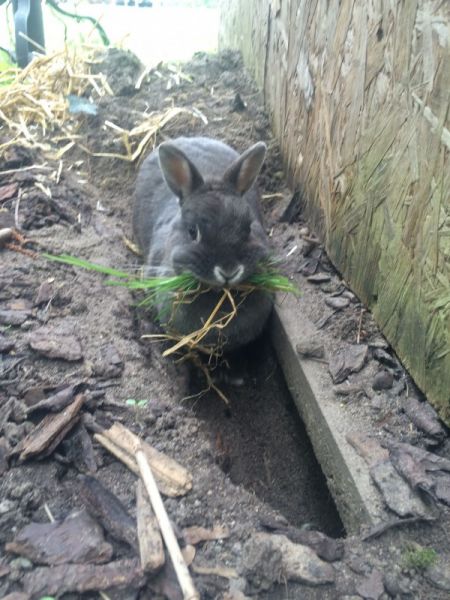
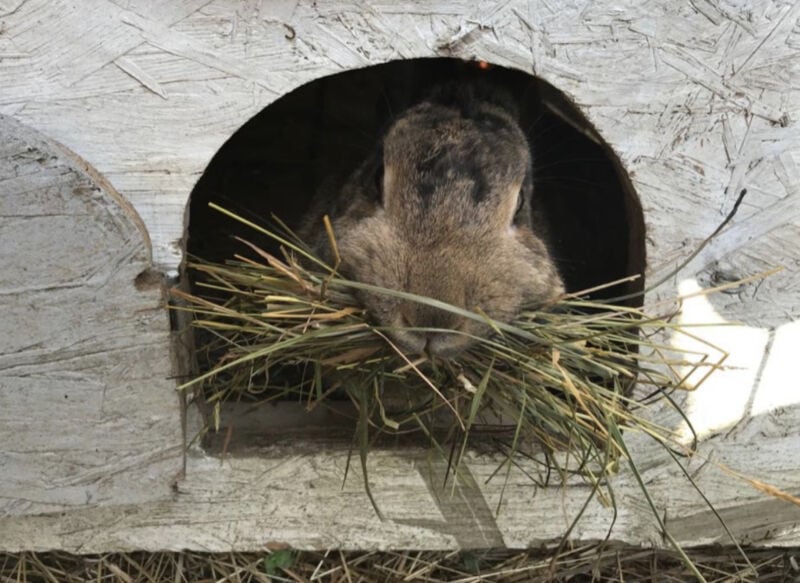
Nest building, mounting, chasing, aggression, and pseudopregnancy in female rabbits
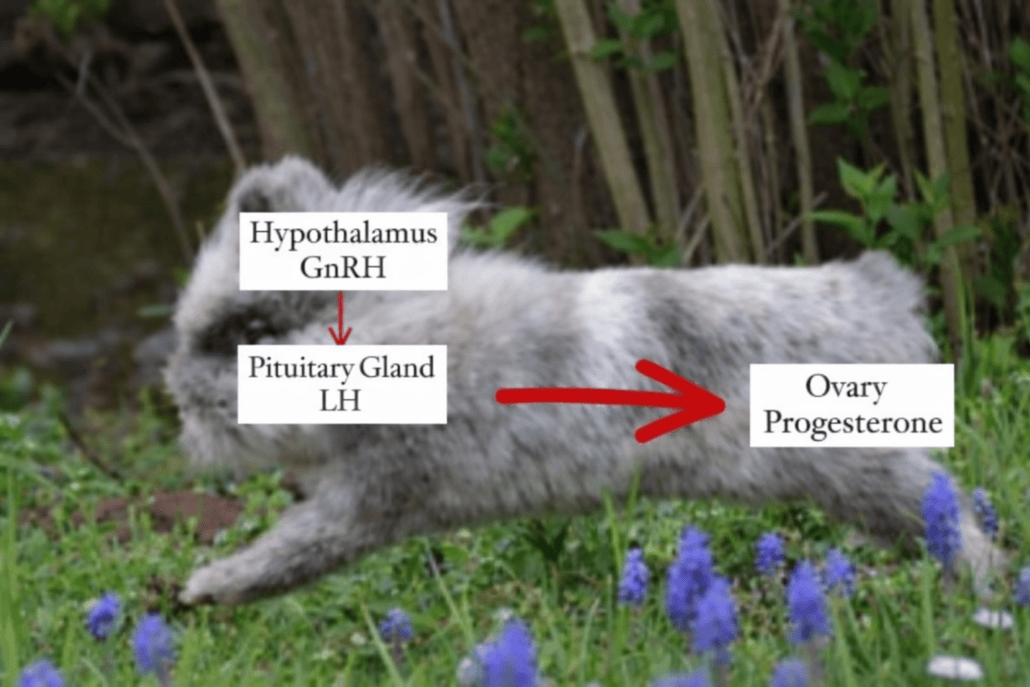
• The female rabbit is not spayed and is therefore experiencing pseudopregnancy or is in estrus (heat).
• The rabbit is incompletely spayed (residual ovarian tissue — ovarian remnant syndrome (ORS)).
• The rabbit is spayed but has a sex hormone–producing tumor, for example involving the adrenal glands (adrenal hyperplasia or neoplasia) or the pituitary gland.
• Behavioral disorder.
V
Diagnostic evaluation
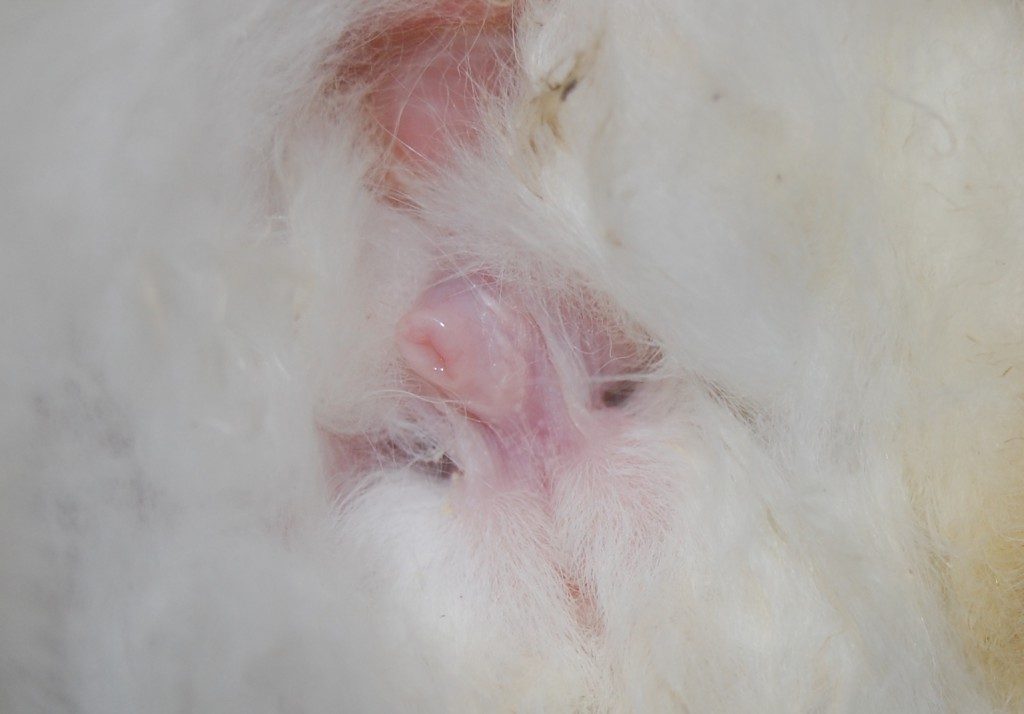
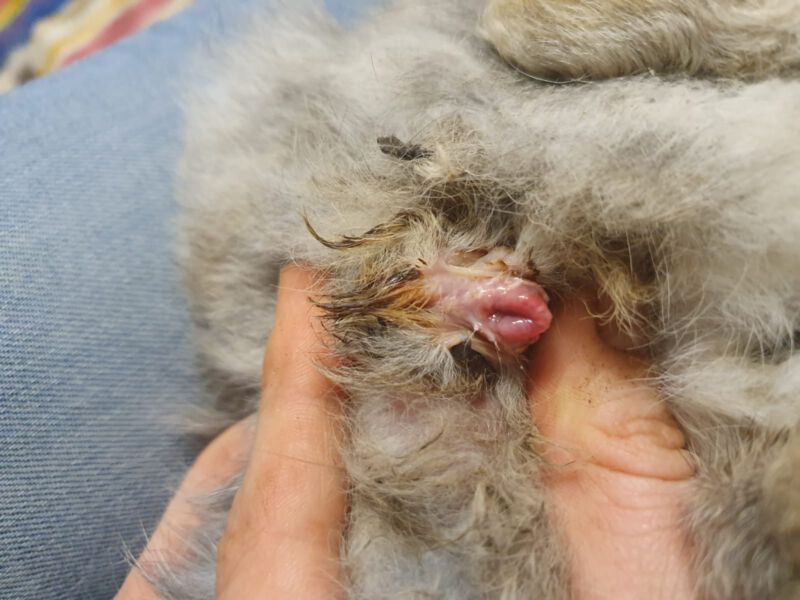
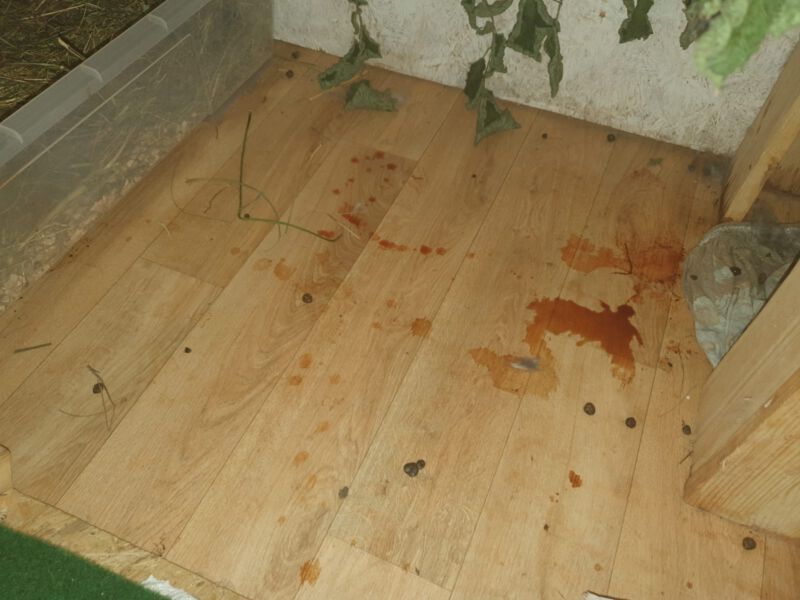
Visual inspection: Vulvar enlargement/swelling (may indicate estrus or a hormone-producing tumor).
Check for evidence of prior spaying (spay scar).
Physical examination
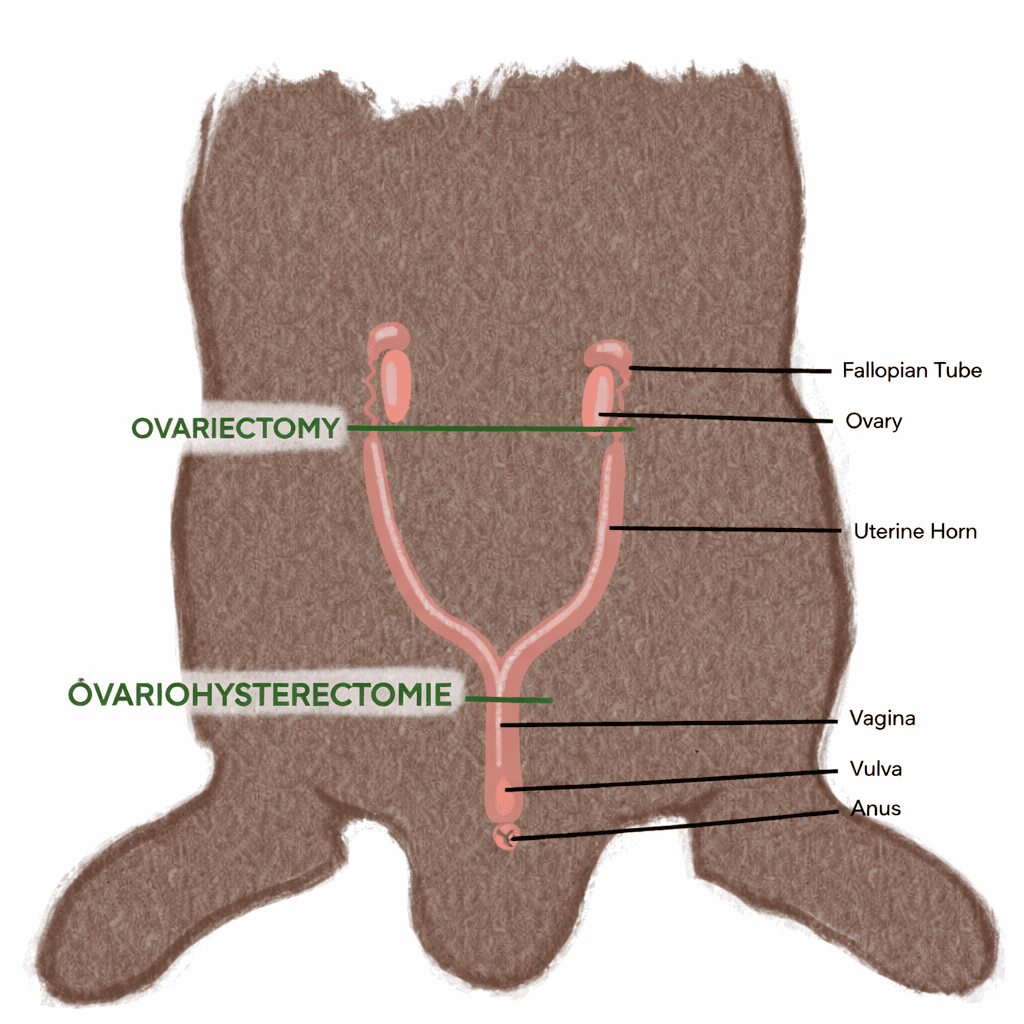
Is the uterus palpable?
(Note: Some rabbits are spayed via ovariectomy without removal of the uterus.)
Serum progesterone measurement (blood test)
Is an elevated progesterone level present? High values indicate the presence of hormone-producing tissue. In cases of low values, an hCG stimulation test may be performed.
Interpretation of progesterone concentration:
• < 2 ng/mL – follicular phase / not pseudopregnant
• > 2 ng/mL – luteal phase / pseudopregnancy possible
hCG stimulation test (two progesterone measurements) (blood test)
More reliable than a single progesterone measurement, particularly in animals with low baseline values.
Procedure:
• First blood sample for baseline progesterone
• Administer hCG (100–250 IU per rabbit, intramuscular injection)
(e.g., Ovogest®, Suigonan®)
• Second blood sample after 5–7 days
• Repeat progesterone measurement
Interpretation:
• < 2 ng/mL – consistent with neutered status
• 2–4 ng/mL – inconclusive range
• > 4 ng/mL – hormone-producing tissue likely present
Anti-Müllerian Hormone (AMH) (blood test)
Used to assess reproductive / neuter status.
Interpretation:
• < 0.07 ng/mL – spayed
• 0.77–3.36 ng/mL – intact (not spayed)
Physiological interpretation:
• < 2 ng/mL – follicular phase / not pseudopregnant
• > 2 ng/mL – luteal phase / pseudopregnancy possible
Abdominal ultrasound
Ultrasonographic evaluation of the ovaries and uterus.
Assessment of the adrenal glands (technically challenging in rabbits due to their very small size).
Exploratory surgery
Surgical exploration of the abdominal cavity (exploratory laparotomy) to identify residual ovarian tissue.
Treatment
Treatment depends on the underlying cause:
Not (fully) neutered / residual ovarian tissue:
Surgical neutering or exploratory surgery to locate and remove residual ovarian tissue.
Sex hormone–producing tumors
(e.g., adrenal glands — adrenal cortical carcinoma or adenoma, adrenal hyperplasia, hyperadrenocorticism / Cushing’s syndrome, or pituitary tumors):
• Surgical removal of the affected adrenal gland (adrenalectomy)
• Hormonal implant / chemical castration (deslorelin, trade name: Suprelorin)
Rabbits may be chemically neutered using a GnRH agonist implant (deslorelin).
Important: Chemical neutering should only be considered in animals without uterine pathology.
An ultrasound examination should always be performed beforehand.
Behavioral disorder:
Behavioral management / environmental modification.
If the rabbit is housed with an old, ill, or weakened partner, bonding with a healthy and compatible rabbit often resolves the issue.
Sources, among others:
Böhmer F, Erber K, Ewringmann A, Klein R, Reese S, Böhmer C, Meyer-Lindenberg A, Walter B. (2022): Anti-Müllerian hormone concentrations in female rabbits and its relation to spay status, pseudo-pregnancy and ovarian follicle numbers. Reprod Domest Anim 2022;57(12):1636-43. doi: 10.1111/rda.14240.
Böhmer F. (2023): Das Anti-Müller-Hormon beim weiblichen Kaninchen und seine Serumkonzentrationen im Verhältnis zu Kastrationsstatus, Scheinträchtigkeit und Follikelanzahl. Dissertation, Ludwig-Maximilians-Universität München: Tierärztliche Fakultät; 2023. doi: 10.5282/edoc.31465.
Fecteau, K. A., Deeb, B. J., Rickel, J. M., Kelch, W. J., & Oliver, J. W. (2007): Diagnostic endocrinology: blood steroid concentrations in neutered male and female rabbits. Journal of Exotic Pet Medicine, 16(4), 256-259.
Geyer A. (2015): Hormonelle Kastration beim weiblichen Kaninchen mit dem GNRH-Agonisten Deslorelin. Dissertation, Ludwig-Maximilians-Universität München: Tierärztliche Fakultät; 2015. doi: 10.5282/edoc.18654.
Ghaffari, T., Mirshahi, A., Sarchahi, A. A., & Azizzadeh, M. (2023): Ultrasonographic measurement of the adrenal gland‐to‐abdominal aortic ratio as a valuable method of estimating normal adrenal size in rabbits. Anatomia, Histologia, Embryologia, 52(2), 234-240.
Goericke-Pesch, S., Groeger, G., & Wehrend, A. (2015): The effects of a slow release GnRH agonist implant on male rabbits. Animal reproduction science, 152, 83-89.
Hein, J. (2019): Labordiagnostik bei Kleinsäugern. Präanalytik und tierartspezifische Befundung. Schlütersche
Jekl, V. (2024): Adrenal Disease in Small Mammals. Veterinary Clinics: Exotic Animal Practice.
Laboklin (2024): Kastriert oder nicht kastriert? Kastrationsstatus beim Kleinsäuger. [https://laboklin.de/de/kastriert-oder-nicht-kastriert-kastrationsstatus-beim-kleinsaeuger/ Stand: 30.10.24]
Lennox, A. M., & Chitty, J. (2006): Adrenal neoplasia and hyperplasia as a cause of hypertestosteronism in two rabbits.
Lennox, A. M. (2013): Surgical treatment of adrenocortical disease. In BSAVA manual of rabbit surgery, dentistry and imaging (pp. 269-273). BSAVA Library.
Liebscher, J., & Hein, J. (2024): Kastriert oder nicht kastriert–Das ist hier die Frage! Kastrationsstatus beim Kleinsäuger. kleintier konkret, 27(S 02), 34-38.
Phungviwatnikul, T., Tisyangkul, V., Pagdepanichkit, S., & Sirivaidyapong, S. (2011): Effect of GnRH-agonist deslorelin subcutaneously implantation on fertility in mixed breed female rabbits at the age of 2.5 months and 5 months. The Thai Journal of Veterinary Medicine, 41, 179.
Rose, J. B., Vergneau-Grosset, C., Steffey, M. A., Johnson, E. G., Chen, V. S., Mohr, F. C., … & Guzman, D. S. M. (2016): Adrenalectomy and nephrectomy in a rabbit (Oryctolagus cuniculus) with adrenocortical carcinoma and renal and ureteral transitional cell carcinoma. Journal of Exotic Pet Medicine, 25(4), 332-341.
Schützenhofer G. (2011): Einsatz von Deslorelin beim männlichen Kaninchen sowie Versuche zur Quetschung des Samenstranges zur Ausschaltung der Hodenfunktion. Dissertation, Justus-Liebig-Universität Gießen: Fachbereich Veterinärmedizin; 2011. doi:10.22029/jlupub-11728.
Schwarze I. (2023): Wirklich kastriert?! Referenzwertbestimmung des Anti-Müller-Hormons beim Kaninchen. Poster DVG Berlin 23.11. – 25.11.2023. Proceedings DVG 2023 Kleintiere Do & Fr: 5.
Varga, M. (2011): Hypersexuality in a castrated rabbit (Oryctolagus cuniculus). UK Vet Companion Animal, 16(1), 48-50.
Zerani M, Parillo F, Brecchia G, Guelfi G, Dall’Aglio C, Lilli L, Maranesi M, Gobbetti A, Boiti C. (2010): Expression of type I GNRH receptor and in vivo and in vitro GNRH-I effects in corpora lutea of pseudopregnant rabbits. J Endocrinol 2010;207(3):289-300. doi: 10.1677/JOE-10-0109.